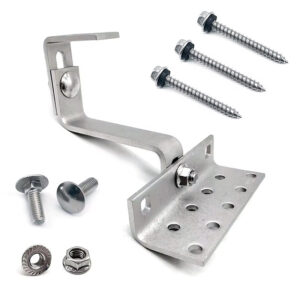
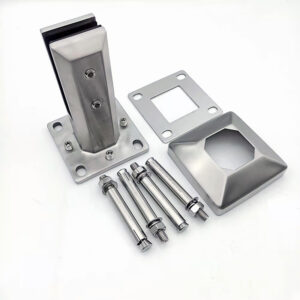
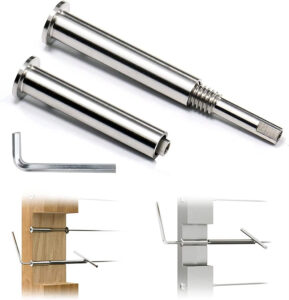
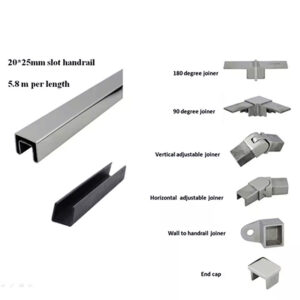
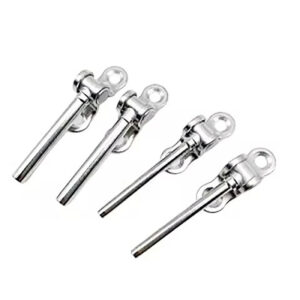
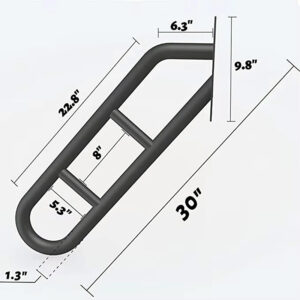
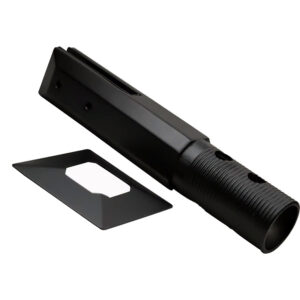
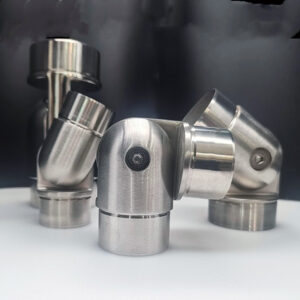
When a fastener, bracket, or anchor shows rust staining six months after handover, the specification review rarely traces back to a single passivation certificate accepted at procurement. The evidence that matters is not whether a certificate exists, but whether the documented treatment route matches the surface condition of each component family that reached the installation. The practical judgment is whether to accept that certificate as proof of passivation for all hardware, or to verify that machined fasteners, welded brackets, and fabricated anchors each followed a process route that addressed their specific contamination and scale condition before the certificate was issued.
Different Surface Conditions Across Hardware Types
The hardware arriving at a passivation line is rarely in a uniform condition, and treating it as though it is creates corrosion risks that surface long after procurement sign-off. A machined bolt, a welded bracket, and a shop-fabricated anchor carry fundamentally different contamination profiles, and a single cleaning-and-passivation protocol cannot address all of them equally.
The most immediate consequence shows at mixed-metal contacts. Carbon steel debris or iron filings embedded on a stainless fastener surface during machining or handling will initiate galvanic corrosion once moisture is present, regardless of whether the base material meets grade. This is not a material defect—it is a surface preparation failure that passivation alone may not correct if debris removal was incomplete. The corrosion mechanism under a fastener head operates differently from what occurs at a weld zone, where heat tint and sensitized grain boundaries degrade the passive layer locally. If the passivation process was designed around machined parts, welded components arriving with heat scale may enter the same bath and leave with the scale intact but chemically invisible beneath a superficial passivation film.
| Type onderdeel | Typical Pre-Treatment Condition | Key Contaminant / Scale to Remove |
|---|---|---|
| Machined fasteners | Machining residues, possible iron filing contamination | Carbon steel debris, cutting oils |
| Welded brackets | Weld heat scale, oxide layer | Welding slag, heat tint, sensitized zone |
| Fabricated anchors | Fabrication residues, possible welding scale | Iron filings, weld scale, shop debris |
The table identifies distinct pre-treatment conditions, but the procurement decision sits earlier: whether the passivation specification acknowledges that brackets and anchors with weld scale need pickling before passivation, not just degreasing and immersion. When the specification is silent on this distinction, the processor has no instruction to route parts differently, and the treating bath becomes a common denominator that serves none of the part families well.
A single passivation protocol cannot equalize parts that arrived with unequal surface risk.
Gaps Hidden by Generic Treatment Certificates
The certificate that arrives with a shipment of fasteners, brackets, and anchors often reads as a blanket statement: all parts passivated to a cited standard. What it does not reveal is whether individual component types within that shipment received the preparation steps their surface condition required. Procurement teams that treat the certificate as closure—rather than as a document to be interrogated—inherit risk that commissioning inspections may discover later.
Three gaps recur. The first is surface contamination removal: a certificate may assume uniform cleaning across all parts, but machined fasteners packed with cutting oil residue and fabricated anchors carrying shop debris demand different cleaning rigour before passivation. The second is post-weld scale removal: if any brackets or anchors were welded, a generic certificate that does not reference pickling leaves open the question of whether heat tint and sensitized zones were removed or merely overcoated by the passivation bath. The third is lot traceability: a blanket certificate can mask mixed lots that were not individually tracked through treatment, making it impossible to isolate a suspect batch if corrosion appears later.
| Gap Area | Why a Generic Certificate May Miss It | Wat te controleren |
|---|---|---|
| Surface contamination removal | Certificate may assume all parts were equally cleaned | Evidence of pre-passivation cleaning for each component type |
| Post-weld scale removal | Generic cert may not specify pickling for welded parts | Record of pickling and passivation for any welded brackets or anchors |
| Lot traceability | A blanket certificate can mask mixed lots that were not individually tracked | Lot-specific passivation records or processor lot logs |
Verifying these areas does not require rejecting the certificate outright. It requires asking whether the processor can produce evidence that each component family followed a defined route—degreasing for machined parts, pickling then passivation for welded items—and that lot identification is preserved in the processor’s records. Without that evidence, the certificate describes intent, not execution.
A certificate that does not distinguish part families may describe a process that some components never received.
Common Specifications Versus Part-Specific Routing
The procurement logic behind a single passivation specification is understandable: it simplifies supplier management, reduces documentation, and keeps the order process straightforward. Whether that simplicity is acceptable depends on what is being ordered and where it will be installed.
For an order consisting entirely of machined fasteners headed to an indoor, low-humidity environment, a common specification with standard degreasing and passivation is typically sufficient. The surface risk is uniform, and the passive layer does not need to withstand aggressive chloride exposure or compensate for weld damage. The trade-off shifts when the order includes welded brackets or fabricated anchors destined for an exterior balustrade, a coastal handrail system, or a pool enclosure. In those conditions, a specification that does not route welded parts through pickling before passivation leaves heat-affected zones vulnerable to preferential corrosion that may not appear immediately but accelerates once the passive film breaks down locally.
| Benadering | Benefit | Limitation / Risk |
|---|---|---|
| Common specification (single passivation process for all hardware) | Simplifies procurement and supplier management | May leave certain surface risks unaddressed if part conditions differ |
| Part-specific routing (treatment tailored to component family) | Addresses actual surface risk per part condition and manufacturing route | Adds complexity to procurement and quality oversight |
Part-specific routing is not a compliance requirement under ASTM A967; it is an engineering judgment based on the manufacturing history of the hardware. The practical question for procurement is whether the cost of routing complexity is lower than the cost of replacing corroded anchors or defending a specification decision after installation. Where the hardware mix includes welded and machined components in a corrosive exposure, the answer is rarely in favour of a blanket specification.
Lot Control Across Purchased and Fabricated Parts
Lot control becomes the weak point when purchased fasteners and in-house fabricated brackets are combined into a single project package and sent for passivation under one work order. The processor may record the treatment as a single batch, but the parts inside that batch came from different manufacturing origins, with different contamination histories, and possibly at different times. If the processor’s lot log does not distinguish supplier lots from fabricated lots, the ability to trace passivation evidence back to a specific box of fasteners or a specific welding shift is lost.
| Part Source | Typical Lot Control Gap | Wat bevestigen? |
|---|---|---|
| Purchased fasteners | Supplier lot certificates may be incomplete or not linked to delivered boxes | Supplier lot documentation matches actual received product |
| Fabricated brackets / anchors | In-house lot assignment may be informal or undocumented | Defined lot numbering and traceability in fabrication records |
The downstream consequence is operational, not theoretical. When a contractor reports rust on anchor plates at a single elevation, the project team needs to know whether the issue is confined to one lot of fabricated anchors or widespread across purchased brackets. Without lot-specific passivation records keyed to installed locations, that investigation stalls. The same gap complicates any recall or replacement decision: if the passivation evidence cannot be linked to a definable population of hardware, the default response is often to replace broadly rather than precisely, adding cost that better lot discipline could have avoided.
Lot traceability is not a passivation method; it is the prerequisite for linking acceptance evidence to installed hardware when a problem appears.
Passivation Acceptance by Component Family
Accepting passivation as complete means accepting that each component family followed the process route its surface condition demanded and that there is evidence linking that route to the specific lot. The acceptance framework is straightforward: machined fasteners require evidence of cleaning followed by passivation; welded brackets and anchors require evidence of pickling to remove heat scale, followed by passivation. The standard—commonly ASTM A967—defines acceptable passivation practices and test methods, but it does not automatically enforce part-specific routing. That enforcement comes from the specification and the acceptance criteria the buyer applies at incoming inspection.
| Component Family | Required Process Route | Acceptance Evidence |
|---|---|---|
| Machined fasteners | Clean + passivate | Certificate showing passivation after degreasing and contamination removal |
| Welded brackets | Pickle + passivate | Record of pickling paste application and passivation treatment with lot traceability |
| Fabricated anchors (welded) | Pickle + passivate | Treatment log matching the welding and passivation steps for the specific lot |
For welded brackets and anchors, the pickling step is widely recognized as a necessary precursor to effective passivation. Heat tint and the chromium-depleted zone beneath it will not respond to passivation alone; the surface must be restored to full alloy composition before the passive layer can form properly. A treatment log that records pickling paste application, passivation parameters, and lot identification for the specific welded parts provides acceptance evidence that a generic certificate alone cannot. Where that log is absent, the hardware should be treated as having unverified surface condition—regardless of what the material certificate states.
Acceptance is not a certificate review. It is a process-route check, part family by part family.
The decision that echoes through every section is whether to accept a single passivation certificate as proof, or to verify that the certificate is supported by component-specific process routes and lot-traceable records. Before procurement closes, the question to ask is not simply whether passivation was performed, but whether machined fasteners, welded brackets, and fabricated anchors each followed the route their surface condition required, with evidence that survives project handover. When that evidence is incomplete, the corrosion risk belongs to the project, not the certificate.
Frequently Asked Answers
Q: What if my hardware package consists entirely of machined fasteners with no welded brackets or anchors?
A: The risk of missed pickling is eliminated, but surface contamination from machining debris remains a real threat. A common passivation specification with rigorous degreasing is typically adequate, provided the fasteners are not exposed to aggressive chlorides. For indoor applications, verification can focus on cleanliness and certification rather than pickling logs.
Q: After reading this, what is the first concrete step I should take to close the gap in my current procurement process?
A: Request from your passivation processor a documented process route for each component family in your order. This document should detail cleaning, any pickling applied to welded items, passivation parameters, and lot identification. Without it, you are accepting a certificate that does not distinguish part conditions, leaving you unable to confirm that welded hardware received the necessary preparation.
Q: When does a generic passivation certificate become unacceptable?
A: A generic certificate is unacceptable whenever the order includes welded brackets or anchors that will be installed in exterior, coastal, or poolside environments. In those exposures, the certificate must explicitly show that pickling preceded passivation for welded parts; a blanket statement covering all components does not confirm that heat scale and sensitized zones were removed. For entirely machined parts in benign indoor settings, a generic certificate may be sufficient.
Q: How do I weigh the added cost of part-specific routing against the risk of corrosion failure?
A: The comparison rests on the cost of post-installation replacement, including labor, access, and reputational damage. In high-exposure projects, the one-time expense of segregated processing and auditable documentation is almost always lower than the potential remedial cost. For low-risk, interior applications with uniform hardware, the extra routing expense is rarely justified.
Q: Is this level of passivation verification worth it for a small residential railing project?
A: It depends on the site exposure and hardware mix, not the project scale. A small balcony with welded brackets facing a coastal environment demands the same pickling and passivation rigor as a large commercial project, because corrosion risk is driven by conditions. For an interior stair railing using only machined fasteners, a simplified acceptance process is typically appropriate.