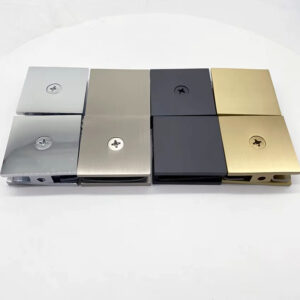
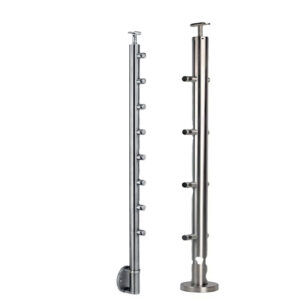
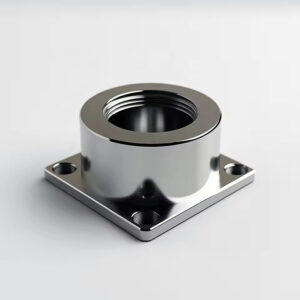
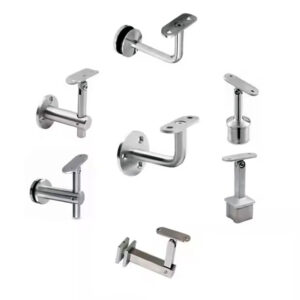
Toepassingsspecifieke oplossingen
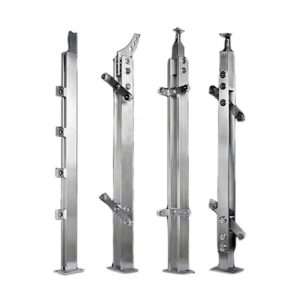
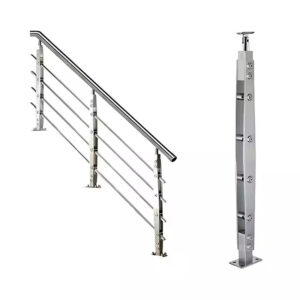
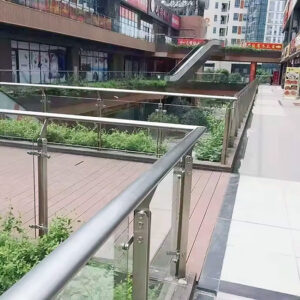
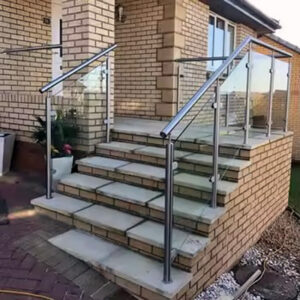
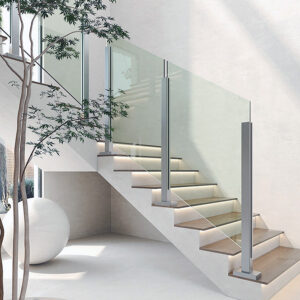
Toepassingsspecifieke oplossingen
ESANG application-specific railing solutions help project buyers choose stainless steel railing systems and hardware according to the installation environment, exposure condition, design style, and project requirements. Instead of starting only from product type, this category starts from where the railing will be used.
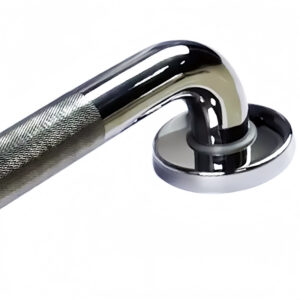
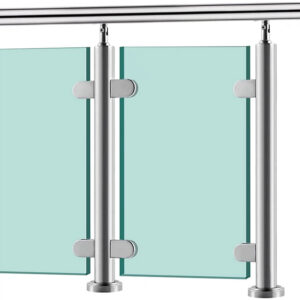
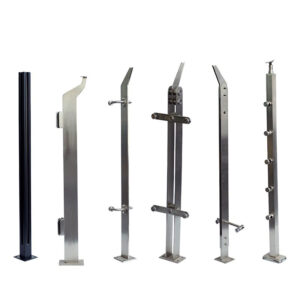
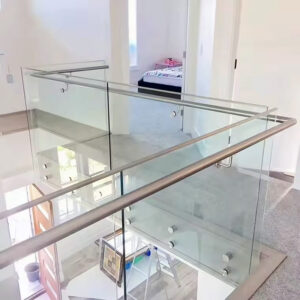
Deze categorie omvat Railingsystemen voor binnen, Railingsystemen voor buiten, en Mariene en kusttoepassingen. These application groups help buyers select suitable handrails, posts, glass railing hardware, cable railing hardware, mounting brackets, material grades, and surface finishes for different project conditions.
For contractors, distributors, fabricators, architects, and project buyers, the right railing solution depends on more than the product name. Indoor stair railings, outdoor balcony railings, poolside glass railings, deck cable railings, waterfront railings, and coastal installations may require different material grades, finishes, mounting details, drainage considerations, and maintenance expectations.
Application-Specific Railing Options
| Application category | Het meest geschikt voor | Belangrijke selectievragen |
|---|---|---|
| Railingsystemen voor binnen | Interior stairs, interior balconies, commercial interiors, residential interiors, hotels, offices, and public indoor circulation areas | Is the project focused on appearance, hand comfort, low maintenance, accessibility, or compatibility with interior finishes? |
| Railingsystemen voor buiten | Exterior stairs, decks, balconies, terraces, patios, outdoor walkways, and exposed building areas | What weather exposure, drainage, material grade, fastener selection, and maintenance level are expected? |
| Mariene en kusttoepassingen | Coastal buildings, waterfront railings, piers, docks, poolside areas, humid locations, and salt-air environments | Is the railing exposed to salt, moisture, pool chemicals, wind-driven rain, or high-corrosion conditions? |
How to Choose by Application Environment
Application-based selection is useful because the same railing product may perform differently in different environments. A 304 stainless steel interior stair railing, a 316 outdoor balcony railing, and a 316L coastal handrail system may share similar product forms, but the material grade, finish, fixing method, and maintenance plan should be selected differently.
| Project environment | Aanbevolen richting | Waarom dit belangrijk is |
|---|---|---|
| Dry indoor stair or corridor | Use indoor railing systems with suitable 304 stainless steel options, brushed finish, and appropriate handrail or post hardware | Indoor projects usually focus on appearance, comfort, and compatibility with interior materials. |
| Commercial interior with heavy traffic | Use durable stainless steel handrails, posts, brackets, and finishes that are easy to clean | Public indoor areas need repeatable quality, stable finish, and practical maintenance. |
| Outdoor deck or balcony | Use outdoor railing systems with weather-resistant material and mounting details | Outdoor exposure increases the importance of drainage, anchors, fasteners, and finish selection. |
| Poolside or humid environment | Consider 316 stainless steel or project-specified corrosion-resistant hardware | Moisture and chemical exposure can increase corrosion risk. |
| Coastal or waterfront project | Consider marine-oriented material, finish, fasteners, and maintenance requirements | Salt air and wet exposure require more careful material and hardware selection. |
| Pier, dock, or marine-adjacent railing | Review posts, handrails, base plates, anchors, and exposed hardware as a complete system | The installed assembly must resist environmental exposure and site-specific structural conditions. |
Indoor, Outdoor, and Coastal Selection Differences
Indoor, outdoor, and coastal railing projects often require different priorities. Application-specific pages should not repeat every product category in full; they should help buyers understand how the project environment changes product selection.
| Selectiefactor | Indoor railing systems | Outdoor railing systems | Marine and coastal applications |
|---|---|---|---|
| Common material direction | 304 stainless steel is often suitable for many dry interior projects | 316 stainless steel is often considered for exposed outdoor environments | 316 or 316L stainless steel is often considered for salt-air, waterfront, poolside, or high-humidity exposure |
| Finish priority | Appearance, touch comfort, fingerprint control, and interior design match | Weather resistance, cleaning access, and finish durability | Corrosion resistance, surface care, and cleaning frequency |
| Hardware focus | Handrail brackets, posts, glass clamps, rail connectors, and clean visible details | Base plates, anchors, drainage, fasteners, handrails, posts, and exposed fittings | Fastener material, exposed hardware, base fixing, drainage, and maintenance plan |
| Common project types | Interior stairs, interior balconies, hotels, offices, commercial interiors, villas | Exterior stairs, decks, terraces, balconies, patios, outdoor walkways | Waterfront buildings, pool areas, coastal balconies, piers, docks, marine-adjacent railings |
Material Grade and Finish Considerations
ESANG can manufacture railing systems and hardware according to project requirements, including material grade, surface finish, hardware type, mounting method, tube profile, glass or cable compatibility, and packaging requirements.
| Materiaal of afwerking | Application use | Opmerkingen van de koper |
|---|---|---|
| 304 roestvrij staal | Interior stair railings, interior balcony railings, commercial interiors, residential interiors, and dry environments | A common option for many indoor railing projects where corrosion exposure is limited. |
| 316 roestvrij staal | Outdoor stair railings, deck railing systems, balcony railing systems, poolside areas, and humid environments | Wordt meestal verkozen wanneer een betere corrosiebestendigheid vereist is. |
| 316L roestvrij staal | Marine-grade, coastal, waterfront, and project-specific applications requiring low-carbon stainless steel | Geschikt wanneer de specificatie een betere lasbaarheid of betere corrosiebestendigheid vereist. |
| Geborstelde of satijnen afwerking | Commercial interiors, outdoor railings, public circulation areas, and high-traffic applications | Helpt vingerafdrukken en lichte gebruikssporen minder zichtbaar te maken. |
| Spiegelglans | Decorative interiors, villas, hotels, and selected premium visual applications | Zorgt voor een glanzend uiterlijk, maar vereist een zorgvuldiger behandeling en reiniging. |
Material grade should not be selected by product name alone. The final choice should consider indoor or outdoor exposure, coastal distance, pool chemicals, cleaning method, fastening details, budget, and project specification.
Product Systems Commonly Used by Application
Application-specific railing solutions usually combine several ESANG product categories. The right solution may include handrails, posts, glass hardware, cable hardware, mounting brackets, base plates, connectors, and finishing components.
| Application need | Common product direction | Related categories |
|---|---|---|
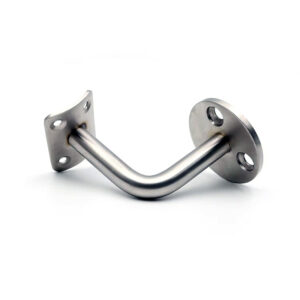
| Interior stair or corridor handrail | Wall-mounted or post-mounted stainless steel handrails with suitable brackets | Wand gemonteerde leuningen, Wandmontagebeugels |
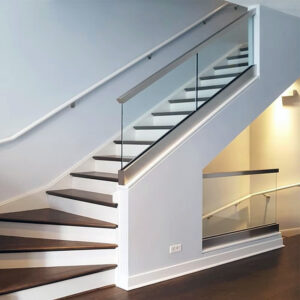
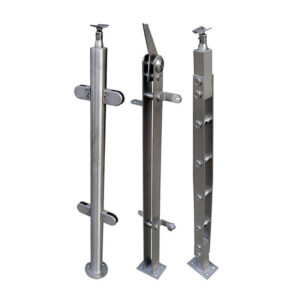
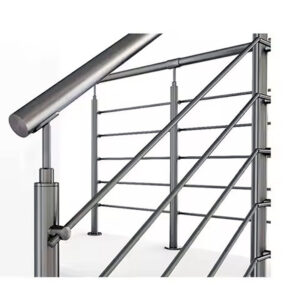
| Interior balcony railing | Stainless steel posts, top rails, glass hardware, cable hardware, or infill components | Roestvrijstalen palen, Invulsystemen |
| Outdoor deck or terrace railing | Weather-resistant posts, handrails, base plates, cable systems, or glass railing hardware | Bevestiging van hardware en montage, Kabelrailingsystemen |
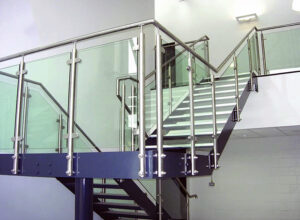
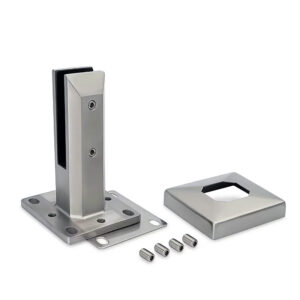
| Poolside or glass railing project | Glass spigots, standoffs, base shoe systems, cap rails, and corrosion-resistant hardware | Glazen aansluitingen en afstandhouders, Systemen voor basisschoenen |
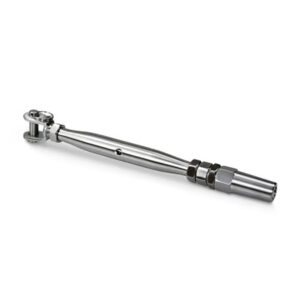
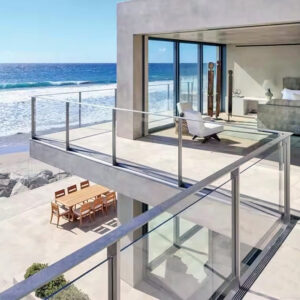
| Coastal balcony or waterfront railing | 316 or 316L stainless steel posts, handrails, cable fittings, base plates, and exposed hardware | Leuning Systemen, Railing Posts and Components |
| Pier, dock, or marine-adjacent railing | Marine-oriented material selection, exposed hardware review, strong mounting, and planned cleaning access | Mariene en kusttoepassingen, Bevestigingsmateriaal en beugels |
Aanpassing aan de projectvereisten
Application-specific railing projects are often custom by nature. ESANG can manufacture railing systems and hardware according to project drawings, dimensions, material grades, surface finishes, installation methods, and environmental requirements.
Customers can specify handrail shape, post profile, glass thickness, cable layout, bracket type, mounting method, base plate details, finish, packaging, and OEM or ODM requirements. For projects that target ADA-oriented, IBC-oriented, OSHA-related, or other project-specific requirements, customers should provide the required dimensions and specifications. ESANG can manufacture components to match those provided details, while final compliance depends on the complete installed system, structural design, installation method, and applicable local code.
Installation and Environment Considerations
Application-specific railing selection should be reviewed with the complete project environment. A dry indoor stair railing, a weather-exposed balcony, and a coastal dock railing may need different material grades, mounting hardware, fasteners, drainage planning, and cleaning routines.
- Indoor or outdoor installation
- Dry, humid, poolside, coastal, or marine-adjacent environment
- Materiaalkwaliteit: roestvrij staal 304, 316 of 316L, zoals gespecificeerd
- Surface finish and cleaning expectations
- Handrail, post, glass, cable, or infill system type
- Mounting method: wall mount, surface mount, fascia mount, core mount, or post mount
- Fastener and anchor compatibility
- Drainage, waterproofing, and cleaning access
- Project drawings and local building code requirements
For accessibility-focused U.S. interior projects, the 2010 ADA-standaarden voor toegankelijk ontwerp provide reference requirements related to handrail height, clearance, gripping surface, and continuity. For workplace or industrial access areas, OSHA 1910.29 may also be relevant. These references should be treated as planning resources, and final compliance should be confirmed by the project designer, engineer, contractor, or local authority.
Toepassingsscenario's
Interior Stair Railings
Interior stair railing projects often focus on hand comfort, finish quality, visual consistency, and compatibility with interior materials. 304 stainless steel handrails, posts, brackets, and connectors may be suitable for many dry indoor conditions.
Commercial Interior Railings
Commercial interior projects such as offices, hotels, shopping centers, schools, hospitals, and public buildings often require durable stainless steel railing systems with repeatable finish, easy cleaning, and clear installation details.
Exterior Stair and Balcony Railings
Exterior stair and balcony railings require greater attention to rain exposure, drainage, anchors, fasteners, surface finish, and material grade. 316 stainless steel is often considered for exposed outdoor applications.
Deck and Terrace Railing Systems
Deck and terrace projects may use glass railing, cable railing, stainless steel posts, handrails, or mixed railing systems. The correct solution depends on the view requirement, edge condition, mounting surface, and weather exposure.
Poolside and Humid Environments
Poolside and humid environments require careful material and cleaning consideration. Stainless steel grade, surface finish, fasteners, drainage, and maintenance access should be reviewed together.
Coastal and Waterfront Projects
Coastal and waterfront railings are exposed to salt air, moisture, wind-driven rain, and more demanding maintenance conditions. 316 or 316L stainless steel, appropriate fasteners, exposed hardware review, and regular cleaning are commonly considered for these projects.
Pier and Dock Railing Systems
Pier and dock railings may require stainless steel handrails, posts, base plates, cable hardware, or glass hardware selected for marine-adjacent exposure. Structural fixing, corrosion resistance, and maintenance planning should be reviewed before production.
Gerelateerde productcategorieën
- Railingsystemen voor binnen
- Railingsystemen voor buiten
- Mariene en kusttoepassingen
- Leuning Systemen
- Railing Posts and Components
- Glazen relingen
- Kabelrailingsystemen
- Bevestigingsmateriaal en beugels
Veelgestelde vragen
What is an application-specific railing solution?
An application-specific railing solution starts from the project environment instead of only the product name. It considers whether the railing is used indoors, outdoors, near the coast, around pools, on decks, on balconies, or in commercial access areas, then selects suitable materials, finishes, posts, handrails, glass hardware, cable hardware, and mounting components.
When should I choose 304 stainless steel for railing systems?
304 stainless steel is commonly used for indoor, dry, and general architectural railing projects. It may be suitable for interior stair railings, interior balcony railings, commercial interiors, and residential projects where corrosion exposure is limited.
When should I choose 316 stainless steel?
316 stainless steel is usually preferred for outdoor, coastal, poolside, humid, or more demanding environments where better corrosion resistance is required. The final material grade should be selected according to the project environment, specification, and maintenance expectations.
When should 316L stainless steel be considered?
316L stainless steel may be considered when the project specification calls for low-carbon stainless steel, improved weldability, or more demanding corrosion performance. It is often relevant for marine-oriented, coastal, or custom-fabricated railing projects when specified.
Can ESANG customize railing systems for specific environments?
Yes. ESANG can manufacture railing systems and hardware according to drawings, material grades, surface finishes, installation methods, glass or cable requirements, mounting conditions, packaging needs, and project environment. The more complete the project information, the easier it is to confirm suitable options.
Are indoor and outdoor railing systems structurally different?
They may use similar product forms, but outdoor systems usually need more attention to material grade, drainage, fastener selection, anchors, finish durability, and maintenance. Indoor systems often focus more on appearance, touch comfort, and compatibility with interior design.
Can ESANG support ADA-oriented interior railing requirements?
Yes. When customers provide required dimensions and project specifications, ESANG can manufacture handrails, brackets, and related components to support ADA-oriented requirements such as handrail height, wall clearance, grip profile, and continuity. Final compliance depends on the complete installed system and applicable local code.
What information is needed for an application-specific railing inquiry?
Useful inquiry information includes project environment, indoor or outdoor location, material grade, railing type, handrail requirement, post type, glass or cable details, mounting method, finish, quantity, drawings, and any target project specification.
How should outdoor or coastal stainless steel railings be maintained?
Voor de routine reiniging worden doorgaans een mild reinigingsmiddel, schoon water en een zachte doek gebruikt. Vermijd reinigingsmiddelen op basis van chloor, staalwol en schurende hulpmiddelen. Installaties in de buitenlucht, bij het zwembad en aan de kust moeten vaker worden gereinigd om vervuiling van het oppervlak te verminderen en het uiterlijk te behouden.
Gerelateerde berichten:
Replacing Core-Mounted Posts With Surface Bases: Precheck
Check the existing opening, slab condition, edge geometry, drainage, and revised load path before converting an embedded post to a surface base.
Railing Post Base RFQ Checklist for Project Buyers
Request comparable base hardware, substrate inputs, finishes, drawings, anchor boundaries, samples, and inspection documents in one project RFQ.
Adjustable Railing Post Bases for Sloped or Uneven Surfaces
Compare adjustable bases against the actual slope, bearing surface, leveling range, finish interface, and fixing access before selecting a detail.
Railing Post Base Anchors: Inputs for Engineering Review
Define substrate, geometry, loads, exposure, and anchor evidence before engineering review so a hardware label is not mistaken for a connection design.
Tekeningen van de voetplaten voor leuningpalen: gaten, randen en toleranties
Give fabricators and installers a base-plate drawing that resolves hole centers, slab edges, tool access, and agreed tolerances before production.
ESANG Wall Bracket Range: Standard, Heavy-Duty, Adjustable, and Flush
Match standard, heavy-duty, adjustable, and flush wall bracket options to projection, wall build-up, access, finish, and project evidence needs.
Esangs projecten

Esang's certificaat
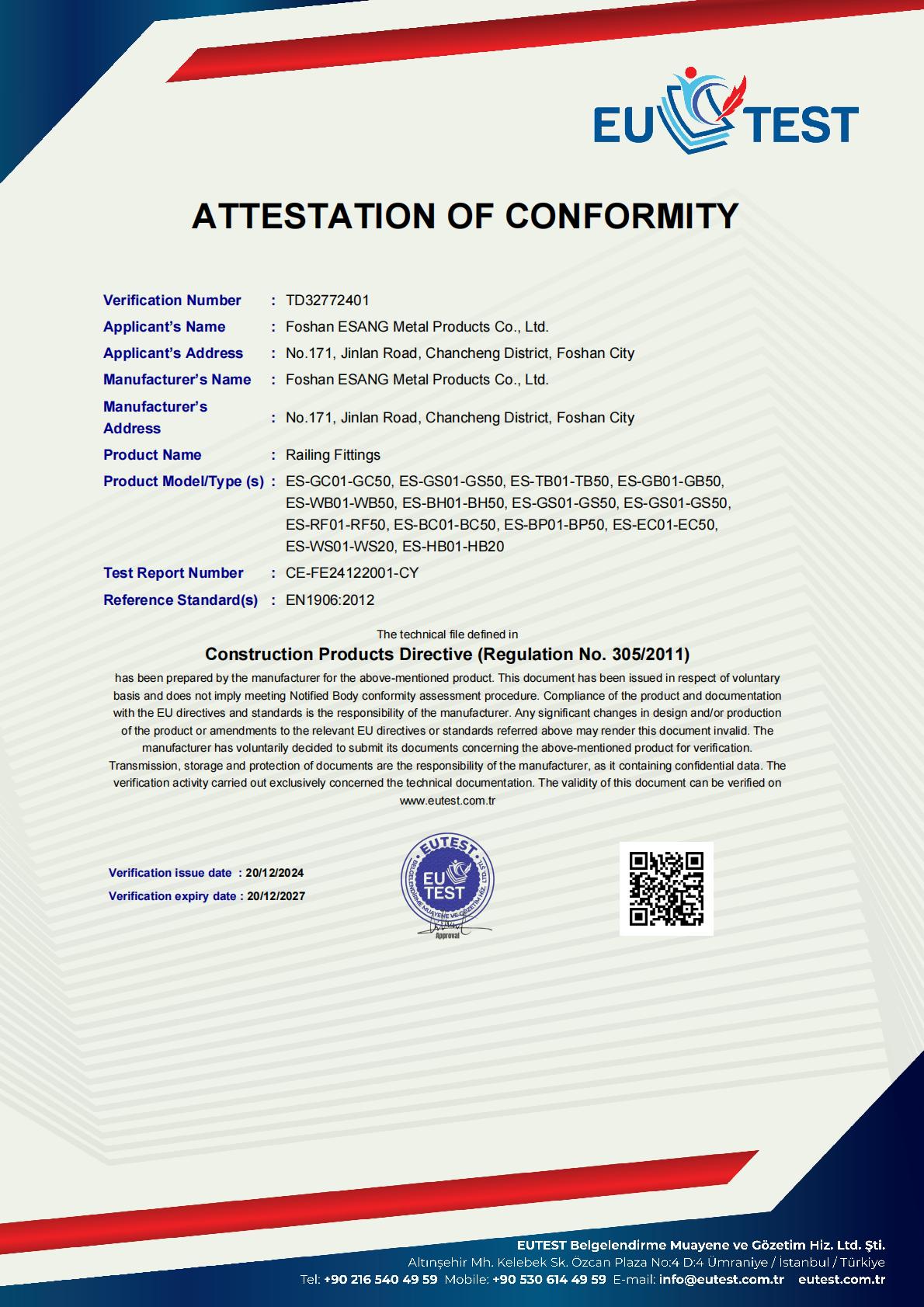
Foshan ESANG Metal Products onderhoudt met trots CE-certificering (Verificatienummer TD32772401) onder de Richtlijn bouwproducten (Verordening nr. 305/2011), waarmee we onze toewijding aan de hoogste Europese veiligheids- en kwaliteitsnormen bevestigen.
Gecertificeerd Assortiment:
Ons uitgebreide assortiment railingbeslag - inclusief glasklemmen, spanners, beugels, muurbevestigingen, basischoenen, leuningbeslag, kabelbeslag en staanderonderdelen - voldoet aan de volgende eisen EN1906:2012 normen, zodat de structurele integriteit en betrouwbaarheid van de prestaties in alle installaties gewaarborgd zijn.
Wat dit betekent voor je project:
✓ Volledige naleving van regelgeving voor Europese en internationale markten
✓ Onafhankelijk geverifieerde veiligheids- en duurzaamheidsprestaties
✓ Documentatie-ondersteuning voor architecturale specificaties
Gemoedsrust dankzij kwaliteitsgarantie van derden
Certificering geldig tot 2027 | Testrapport: CE-FE24122001-CY
Esangs projecten

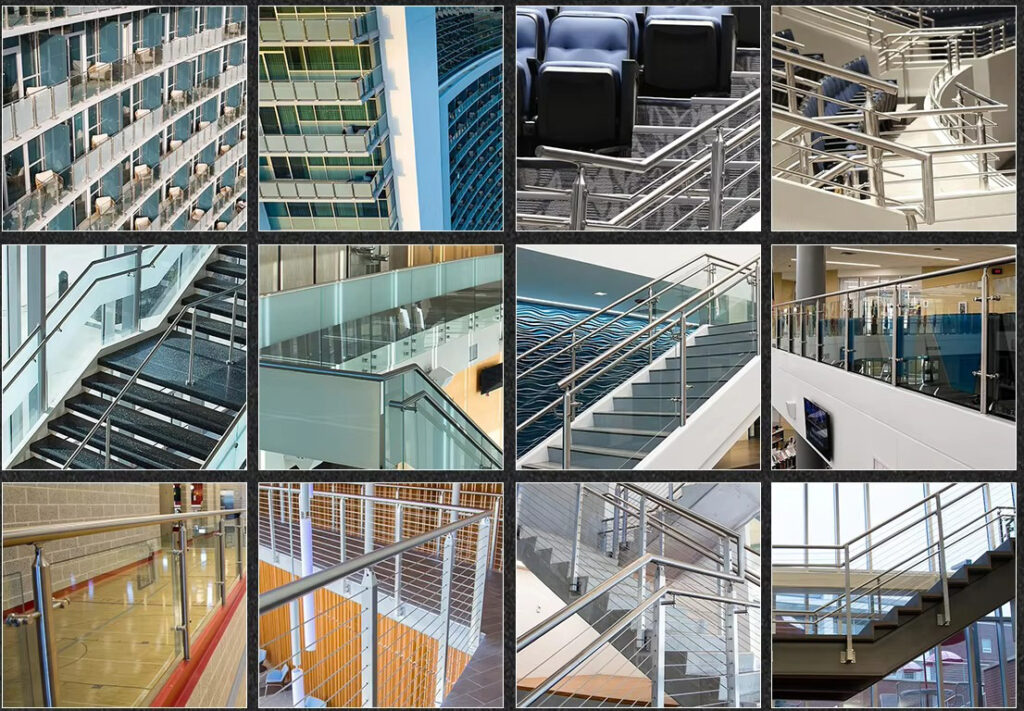
Referentieproducten