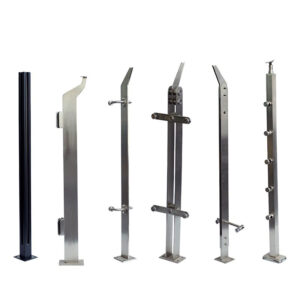
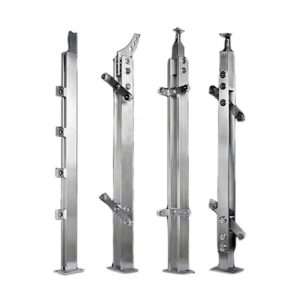
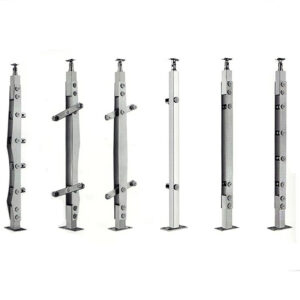
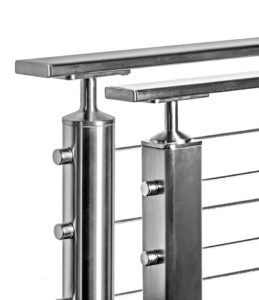
A post-base RFQ that leaves out the post schedule, substrate, or anchor boundary invites bids that cannot be compared on a common basis. Buyers end up evaluating price differences that actually reflect different scopes, different assumed field conditions, or hardware one bidder quietly excluded. Getting the right project data into the request, and asking each bidder to state assumptions against the same baseline, is what makes bid comparison possible rather than approximate.
Project data every post-base bidder should receive
Every bidder pricing a post-base package is working from assumptions about the project unless the RFQ removes the need to assume. Where the request states only a general product category without the specific project conditions attached, each bidder fills the gaps with its own defaults: a default substrate, a default edge detail, a default finish exposure. Those defaults rarely align across bidders, so the resulting bids price different installations even when the line-item description reads the same.
The inputs a buyer supplies at the RFQ stage are not paperwork for its own sake. They establish a shared reference point that every bidder must price against, so that a lower number reflects a real difference in approach rather than a difference in what was assumed. Where the buyer withholds a detail because it seems minor or because the buyer assumes it is self-evident from the product name, that detail becomes exactly the kind of gap a bidder can price around, favorably or unfavorably, without the buyer ever seeing the decision being made.
This matters more for post bases than for many other hardware categories because a base sits at the interface between the railing system and the structure. Its suitability depends on conditions that live outside the post itself: what the post is being mounted to, how the edge of that substrate is finished, what the surrounding finish build-up looks like, and what exposure the location presents over the life of the installation. A base that is correctly specified for one substrate and edge condition is not necessarily correct for another, even if the base part number does not change. The RFQ stage is where the buyer either transmits that project-specific information or leaves it to be assumed.
The project information a buyer compiles for this purpose is also what a supplier uses on the other end, during configuration or quotation review, to confirm that the base type, mounting approach, and finish selection correspond to the conditions the buyer has actually described rather than a generic default. Where that information is incomplete, the quotation stage inherits the same ambiguity the RFQ stage failed to resolve, and the comparison problem simply moves downstream instead of being solved.
Base type, post schedule, layout, substrate, edges, and finish build-up
| Project input | Include in the RFQ | Comparison use |
|---|---|---|
| Base type | Identify the requested base system, including surface mount or core mount where applicable. | Compare bids against the same mounting approach. |
| Post schedule | Attach the post schedule used for the request. | Check that priced bases and post hardware follow the same post list. |
| Layout | Attach the project layout relevant to post-base locations. | Check whether bidders used the same location basis. |
| Substraat | Describe the substrate at each applicable post-base condition. | Keep anchor and field-work assumptions visible rather than implicit. |
| Edge conditions | Identify the applicable edge conditions. | Expose assumptions that can change post-base coordination. |
| Finish build-up | State the finish build-up at mounting locations. | Compare coordination allowances against the same project condition. |
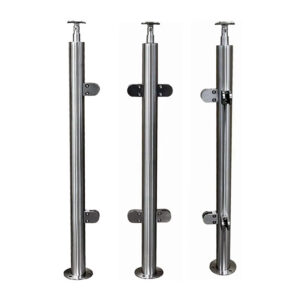
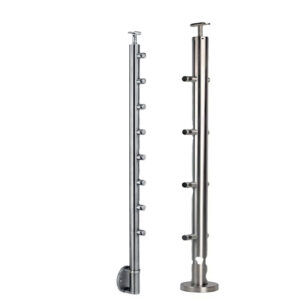
De base type decision determines a large share of what follows, because surface-mounted and core-mounted systems interact with the substrate in fundamentally different ways. A surface-mounted base sits on top of the finished substrate and transfers load through a fastening pattern into that surface, which means the substrate’s surface condition, thickness, and finish build-up near the mounting point all affect suitability. A core-mounted system is set into a prepared opening in the substrate itself, which shifts the relevant questions toward the opening’s depth and condition rather than the surface finish around it. An RFQ that does not identify which base type is being requested leaves each bidder free to assume the mounting approach that is easiest for that bidder to supply, which is not the same as the approach the project requires.
The post schedule and layout serve a related but distinct function: they tell every bidder how many posts, at what spacing, and in what arrangement, so that quantity and configuration are held constant across bids. Without the schedule, a bidder may price a representative post rather than the actual post count and mix, producing a number that cannot be scaled to the real project without revision.
Substrate description and edge conditions matter because the same base hardware performs differently depending on what it is being fixed into and how close that fixing point sits to an edge. A substrate’s composition and condition affect what fastening approach is even viable, and an edge condition close to a mounting location can constrain spacing or require a different base footprint than an interior location would. Where the edge condition changes, the acceptable base placement or base geometry can change with it, even though the railing design above the base stays the same.
Finish build-up at the mounting location affects how the base sits relative to the finished surface and what coordination is needed between trades installing the substrate finish and trades installing the railing. An RFQ that attaches the post schedule, base detail, substrate description, edge conditions, and finish build-up gives every bidder the same starting conditions, which is what makes a subsequent price comparison meaningful rather than coincidental.
Anchor scope, engineering responsibility, site drilling, and waterproofing boundaries
| Scope item | Boundary to state in the RFQ | Bid response to compare |
|---|---|---|
| Bases and fasteners | Identify the bases and fasteners expected in the supplier-furnished package. | Included items, omitted items, and any stated limitations. |
| Anchors | Keep engineer-selected anchors separate from the base and fastener supply scope. | Anchor assumptions, exclusions, and any evidence offered for the proposed scope. |
| Engineering responsibility | Identify where project-specific connection selection and structural verification sit. | Any engineering service included in the bid and the limits of that service. |
| Site drilling | State whether drilling is included or remains field work. | Drilling inclusion, exclusions, and coordination assumptions. |
| Grout | State whether grout is included with the supplied package or remains a separate project item. | Grout inclusion, exclusions, and stated interface assumptions. |
| Waterdicht maken | State whether waterproofing is included or remains separate from post-base supply. | Waterproofing inclusion, exclusions, and stated interface assumptions. |
A post-base RFQ response can look complete while excluding exactly the items that determine whether the installed assembly will actually perform: the anchor connection, the engineering behind it, and the field work required to realize it. Separating what the bidder is proposing to furnish from what remains a project responsibility is the mechanism that keeps those exclusions visible instead of implicit.
Base plates and fasteners supplied with the post hardware are a distinct scope item from the anchors that connect that base to the structure. An anchor’s selection depends on the specific substrate, the loads the connection must resist, and the structural conditions at each mounting point, which is project-specific engineering rather than a hardware catalog decision. Where a bidder’s price includes only the base and fastener package and is silent on anchors, that silence should be read as an exclusion to confirm, not as an assumption that anchors are included. The reverse is also true: a bidder proposing to supply or select anchors is taking on a scope that carries engineering responsibility, and the RFQ should make clear where that responsibility is expected to sit before bids are compared.
Site drilling follows the same logic. Creating the opening or preparation needed for a given base or anchor type is field work that may or may not be included in a hardware bid, and whether it is included changes both the price and the coordination the buyer must arrange separately. Grout, where a base or anchor condition requires it, raises the same question: is it part of the supplied package, or a separate trade’s responsibility that the buyer must schedule independently. Waterproofing at a post-base penetration is a further interface that a hardware bid may or may not address, and where the penetration passes through a waterproofed assembly, leaving that boundary unstated creates a coordination gap regardless of how complete the hardware pricing looks.
None of these items are optional details to resolve after award. A bid that is silent on anchor scope, drilling, grout, or waterproofing has not necessarily omitted them from the project, but it has omitted them from the information the buyer can use to compare that bid against another. Reference material such as Bovenste Fossa, 52 graden 00 minuten, a government metal-railing specification structure, illustrates one way these scope divisions get organized in a submittal structure, though it serves here only as an example of how such boundaries can be documented, not as a requirement that applies to this project or an indication of ESANG compliance with it.
Material, finish, exposure, and sample requirements by component
| Component | RFQ evidence or sample request | Beslissingsgrens |
|---|---|---|
| Base plates or base systems | Request material and finish records that match the selected component form and project exposure classification. | Check the priced base against records for that same form and finish; an example metal-railing specification is not a universal requirement or evidence of ESANG compliance. |
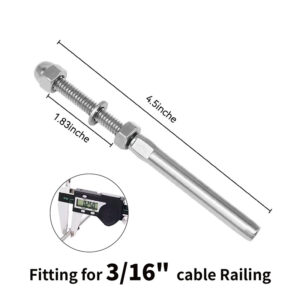
| Stainless-steel fasteners | Request material and finish records for the fasteners in the offered package; where ISO 3506-1 is cited, identify the in-scope bolts, screws, or studs and the property-class evidence. | ISO 3506-1 addresses property classes for in-scope stainless fasteners; it does not specify torque, shear, fatigue, weldability, or the design of a railing anchor connection. |
| Anchors | Request the project-specific anchor evidence associated with the engineer-selected anchor scope. | Fastener records do not replace anchor-connection design or project structural verification. |
| Covers and special brackets | State whether each item is required, then request matching material and finish records and any purchase sample needed. | Compare the evidence and sample with the actual component included in the bid so an omitted item does not create an artificial price difference. |
Material and finish records answer a narrower question than many buyers expect: they confirm what a specific component is made of and how it is finished, not how the assembled system will perform once installed. Treating a finish record as evidence of load capacity, or a material record as evidence of a complete assembly’s suitability, conflates two different kinds of information. The record matches the component form it was issued for; it does not extend automatically to a different component, a different exposure condition, or the installed assembly as a whole.
This distinction matters most where exposure conditions vary across a project. A base plate or base system intended for an interior, climate-controlled location faces different corrosion conditions than one at an exterior or high-humidity location, even if both use the same general material family. Requesting records that match the selected component form and the project’s exposure classification, rather than a generic material certificate, is what lets the buyer confirm the right evidence was issued for the right condition.
Stainless-steel fasteners carry their own evidence question. Where a bid cites ISO 3506-1, that standard addresses property classes for in-scope stainless bolts, screws, and studs, which is useful for confirming the fastener’s mechanical property class. It does not address torque, shear, fatigue performance, or weldability, and it does not design or validate the anchor connection the fastener may be part of. A buyer requesting fastener records under this standard should confirm which bolts, screws, or studs are actually in scope and keep that evidence separate from any claim about the anchor connection’s adequacy.
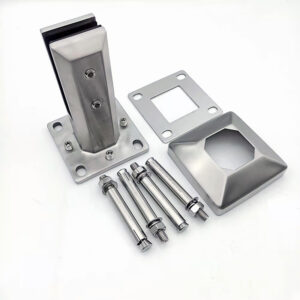
Anchors require their own project-specific evidence, separate from fastener material records, because anchor performance depends on the structural connection being verified for the actual substrate and load condition, not on the metallurgy of the anchor component alone. Covers and special brackets are easy to omit from a bid without the omission being obvious, since they may not appear as a distinct line item; stating whether each is required, and requesting matching records and a sample where needed, keeps the comparison honest. Products such as voetplaten voor opbouwmontage en bevestigingssystemen voor kernsteunen each have their own applicable records and sample expectations tied to their form, which is why a generic “material certificate” request without reference to the specific component form leaves room for mismatched evidence to pass unnoticed.
Drawings, records, inspection evidence, packaging, and delivery scope
| Deliverable or scope | RFQ entry | What to compare in bids |
|---|---|---|
| Drawings | Request the drawings needed for the offered post-base package and its project interfaces. | Drawing scope, identified interfaces, and listed assumptions or exclusions. |
| Material and finish records | Request records that correspond to each offered component form and finish. | Whether the records cover the components actually included in the bid. |
| Samples | Identify the component and finish each requested sample must represent. | Sample scope and any sample exclusions. |
| Inspection documents | State the inspection evidence needed for the purchase, including the applicable bases, anchors, welds, or site tolerances. | Document scope and the conditions each document addresses. |
| Packaging | State the packaging expected for the purchase. | Included packaging and any packaging exclusions. |
| Delivery | State the required delivery scope. | Included delivery scope and any stated delivery exclusions. |
The deliverables attached to a post-base purchase extend beyond the hardware itself, and a bid that prices the hardware correctly can still leave the buyer without what is needed to install, verify, or receive it on schedule. Drawings showing the offered package and its project interfaces let the buyer confirm that what was priced matches what will physically arrive and connect to the surrounding structure and finish. Where drawings are absent or describe a generic condition rather than the project’s actual interfaces, the buyer has priced hardware without confirming it fits the project.
Material and finish records need to correspond to the components actually included in the bid, which connects back to the component-by-component evidence question: a record set that covers only part of the offered package leaves the remainder unverified. Samples serve a related but distinct purpose, letting the buyer confirm appearance and finish physically rather than on paper, and a sample request should specify exactly which component and finish it must represent so the sample received answers the question it was meant to answer.
Inspection documents covering bases, anchors, welds, or site tolerances provide evidence that the installed condition, not just the supplied component, meets the project’s requirements. This evidence sits downstream of supply and depends on site conditions as much as on the hardware itself, which is why it is tracked separately from material and finish records. Related submittal material, including drawings, mill test records, and finish samples for handrail projects more broadly, follows a similar logic of matching documentation to the specific component and condition it describes rather than treating one generic submittal package as sufficient for every item.
Packaging and delivery scope affect project logistics rather than technical performance, but an RFQ silent on either leaves the buyer to assume standard handling that may not match the project’s site conditions or schedule. Stating the packaging and delivery expectations lets bidders price those elements explicitly rather than leaving them bundled into an assumption the buyer cannot see. Once a buyer has decided on a base type and supplier, the hardware itself connects to post-installation questions of delivery coordination and the maintenance or inspection path for the installed system, which is a separate consideration from the initial comparison of hardware specifications.
Bid-comparison check for assumptions, exclusions, and missing hardware
A completed set of bids should be read for what each bidder assumed and excluded, not only for the headline price. Two bids priced against the same post schedule and substrate description can still diverge in scope if one bidder has included anchors, drilling, and grout while the other has priced only the base and fastener package. Reading the bids side by side for these exclusions, rather than comparing bottom-line numbers directly, is what prevents a lower price from reflecting a smaller scope rather than better value.
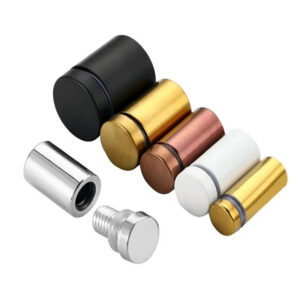
Covers, special brackets, and similar secondary hardware are among the items most easily left out of a bid without the omission being stated, because they may not have a clear place in a generic line-item structure. A buyer checking bids should confirm that each quotation either includes these items explicitly or states their exclusion, rather than assuming silence means inclusion.
Anchor evidence deserves the same scrutiny during comparison as during the initial RFQ, because a bidder who has not addressed the anchor connection has not necessarily priced a deficient system, but has left a scope gap that the buyer must resolve with the project’s engineering party before award. Similarly, field coordination items like site drilling and waterproofing interfaces should appear in the comparison as explicit inclusions or explicit exclusions, not as implied by the absence of discussion.
Where one bidder’s package assumes a surface-mounted base and another assumes core-mounted, the comparison is no longer between two prices for the same item but between two different mounting approaches, and the buyer needs to confirm which approach the project substrate and design actually require before treating either bid as responsive. The practical check at this stage is not whether a bid is complete in some absolute sense, but whether its assumptions and exclusions have been stated clearly enough that the buyer can see exactly what was and was not priced, and can request the missing information before committing to an award based on an incomplete picture.
Veelgestelde vragen
V: Can I compare railing post base bids by total price alone?
A: Compare total prices only after leveling the included hardware, project services, field work, evidence, packaging, and delivery scope. Require each bidder to identify assumptions and exclusions, then check whether covers, special brackets, fasteners, anchor evidence, drilling, grout, or waterproofing have been omitted.
V: How should an RFQ handle different substrates or edge conditions within one project?
A: Identify each applicable substrate, edge condition, and finish build-up, and link those conditions to the relevant post locations in the schedule and layout. This lets bidders state condition-specific assumptions instead of pricing one mounting arrangement for every location.
V: Who should be responsible for selecting the anchors for a railing post base?
A: State the responsibility explicitly in the RFQ and keep engineer-selected anchors and project-specific structural verification separate from the supplier-furnished base and fastener package. Each bid should show any included engineering service, its limits, and the anchor assumptions or exclusions used for pricing.
V: What should I request when a bidder cites ISO 3506-1 for stainless-steel fasteners?
A: Ask the bidder to identify the in-scope bolts, screws, or studs and provide property-class evidence for those items. Do not treat that citation as evidence for torque, shear, fatigue, weldability, anchor-connection design, or project structural verification, because those matters fall outside the stated standard scope.
V: How can a sample help prevent a finish or component mismatch?
A: Define the exact component and finish that each sample must represent, then confirm that the sampled item is included in the priced package. Match the sample with the corresponding material and finish records so a cover, bracket, base, or fastener is not approved using evidence for a different component form.