Treat “universal” as a sourcing category, not a compatibility claim
Universal adjustable hardware is most useful as a request for one adaptable component concept across a defined family of supports, rails or project conditions. The word does not mean every profile, hole pattern, angle, load or environment is compatible. A buyer should define the interface family, permitted adjustment and exceptions before deciding that one part can replace several dedicated items.
Start with a sample photo or drawing, the support-side and carried-side interfaces, the adjustment you need, the range of variants and an estimated quantity. ESANG can use that boundary to propose what may be common and what must remain variant-specific.
Request an adjustable hardware quote on WhatsApp
Break the product into three interfaces
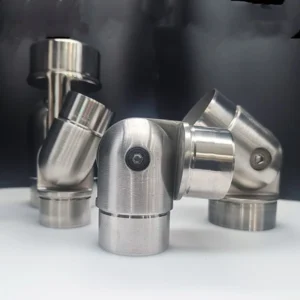
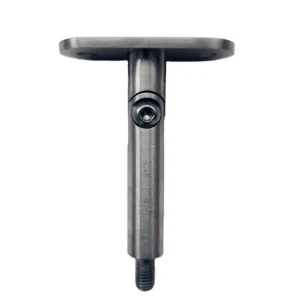
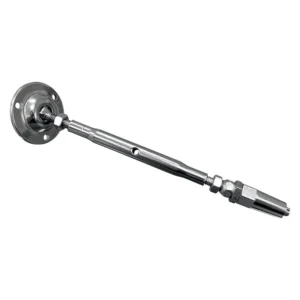
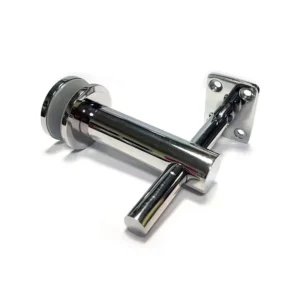
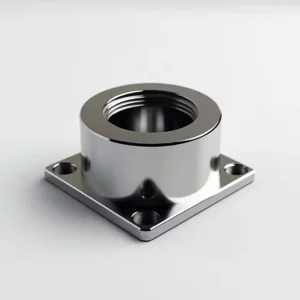
Think of the assembly as a support-side interface, an adjustment module and a carried-side interface. A common adjustment module may still require different mounting plates, saddles, receivers, adapters or fasteners. Compatibility exists only where all three blocks are defined together.

Define the compatibility boundary
| Boundary field | What to list | Why “universal” can fail |
|---|---|---|
| Support family | Wall/post/plate type, profile, dimensions, fixing face, hole pattern and backing | One body cannot mount safely to incompatible faces or fixing patterns without a defined adapter. |
| Carried family | Rail, panel or component type; profile, dimensions, wall thickness and fastening | Round, flat and other interfaces need different contact and retention details. |
| Adjustment function | Height, angle, projection, translation or a stated combination | An adjustable part may move in one direction only; that does not solve every site variation. |
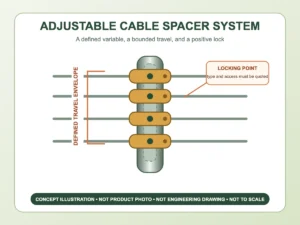
| Working envelope | Nominal, minimum and maximum positions plus collision/tool clearance | Advertised movement is irrelevant if real components collide before the required setting. |
| Lock and anti-rotation | Locking components, tightening sequence, end retention and access | A fit that looks correct before tightening may move or twist at the final step. |
| Hardware package | Fasteners, adapters, bushings, covers, isolators and tools included or excluded | Missing adjacent parts can turn a common module into several incompatible site improvisations. |
| Environment and finish | Exposure, cleaning conditions, requested material/finish and visible match | Geometric compatibility does not establish environmental suitability or finish consistency. |
Choose the right standardisation task
Repeat order to an existing approved interface
Use the prior part drawing, sample, revision, finish and mating dimensions. Do not rely on the “universal” description to replace revision control.
Retrofit across several existing conditions
Group the measured support and carried interfaces. A common core plus defined adapters may be practical, while a single unmodified part may not be. Keep the largest outliers visible rather than forcing them into the common group.
Distributor or OEM platform
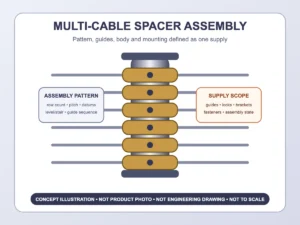
Standardise the adjustment module only after defining which saddles, bases, covers and fasteners form the permitted family. Quotations should identify common and variant-specific lines separately.
New project with incomplete geometry
Use provisional interface schedules and mark open assumptions. The “universal” label must not become a substitute for final rail, post, support and fixing dimensions.
Universal does not combine every adjustment responsibility
Height adjustment, angle setting, self-aligning compensation and variable-angle scheduling solve different problems. A product may include one or more of them, but each movement needs its own datum, limits, locking and clearance. Do not assume that one multi-piece assembly automatically provides independent movement in every axis.
Similarly, adaptable hardware cannot replace engineering positioning. The completed connection still depends on the bracket, carried component, support, fasteners/anchors, backing and substrate. Performance or acceptance must be based on the exact assembly and project conditions rather than the product category.
Split common factory work from project-specific field work
The factory proposal can identify the common module, allowed support/carried variants, adapter matrix, movement envelope, locks, material/finish, included hardware and drawing revisions. The site team verifies which measured condition applies, confirms substrate and anchor suitability, installs the correct variant, adjusts within the accepted envelope, tightens and checks the final assembly.
When a site condition falls outside the agreed matrix, stop and request a revised adapter or component. Field cutting, drilling, welding or combining unmatched parts should not be assumed simply because the hardware was sold under a universal category.
Compare the exclusions as carefully as the common features
Request a compatibility matrix that lists supported interfaces, excluded interfaces, adapter part or drawing references, adjustment axes and limits, lock method, hardware inclusions, environment/finish proposal, quantity by variant, packaging identification and verification basis. This makes two offers comparable even when both use the word “universal.”
Frequently asked procurement questions
Will one bracket fit round and square rails?
Only if the proposal includes the correct saddle, receiver or adapter for each profile and states the mating dimensions and retention method.
Does universal hardware cover height and angle adjustment?
Not automatically. Ask each movement axis, range and lock to be shown separately. A part that pivots may have no usable height travel.
Can a distributor reduce stock to one SKU?
Possibly within a narrow, reviewed interface family. A common core may still need variant bases, saddles, covers or fasteners, which should remain distinct order lines.
Can photos establish compatibility?
Photos can start the enquiry and help group conditions. Before order, dimensions, hole patterns, locked geometry, fastener access and support responsibility must be confirmed.
Is unmatched hardware acceptable if it can be modified on site?
Do not assume it. Unplanned drilling, grinding, welding or adapter combinations can change geometry, finish, fastener engagement and the project’s verification basis.
Send the interface family and its exceptions
Share the support types, carried profiles, required adjustments, known outliers, environment and quantity by variant. Ask ESANG to return a compatibility boundary, common versus variant-specific components, locks, exclusions and drawing references.