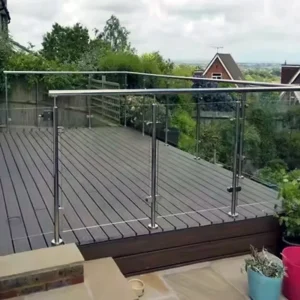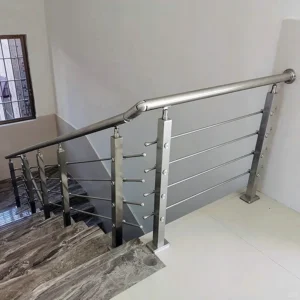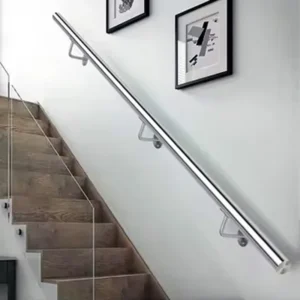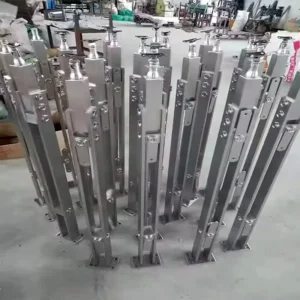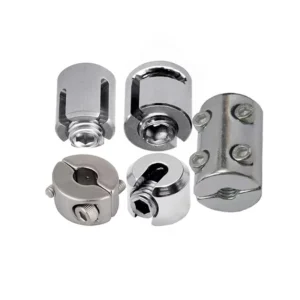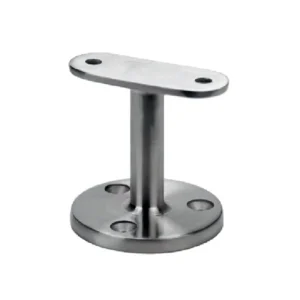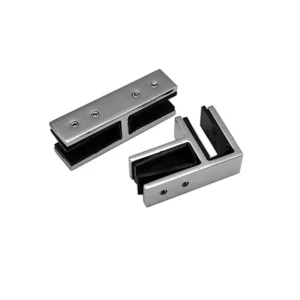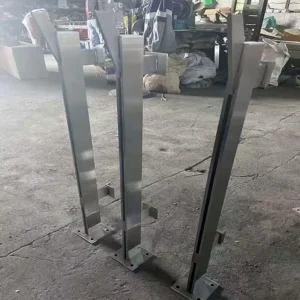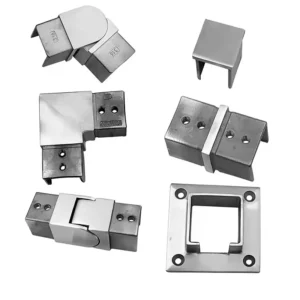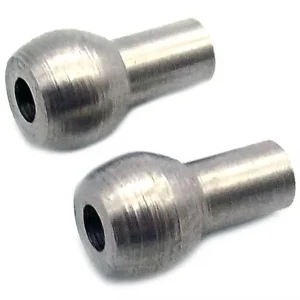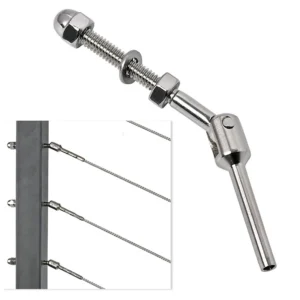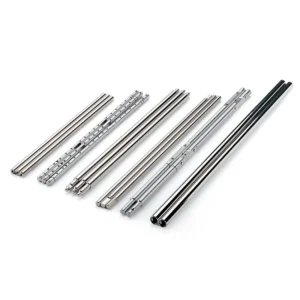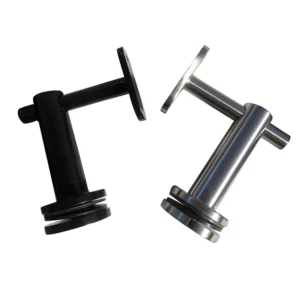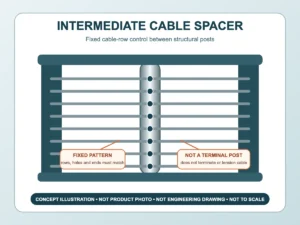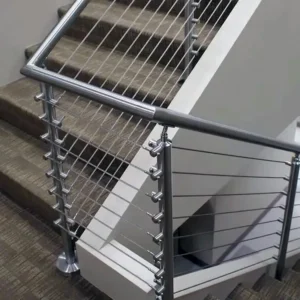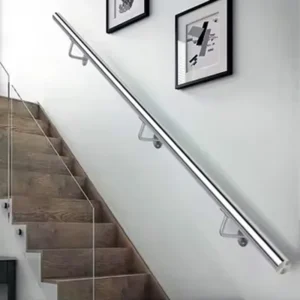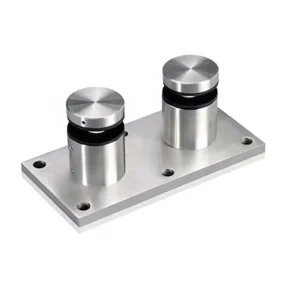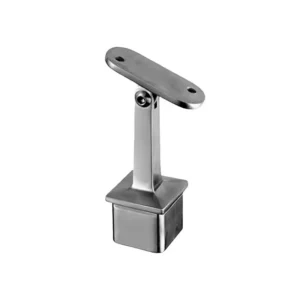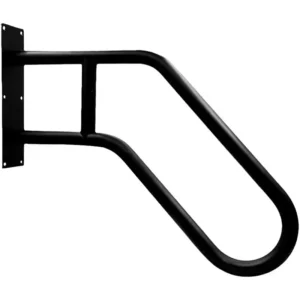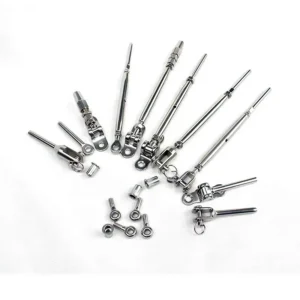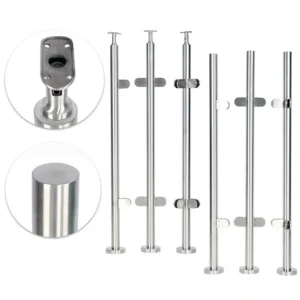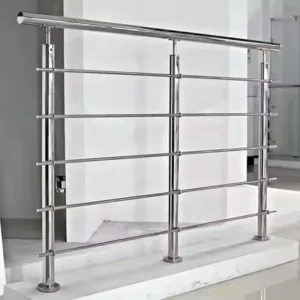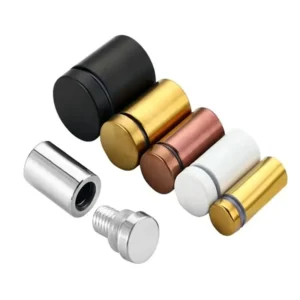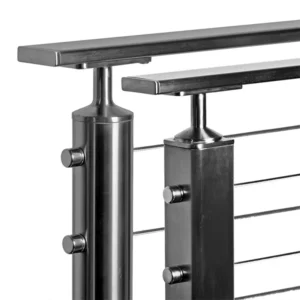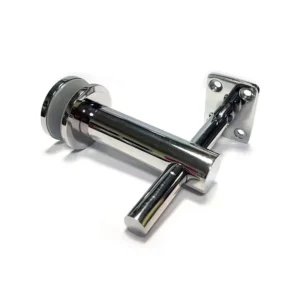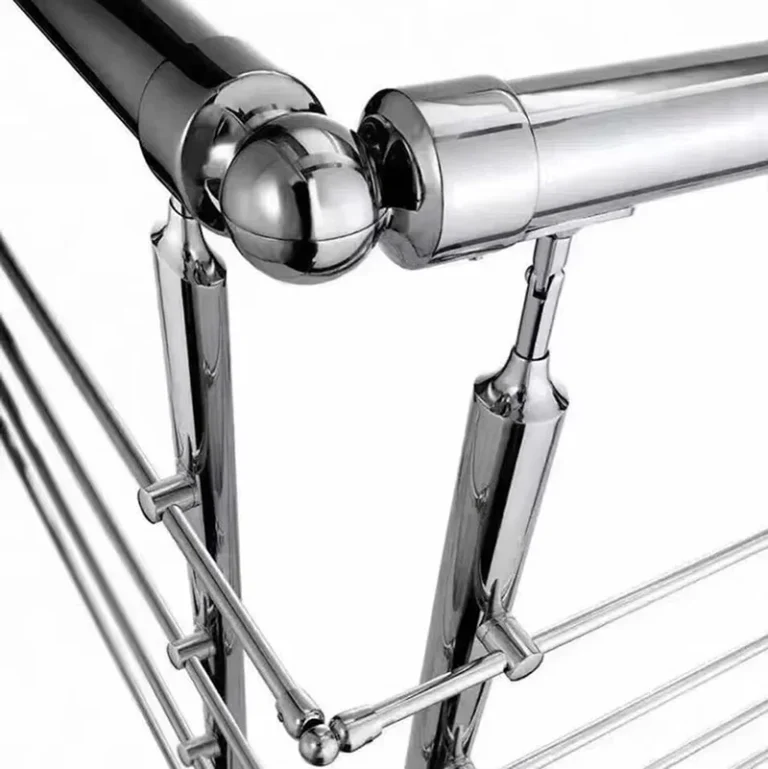
Intermediate-post connectors repeat along a railing run, so a small mismatch can multiply across the project. Select them by connection role, post and rail geometry, alignment method, fastener access and finish. ESANG can review a replacement fitting, a connector set for a new run or a volume requirement when the rail path and mating dimensions are provided.
Request an intermediate-post connector review on WhatsApp
Decide how the rail passes the intermediate post
| Connection route | Use it when | Key dimensions | Coordination risk |
|---|---|---|---|
| Continuous rail supported above the post | The top rail passes over multiple posts without ending at each support | Post top, support height, rail profile, saddle radius/width and pitch | A saddle may match the post but not the rail contact surface |
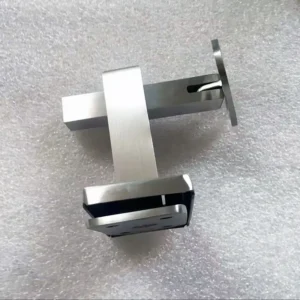
| Rail attaches to the post side | The rail centreline is offset from the post or a face-mounted connection is required | Stand-off, hole pattern, post face/diameter, rail centreline and fastener access | The post wall may not provide the assumed thread or rear access |
| Rail sections join at the post | A controlled joint is required at an intermediate support | Rail outside and inside profile, insertion depth, joint gap and support location | A rail joiner and a post support may be separate parts |
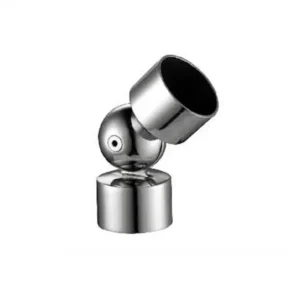
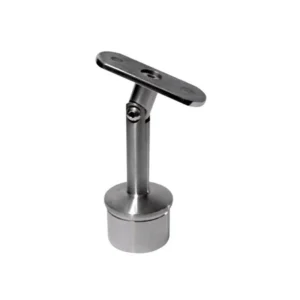
| Adjustable support at a slope | Stair or ramp pitch must be set at the post | Angle plane, usable range, rail profile, pivot location and locking method | An adjustable-looking fitting may move in the wrong plane |
Do not confuse intermediate, terminal and corner fittings
An intermediate post normally supports a continuing run. A terminal post finishes the rail or infill, while a corner changes direction and may receive one-sided or multi-direction hardware. Some components may look similar, but their hole pattern, fastener access, support and preparation can differ.
Mark post positions on the plan as intermediate, end, corner, gate, stair or landing transition. Ask the component schedule to follow those positions. This prevents a repeated intermediate fitting from being used where the rail or infill actually terminates.
Match the connector at both ends
Post-side interface
Provide round diameter or square/rectangular width, post wall when known, existing holes and internal access. If the connector sits on top, show the post-top opening, cap or insert. If it mounts to the side, state the stand-off and rail centreline.
Rail-side interface
Provide the outside profile and the internal opening where a fitting inserts. Nominal outside size alone may not establish fit because wall thickness, seams, radii and internal welds can change the opening. Show whether the rail is round, square, rectangular, slotted or another project-defined form.
Fastening and final alignment
Ask how the connector is fixed, what fasteners are included and what field work remains. If the part adjusts, define the movement and the final locking method. Slots and pivots can help alignment, but they do not replace the required connection design or substrate review.
Coordinate repeated interfaces before volume
A connector repeated at every post deserves a controlled sample or first-article check when it must match an existing post or rail. Confirm:
- mating dimensions and tolerances;
- visible gap and rail alignment;
- fastener access and tool clearance;
- surface finish beside the post and rail;
- factory versus site drilling or assembly;
- marking and packing for straight, stair or corner positions; and
- the approved sample or drawing revision used for production.
For a mixed supply, identify which posts, rails or fasteners come from another manufacturer. Do not rely on “standard size” language without dimensions and an interface check.
Connector choice by project situation
New straight railing run
A fixed support can be efficient when the post tops and rail centreline are consistent. Send the post layout and identify where the rail joins. Ask the quotation to separate post supports from rail joiners if they are different parts.
Stair or ramp run
Provide rise/run, slope or measured angle and the landing transitions. Confirm whether adjustment occurs at every post or only at defined changes. The support must match the rail profile at the final pitch.
Retrofit connector
Send photos with a ruler, hole spacing, post and rail profiles and any removed sample. Check for concealed inserts, internal threads and rear access. A connector with the same visible face may use a different internal fixing.
Distributor stock request
Group demand by post interface, rail interface, fixed/adjustable function and finish. Ask which parts are configuration-specific. This produces a more useful stock plan than one broad “intermediate connector” line.
What a useful quotation should state
- connector role and the post position it serves;
- post-side and rail-side mating dimensions;
- fixed or adjustable function and locking method;
- proposed material designation and finish;
- included fasteners, inserts, covers and small parts;
- factory drilling, tapping, welding or assembly;
- quantity, packing and sample/approval basis; and
- excluded rail, post, anchors, site work or project verification.
Intermediate-connector questions
Can one connector work on both round and square posts?
Do not assume it. A round post needs a curved or otherwise matched contact, while a square post presents a flat face. Even a top insert depends on the internal post opening.
Can the rail joint be hidden inside the support?
That depends on the proposed connector and rail profile. Show the desired joint position and ask the drawing to identify insertion, fasteners and access.
Does an intermediate connector establish railing compliance?
No. System performance depends on the connector, post, rail, infill, spacing, bases, anchors and substrate together. Use configuration-specific project review where required.