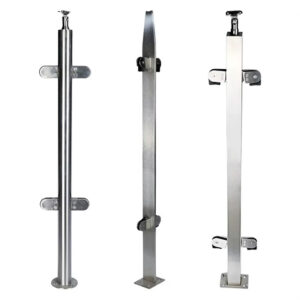
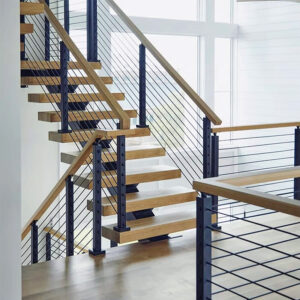
A “marine grade” callout on a coastal railing quote tells a buyer almost nothing about what they are actually comparing. Two bids can both describe the same project as marine grade while differing in material form, finish scope, weld treatment, interface coverage, and what happens after installation when salt exposure begins its work. Before a procurement team or fit-out contractor can treat quoted prices as comparable, they need to know whether the underlying scope is comparable first.
Common project assumptions required before coastal quotations can be compared
Every coastal railing quote is built on a set of assumptions about the project that the bidder may or may not have stated explicitly. Where one bidder assumes a different exposure zone, layout, or substrate condition than another, their resulting prices answer different questions, even when both quotes reference the same railing system and the same general material label.
Exposure zone matters because atmospheric corrosivity is not uniform across a site. Where a railing run sits close to open water with direct wind-driven salt deposition, the corrosion behavior of any given stainless steel differs from a run that is set back, sheltered, or exposed only to occasional spray. ISO 9223:2012 frames atmospheric corrosivity classification around specimen corrosion behavior and environmental factors including wetness and airborne salinity, which is useful for understanding why location changes the picture. That classification context does not select a material grade or predict how long a specific component will perform in a specific project; it only explains why identical hardware can face different service conditions depending on where it sits.
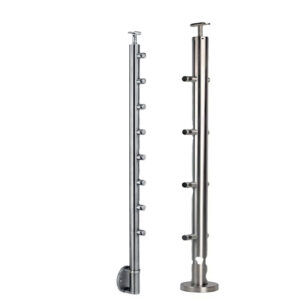
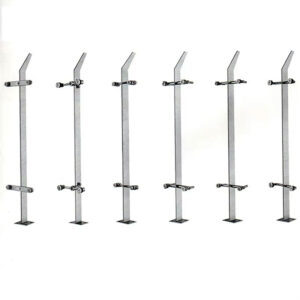
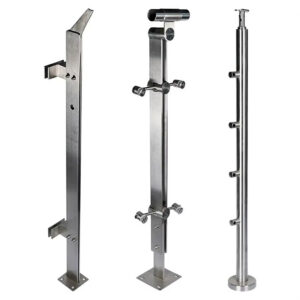
Railing layout is a second assumption that must be shared before quotes are comparable. The count and arrangement of posts, the span between supports, the presence of infill panels, and the transitions at corners or terminations all change the quantity and type of hardware required. A bidder working from an incomplete or informally communicated layout will price a different assembly than one working from a defined drawing set, even if both quotes use the same per-unit pricing logic.
Component list and substrate conditions complete the baseline. The same railing concept can be built on a concrete curb, a steel sub-structure, or a timber deck, and each substrate changes the anchoring and base approach a bidder must account for. Responsibility split is the final shared assumption: whether the bidder is pricing supply only, supply and install, or supply with a defined maintenance or replacement responsibility changes what the number on the page actually represents.
A buyer who normalizes each quotation against these same exposure zones, layout, component list, substrate conditions, and responsibility split is comparing scope rather than comparing headline price. Where any one of these assumptions is undocumented or left to inference, the quotes cannot yet be placed side by side with confidence, regardless of how similar the stated material appears.
Material form and grade records for posts, plates, tubes, bars, fasteners, and cable
A single alloy label applied to an entire assembly obscures a structural reality: posts, plates, tubes, bars, fasteners, and cable are different material forms, and each form can carry its own grade, processing history, and corrosion behavior even within a nominally consistent alloy family. A bidder who states one grade for the whole railing system without breaking out each component form has not yet given the buyer enough information to evaluate the assembly.
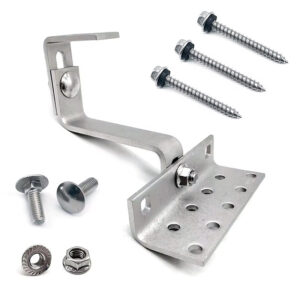
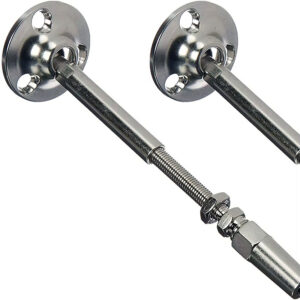
This distinction matters because the same alloy designation does not guarantee identical performance across different product forms. A tube and a fastener manufactured from material of the same nominal grade can differ in surface condition, cold-work history, or susceptibility to localized corrosion, particularly at threaded connections, crevices, or welded joints where environmental exposure interacts with geometry. Fasteners deserve particular attention in a coastal quote because their small size and threaded geometry make them disproportionately exposed to crevice conditions relative to the larger structural members they connect.
Where a bidder can produce component-level material form and grade records, the buyer gains a basis for comparing one quote’s posts against another quote’s posts, rather than comparing one bidder’s stated alloy for the whole system against another bidder’s stated alloy for the whole system. This is the difference between comparing assemblies and comparing labels.
The practical consequence for a buyer is to ask each bidder to identify the material form and grade for posts, plates, bars, tubes, fasteners, and cable individually rather than accepting a single blanket statement. Where a bidder cannot separate these records, that gap itself is information: it indicates the quote may have been assembled around a general material assumption rather than a component-specific one.
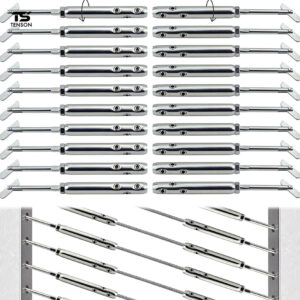
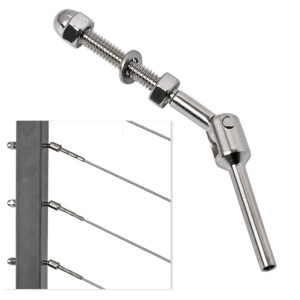
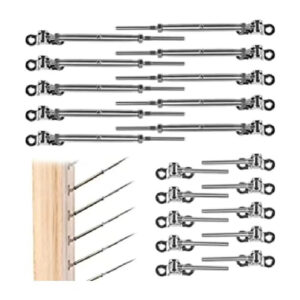
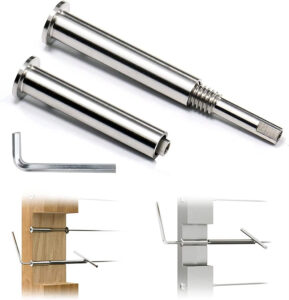
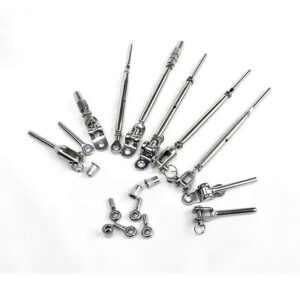
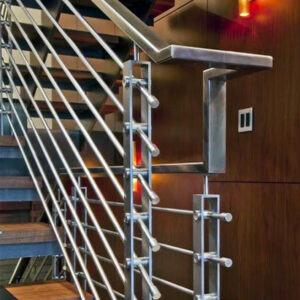
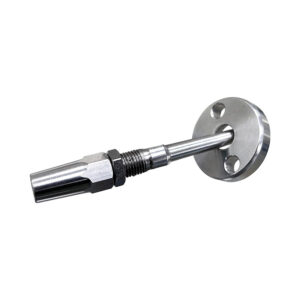
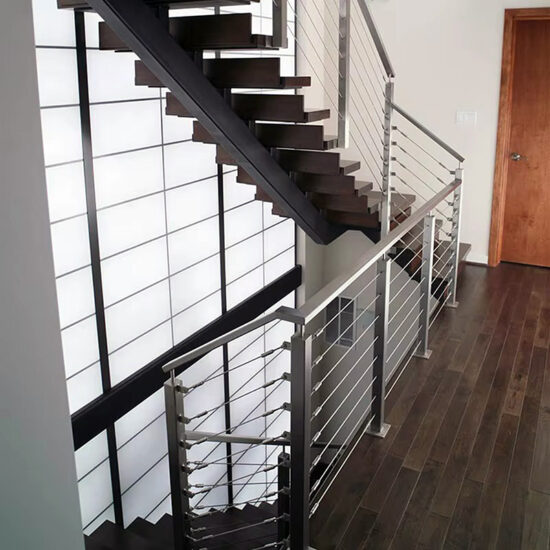
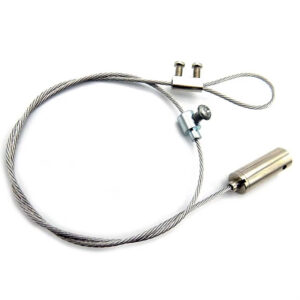
Cable, where present in the railing system, introduces its own form-specific considerations distinct from rigid structural members, since its grade and condition affect both tensioning hardware and the fittings that terminate it. ESANG’s stainless steel cable fittings for marine-grade cable railing applications illustrate how a cable-based infill system carries its own hardware and grade considerations separate from the posts and rails that frame it. A buyer evaluating a coastal cable-railing quote should expect the same component-level clarity for cable and its fittings that they require for the structural frame.
Finish, weld treatment, passivation, and sample scope as separate bid items
| Bid item | Quote detail to compare | Bewijsgrens |
|---|---|---|
| Afwerking oppervlak | Named finish and the components or areas it covers | A whole-assembly material label does not define the finish scope |
| Weld treatment | Included treatment and the welds or components covered | Keep this scope separate from finish and passivation |
| Passiveren | Treatment scope and any qualitative confirmation of contaminant-iron removal | Passivation does not prove a long-term coastal outcome |
| Samples | Sample included, the component, finish, or treatment it represents, and the comparison basis | A sample does not replace material records or applicable test evidence |
Surface finish, weld treatment, and passivation address different mechanisms, and a coastal quote that bundles them under one line item makes it difficult to know what has actually been priced and performed. Finish is primarily about surface texture and appearance, though it can also affect how readily contaminants adhere to or are removed from a surface. Weld treatment addresses the altered metallurgy and surface condition that occurs specifically at and around welded joints, where heat input can change local corrosion resistance if left untreated. Passiveren is a chemical treatment intended to support the removal of embedded or surface contaminant iron that can otherwise initiate localized corrosion.
Because these three processes act on different mechanisms, a quote that states only a finish without separately addressing weld treatment and passivation leaves open whether welded areas received any corrective treatment at all. Where a railing system includes a meaningful number of welded connections, this gap is more consequential than it would be for a system assembled primarily with mechanical fasteners.
ASTM A967/A967M-25 addresses chemical passivation treatments for stainless steel parts and the qualitative confirmation of contaminant-iron removal associated with those treatments. That confirmation speaks to whether a passivation process was carried out and verified in a defined way; it does not, on its own, demonstrate how the treated component will perform over time in coastal service. A buyer should treat passivation evidence as confirmation of process, not as a substitute for broader material and corrosion evidence.
Samples occupy a different role in the comparison. A physical sample lets a buyer inspect finish and, to some extent, surface condition directly, but a sample represents only the specific component, finish, or treatment it was produced to demonstrate. A sample of a post finish says nothing about whether the fastener finish or weld treatment on the same quote meets the same standard, and it does not substitute for the material records or applicable test evidence that cover the rest of the assembly.
The buyer’s task is to compare surface finish, weld treatment, passivation scope, and sample coverage as four distinct items rather than assuming that naming one of them implies the others were addressed to an equivalent standard.
Interface coverage for bases, anchors, drainage, infill, and replacement access
| Interface | Quote coverage to identify | Comparison use |
|---|---|---|
| Bases | Included base scope and stated substrate conditions | Compare bids against the same base and substrate basis |
| Anchors | Included anchor scope and any stated interface assumptions | Separate included work from exclusions or unstated coverage |
| Afvoer | Drainage details included for the quoted interfaces | Compare an explicit detail with an absent or unclear scope |
| Infill | Included infill scope and its relationship to the stated railing layout and component list | Keep quoted assemblies on the same layout and component basis |
| Replacement access | Access assumptions and replacement availability included in scope | Treat access and availability as commercial scope |
A railing assembly is only as coherent as its interfaces, and coastal conditions make several of these interfaces more consequential than they would be in a sheltered interior setting. Bases, anchors, drainage, infill connections, and the access needed for future replacement each introduce a point where water, salt, or mechanical movement can concentrate, and each can be included, excluded, or left ambiguous in a quote.
Base and anchor interfaces depend heavily on the substrate they connect to. A base detailed for a concrete curb assumes a different anchoring approach than one detailed for a steel sub-structure, and a quote that does not state its substrate assumption leaves the buyer unable to confirm whether the anchoring scope matches the actual project condition. Where water can collect at a base connection rather than draining away, the local exposure at that single point can exceed the general exposure the surrounding railing experiences, which is why drainage detailing at bases and horizontal members deserves attention as its own item rather than an assumed feature of “marine grade” hardware.
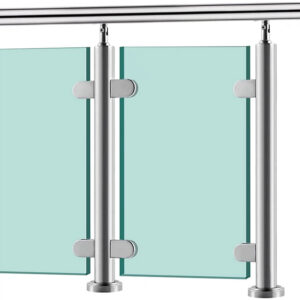
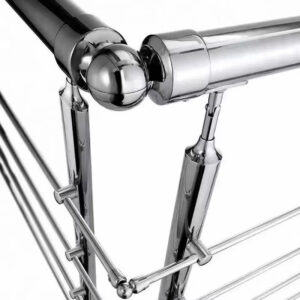
Infill connections, whether glass, cable, or panel-based, add additional interface points where the infill meets the post or rail. The suitability of an infill connection is tied to the specific railing layout and component list a bidder has priced against; a quote that changes the infill type without an equivalent change to the stated layout has effectively changed the project without saying so.
Replacement access is a forward-looking interface consideration rather than an installation-day one. Where a fastener or fitting sits in a location that is difficult to reach without disassembling adjoining components, future replacement becomes a larger undertaking than the same part located at an accessible point. A quote’s inclusion or exclusion of replacement access and component availability is a commercial decision as much as a technical one, since it determines what a future repair will require regardless of how the original installation performed.
A buyer reviewing interface coverage is checking whether bases, anchors, drainage, infill, and replacement access were addressed on a comparable basis across bidders, rather than assuming that silence on any one of these points means the item was included at no cost.
Evidence boundaries for tests, drawings, certificates, and project acceptance
| Evidence item | What to check | What it does not establish |
|---|---|---|
| Applicable tests | The exact condition or subject addressed by the cited test evidence | Atmospheric-corrosivity classification provides context; it does not select a material grade or predict component life |
| Drawings and submittals | The project layout, interfaces, and quoted scope represented | An example project-edited specification and submittal structure is not a universal code or an ESANG product requirement |
| Certificates and material records | Material form and grade recorded separately for posts, plates, tubes, bars, fasteners, and cable | Records of quoted material scope do not by themselves prove component life in coastal service |
| Project acceptance | The project-specific treatment, evidence, and acceptance basis | Treatment and acceptance remain application-specific; general evidence does not establish project acceptance |
Evidence submitted with a coastal railing quote falls into several categories, and each category answers a narrower question than a buyer might assume on first reading. Treating any one document as proof of overall project suitability risks overstating what that document was prepared to show.
Applicable test evidence should be read for the exact condition or subject it addresses. Atmospheric-corrosivity classification, of the kind described in ISO 9223:2012, provides a way to understand how wetness and airborne salinity contribute to corrosivity in a general sense. It gives context for why a coastal site differs from an inland one, but it does not select a material grade for a specific project, and it does not predict how long a particular component will remain serviceable once installed. A bidder who cites this kind of classification is offering environmental context, not a performance guarantee.
Drawings and submittals represent the project layout, interfaces, and quoted scope as the bidder understood them at the time of preparation. Bovenste Fossa, 52 graden 00 minuten, a government metal-railing specification, illustrates the kind of structure a project-edited specification and submittal package can take, including how scope, materials, and acceptance criteria might be organized. It functions here as an example of submittal structure rather than a universal code or a requirement that applies to any particular supplier’s product line. A buyer comparing drawings across bidders should check whether the represented layout and interfaces match the project’s actual conditions, not whether the submittal format resembles a known structure.
Certificates and material records are most useful when they are organized by component form and grade, consistent with how posts, plates, tubes, bars, fasteners, and cable were evaluated earlier. A certificate confirming the material scope that was quoted does not, by itself, demonstrate how that material will behave in coastal service over time; it confirms what was supplied, not what will happen to it.
Project acceptance sits apart from all of the above because it is necessarily specific to the project’s own treatment, evidence, and acceptance basis. General evidence, however well-documented, does not establish that a particular installation meets a particular project’s acceptance criteria. That determination depends on matching the submitted evidence to the project’s own defined basis for acceptance, which is a step the buyer or project team completes rather than one any general reference can complete on their behalf.
Commercial comparison of exclusions, maintenance assumptions, and supply responsibility
| Commercial item | Bid entry to compare | Decision use |
|---|---|---|
| Exclusions | Explicit exclusions by component, interface, finish, or treatment | Identify whether a lower price omits part of the common comparison scope |
| Toegang voor schoonmaakwerkzaamheden | Access assumed for cleaning and maintenance | Check whether bids use the same access basis |
| Maintenance assumptions | Stated cleaning and maintenance assumptions | Compare commercial scope on the same maintenance basis |
| Replacement availability | Stated availability for replacement components | Identify differences in the quoted replacement-supply basis |
| Supply responsibility | Responsibility split for components, interfaces, material records, and applicable test evidence | Expose scope gaps or overlaps before selecting a bid |
Once material, finish, interface, and evidence scope have been aligned across bidders, remaining price differences often trace back to commercial terms rather than technical ones. Exclusions, maintenance assumptions, replacement availability, and supply responsibility determine what a quoted price actually buys, and these terms can vary even when the technical scope on paper looks identical.
Exclusions are the most direct source of apparent savings that are not real savings. A bidder who excludes a component, interface treatment, finish step, or piece of evidence from their price has reduced their scope relative to a bidder who included it, and the resulting price difference reflects that scope gap rather than a difference in efficiency or value. A buyer who does not read exclusions against the full comparison scope established earlier risks selecting a lower bid that is lower because it covers less.
Cleaning access and maintenance assumptions carry a similar risk. Coastal railing hardware requires periodic attention to manage salt accumulation at crevices, fasteners, and surface finishes, and a bidder’s quote may or may not account for the access needed to perform that maintenance conveniently. Where a quote assumes a maintenance approach that differs from what the buyer intends to carry out, the two parties are not actually aligned on what “coastal-suitable” hardware means for this project, even if the technical specification matches.
Replacement availability is a related but distinct commercial item. A bidder may quote a component that is readily available for future replacement, or one that depends on a longer lead time or custom fabrication; this availability does not appear in a technical specification but materially affects what happens when a component eventually needs replacing.
Supply responsibility is the organizing commercial question beneath all of these items. Where responsibility for components, interfaces, material records, and applicable test evidence is split between supplier and installer, or between manufacturer and fabricator, gaps and overlaps can exist that neither party individually accounts for. ESANG’s role in supplying matched stainless steel hardware for marine and coastal applications depends on the project information a buyer provides at the quotation stage; the responsibility for how that hardware integrates into the finished, installed assembly remains a matter the buyer and their project team confirm as part of the commercial scope, not something that transfers automatically with the hardware order. A buyer who has aligned exclusions, maintenance assumptions, replacement availability, and supply responsibility across bidders has a basis for comparing final price against matched scope, which is the only comparison that reflects what each quote will actually deliver.
Veelgestelde vragen
V: Can two quotes be compared fairly if both describe the railing as “marine grade”?
A: Only after both are aligned to the same exposure zones, railing layout, component list, substrate conditions, and responsibility split. The shared label alone does not show whether the quoted assemblies or scope are equivalent.
V: What should I request when one stainless steel grade is applied to the whole railing assembly?
A: Request the material form and grade separately for posts, plates, tubes, bars, fasteners, and cable. This exposes component-level omissions or differences that a single assembly label can hide.
V: Does passivation or an atmospheric-corrosivity classification prove how long the railing will last near the coast?
A: No. Passivation can address contaminant-iron removal, while atmospheric-corrosivity classification provides exposure context; neither selects a grade nor predicts component life. Compare the exact treatment scope and evidence, then define the project-specific acceptance basis.
V: How should a buyer handle a quote that is silent about drainage or replacement access?
A: Treat the missing detail as unresolved scope before comparing price. Ask whether drainage at the quoted interfaces and access for future replacement are included, excluded, or based on an unstated assumption.
V: What information should be included when asking bidders to revise quotes onto a common basis?
A: Provide the shared exposure zones, layout, component list, substrate conditions, and responsibility split, then state the comparison requirements for finish, weld treatment, passivation, samples, evidence, cleaning access, maintenance, and replacement availability. This makes price differences easier to trace to real scope differences.