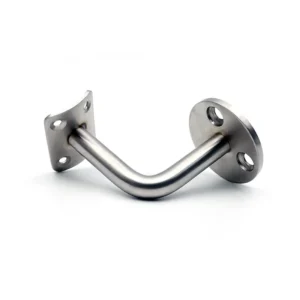
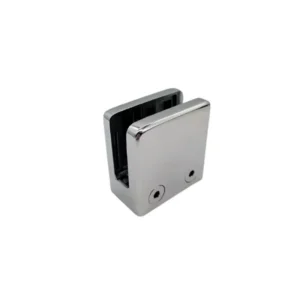
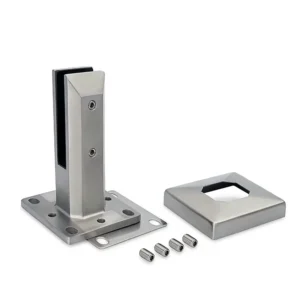
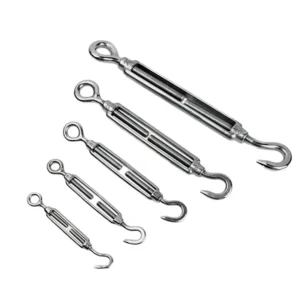
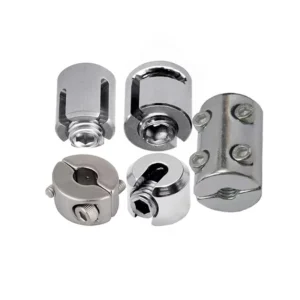
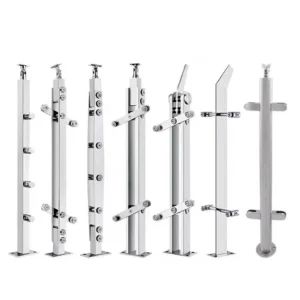
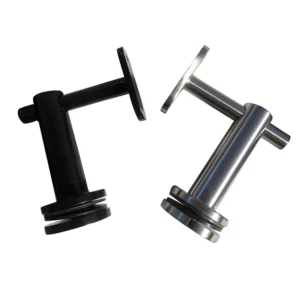
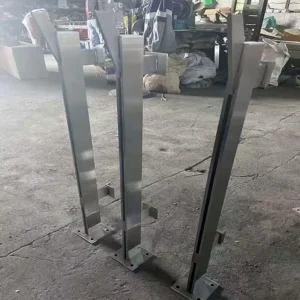
316 stainless steel cable fittings are a material-led option for railing cable lines exposed to salt, humidity, washdown or other corrosive conditions. The useful purchasing decision is not simply “316 or not”: the cable, end forms, adjustment method, post interface, threads, washers and maintenance plan still have to be specified as one compatible line. ESANG can review a drawing, sample or component schedule and quote a proposed configuration; the quotation should identify the material grade and every included part rather than treating “marine grade” as a complete specification.
Request a 316 cable fitting quotation on WhatsApp
Start with the complete cable line
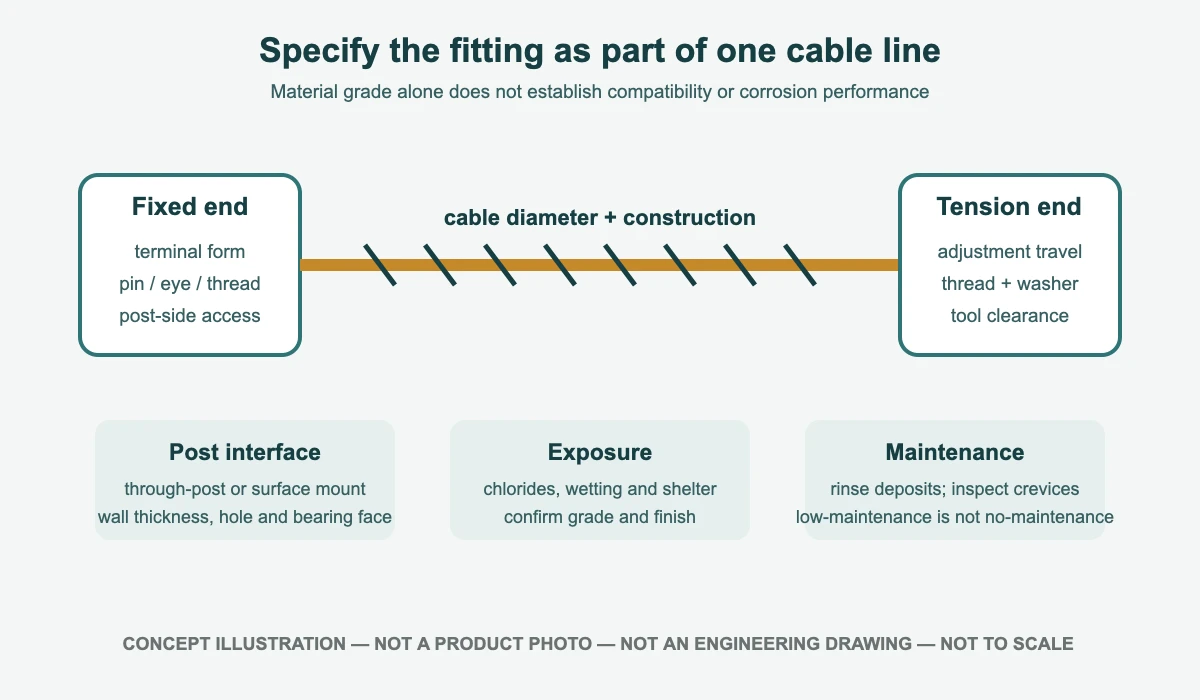
A cable line normally needs a fixed-end function and a tension-adjustment function. Those functions may be separate fittings, or a particular terminal may combine termination with adjustment. A fixed end alone cannot tension the line. A tensioner cannot correct a cable or terminal that is the wrong diameter, construction or thread. For a comparable quotation, define both ends and the parts between them.
| Selection | What must match | Consequence of a mismatch | What the quotation should state |
|---|---|---|---|
| Kabel | Diameter, strand construction, lay and surface condition | The terminal may not grip, seat or accept the cable correctly | Proposed cable diameter and construction; cable included or excluded |
| Cable termination | Swaged, mechanical swageless or factory-prepared end | Wrong tools or assembly sequence can damage strands or produce an unverified connection | Termination method and required preparation |
| Fixed and tension ends | End form, thread, adjustment travel and cable direction | The line may assemble but have no usable way to tension it | One line-item pair or an itemised end schedule |
| Berichtinterface | Through-post hole, face mount, clevis, eye, tab or threaded receiver | Insufficient bearing, misalignment or no tool access | Interface geometry, mating hardware and responsibility for post preparation |
| Exposure | Grade, finish, drainage, contamination and cleaning access | Staining or local corrosion can occur even when the alloy name is correct | Quoted grade and finish for the proposed components |
Specify the cable before the fitting
Cable diameter is only the first compatibility field. A stiff cable construction used to keep railing lines visually straight does not behave like a more flexible rope of the same nominal diameter. Terminals that grip, wedge or compress the strands depend on the cable construction and on a clean cut. Do not transfer a diameter range from another brand or product family to an ESANG fitting without a matching drawing or sample.
- For a new system: send the intended cable diameter and construction, the run length between terminal points, the number of lines and the required end arrangement.
- For replacement fittings: add clear photos, measured cable diameter, strand arrangement and the existing thread or receiver details. The old fitting itself is useful if a sample can be supplied.
- For cable supplied by another party: ask the quotation to state the cable basis used for the proposed terminal. “Fits standard cable” is not a sufficient comparison field.
Choose the end pair, not isolated fittings
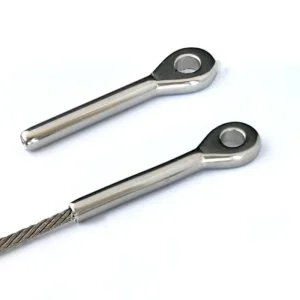
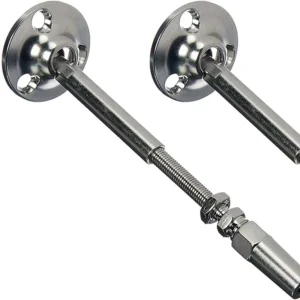
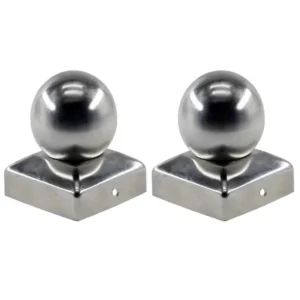
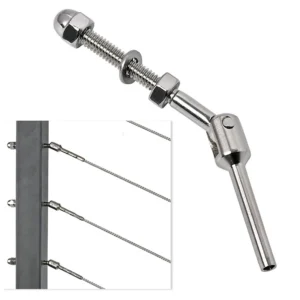
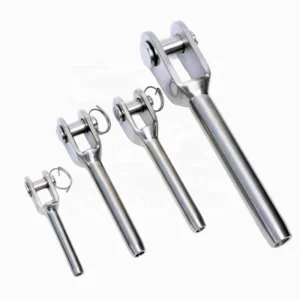
Eye, fork, threaded stud, turnbuckle-style and concealed terminals solve different end conditions. An eye or fork connects to a mating pin, tab or bracket; its bore, fork gap, pin diameter and cable alignment matter. A threaded terminal needs a defined thread, usable thread projection, nut or receiver and enough access to hold and turn the parts. Decorative caps, escutcheons and cover washers do not replace the structural bearing component behind them.
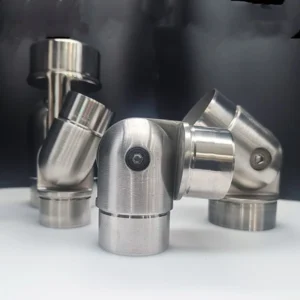
For a straight run, one adjustable end and one fixed end may be a practical starting arrangement. Two adjustable ends can help where access or centring requires adjustment at both ends. A stair line, angled wall or corner may require a pivoting interface or a different termination instead of forcing a straight fitting off-axis. The final pair should be taken from the project drawing and confirmed in the proposed bill of materials.
Through-post and surface-mount interfaces are different orders
Through-post details
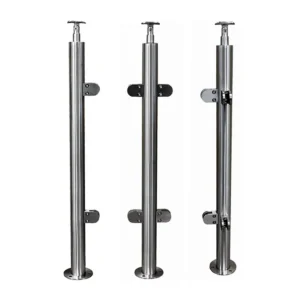
State whether the cable only passes through an intermediate post or terminates at the post. Provide post shape, outside size, wall thickness, hole diameter, hole position, cable angle and access behind the post. A terminal that crosses a hollow post may need a bearing washer, bevelled washer, sleeve, nut and cap. Thread length that works on a thin metal post may be too short for a timber post or too long for a concealed cavity.
Surface-mount details
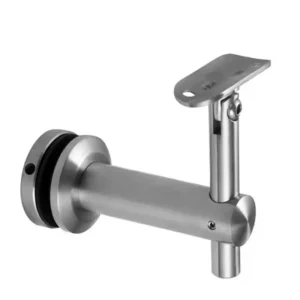
State whether the fitting mounts to a post face, wall, frame, plate or tab. Provide the mounting face, fastener pattern, cable angle and substrate or post material. The quoted fitting should identify its connection to the receiving structure; anchors into concrete, timber or steel should not be assumed to be included merely because a plate or eye is shown.
What “316 marine grade” does and does not decide
316 stainless generally offers better resistance to chloride-related corrosion than 304 because of its alloy composition, which is why it is often considered for coastal, poolside and washdown locations. It is not automatically immune to staining, pitting or crevice corrosion. Salt deposition, shelter from rain, retained water, rough or contaminated surfaces, dissimilar-metal contact and cleaning chemicals can change the result. Severe splash, immersion or poorly washed locations may require a different grade or a more specific corrosion review.
316L is a low-carbon variant often considered where welding and post-weld corrosion performance are relevant. It should not be treated as an automatic upgrade for every machined fitting, and the “L” designation should only appear in the order if it is actually proposed and documented. Likewise, a photograph or page title does not prove the material of a delivered item; request the grade and any required material documentation as quotation fields.
Maintenance belongs in the specification
Plan access to rinse deposited salts and dirt with clean water and a mild detergent, inspect threads and crevices, and correct carbon-steel contamination or damaged surfaces. Avoid chloride-based cleaners, bleach, hydrochloric acid and steel-wool contact. Cleaning frequency depends on actual deposition, rain washing, shelter, finish and the owner’s appearance expectations; “316” is not a no-maintenance promise.
Plan field work before confirming the parts
The installation route changes the tool list. A factory-swaged cable may arrive at finished length, while a field-swaged end needs the specified swaging equipment and inspection method. A swageless fitting removes the traditional swaging step but still normally needs correct cutters, holding tools, wrenches and an exact assembly sequence. Through-post work adds drilling, deburring and rear-side access. Tensioning may require a dedicated gauge or tool specified for the system.
Before ordering, confirm who will cut the cable, prepare ends, drill posts, install sleeves, provide anchors and tension the line. Also confirm whether the visible finish must align across cable, terminals, washers and caps. Mixing nominally similar threads or fittings from different product families without dimensional verification can create partial thread engagement, poor bearing or an unusable adjustment range.
Bepaal de leveringsgrens
A request for “316 cable fittings” does not by itself mean that cable, posts, anchors, tools, tension gauges, sleeves, caps or spare parts are included. ESANG’s proposed supply should be read from the quotation and bill of materials. Buyers can request individual fittings, paired end hardware or a project package, but availability and the exact combination remain subject to review of the requested configuration.
A useful comparison schedule asks each supplier to state:
- component description, quantity, material grade and surface finish;
- compatible cable diameter and construction;
- fixed-end and tension-end type, thread and adjustment range;
- post or mounting interface, washers, nuts, caps and sleeves;
- cable, anchors and tools included or excluded;
- required field assembly and any installation instructions supplied;
- packaging, marking and requested material or inspection documents.
Information to start a useful quotation
You can begin with a marked-up railing drawing, an existing fitting sample, or clear photos plus estimated quantities. Send the cable diameter and construction if known; number and length of cable lines; terminal, intermediate and corner post details; through-post or surface-mount preference; thread or pin dimensions; indoor, outdoor, coastal, poolside or washdown exposure; finish; and delivery destination. If dimensions are still open, identify them as pending so the quotation can separate assumptions from confirmed fields.