Mesh infill panels raise a specific approval question before fabrication proceeds: does the open item concern how the finish looks, or how the mesh, frame, and connections come together as a visible assembly? Choosing the wrong review aid wastes a fabrication cycle without resolving the actual doubt, and choosing the right one depends on what the project team still cannot see from drawings and specifications alone.
Start with the Decision the Sample Must Resolve
Before requesting anything physical, the project team should name the exact question a sample or mockup is meant to close. Finish selection is a different question from finish verification. Choosing a color or sheen from a chart or supplier reference is a design decision; confirming that the chosen finish appears consistent on the actual substrate, gauge, and mesh pattern specified for the project is a verification decision, and the two do not require the same review aid. Edge and joint appearance is a further, separate question: how a cut or welded edge of the mesh reads visually, or how a frame member terminates, is not answered by a flat finish chip. Mesh-to-frame integration raises yet another kind of question, since it depends on how the infill sits within its perimeter member, not on the finish of either part in isolation. Full panel or railing assembly quality is the broadest and most demanding review question, because it depends on how mesh, frame, fixings, posts, and rail relate at once, in a representative condition.
Where the buyer conflates these questions, the review aid requested tends to answer only the narrowest of them while leaving the broader one unresolved. A finish sample answers a color or texture question; it does not answer whether the mesh orientation reads correctly against a post line, and it does not demonstrate how a mechanical fixing will appear once installed. Conversely, commissioning a full mockup to settle a pure color decision produces evidence far beyond what the open question required. The project team’s task at this stage is not to select a review aid by habit or by what was used on a prior project, but to state the review question first, then match the smallest aid capable of answering it.
| Open decision | Potential review aid | Boundary |
|---|---|---|
| Color, sheen, or texture | Finish sample | Does not show full assembly integration |
| Component finish and joint | Component/assembly sample | Limited to represented detail |
| Mesh, frame, fixing, and rail interaction | Panel or railing mockup | Scale and criteria must come from project documents |
| Structural or code performance | Separate calculations, tests, or project review | Not established by visual approval |
When a Finish Sample Is the Proportionate Tool
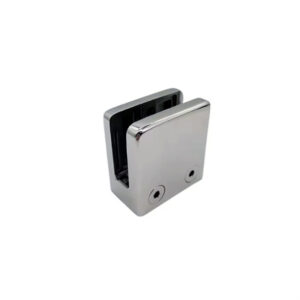
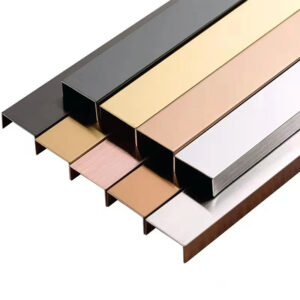
A finish sample is proportionate where the open decision is primarily about how a surface looks or reads, rather than how components relate to each other physically. Color, sheen, texture, and finish variation across a run are the natural domain of a finish sample, because these properties can be assessed on a piece of material without needing to see the full mesh pattern, frame profile, or connection detail. Compatibility between visible finishes on different components, such as whether a frame finish and a fixing finish read as matched or intentionally contrasting, also falls within what a finish sample can settle, provided the samples represent the actual components rather than a generic reference finish.
De New York City Department of Design and Construction project manual for metal railings and mockups illustrates how a specification can call for project-specific color and assembly samples, alongside shop drawings and other submittals, as part of confirming appearance and workmanship before fabrication proceeds. That project manual demonstrates one way finish and assembly samples have been specified and used within a defined project; it does not establish a universal sample size, quantity, or review procedure that applies outside that project, and its requirements should not be copied as a default for a different specification.
Where the visible finish is the only unresolved variable, and the mesh pattern, frame profile, and connection method are already fixed and understood from drawings, a finish sample carries the review efficiently. Where any of those other elements are not yet settled or not yet visualized together, a finish sample alone leaves a gap: it cannot show how the approved finish behaves once mesh, frame, and fixings are assembled in the field condition, because that interaction is outside what a sample of finish on its own can represent. The buyer’s task is to confirm, before ordering a sample, that finish is genuinely the only variable in question, and that the substrate and component represented by the sample match what will actually be fabricated and installed on the project.
When a Panel Mockup Adds Necessary Evidence
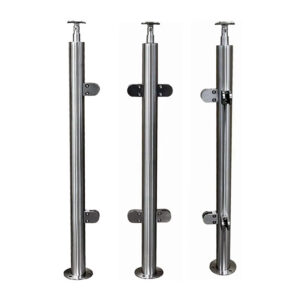
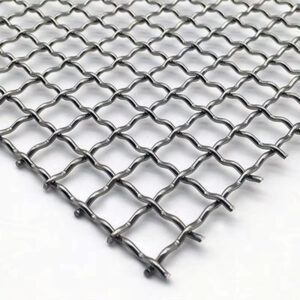
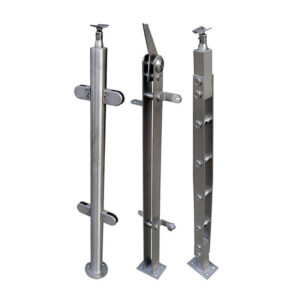
A panel mockup becomes the more useful review aid once the open question involves how several visible elements relate to each other rather than how any one of them looks in isolation. Mesh orientation within a panel, and how that orientation reads across a run or against a repeating post spacing, is a geometric and visual relationship that a flat or small sample cannot represent. Edge and frame treatment, including how the mesh terminates into its perimeter member and how a welded or mechanical connection appears once finished, likewise depends on seeing the actual joint, not a separate sample of each material. The relationship between a panel and its adjoining posts and rails is an assembly-level condition: it shows whether the infill sits correctly within the surrounding railing components and whether the visual proportions work as intended once everything is in place.
Where a project includes a repeated condition, such as a recurring panel type intended to be built the same way multiple times, or a special geometry that departs from a standard panel layout, a mockup can also serve as a reference point the project team returns to during production and installation. This use goes beyond one-time approval; it functions as a shared physical standard against which later production is checked, if the project documents call for that use.
The scale, location, and approval criteria for a mockup are project decisions, not general rules. What one specification requires as the size, siting, or conditions for viewing a mockup reflects that project’s own requirements and does not transfer to a different project by default. Before requesting a mockup, the project team should identify which specific visible or geometric conditions still cannot be judged from drawings, samples, or shop drawings alone, since a mockup is the appropriate tool only where multiple such conditions need to be seen together rather than individually. Reviewing the Vulpanelen van gaas product context or, where a project-specific frame or visual treatment departs from a standard panel, the Custom Panel Infill Systems route can help the buyer identify which components and interfaces need to be represented in the mockup request.
| Condition to assess together | Why a mockup may add value |
|---|---|
| Mesh orientation and panel geometry | Shows their visual relationship at a representative condition |
| Edge/frame and fixing | Shows visible joints and integration |
| Panel with posts and rails | Shows the assembled interface |
| Repeated or special project condition | Establishes a project review reference if required |
Define the Review Record Before Ordering
A sample or mockup only functions as project evidence if its identity, basis, and approval status are recorded before it is used to make a decision. Without a record, a later dispute about what was approved has no fixed reference: the physical item may still exist, but whether it represents the current drawing revision, which variations it does or does not include, and who approved it under what conditions become uncertain exactly when that information is needed most.
Recording the sample or mockup’s identity means assigning it a mark or reference and dating it, so that later correspondence and revisions can point to a specific item rather than a general description. Recording its basis means tying it explicitly to the drawing, detail, material, and finish it is meant to represent, since a sample disconnected from its drawing reference cannot later confirm that fabrication followed the approved condition. Recording what the item does and does not represent matters particularly for mockups, which by their nature show some conditions and interfaces while necessarily excluding others; an approval of a mockup should state clearly which variations were included, so that a later question about an excluded condition is not mistakenly treated as already resolved.
The review itself needs a named reviewer, the specific decision questions the review was meant to answer, and a recorded approval status, because an unrecorded or informal approval leaves the same ambiguity that an unidentified sample does. Where viewing conditions affect how a finish or assembly reads, such as lighting or orientation, recording those conditions preserves the basis for the approval if a later comparison becomes necessary. Finally, the project team should decide and record whether the approved sample or mockup becomes a control reference retained for comparison during production and installation, since that use extends the item’s role beyond a one-time approval into an ongoing quality reference, if the project requires that function.
| Record field | What to identify |
|---|---|
| Identity | Sample/mockup mark, date, and revision |
| Basis | Referenced drawing, detail, material, and finish |
| Representation | Variations and interfaces included or excluded |
| Review | Named reviewer, decision questions, comments, and status |
| Control use | Whether and how the approved item remains a project reference |
Keep Approval and Performance Boundaries Clear
Visual approval of a finish sample or panel mockup answers a visual and workmanship question; it does not by itself establish structural adequacy, code compliance, durability, production consistency, or the acceptance of the installed system. A mesh infill panel that reads correctly in color, orientation, and joint appearance during a mockup review has been evaluated on those visible attributes only. Whether the panel and its connections meet the structural performance the project requires, whether the assembly complies with the applicable code provisions, how the finish will perform in the installed environment over time, and whether production runs will consistently match the approved reference are separate questions that a visual review does not answer and is not designed to answer.
The New York City project manual referenced for its use of railing assembly and finish samples also documents shop drawings and structural calculations as distinct submittal categories alongside samples and mockups, treating visual mockups and performance evidence as separate types of project confirmation rather than substitutes for one another. That separation reflects a general principle applicable beyond the one project manual: a review aid built to answer an appearance question is not evidence for a structural or compliance question, regardless of how convincing the visual result is.
Where a project requires confirmation of structural performance, code compliance, or long-term durability for the mesh infill assembly, that evidence needs to be requested separately, through the appropriate calculations, testing, or documentation the project specifies, rather than inferred from an approved sample or mockup. The project information a buyer supplies when raising a finish-sample or mockup request, such as the drawing basis, the specific decision question, and the conditions under which review will occur, is also the information that determines what a supplier’s quotation review or configuration response is actually addressing; where that information is limited to appearance, the supplier’s response should be understood as addressing appearance, not the assembly’s structural or code performance. A related planning discussion of submittal drawings, mill test certificates, load reports, and finish samples for stainless steel handrail projects addresses how these separate evidence types are assembled for a project record.
Veelgestelde vragen
V: Do we need a full mesh-panel mockup just to choose color and sheen?
A: A finish sample is usually the proportionate review aid when the open decision is color, sheen, texture, or finish variation. Define the actual substrate and the visible finishes to be compared. A full mockup becomes more useful when the unresolved question concerns how the mesh, frame, joints, fixings, posts, and rails look together.
V: What should a mockup include if the concern is a raked panel’s appearance?
A: It should represent the geometry, mesh orientation, and visible interfaces that the team needs to assess together. Identify the relevant frame or edge treatment, welded or mechanical connection appearance, and post-and-rail relationship. Use the project documents to set its scale, location, and review criteria rather than adopt another project’s sample sizes.
V: How can we make an approved sample useful for later project reviews?
A: Record its identity and revision, material and finish, drawing/detail basis, represented variations, reviewer, comments, and approval status. State whether it becomes a project control reference and what it represents. Visual approval addresses the reviewed appearance; structural, code, durability, or other performance evidence needs a separate request under the project requirements.