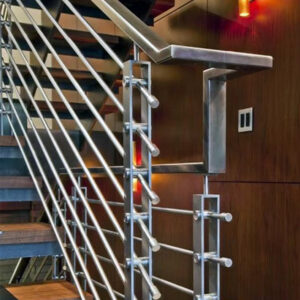
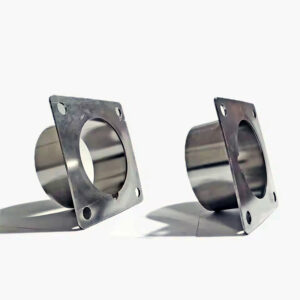
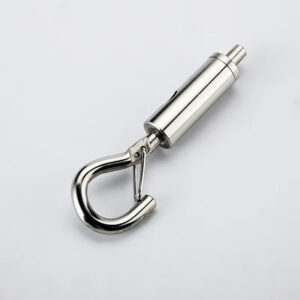
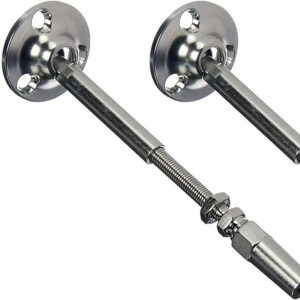
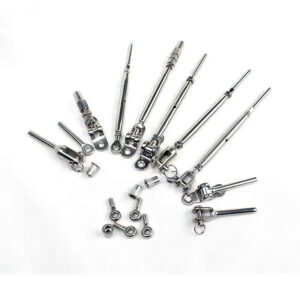
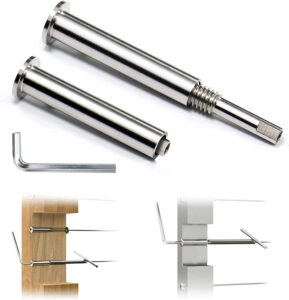
A cable railing assembly can look uniform from the deck or terrace and still be corroding at points the eye never reaches. The tensioner is where threaded metal, washers, and a cable termination all meet in one small volume, which makes it the place where a maintenance plan either holds up or fails quietly. Deciding how to inspect, clean, and judge that interface over time is a different task from choosing the hardware grade at specification stage, and it deserves its own reasoning.
Exposure and Moisture Paths at Threaded Interfaces
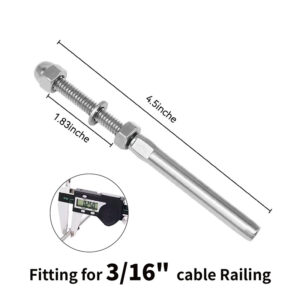
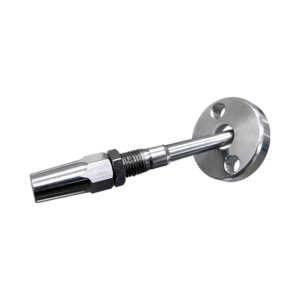
A tensioner thread is not a single exposed surface; it is a series of narrow gaps formed where the threaded rod meets the body, where a locknut seats against a washer, and where the assembly passes through a post or bracket. Each of these gaps behaves differently from an open, washable surface. Where rainwater or wash-down water can reach a flat plate, it also tends to drain off that plate. Where the same water enters a thread root or the underside of a locknut, it can remain there because the geometry that lets it in does not necessarily let it out.
This distinction matters because the corrosion risk at a threaded interface is driven less by how much moisture arrives and more by how long it stays once it has arrived. A coastal or marine environment raises the amount of airborne salinity and moisture reaching the hardware, a relationship described in general terms by ISO 9223, which classifies atmospheric corrosivity using factors such as wetness, sulfur dioxide, and airborne salinity. That classification speaks to the environment, not to a specific stainless grade or a predicted component life, so it does not by itself tell a buyer how a particular tensioner will perform. What it does support is the underlying mechanism: where the classification indicates higher wetness and salinity, the same crevice geometry at a thread root will retain more aggressive moisture for longer, independent of any change to the hardware itself.
The practical consequence is that moisture path and retention time belong in the connection detail, not as an afterthought to material selection. Thread roots, locknuts, washers, and the point where a tensioner penetrates a post can all retain salts and moisture, and if the connection detail does not account for how that moisture will be removed, the hardware specification alone will not prevent deterioration at these points. A buyer reviewing a tensioner assembly should look at how each threaded or penetrating interface is oriented and whether retained moisture has any path out, rather than assuming that a corrosion-resistant alloy closes the question on its own. Where the project environment is more exposed, this review carries more weight; where it is more sheltered, the same geometry issues still exist but with less aggressive moisture reaching them.
Crevices Dissimilar Metals and Fabrication Contamination
| Voorwaarde | Evidence to record | Beslissingsgrens |
|---|---|---|
| Dissimilar-metal contact | The metals that meet at the interface and the exposure at that contact | Review material matching as its own issue rather than treating it as contamination, finish damage, or a deposit |
| Fabrication contamination | The contamination present at the fabricated interface | Keep the cleaning or treatment decision separate from material-contact and finish-condition decisions |
| Damaged finish | The affected finish and where the damage meets the threaded or metal interface | Treat finish condition as a separate corrective-action input rather than combining it with deposits or fabrication contamination |
| Chloride deposits | Deposits retained at threads, locknuts, washers, or post penetrations | Use the finding to guide deposit removal and maintenance; it does not predict component service life |
Corrosion at a tensioner interface can originate from more than one distinct condition, and treating them as a single undifferentiated “corrosion problem” tends to produce the wrong corrective action. Dissimilar-metal contact, contamination introduced during fabrication, damage to the protective finish, and chloride deposits left on the surface are separate conditions with separate causes, and each calls for its own response rather than a shared fix.
Dissimilar-metal contact occurs where two different metals meet at a joint or contact point, and the behavior at that interface depends on which metals are present and what exposure reaches the contact. This is a material-compatibility question, answered by reviewing which metals were specified to meet and under what conditions, not by cleaning or re-treating the surface. Fabrication contamination is a different condition: residues or particles introduced during manufacturing or assembly that sit on the surface rather than originating from material incompatibility. ISO 3506-1 covers property classes for corrosion-resistant stainless fasteners, but confirming a fastener’s covered scope, dimensions, and intended joint environment does not establish that a given installed assembly is free of fabrication residue; that is a separate verification.
A damaged finish is a third condition, distinct again. Where the protective surface has been scratched, abraded, or otherwise compromised, the underlying metal is exposed at that specific location, and the affected area needs to be identified at the point where the damage meets the threaded or metal interface, rather than lumped in with surface deposits. Chloride deposits are the fourth condition, and they accumulate at threads, locknuts, washers, and post penetrations as a retained residue rather than a material or fabrication defect.
Recording these four conditions separately matters because a buyer who treats a chloride deposit as if it were fabrication contamination may call for the wrong cleaning agent, and a buyer who treats dissimilar-metal contact as a finish problem may re-treat a surface without addressing the actual material interface driving the corrosion. Where the project history includes mixed-metal fasteners or hardware sourced from more than one fabrication batch, this separation becomes more important, since the number of distinct conditions present at any one interface can increase accordingly.
Cleaning Access Drainage and Deposit Removal
| Control | What to check at the connection | Gebruik van de beslissing |
|---|---|---|
| Toegang voor schoonmaakwerkzaamheden | Thread roots, locknuts, washers, and post penetrations can be reached where salts and moisture may collect | Identify connection details that do not allow retained contamination to be removed |
| Afvoer | Moisture has a path out of the threaded and metal interfaces rather than remaining in a crevice | Identify details that need a drainage decision before the connection is finalized |
| Deposit removal | Chloride deposits are recorded separately and removed under the agreed cleaning or treatment procedure | Confirm the maintenance action addresses deposits without treating removal as proof of restored thread condition |
Once the moisture paths and the distinct corrosion conditions are understood, the next judgment is whether the connection as built actually allows them to be addressed. A connection detail can be reviewed on three separate points: whether the interface can be physically reached for cleaning, whether moisture has any way out once it enters, and whether a deposit-removal step is being used appropriately.
Cleaning access asks whether the thread roots, locknuts, washers, and post penetrations identified earlier as moisture-retaining features can actually be reached with a cleaning or treatment procedure. A connection that places these features behind a cover plate or in a position that tools cannot reach presents a different access problem than one that is openly exposed, even if the thread geometry is identical in both cases. Where access is restricted by the surrounding assembly, the buyer needs a decision about how that detail will be inspected and cleaned before the connection is finalized, not after a corrosion finding.
Drainage is a related but separate check. A thread or crevice that can be reached for cleaning may still lack any path for moisture to leave on its own between cleaning cycles, which means retained moisture reaccumulates regardless of how thoroughly the interface was cleaned at the last inspection. Evaluating drainage means asking whether the connection geometry lets moisture move out of the threaded and metal interfaces, or whether it remains trapped in a crevice until the next deliberate cleaning intervention.
Deposit removal is the corrective action that follows from identifying chloride deposits as their own condition. ASTM A380/A380M addresses cleaning, descaling, pickling, and passivation recommendations for stainless parts and assemblies, with the scope that the supplier and purchaser must agree on the applicable procedure, and that the standard does not by itself establish structural performance. Applying this in practice means that removing a chloride deposit under an agreed procedure, as described in guidance such as cleaning 316 stainless steel cable and glass railing hardware in marine environments, addresses that specific deposit; it does not confirm that the thread beneath the deposit has returned to its original condition. That confirmation is a separate check, which is why deposit removal and thread-function verification need to be treated as two different steps rather than one combined action.
Thread Function After Surface Treatment
Cleaning and treating a stainless surface restores the exterior condition the agreed procedure addresses, but it does not by itself confirm that the mechanical function of the thread has been preserved underneath. Once a treatment procedure has been applied under an agreed method, the relevant question shifts from surface appearance to whether the threaded connection still performs the function it was installed to perform: engaging fully and rotating without resistance.
This distinction matters because a treated surface can look uniform and still conceal damage that affects adjustment or re-tensioning. Passivation and cleaning steps are intended to remove contamination and restore a passive surface layer, as described in guidance on passivation and cleaning for stainless steel railing hardware in coastal environments, but that restoration happens at the surface. It does not by itself verify whether pitting has progressed into the thread form or whether two mating thread surfaces have begun to gall against each other during prior adjustment. A surface treatment and a mechanical-function check are answering two different questions, and completing the first does not substitute for the second.
The practical sequence this supports is straightforward: treat the surface under the agreed procedure first, then physically confirm that the threads still engage and rotate without binding. Where this confirmation step is skipped, a treated tensioner can appear fully restored while the underlying thread condition remains uncertain, and that uncertainty carries forward into every future adjustment made to that fitting. Where the treatment is applied but the engagement and rotation check is also performed immediately afterward, any remaining mechanical restriction is identified while the connection is still accessible, rather than discovered later during a routine tensioning adjustment when the cause is harder to isolate.
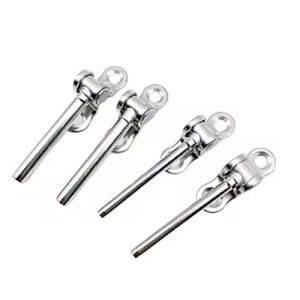
This sequencing question connects directly to how a project’s verstelbare kabelspanners are selected and specified in the first place. Hardware chosen with serviceability in mind, where the thread engagement can be inspected without full disassembly, supports this kind of post-treatment check more readily than hardware where the thread interface is largely enclosed. That is a configuration decision made before installation, but it determines how practical this verification step remains once the hardware is in service.
Inspection Triggers for Pitting Binding or Replacement
| Inspection trigger | Check before or after treatment | What the finding establishes |
|---|---|---|
| Pitting | Inspect the threads before adjustment and keep pitting visible through cleaning or treatment | Records surface damage; it does not by itself set a replacement threshold or predict service life |
| Binding | After cleaning or treatment, confirm that the threads still engage and rotate | Shows whether thread function has been restored; it does not identify the corrosion cause by itself |
| Galling | Inspect the engaging thread surfaces and do not allow treatment to hide galling | Records thread-interface damage; it does not by itself establish remaining life or a replacement threshold |
The findings that justify ongoing attention to a tensioner interface fall into distinct categories, and each one tells the buyer something different about what has happened and what remains unknown. Pitting, binding, and galling are related conditions, but confirming one does not confirm the others, and none of them by itself establishes how much service life remains in the component.
Pitting is a visible surface condition that should be checked before any adjustment is attempted, and it needs to remain visible through the cleaning or treatment process rather than being concealed by it. Finding pitting records that localized surface damage has occurred; it does not, by itself, set a point at which the component must be replaced, and it does not predict how the condition will progress under continued exposure. Binding is evaluated differently: after cleaning or treatment has been completed, the check is whether the threads still engage and rotate as intended. A binding finding shows whether thread function has been restored following the treatment, but it does not identify what caused the corrosion in the first place, which is why the separate classification of conditions addressed earlier in the project remains necessary even after a binding check is complete. Galling is identified by inspecting the engaging thread surfaces directly, and a treatment procedure should not be allowed to mask galling damage that was present before it was applied. Like pitting, a galling finding records damage to the thread interface without establishing on its own how much remaining function or life the component has.
Because none of these three findings converts directly into a replacement decision by itself, the buyer’s task is to record each one as a distinct piece of evidence and weigh them together against the project’s exposure conditions, maintenance history, and the hardware’s accessibility for future inspection. A salt-spray test duration or a stainless grade label describes a tested condition or a material classification; it does not translate into a promised service life for an installed tensioner, since the actual exposure, the specific part geometry, the treatment history, and the ongoing maintenance conditions all remain variables that a test result or grade label does not capture on its own. Where a project calls for components sourced for marine or coastal exposure, such as salt water resistant components, that sourcing decision addresses material suitability for the environment; it does not remove the need for the pitting, binding, and galling checks described here, since those checks evaluate the condition of the specific installed and serviced hardware rather than the material specification alone.
Veelgestelde vragen
V: Is a 316 or marine-grade label enough to predict how long a cable tensioner will resist corrosion?
A: No. A grade label or salt-spray duration should not be converted into a promised service life. Record the actual exposure, connection geometry, surface treatment, and maintenance conditions before judging whether the selected material and detail fit the project.
V: What should be documented before choosing a corrective action for corrosion at a threaded connection?
A: Record each condition separately: the metals in contact, any fabrication contamination, the location of damaged finishes, and chloride deposits at thread roots, locknuts, washers, or post penetrations. This prevents cleaning, material matching, finish repair, and deposit removal from being treated as interchangeable actions.
V: Does cleaning or surface treatment make a tensioner ready for adjustment?
A: Not by itself. Inspect the threads for visible pitting or galling, apply the agreed cleaning or treatment procedure, and then confirm that the threads still engage and rotate without the treatment hiding damage. Restored movement does not establish the corrosion cause or remaining service life.
V: What connection details help reduce recurring salt and moisture retention?
A: Provide access to clean thread roots, locknuts, washers, and post penetrations, and give moisture a drainage path out of threaded and metal interfaces. If either access or drainage is restricted, resolve that detail before relying on routine deposit removal as the control.
V: What can the cited corrosion and fastener standards establish for this decision?
A: Use ISO 9223 to classify atmospheric exposure factors, ISO 3506-1 to check whether a covered stainless fastener and property class match the fitting and thread scope, and ASTM A380/A380M to agree a stainless cleaning or passivation procedure. These documents do not, on their own, select a stainless grade, predict component life, or establish structural performance for the connection.