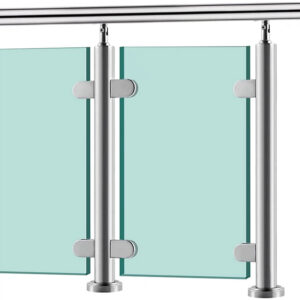
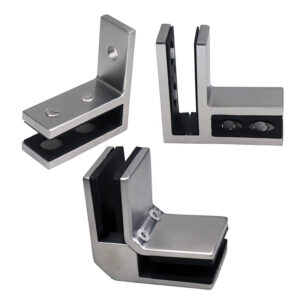
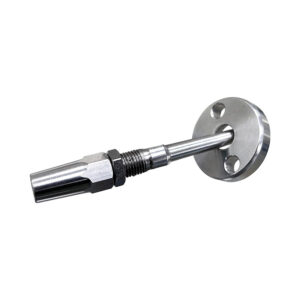
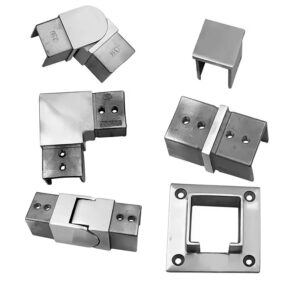
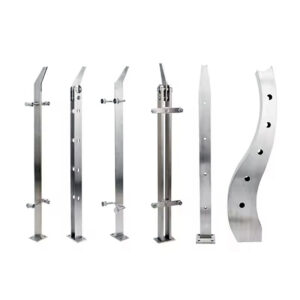
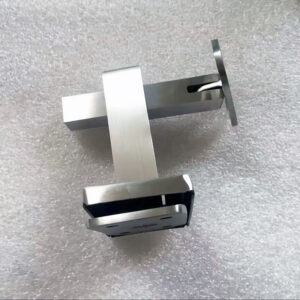
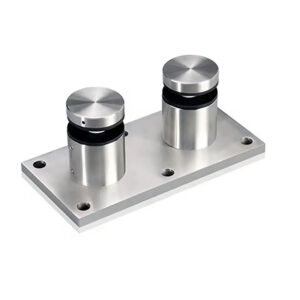
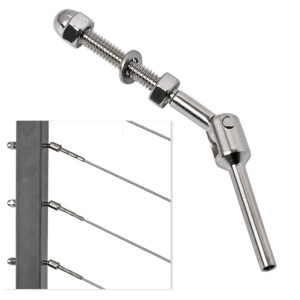
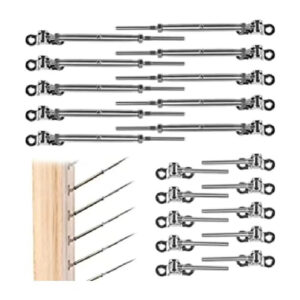
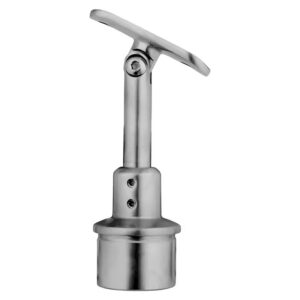
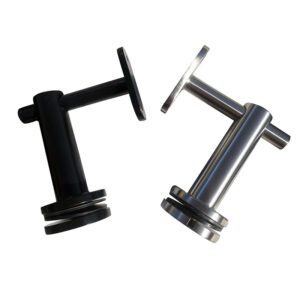
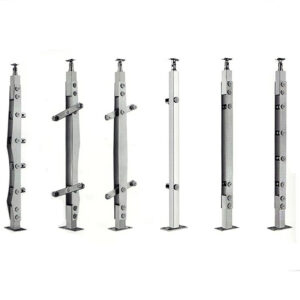
Wall brackets sit at a visible junction between a rail system and a building surface, which means the finish specification carries both a structural material decision and an appearance commitment. Getting that specification wrong shows up twice: once when the sample doesn’t match the installed rail, and again months later when an exterior bracket begins to stain in a way the finish name never predicted. The question a specifier has to answer before issuing drawings is not “which finish looks right” but “which exposure and handling conditions does this finish have to survive, and does the documentation say so clearly enough to hold the fabricator to it.”
Interior and Exterior Exposure Inputs That Change the Finish Brief
| Project context | Inputs to establish | How they guide the finish decision |
|---|---|---|
| Interior or exterior | Bracket exposure; visual intent; cleaning regime; contact with adjacent materials | Consider the inputs together before specifying the finish. |
| Buitenkant | Material grade; fabrication condition; drainage; contaminants; cleaning access; finish | Evaluate these conditions together; a finish name alone does not predict corrosion performance. |
The starting point for any wall bracket finish decision is the exposure the bracket will actually see, not the exposure the building type suggests. An interior bracket in a lobby and an interior bracket near a pool deck door are both “interior” in a schedule, but the second behaves like an exterior condition because of moisture and airborne contaminants passing through the opening. Exposure, visual intent, cleaning regime, and contact with adjacent materials need to be considered together before a finish is named, because each one can override the others. A highly reflective finish that satisfies the visual intent may be unsuitable where the cleaning regime involves abrasive pads, and a finish chosen for corrosion resistance may still fail visually if it does not match the grain direction of the rail it sits against.
Contact with adjacent materials deserves particular attention because a bracket does not exist in isolation. Where a bracket meets a dissimilar metal fastener, a sealant, or a cladding material with its own runoff chemistry, the finish brief has to account for what passes over or touches the bracket surface, not just what the bracket is made of. This is a different question from the material grade question, though the two interact.
Exterior work adds a further layer that interior specification does not require. Material grade, fabrication condition, drainage, contaminants, and cleaning access all have to be evaluated together with the finish, because a finish name alone does not predict corrosion performance. A mirror finish and a brushed finish in the same grade will not necessarily perform the same way once drainage and contaminant exposure differ between two points on the same façade. Where a bracket sits in a location with poor drainage or limited cleaning access, the finish decision has to be paired with a review of whether that location can realistically be maintained at all, because a finish that depends on regular cleaning to hold its appearance and corrosion resistance is only as good as the access allows.
Appearance Samples for Grain Direction, Reflectivity, and Color Consistency
| Control stage | Comparison or check | Agreed output |
|---|---|---|
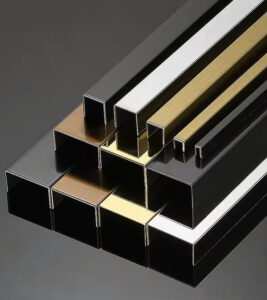
| Sample review | View the bracket sample with the intended rail and wall finishes. | Reflectivity, grain direction, and color variation agreed before production. |
| Production record | Identify the agreed sample and visible-face direction. | Sample reference and visible-face direction recorded on drawings and inspection documents. |
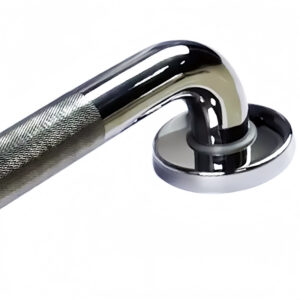
A finish designation on a specification sheet describes a category, not a guaranteed visual outcome. Grain direction, reflectivity, and color consistency can all vary within the same nominal finish, depending on the coil, the polishing pass, and the fabrication sequence used to produce the bracket. This is why an approval sample matters: it fixes what “this finish” means for this project, rather than leaving that meaning to whatever the fabricator’s default output happens to be.
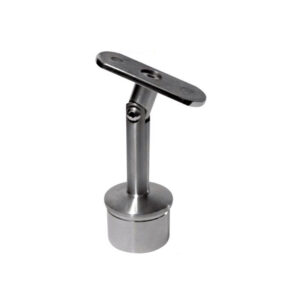
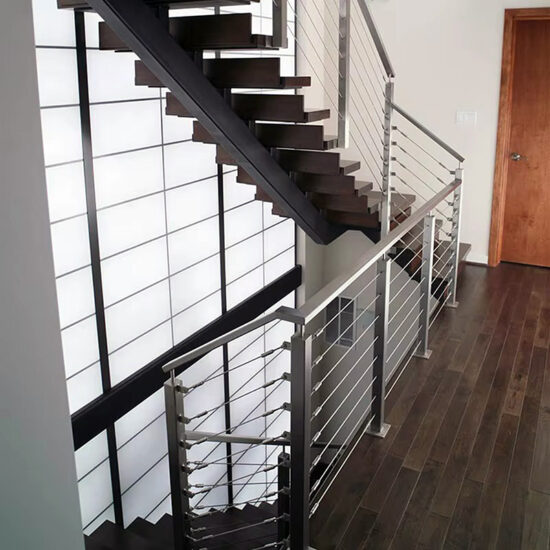
The sample only does this job properly if it is viewed in context. A bracket sample reviewed on its own, under different lighting than the installed condition, can look acceptable and still create a visible mismatch once it sits against the rail and wall finish it will actually adjoin. Viewing the sample with the intended rail and wall finish lets the specifier and installer agree on reflectivity, grain direction, and color variation before production starts, rather than discovering a mismatch after brackets are fabricated and delivered. Where the rail is a different finish family from the bracket, this comparison matters even more, because two “brushed” finishes from different sources or different grain orientations can read as inconsistent even when each one is correctly made to its own designation.
Grain direction carries a second, less visible consequence: it affects how light reflects off the bracket face at different viewing angles, which is why a sample approved under one lighting condition may still need to be checked against the range of lighting the installed location will experience. Once the sample is agreed, its value depends on it being tied to a specific reference and to a stated visible-face orientation, so that the fabricator producing multiple brackets does not introduce drift across the run. This record becomes the basis for judging whether a delivered batch matches what was approved, rather than relying on a subjective recollection of what “looked right” at the sample stage.
Material Grade, Fabrication Condition, and Finish as Separate Decisions
It is easy to treat grade, fabrication condition, and finish as a single bundled choice, because they are often presented together on a specification line. They are, however, three separate decisions that happen to intersect at the same component. Grade determines the underlying corrosion resistance of the steel itself, independent of how it looks. Fabrication condition covers how the bracket was formed, welded, and treated afterward, which affects whether the base corrosion resistance of the grade is preserved or compromised at specific points on the part, particularly around welds and heat-affected zones. Finish is the surface treatment applied over that fabricated part, chosen primarily for appearance but with its own influence on how contaminants and moisture sit on the surface.
Because these are separate decisions, a higher grade does not compensate for poor fabrication condition, and a premium finish does not compensate for either. Where a bracket is welded and the weld area is not properly treated afterward, that location can behave differently from the surrounding surface regardless of the grade specified or the finish applied elsewhere on the part. This is the reasoning behind treating cleaning, descaling, pickling, and passivation as their own step: ASTM A380/A380M addresses cleaning, descaling, pickling, and passivation, along with surface-contaminant removal, weld-area treatment, and cleanliness assessment for stainless parts, on the basis that the supplier and purchaser agree which procedures apply to the specific part and project. That agreement is what turns a general fabrication capability into a documented step the buyer can point to.
The practical consequence for a specifier is that a finish call-out should never be read as also covering grade and fabrication condition by implication. Each needs its own line, or at minimum its own confirmed statement from the fabricator, because the failure modes associated with each are different. A grade mismatch shows up as broad corrosion susceptibility across the part. A fabrication condition issue shows up as localized failure at welds or worked areas. A finish issue shows up as an appearance or contaminant-retention problem that may have nothing to do with the underlying corrosion resistance at all.
Cleaning, Contamination, and Drainage Conditions Around Wall Brackets
A finish that performs well in a controlled interior setting can behave differently once it is exposed to the cleaning regime, contaminants, and drainage pattern of its actual installed location, which is why these conditions need to be reviewed together rather than treated as maintenance items to be resolved after installation. Cleaning regime refers to what method and frequency of cleaning the bracket will realistically receive, and this has to be matched to the finish rather than assumed to be interchangeable across finishes. A finish that holds its appearance under a gentle wipe-down regime may show visible wear if the actual regime involves more aggressive cleaning agents or mechanical scrubbing.
Cleaning access is a distinct condition from cleaning regime. A bracket in an easily reached location can be cleaned on a routine basis even if that routine is not documented anywhere, simply because it is convenient to do so. A bracket in a location that is difficult or hazardous to reach may go without cleaning for extended periods regardless of what the maintenance plan specifies, and a finish specified without accounting for that access gap is being asked to perform under a condition it was never evaluated against.
Contaminants change the picture further, because different environments introduce different substances onto the bracket surface, and these substances interact with the finish and the underlying grade differently depending on what they are and how long they remain in contact. Where drainage is poor, contaminants and moisture do not clear the surface but instead sit and concentrate at low points or crevices, which changes the exposure at those specific points relative to the rest of the bracket. This is a mechanism worth separating from the exposure classification discussed for exterior work generally, because two brackets in the same general atmospheric environment can experience different local conditions purely because of how each one drains. A specifier reviewing a bracket location should ask not only what the general environment is but where water and contaminants go once they reach the bracket, since that path determines which parts of the bracket face the most demanding condition.
Drawing Notes and Sample References That Keep Production Consistent
The judgments made during exposure review and sample approval only carry forward into fabrication if they are captured in a form the fabricator and inspector can both reference without relying on memory or verbal agreement. Four pieces of information do this work. The agreed finish designation states which finish category was approved, using the same terminology the fabricator will use in production. The visible-face direction records which face of the bracket was reviewed and approved, since grain direction and reflectivity can differ across faces of the same part depending on how it was formed. The sample reference ties the drawing note back to a specific physical or documented sample, so that a dispute over whether a delivered part matches what was approved has a fixed point of comparison rather than a description open to interpretation. The touch-up boundary defines how much surface correction, if any, is acceptable after fabrication or installation before a part is considered nonconforming.
Recording these on drawings and inspection documents, rather than leaving them as notes from a meeting or an email thread, matters because drawings are what the fabrication shop and the site inspection team actually work from. A finish designation without a visible-face direction leaves room for a part to be technically correct in category but installed with the wrong face outward. A sample reference without a touch-up boundary leaves the question of acceptable field correction unresolved until a dispute forces the issue.
This documentation step is also where the project’s own specific inputs, such as the confirmed finish designation and sample identity, become part of what a supplier reviews when preparing a quotation or fabrication plan, since a request that specifies the finish, the visible-face direction, and the sample reference gives the supplier a fixed target rather than a general finish family to interpret. Without that specificity, the supplier is left to apply a default interpretation of the finish name, which may or may not match what the specifier had in mind when the sample was approved.
Project Acceptance Boundaries for Finish and Surface Condition
| Reference | What it supports | What it does not establish |
|---|---|---|
| ISO 9223 atmospheric corrosivity classification | Exposure context from first-year corrosion of standard specimens and environmental factors including time of wetness, sulfur dioxide, and airborne salinity. | It does not select a stainless grade, predict bracket life, or characterize every industrial atmosphere. |
| ASTM A380/A380M cleaning and passivation guidance | Agreed procedures for cleaning, descaling, pickling, passivation, surface-contaminant removal, weld-area treatment, and cleanliness assessment. | The supplier and purchaser must agree the applicable procedures; the standard does not qualify weld strength or structural performance. |
Acceptance boundaries answer a question that specification alone cannot: once a bracket is fabricated and delivered, what condition is considered within tolerance, and what condition triggers rejection or rework. This is a separate judgment from choosing the finish in the first place, because even a correctly specified finish can be produced with variation, and the project needs a stated boundary for how much variation is acceptable before it becomes a nonconformance.
Two categories of reference help frame where these boundaries can and cannot rely on outside standards. ISO 9223 classifies atmospheric corrosivity based on first-year corrosion of standard specimens and environmental factors such as time of wetness, sulfur dioxide, and airborne salinity, which gives a project an exposure classification context for understanding the general severity of an environment. It does not select a stainless grade, predict how long a specific bracket will last, or characterize every industrial atmosphere a project might encounter, so it should inform the exposure conversation described earlier rather than serve as an acceptance criterion on its own. ASTM A380/A380M, covering cleaning, descaling, pickling, passivation, and cleanliness assessment, supports agreement on which procedures apply to a part, but the supplier and purchaser still have to agree on the applicable procedures for the specific project, and the standard does not qualify weld strength or structural performance.
Where a project’s acceptance criteria rely only on a finish name and a general reference to a standard, the boundary remains undefined in practice, because neither tells an inspector what surface condition is acceptable on the specific delivered brackets. Where the project instead ties acceptance to the documented sample reference, the visible-face direction, and a stated touch-up boundary, the inspector has a concrete basis for a pass or fail decision. This is also where a project’s coordination with its hardware supplier matters at the delivery stage: confirming which finish, size, and touch-up allowances apply to a given order before fabrication proceeds is what keeps the acceptance boundary meaningful rather than aspirational. A specifier moving from documentation to sourcing should confirm, for the wall mount brackets under consideration, whether the finish designation, sample reference, and touch-up boundary agreed on paper are the same terms the supplier will fabricate and inspect against.
Veelgestelde vragen
V: Can one finish designation be used for both interior and exterior wall brackets?
A: Use a common designation only after each location has been assessed for exposure, visual intent, cleaning regime, contact with adjacent materials, and, outdoors, grade, fabrication condition, drainage, contaminants, and cleaning access. If these conditions differ, separate the locations in the finish schedule and assign their own material, finish, and sample controls.
V: How should an appearance sample be approved when the bracket meets different rail or wall finishes?
A: Review the bracket sample beside the intended rail and wall finish for each distinct visual condition. Record the accepted reflectivity, grain direction, color variation, visible-face direction, and sample reference before production; if the surrounding finish changes, repeat that comparison for the affected location.
V: What should a buyer provide before an exterior finish recommendation is finalized?
A: Provide the exposure context, intended material grade, fabrication condition, drainage path, likely contaminants, cleaning regime and access, adjacent materials, and appearance intent. Mark any undecided item openly so the finish name is not treated as a substitute for the missing project decision.
V: Do ISO 9223 or ASTM A380/A380M establish the finished bracket’s service life or structural acceptance?
A: No. Use ISO 9223 to frame atmospheric exposure context and ASTM A380/A380M to agree applicable stainless cleaning and passivation procedures. Keep grade selection, predicted life, weld strength, and structural acceptance as separate project decisions supported by the appropriate evidence.
V: How should touch-up work be controlled at inspection?
A: Define the permitted touch-up boundary on the drawings or inspection documents and tie it to the agreed sample and visible-face direction. Inspect the treated area against that recorded appearance reference, while keeping any cleaning or passivation procedure separately agreed between purchaser and supplier.