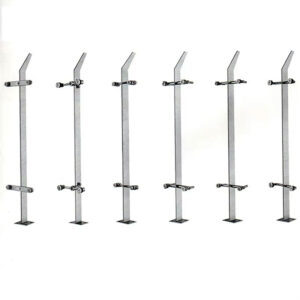
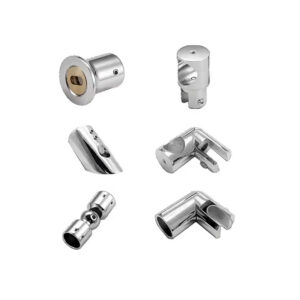
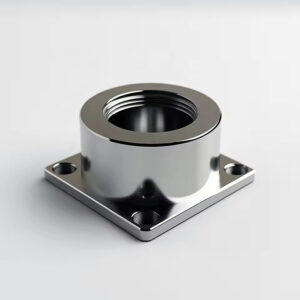
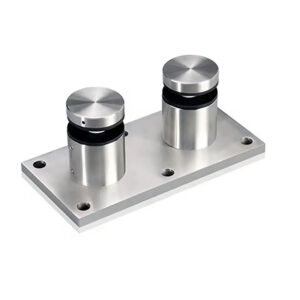
Distributors who qualify a factory based on physical samples alone often discover the real cost of that shortcut only after the first bulk shipment arrives. Dimensions that looked acceptable on a prototype may sit outside a range that was never formally agreed, and the dispute that follows—over whether variation is within tolerance or constitutes a defect—has no documented baseline to resolve it. The same gap appears at the back end: packaging, labeling, and part coding left until after final inspection become expensive retrofits that break the replacement scheme distributors depend on for after-sales service. What resolves these risks is not a stricter supplier audit, but earlier agreement on who owns which specifications, what testing confirms reliability before production, and how all of those approvals travel together as a synchronized release package.
Program Boundaries Between OEM and ODM Work
The practical boundary between OEM and ODM work is not a legal category—it is a drawing confirmation. When a customer provides dimensioned drawings and the factory manufactures to those confirmed drawings, the customer owns the design specification and the factory owns the manufacturing method. That distinction matters operationally because it determines who carries audit exposure when a dimension changes and who must approve any revision before production continues.
Where the boundary becomes ambiguous is when a factory contributes development work—surface treatment selection, hardware geometry refinement, material grade specification—without a clear agreement on whether those decisions are now customer-owned or factory-retained. For distributors sourcing from Chinese glass railing manufacturers, this ambiguity tends to surface not during sampling but during a second production run, when the factory applies a slightly different interpretation of a finish or tolerance range and the distributor has no confirmed drawing to reference as the governing document.
The practical implication is that the drawing confirmation should be treated as the formal handoff that separates design ownership from manufacturing execution. Until that confirmation exists in a specific revision, the program boundary is undefined regardless of how many samples have been approved.
Risks of Sample-Only Product Definition
A physical sample is useful for verifying appearance and surface finish. It is a poor substitute for a dimensioned drawing when mechanical performance, structural fit, or consistent replication across batches is required. The failure pattern is predictable: a distributor approves a sample based on visual and tactile review, places a bulk order, and receives hardware where wall thickness, hole positioning, or fitting geometry drifts from the reference sample in ways that create installation problems or warranty claims—none of which can be adjudicated because no tolerance range was ever documented.
This is not a theoretical risk. It is an operational quality risk that surfaces specifically at the batch boundary. The first production run often matches the sample closely because the operator who made the sample is closely involved. Later runs—especially after workforce changes, tooling wear, or subcomponent substitution—may drift within ranges the factory considers normal but the distributor considers defective. Without agreed acceptable variation limits, both positions are defensible, which means disputes take longer to resolve and escalate more often.
Samples also cannot communicate what material they are made from. A sample that looks and feels like 316-grade stainless may have been produced from a different alloy. Spectrometer confirmation of material grade is a distinct verification step that physical inspection cannot replace, and it is one that needs to be contractually established before production rather than retroactively requested after a corrosion failure.
For distributors evaluating how to structure early-stage product definition, the distinction between appearance approval and specification control is worth reviewing before a first bulk order is placed. Hoe evalueer je een leverancier van roestvast stalen leuningen vóór je eerste bulkbestelling? addresses several of these supplier qualification criteria.
Buyer Design Control Versus Factory Development
Choosing how much design development to delegate to the factory is a procurement strategy decision, not a quality judgment. Greater buyer control—where the distributor provides fully dimensioned drawings, specifies material grades, and defines surface treatments—preserves the distributor’s design intent and simplifies change management. It also increases the technical burden on the buyer’s side and extends the pre-production phase. Factory-led development under an ODM arrangement can reduce that burden and shorten time to sample, but it transfers design decisions to a party whose optimization priorities—tooling cost, production efficiency, standard material availability—may not align with the distributor’s serviceability or aesthetic requirements.
The less visible cost of ODM development is change ownership ambiguity. If the factory proposes a geometry adjustment to simplify machining and the distributor approves it informally, it may not be clear whether the revision is now reflected in a controlled drawing, who holds the approval authority for future changes to that detail, and whether the adjustment is visible to quality inspection. ISO 9001:2015 provides a useful process reference here: its design and development planning requirements (clause 8.3) distinguish between design inputs, design outputs, and design changes, and treat design-change authority as a defined responsibility rather than an informal agreement. Applying that framing to an ODM relationship helps clarify who reviews and approves each revision before it reaches production.
The threshold that changes the recommendation is design maturity. When the distributor has a fully defined product with validated dimensions and a proven replacement scheme, OEM control is the lower-risk path. When the product is still being developed and the factory has relevant geometry expertise—as is common with custom infill configurations—paneelinvulsystemen op maat that involve factory-side geometry input may warrant an ODM structure, provided change approval terms are written into the agreement before development begins.
Packaging and Part Coding During Product Design
Packaging and part coding are typically treated as post-design tasks, finalized once the product is confirmed and ready for shipment. That sequencing creates a specific and preventable problem: a replacement-part scheme that was never considered during product design may require physical modification of the hardware—added markings, alternative configurations, or split packaging—after the product is already tooled and sampling. Retrofitting a coding scheme at that stage is more expensive than integrating it during design, and it often produces a less reliable outcome because the part structure was not planned with serviceability in mind.
Part coding should be treated as a configurable specification that must align with the distributor’s replacement and service logistics, not as a factory default. The factory’s internal part numbering system almost certainly does not correspond to how the distributor’s customers order replacement components. If that alignment is left to the distributor to resolve after production is confirmed, the distributor inherits the problem of translating between two incompatible coding systems—a maintenance and after-sales friction that can generate ongoing order errors.
The practical planning criterion is this: packaging format, labeling content, and replacement-part coding should be defined during design review, not during pre-shipment inspection. A distributor entering an OEM or ODM program should treat packaging and coding specifications as design inputs that require the same revision control as dimensional drawings. When those specifications carry a revision number that matches the production drawings, the relationship between physical product and service documentation is traceable. When they do not, serviceability is dependent on informal knowledge that may not survive personnel changes.
Mass-Production Release Package
Declaring mass production ready before all release components are aligned at the same revision is one of the more common sources of late-stage renegotiation in OEM and ODM programs. The problem is that drawings, golden samples, QC criteria, and packaging standards are often approved on different timelines by different stakeholders, and the assumption that they refer to the same product configuration is not always tested before production begins. A golden sample approved before a drawing revision may represent a superseded specification. A QC inspection standard written before packaging was finalized may not address marking verification. Testing requested before load-bearing tolerances were confirmed may use a load figure that no longer matches the current specification.
The recommended testing—salt spray resistance, spectrometer material confirmation, load-bearing validation, and tolerance control—serves as a practical reliability check before production volume is committed. These are not arbitrarily selected; each addresses a distinct failure mode: corrosion performance, material identity, structural adequacy, and dimensional consistency. Where material traceability is required, ISO 10474:2013 provides a framework for inspection documents, including type 3.1 certificates that confirm material composition against the relevant standard with independent verification. Contracting for this documentation before production is more straightforward than requesting it after shipment, when traceability back to the original heat may no longer be possible.
Each release component and its pre-approval confirmation criteria are structured as follows.
| Release Component | Description / Purpose | What to Confirm Before Approval |
|---|---|---|
| Drawings | Customer-confirmed production drawings that define all dimensions, tolerances, and finishes. | All drawings carry the same revision number and are the final approved version. |
| Golden Samples | Physical reference samples that represent the agreed quality and appearance. | Samples match the final drawing revision and are signed off by both parties. |
| QC Criteria & Testing | Industry-grade checks: salt spray resistance, spectrometer material confirmation, load-bearing validation, and tolerance control. | Testing results meet specified standards; QC inspection criteria are documented and agreed. |
| Packaging Standards | Packaging, labeling, and replacement-part coding specifications developed alongside the product. | Packaging details are finalized, part coding aligns with the replacement scheme, and packaging standards carry the same revision as drawings. |
The value of treating this as a gate check rather than a documentation formality is that it forces alignment across stakeholders who may have approved their portion of the release in isolation. A buyer-side QA team that signs off on golden samples should confirm those samples match the current drawing revision before the release is declared. A factory that issues a QC criteria document should confirm it incorporates the agreed testing results, not placeholder pass/fail ranges. The release package is only coherent when every component references the same product state.
A well-structured OEM or ODM program creates a traceable link between what was agreed during design, what was confirmed during sampling, and what governs production. The risks that erode that traceability—sample-only qualification, undocumented change approvals, deferred packaging decisions, and misaligned release components—each operate on a different timeline but converge at the same point: the first time a distributor needs to resolve a dispute, service a replacement request, or respond to a quality claim without a clear documented baseline.
Before entering a manufacturing program, the most useful pre-decision check is whether the factory can demonstrate that its production process is drawing-driven, that its change process assigns revision authority to a named party, and that its pre-production release documentation ties testing results to the same revision as the confirmed production drawings. Those three conditions, taken together, are a more reliable indicator of program maturity than the quality of any single sample.
Veelgestelde vragen
Q: What if I don’t have detailed technical drawings to provide as a distributor?
A: You can still structure an ODM program where the factory develops the design from a functional brief, but you must insist on a formal drawing confirmation that captures all dimensions, tolerances, and material specifications before production. Without it, you are effectively relying on sample-only approval with none of the documented baselines this article recommends, leaving you exposed to the same disputes over acceptable variation and change ownership.
Q: After all components of the mass-production release package are aligned, what comes next before committing to the full order?
A: Run a limited pilot production batch and inspect it against the agreed QC criteria, drawing revision, and packaging specification. This step confirms that the factory can reproduce the release package standard under normal production conditions rather than just during sample preparation, and it gives you a chance to catch any mismatches that individual approvals might have missed.
Q: At what order size does a full drawing-driven OEM program become over-engineering?
A: When the project is a one-off custom installation where repeatable part standardization and replacement-part coding are not required, you can reasonably work from a sample-plus-critical-dimensions approach. Even then, you should still contract material certification and corrosion testing, because safety and durability risks do not scale down with volume.
Q: Which model gives me stronger intellectual property protection for a custom railing design, OEM or ODM?
A: OEM offers stronger IP control because you own the confirmed drawings and the factory’s role is strictly manufacturing to your specification. In ODM, the factory may retain rights to reuse geometry, tooling approaches, or finish developments for other clients unless you contractually define exclusivity clauses upfront—something that samples and informal approvals do not establish.
Q: Is the documented OEM/ODM program and ISO-aligned testing worth the investment for a distributor ordering under 500 units a year?
A: Yes, because the true cost of skipping drawing confirmation, tolerance agreements, and material verification often appears later as dispute time, warranty claims, or rework that eats into margins far more than the upfront documentation effort. The process scales: you can adjust documentation depth to your risk, but the core provisions described in the article—drawing control, golden sample locking, and aligned release components—protect low-volume distributors just as much as high-volume buyers.