Specification errors on stair handrail projects rarely appear at installation — they appear three weeks earlier, when field measurements come back different from the architect’s drawings and the bracket order is already placed. The downstream cost isn’t just parts reordering: it’s transition gaps at landings that require site fabrication, finish mismatches between indoor and outdoor segments, and end plugs missing from the punch list that stall final sign-off. The decision that controls most of these failures is sequence — resolving run length, exposure condition, and landing geometry before selecting tube profile, grade, or bracket style. What follows gives procurement leads, project managers, and specifying contractors a structured way to work through those decisions in the right order.
Stair location before continuous rail selection
Location classification is a planning gate, not a preference. Whether a stair run is interior, exterior, or transitions between both determines the corrosion resistance required from the material, the finish durability needed, and which bracket and mounting configurations are appropriate for the substrate. Treating location as something to confirm later — after tube style and bracket type are already under discussion — forces specification revisions that ripple backward through the entire system.
The indoor/outdoor distinction also carries a less obvious implication for continuous rail selection. A continuous rail that runs from an interior lobby to an exterior landing must satisfy both exposure conditions simultaneously. That means the rail specification — including grade selection — has to account for the harsher environment, even if only a fraction of the run is exposed. Projects that split this decision, specifying the interior and exterior segments as separate systems without coordinating the transition, often end up with a grade mismatch at the connection point, which is exactly where weather-related degradation starts.
Confirming stair location before anything else also sets the scope of coordination work. Interior-only runs generally involve more predictable substrate conditions, simpler bracket sequencing, and no finish degradation concerns from UV or moisture. Exterior runs introduce substrate variability, thermal movement considerations, and finish maintenance cycles. Mixed-exposure runs require both. None of this can be properly scoped until location is fixed.
Indoor and outdoor exposure effects on grade and finish
The practical consequence of mismatching grade to environment isn’t visible at handover — it shows up as surface pitting or discoloration within a few seasons, at which point the only remedy is replacement, not refinishing. Grade 304 provides adequate corrosion resistance in interior settings where moisture and chloride exposure are limited. Grade 316 adds molybdenum to the alloy, which significantly improves resistance to chloride-induced corrosion and makes it the appropriate choice for exterior applications, particularly in coastal, high-humidity, or chemical-exposure environments.
| Exposure | Aanbevolen rang | Waarom het belangrijk is |
|---|---|---|
| Interieur | 304 | Adequate corrosion resistance for indoor use |
| Buitenkant | 316 | Higher corrosion resistance to withstand outdoor elements |
The finish choice compounds the grade decision rather than replacing it. A brushed No. 4 finish on 316 tubing performs differently than a mirror-polished finish on the same grade in an outdoor setting — the brushed finish conceals weathering and minor surface oxidation more forgivingly, while mirror finishes show deterioration earlier and require more frequent maintenance to hold their appearance. For exterior commercial and institutional installations, the combination of 316 grade and an appropriate surface finish should be treated as paired decisions rather than independent ones. Detailed guidance on grade and finish selection for exterior applications is covered in De complete gids voor roestvrijstalen trapleuningen voor buiten voor commerciële en institutionele projecten: 2025 normen en specificaties.
ASTM E985-24 provides a testing framework for evaluating permanent metal railing system performance, which is useful context when specifying system-level performance requirements — but the 304/316 grade split itself reflects widely accepted corrosion-resistance practice rather than a codified rule from that standard.
Bracket clearance conflicts on real stair runs
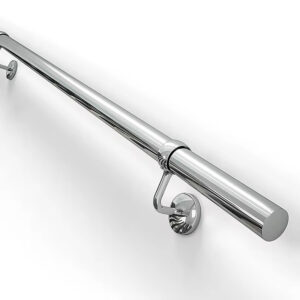
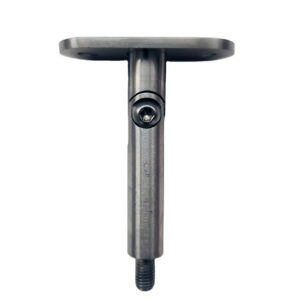
Clearance conflicts on real stair runs are rarely theoretical — they emerge when actual substrate conditions, wall obstructions, or stair geometry reduce the available mounting zone after field measurements are taken. For a standard 1.5-inch round handrail tube, the typical design figure is 1.5 inches of spacing from the wall surface to the rail centerline, producing a total projection of approximately 3 inches. That figure reflects product and installation practice, not a universal code minimum, and actual clearance requirements should be confirmed against the applicable jurisdiction’s accessibility and building code provisions. What this figure does usefully establish is a baseline: any wall feature, trim element, or substrate irregularity that encroaches on that zone needs to be identified before bracket locations are finalized.
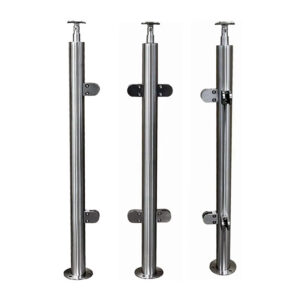
Substrate type determines the bracket and fastener combination, and getting that sequence wrong affects both structural hold and clearance geometry.
| Hardware Option | Suitable Substrate | Attachment Notes |
|---|---|---|
| Circle L brackets | Wall surface (universal bracket) | Works with appropriate screws or bolts for the substrate |
| Self-tapping screws | Metal | Drive directly into metal substrate |
| Maak bouten | Hout | Pre-drill holes for secure hold |
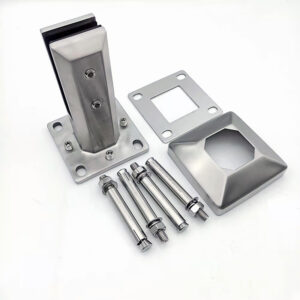
| Ankerbouten | Beton / Baksteen | Insert into drilled holes for expansion fastening |
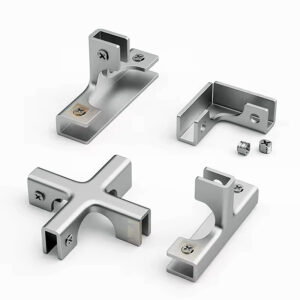
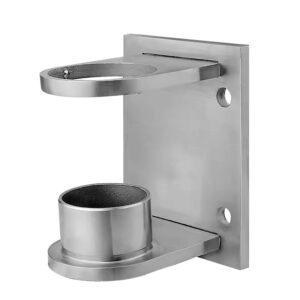
The most common clearance conflict pattern occurs when bracket type is selected before substrate is confirmed. Circle L brackets are a widely used option across substrate types, but the fastener selection — self-tapping screws for metal, lag bolts into pre-drilled wood, anchor bolts for concrete or brick — changes the effective bracket footprint and the required standoff from the wall surface. On concrete substrates, the anchor bolt installation sequence also requires drilling clearance that may interact with adjacent wall features. Selecting fastener type late in the coordination process, or assuming a single bracket solution works across a mixed-substrate run, is a reliable source of field rework. More detailed guidance on preventing anchoring and clearance conflicts is available in Trapleuninghouders: Hoe installateurs problemen met vrije ruimte en verankeringen op echte trappen voorkomen.
Continuous rail coordination around landings and turns
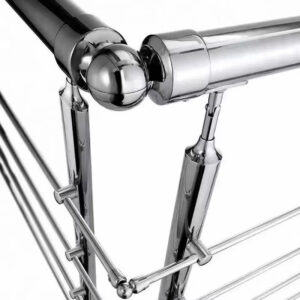
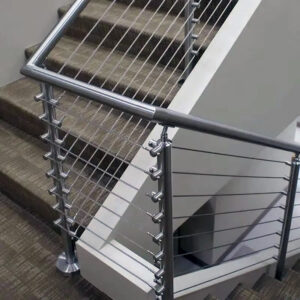
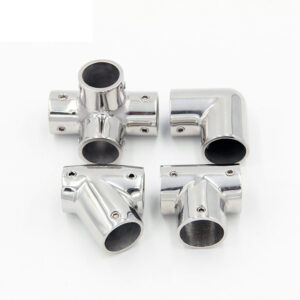
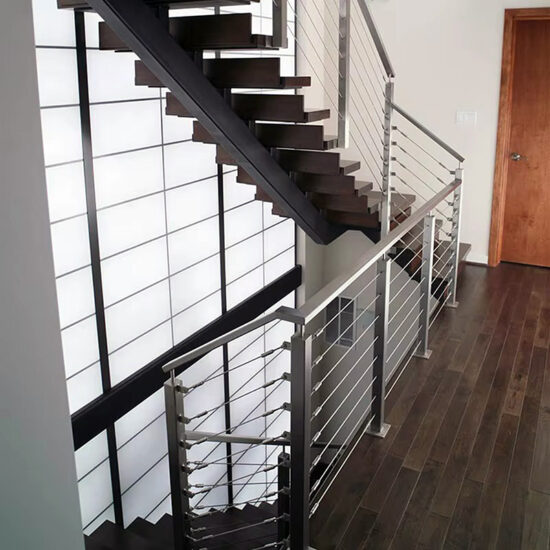
Continuous rails earn their specification advantages — uninterrupted graspability, visual consistency across a full stair run, and reduced splice hardware — but those advantages depend entirely on geometry coordination that must happen before fabrication, not during installation. The failure pattern is consistent: a continuous rail system is specified for a multi-flight stair, shop drawings are produced from design-intent drawings, and then field measurements return with actual landing dimensions and turn angles that differ from the originals. The result is transition gaps that require site-fabricated connectors, which compromise both the visual integrity and the graspability continuity that justified the continuous system in the first place.
The hard coordination point is the transition between stair flights at landings. When a rail turns at a landing, the geometry of that turn — angle, radius, and the elevation change between the inclined flight and the level landing section — has to be precisely matched in the shop drawing. The Access Board’s ADA guide treats continuity and graspability at these transitions as a functional requirement, which means a rail that breaks grip at a landing doesn’t satisfy the purpose of a continuous system regardless of how cleanly it’s installed on the flight itself. That functional logic applies whether or not a project is formally subject to ADA requirements: the transition is where users depend on the rail most, and it’s also where coordination failures are most visible.
Segmented rail systems avoid this coordination risk by design — each flight section is a discrete unit with defined terminations, and transitions at landings are handled through bracket endpoints rather than continuous geometry. That simplicity makes segmented rails easier to ship, stage, and replace on individual flights, and it multiplies tolerance for field-measurement variation. The trade-off is bracket count, splice hardware at each termination, and the visual interruption at every landing. On a two-flight interior stair with a single landing, that trade-off may favor segmented rail. On a four-flight commercial stair where visual consistency and uninterrupted graspability are both specified requirements, continuous rail justifies the tighter coordination it demands — provided that coordination happens with final field measurements, not design-intent dimensions.
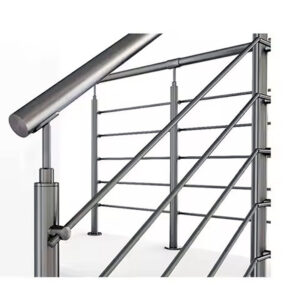
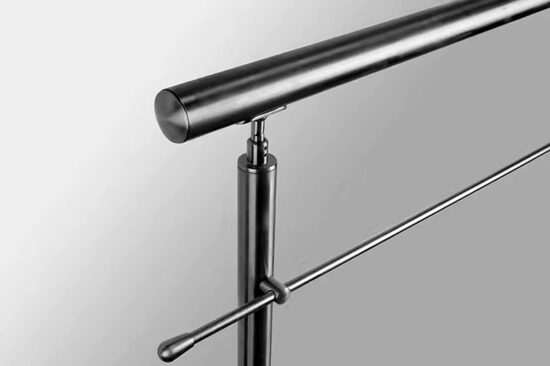
Ronde buis leuningsystemen offer a practical starting point for segmented applications where individual flight sections can be specified and replaced independently, while doorlopende leuningsystemen voor muren are the appropriate reference for projects where run-to-run geometry is being locked in before shop drawing submission.
System selection after stair run, mounting, and code context are fixed
Final system selection — tube profile, grade, bracket type, and run configuration — should be locked only when run length, mounting substrate, exposure condition, and any applicable accessibility or building code requirements are confirmed. Selecting earlier than that creates revision cycles that compound: a bracket type selected for an assumed substrate has to be re-sourced when the substrate changes, which may shift the clearance geometry, which may affect bracket spacing, which may require re-confirming the run length and splice point locations.
Rail length specification reflects this sequencing dependency directly. Handrail lengths can typically be specified from 1 foot up to 22 feet, with custom lengths available beyond standard increments. That range accommodates most stair runs without field cutting, which reduces splice points and maintains a cleaner finish — but it only provides that advantage when the run length is confirmed before ordering. Custom lengths also carry longer lead times, so late-stage field measurement changes that require length adjustments after fabrication starts are a reliable source of schedule delay.
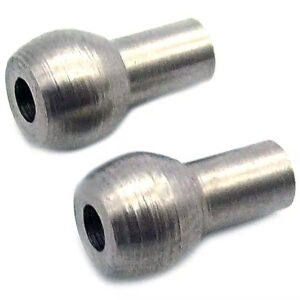
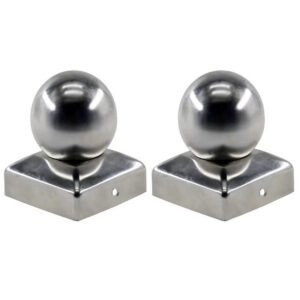
One frequently missed coordination step is end plugs. Open tube ends on metal handrails require separate end plugs to finish correctly, and those plugs are typically specified as a separate line item rather than included with the rail. The omission pattern is consistent: the rail ships, installation proceeds, and end plugs aren’t on-site at final inspection because they weren’t on the original order. That single missing item can stall sign-off on an otherwise complete installation. Including end plug quantities in the pre-installation checklist — tied to the confirmed count of open terminations, not estimated — closes that gap before it reaches the punch list.
For exterior-specific system selection, exterior stair railings in 316 grade address the combined requirements of corrosion resistance, finish durability, and mounting substrate variability that distinguish outdoor commercial stair applications from interior work.
The sequencing logic in this article is also its most practical takeaway: the decisions that control final system performance — grade, bracket type, run configuration, and transition geometry — are all downstream of location, exposure condition, and stair geometry. Teams that treat product selection as the starting point consistently create coordination problems that show up later as site fabrication, rework, or delayed sign-off. The decisions that are easiest to revise on paper are the hardest to fix after fabrication.
Before finalizing any specification, confirm that run length is based on field measurements, that grade matches the actual exposure condition for the full run including transitions, that substrate type and mounting hardware are aligned, and that end plugs appear as a discrete line item tied to a specific termination count. Those four checks cover the majority of coordination failures that surface during installation on otherwise well-specified stair handrail projects.
Veelgestelde vragen
Q: What happens when a stair run spans both indoor and outdoor sections — which grade should govern the entire rail?
A: Grade 316 should govern the full run. When a continuous rail transitions from an interior to an exterior environment, the harsher exposure condition sets the material requirement for the entire system — specifying 304 for the interior segment and 316 for the exterior segment creates a grade mismatch at the connection point, which is precisely where corrosion tends to initiate first.
Q: At what point does a continuous rail system stop being worth the coordination overhead compared to a segmented approach?
A: Continuous rail becomes harder to justify when landing geometry can’t be confirmed from field measurements before shop drawings are submitted. The graspability and visual consistency advantages of a continuous system depend on tight geometry coordination at every transition — if final field dimensions aren’t available before fabrication, the risk of transition gaps requiring site-fabricated connectors can outweigh the benefits, and a segmented system with defined terminations at each landing becomes the lower-risk choice.
Q: If field measurements come back after fabrication has already started, what is the least disruptive recovery path?
A: The least disruptive path is isolating which line items are still revisable — typically bracket spacing and end plug quantities — before escalating to length changes. Custom-length rails carry longer lead times, so any run length revision after fabrication starts is a schedule risk. Bracket spacing and fastener type can often be adjusted closer to installation without reordering rail sections, provided the clearance geometry is re-checked against the revised measurements before brackets are sourced.
Q: Does the 1.5-inch wall clearance figure apply to handrails mounted on open stair stringers or newel posts, or only to wall-mounted bracket configurations?
A: The 1.5-inch spacing figure applies specifically to wall-mounted bracket configurations with a 1.5-inch round tube. Post-mounted or stringer-mounted systems use different structural attachment logic and their own projection geometry, so that baseline clearance figure doesn’t transfer directly. Clearance requirements for non-wall-mounted configurations should be confirmed against the applicable building code and the specific bracket system’s installation documentation.
Q: Is there a run length below which specifying a custom-length rail introduces more risk than it removes?
A: For short runs — generally those that fall within standard stocked increments — a custom length adds lead time without a meaningful reduction in splice points or field cutting, so the coordination overhead isn’t justified. Custom lengths provide clear value on longer runs where a standard increment would require a field cut or an additional splice near a transition point. The practical threshold depends on what standard lengths a supplier stocks, so confirming available increments before deciding whether to specify custom is the cleaner approach.