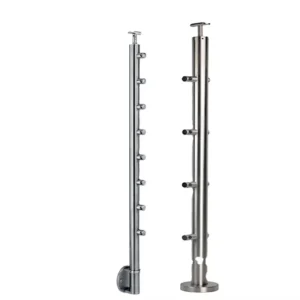
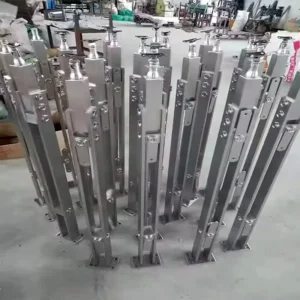
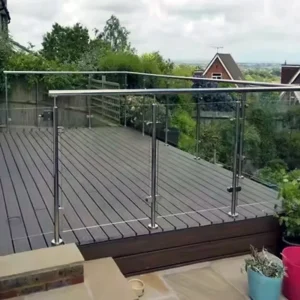
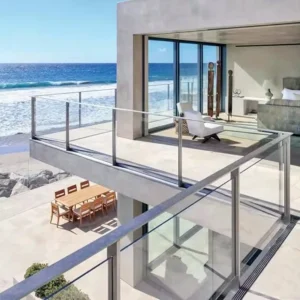
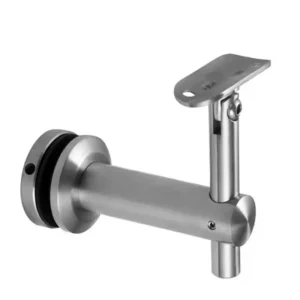
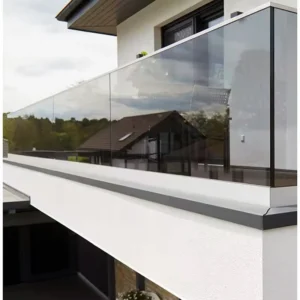
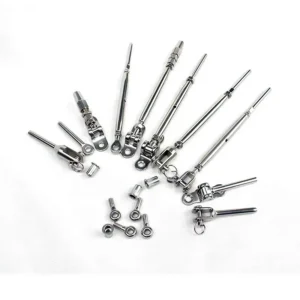
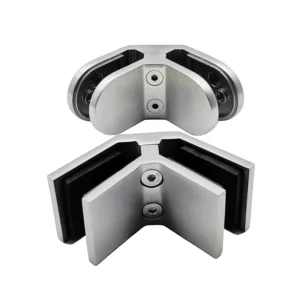
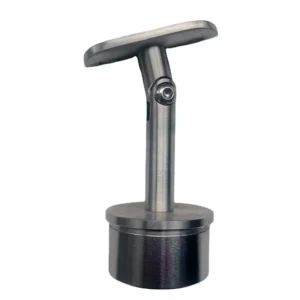
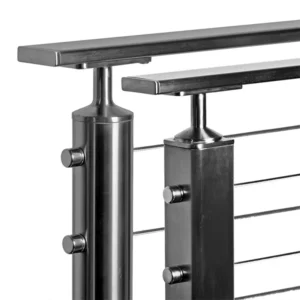
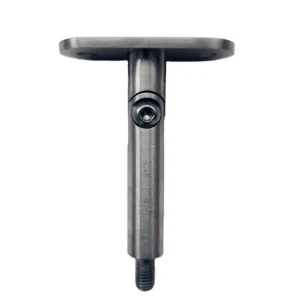
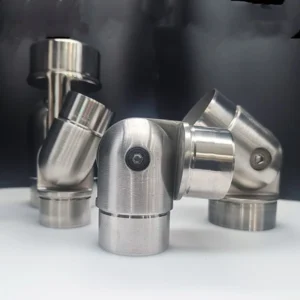
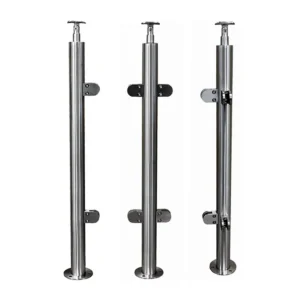
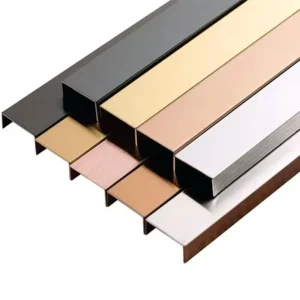
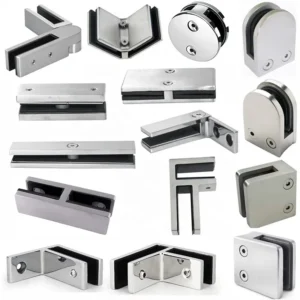
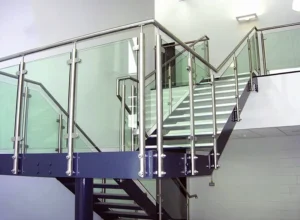
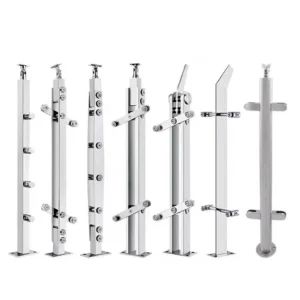
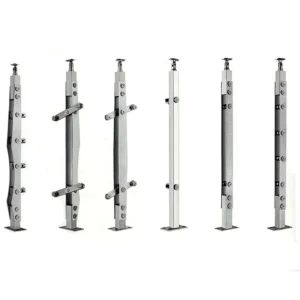
Rectangular stainless steel posts are a useful starting point when a railing needs a directional profile, flat faces for connection hardware, or a deliberate contrast with round rails. The profile alone does not define a safe post: the long-side orientation, wall thickness, height, mounting method, top-rail connection and infill loads all have to be resolved together. Send a plan, a site photo or even an early quantity estimate and ESANG can prepare a proposed configuration for comparison.
Request a rectangular post proposal on WhatsApp
Decide the profile by its job, not by appearance alone
A rectangular tube has two different bending axes. Turning the long face toward the railing run is not equivalent to turning it across the run, and connection plates or clamps may occupy different faces. Mark the post orientation on the plan before holes, brackets or base plates are finalized.
| 决定 | What changes | What the quote should show |
|---|---|---|
| Cross-section and orientation | Available face width, visual weight, connection clearance and directional stiffness | Outside dimensions, wall thickness, long-face direction and allowable tolerances |
| Surface, fascia or embedded mounting | Post length, base geometry, edge distance, waterproofing coordination and access to anchors | Post-to-base detail, base-plate or receiver scope, anchor exclusions and required substrate information |
| Glass, cable, bar or panel infill | Hole pattern, bracket type, gasket or sleeve needs, terminal loads and maintenance access | Machining schedule and a clear list of included clamps, sleeves, fittings or separate items |
| Top-supported or free-ended post | Top connection geometry and how forces are shared with the rail | Top bracket or saddle interface, rail profile and any site drilling still required |
Keep the five system responsibilities separate
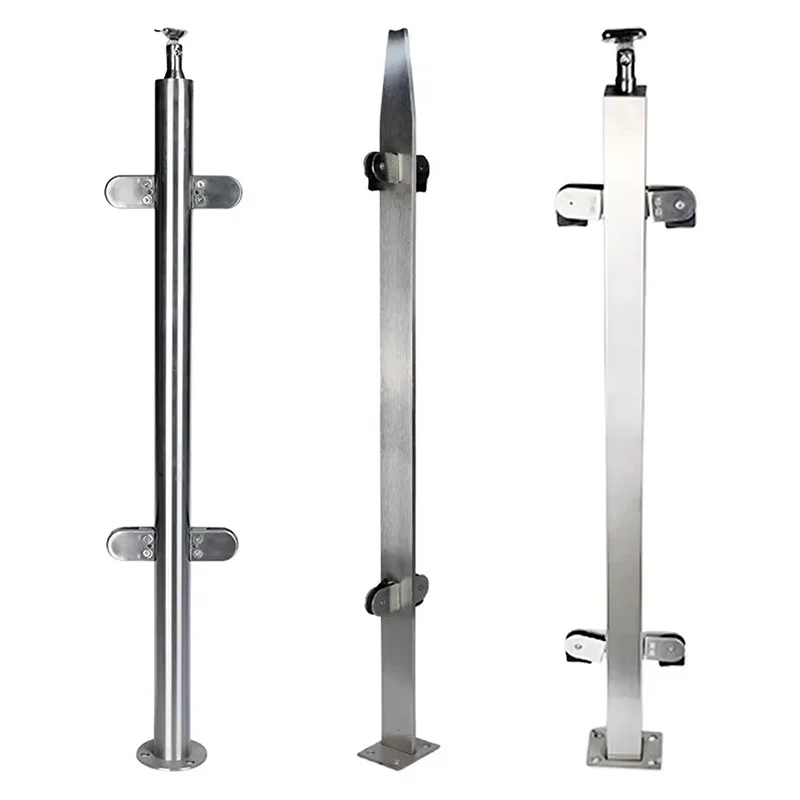
- 帖子正文: provides the vertical member and the faces that receive the specified rail or infill interfaces. Its section, wall and machining are project choices.
- 底座和锚固件: transfer the post reaction into the actual slab, steel, timber or edge structure. Anchor selection, embedment, edge distance and substrate capacity are not proven by the post photo.
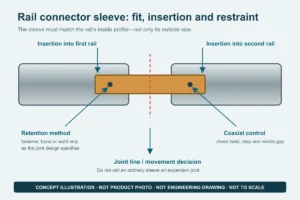
- 顶轨: may act as a handhold, a continuous frame member, or both. Its profile, joints and post connection must be coordinated rather than assumed to arrive with the post.
- 填充: closes the bays with glass, cable, bars or panels. Its own clamps, gaskets, terminals and tolerances are separate matching items.
- Position: an end, corner, stair transition or intermediate location changes which faces need connections and which loads enter the post.
This separation matters when comparing two offers. A low post price may exclude the base, anchors, rail saddle, infill connectors, surface finishing after fabrication or the drilling schedule. Ask suppliers to identify those boundaries on the same elevation.
Material and finish are conditional selections
304 and 316 are common stainless-steel requests, but the title does not mean every rectangular configuration is available in both grades. Grade 316 generally offers higher resistance to chloride-related pitting than 304 because of its molybdenum content; it is not automatically “marine proof,” and grade alone does not resolve crevices, contamination, cleaning, drainage or dissimilar-metal contact. Provide the exposure conditions and request the proposed grade plus any material certificate requirement in the quotation.
For a brushed finish, identify the grain direction on every visible face and decide how welds and cut edges should be blended. For a reflective finish, confirm the acceptable visual standard and protective-film handling. If matching existing work, send an unedited close-up and a physical reference when appearance is critical.
Machining must follow the final interface schedule
Do not release holes from a typical detail alone. A glass clamp needs the panel build-up, gasket and fastener arrangement; a cable pass-through needs cable direction, sleeve or grommet requirements and access for terminal hardware; a rail bracket needs the actual rail profile and pitch. Hole-to-edge distance, internal tool access and conflicts between opposite faces should be checked before production.
For stairs or ramps, send the pitch and indicate whether the post is vertical or normal to the run. For a corner, show the incoming and outgoing centre lines. For a fascia installation, include the edge build-up and available rear access. These inputs determine a useful proposal without turning an early inquiry into a full engineering package.
Start with the information you already have
A first inquiry can begin with:
- a marked plan, elevation, sketch or site photographs;
- the number of straight, end, corner, stair and intermediate positions;
- preferred rectangular proportions, post height and finish, if known;
- indoor, outdoor, poolside, coastal or process exposure;
- surface, fascia, core or embedded mounting and the known substrate;
- top-rail profile plus glass, cable, bar or panel infill;
- estimated quantities and any required standard, test or documentation.
The proposed offer should then identify the post section and orientation, grade, finish, height, base interface, machining pattern, included connectors, source documents, packaging and explicit exclusions. Final spacing, loads, anchors and compliance remain project-specific and should be confirmed by the responsible designer for the actual installation.