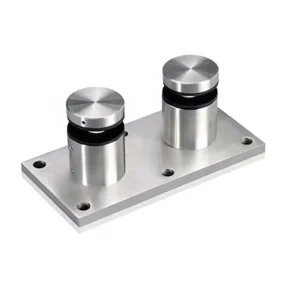
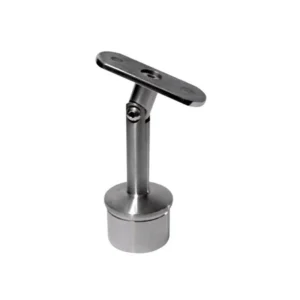
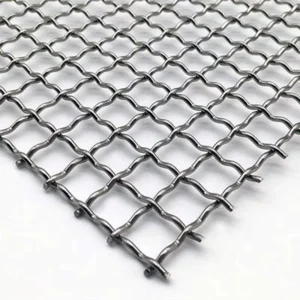
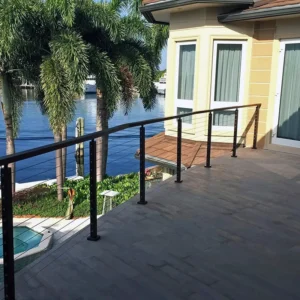
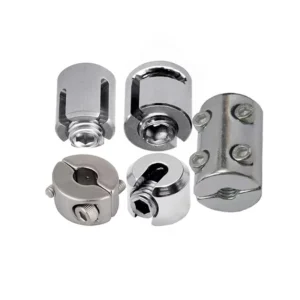
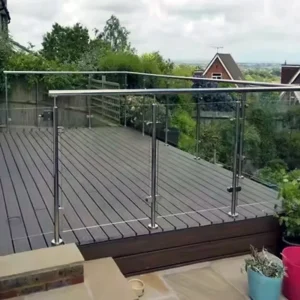
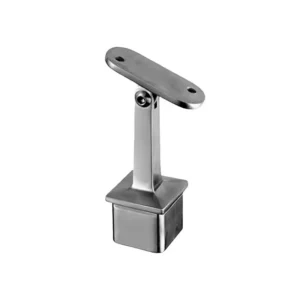
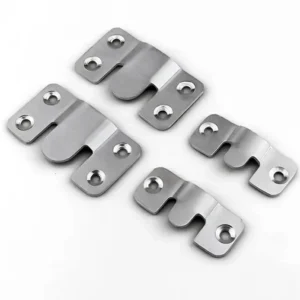
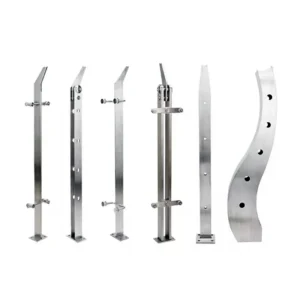
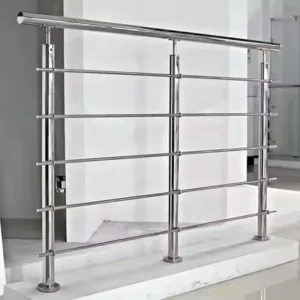
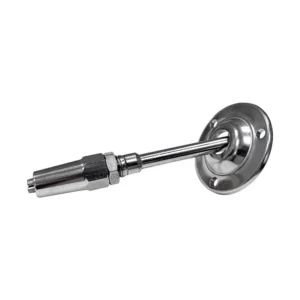
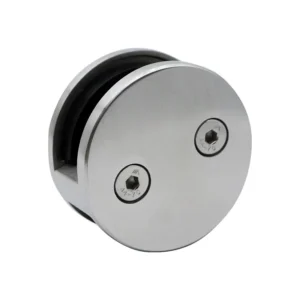
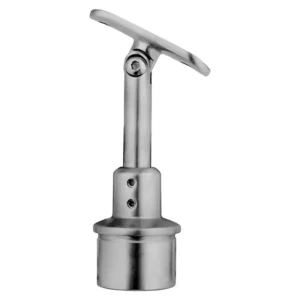
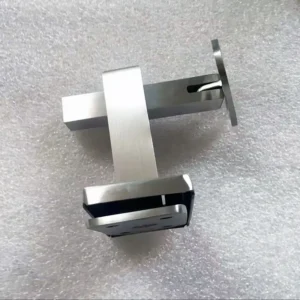
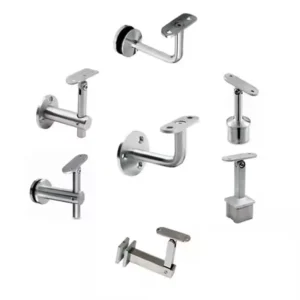
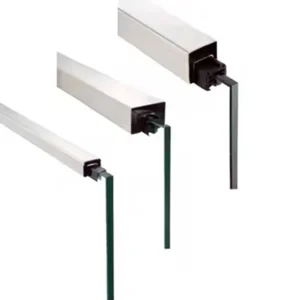
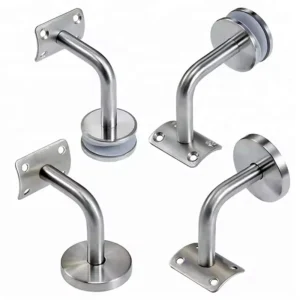
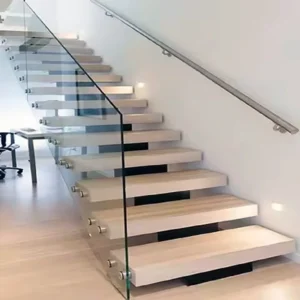
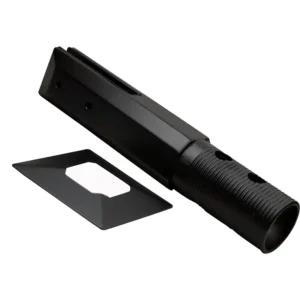
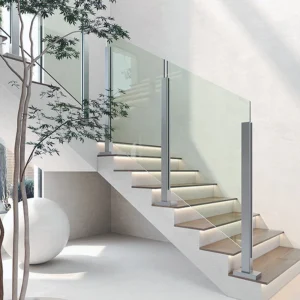
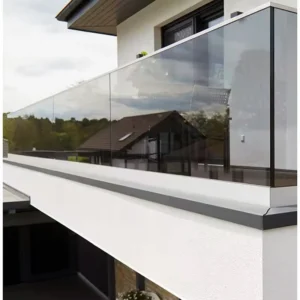
Terminal post components finish a railing run and provide the working interface for its last rail, glass panel, cable terminal, bar or framed panel. That makes the terminal location different from an intermediate support: end hardware needs bearing area, adjustment room and installation access. Send a run sketch, the infill type and a photograph of the end condition so ESANG can organize a proposed terminal package around the actual route.
Request terminal post components on WhatsApp
Define what ends at the post
A terminal post may stop the guard frame, the handrail, the infill, or all three—but those functions do not always end at the same point. A handrail may return to a wall beyond the last guard post. A glass panel may finish in clamps while the top rail continues. Cable fittings may pass through the post and require access on the outside face. Mark each endpoint independently before choosing components.
| Infill or rail | Terminal information needed | Mismatch to avoid |
|---|---|---|
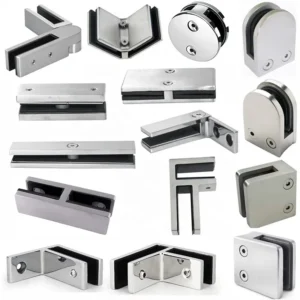
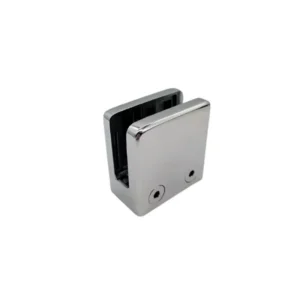
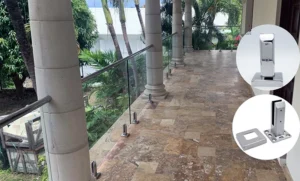
| 玻璃 | Panel build-up, edge position, hole/no-hole condition, clamp faces, gaskets and removal direction | Ordering a visible clamp without the matching panel and post interface |
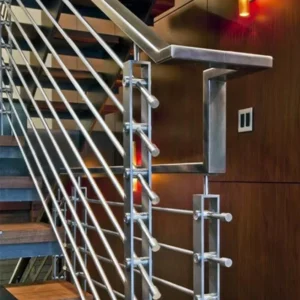
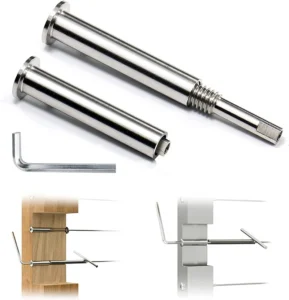
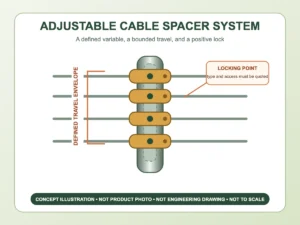
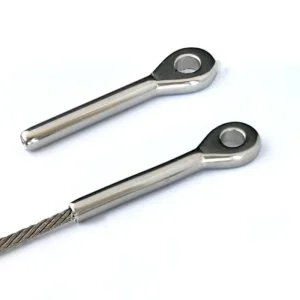
| 电缆 | Cable system, terminal body, thread or adjustment access, hole angle and run direction | Using an intermediate pass-through hole where a terminal fitting must bear and be tightened |
| Bars or framed panels | End bracket, frame depth, weld or mechanical joint and finish treatment | Leaving no edge clearance or site access for the last connection |
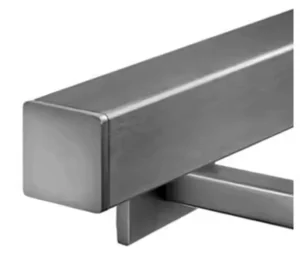
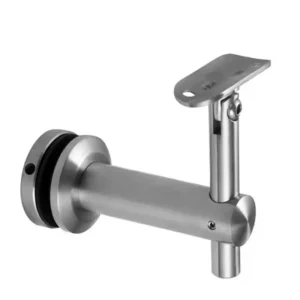
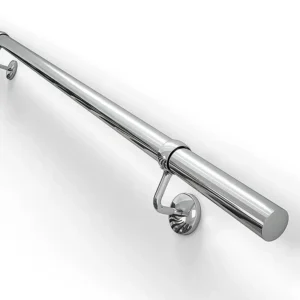
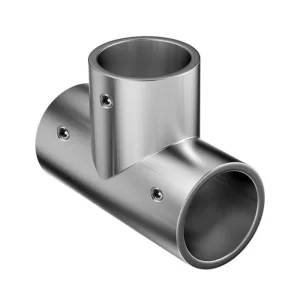
| Top rail or handrail | Stop, return, wall connection, cap or continuation beyond the post | Assuming the post cap also performs the rail termination |

Separate the terminal package into responsibilities
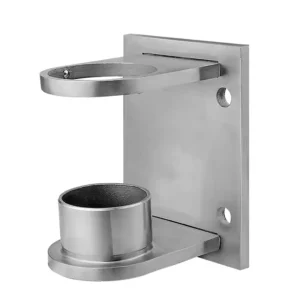
- 帖子正文: receives the end-specific holes, bearing faces, clamps or brackets and provides room for installation and future adjustment.
- 底座和锚固件: connect the terminal post to the actual slab, frame, fascia or embedded receiver. They are substrate-specific and are not proven by the post itself.
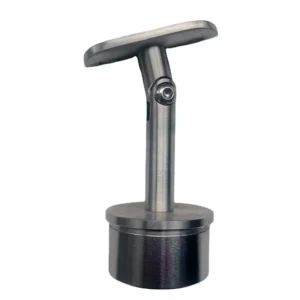
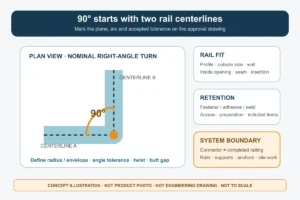
- 顶轨: may stop, return or continue. Its cap, elbow, wall return or joint is a separate interface unless included by name.
- Infill termination: glass clamps, cable tensioners, sleeves, panel brackets and gaskets must match both the infill and the post preparation.
- End position: often needs access beyond the final post. Wall spacing, adjacent finishes, doors and edge conditions can make an otherwise correct fitting unusable.
Mounting and access should be checked together
A terminal near a wall may need clearance for a wrench, cable tail, cover plate or removable glass clamp. A terminal at a slab edge may have restricted anchor locations or require fascia mounting. A stair terminal introduces pitch and angled holes. Provide the finished surfaces and access zone in the drawing; do not evaluate only the centre line of the post.
Surface, fascia, core and embedded mounting change the post length and the base components. The responsible designer must confirm substrate capacity, anchor type, embedment, edge distance and waterproofing for the actual project. The offer should state whether base plates, covers, receivers, anchors and sealants are included or left to others.
Grade and finish must cover the whole connection
304 and 316 are common stainless-steel requests. Grade 316 generally has higher resistance to chloride-related pitting than 304, but the terminal package also includes fasteners, fittings and crevices where salts or cleaning chemicals can collect. State the exposure and ask the quotation to identify materials for the post and each critical fitting, rather than accepting one grade label for the whole assembly.
For brushed work, align the visible grain between post, cap and rail. For polished work, confirm how fabrication marks and welds are finished. If dissimilar metals or coated components meet the stainless post, request the proposed isolation detail. Appearance, corrosion behaviour and structural suitability remain separate questions.
Build an inquiry from the run end inward
Useful starting information includes the run length and direction, terminal location, post profile and height, top-rail route, infill type, finished mounting surface, available rear/side access, environment, finish and quantity. For cable, identify the cable/fitting system if selected. For glass, provide panel thickness and build-up when known, plus whether holes are allowed.
The returned proposal should name the terminal post body, grade, finish, base, face preparation, rail end hardware, infill terminal parts, fasteners, covers, certificates or source documents, packaging and exclusions. It should also distinguish items that still need the final shop drawing, panel schedule, cable layout, anchor design or project approval.