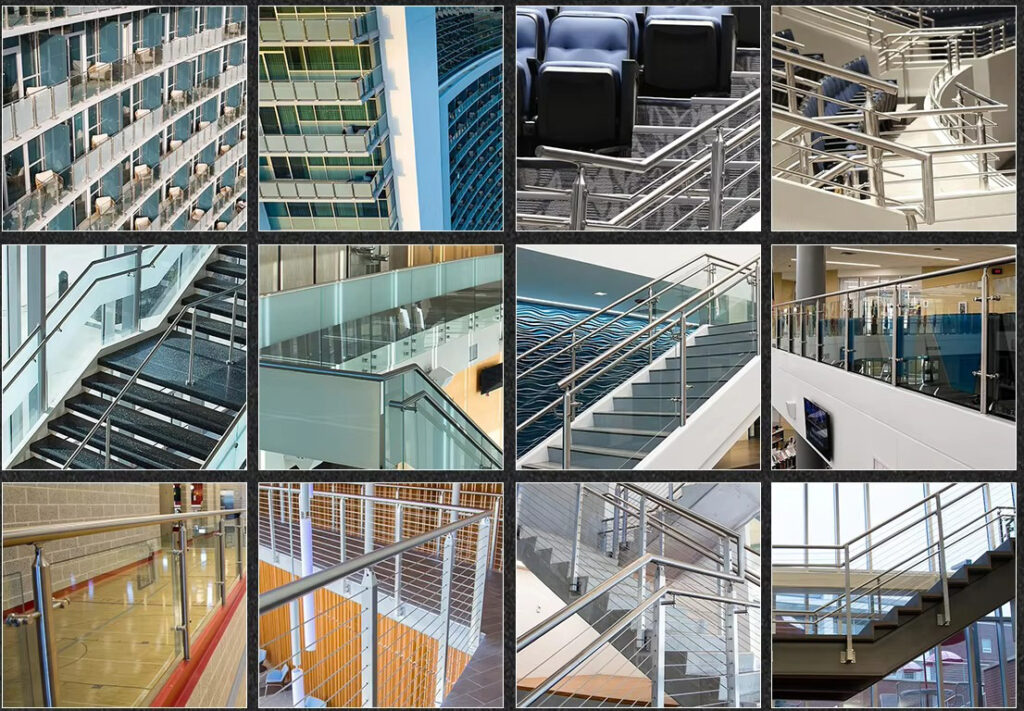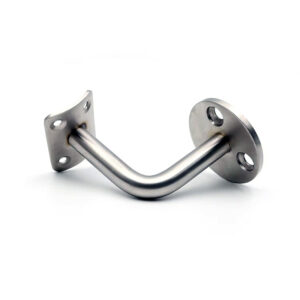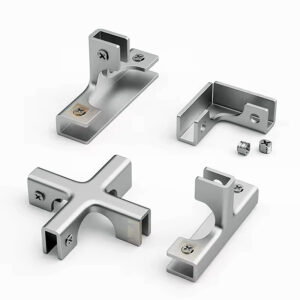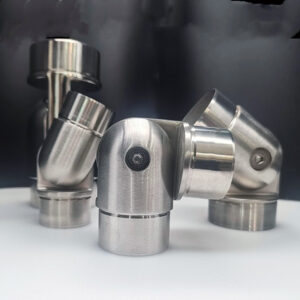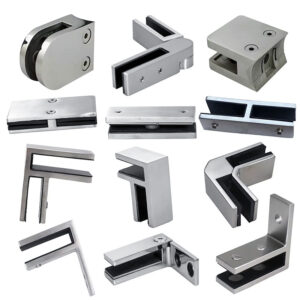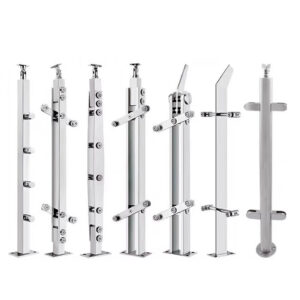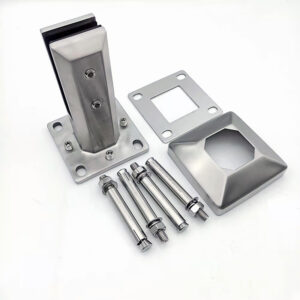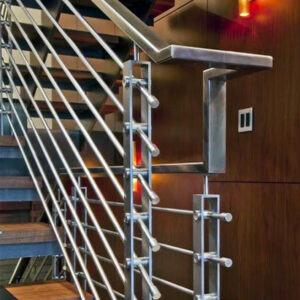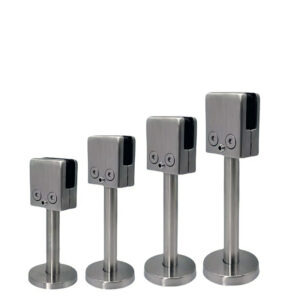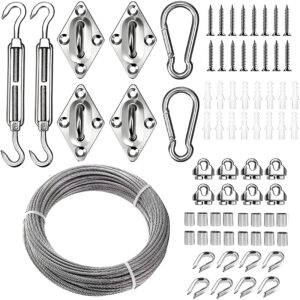
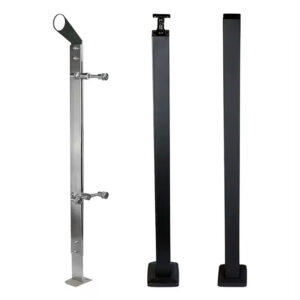
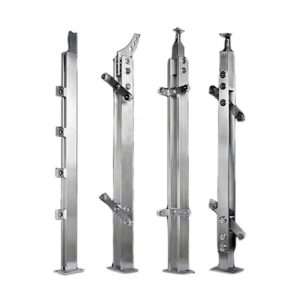
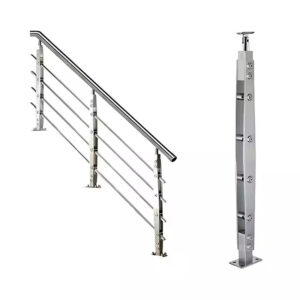
ESANG marine and coastal railing solutions are designed for projects exposed to salt air, waterfront moisture, poolside conditions, coastal weather, piers, docks, and marine-adjacent environments. These projects require more careful material selection, exposed hardware review, drainage planning, fastener compatibility, and maintenance than typical indoor or mild outdoor railing systems.
本类别包括 Marine Grade Railing Systems 316L, Salt Water Resistant Components, Coastal Installation Hardware, Waterfront Railing Solutions, ,以及 Pier Dock Railing Systems.
For contractors, distributors, fabricators, designers, and project buyers, marine and coastal railing selection should consider chloride exposure, salt spray, humidity, rain, cleaning frequency, fastener compatibility, base plate design, material grade, surface finish, and project installation conditions. ESANG can manufacture marine and coastal railing components according to drawings, dimensions, material grade, finish requirements, and environmental requirements.
| Application option | 最适合用于 | 关键筛选问题 |
|---|---|---|
| Marine Grade Railing Systems 316L | Marine-adjacent, coastal, waterfront, and project-specified 316L stainless steel railing applications | Does the project specify 316L, welded fabrication, chloride exposure, or more demanding corrosion performance? |
| Salt Water Resistant Components | Railing hardware exposed to salt air, salt spray, pool chemicals, or waterfront moisture | What components are exposed, and what grade, finish, fastener, and maintenance plan are required? |
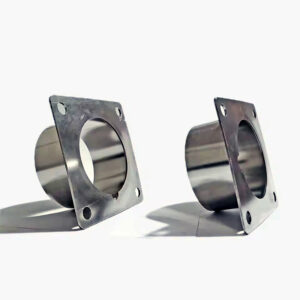
| Coastal Installation Hardware | Anchors, brackets, base plates, fasteners, posts, and exposed hardware for coastal projects | What substrate, anchor type, material grade, drainage, and hardware compatibility should be reviewed? |
| Waterfront Railing Solutions | Waterfront buildings, resorts, promenades, sea-view balconies, and coastal commercial projects | What exposure level, design style, material grade, finish, and cleaning access are required? |
| Pier Dock Railing Systems | Piers, docks, marina walkways, waterfront platforms, and marine-adjacent access areas | What structural fixing, fastener selection, drainage, impact exposure, and maintenance access are needed? |
Marine and coastal railing projects should be selected by exposure severity, not only by product type. A covered coastal balcony, a poolside glass railing, a waterfront promenade, and a pier railing may all require different material, fastener, finish, and maintenance planning.
| 项目状况 | 建议方向 | 为何这很重要 |
|---|---|---|
| The project is close to salt air or waterfront moisture | Consider 316 or 316L stainless steel and compatible fasteners | Chloride exposure increases the risk of staining, pitting, and surface corrosion. |
| The project specifies marine-grade stainless steel | Use marine grade railing systems manufactured to the required grade and drawings | Material grade should match the specification, not just the product name. |
| The railing is exposed to poolside or wet conditions | Review material grade, surface finish, drainage, and cleaning plan | Moisture and chemical exposure can make maintenance more important. |
| The project uses posts and base plates near water | Review coastal installation hardware, anchors, fasteners, and drainage | Base fixing and exposed hardware are critical in coastal environments. |
| The project uses glass or cable railing near the coast | Coordinate glass/cable hardware with posts, handrails, fasteners, and material grade | Small exposed fittings can become weak points if material and maintenance are not planned. |
| The project is a pier, dock, or marina-adjacent walkway | Review structural fixing, impact exposure, wet zones, and cleaning access with the project team | Marine-adjacent installations may face more demanding service conditions than ordinary outdoor projects. |
316 and 316L stainless steel are commonly considered for coastal and marine-adjacent environments because they provide better resistance to chloride-related corrosion than 304 stainless steel in many exposed conditions. 316L may be specified when low-carbon stainless steel or improved weldability is required.
| Material direction | 典型应用 | 买家须知 |
|---|---|---|
| 304 不锈钢 | Dry interiors, protected areas, or mild environments where corrosion exposure is limited | Usually not the first choice for demanding salt-air, poolside, or marine-adjacent exposure. |
| 316 不锈钢 | Outdoor, coastal, poolside, humid, and higher-corrosion railing environments | Often preferred where better resistance to chloride exposure is required. |
| 316L 不锈钢 | Marine-grade, welded, coastal, and project-specified railing systems | May be selected when the specification calls for low-carbon stainless steel or more demanding corrosion performance. |
| 拉丝或缎面处理 | Coastal railings, waterfront hardware, and exposed stainless steel components | Requires planned cleaning to reduce salt and surface contamination. |
| Mirror polish or project-specified finish | Selected visual applications where smoother appearance is required | Finish choice should be reviewed with maintenance expectations and exposure conditions. |
Stainless steel is corrosion-resistant, not maintenance-free. In coastal and marine-adjacent environments, salt deposits and surface contamination should be cleaned regularly to help maintain appearance and reduce corrosion risk.
Coastal railing projects should be reviewed as complete systems. Handrails, posts, glass hardware, cable hardware, brackets, anchors, base plates, fasteners, and connectors should be selected together.
| System area | 需要确认的内容 | 相关产品类别 |
|---|---|---|
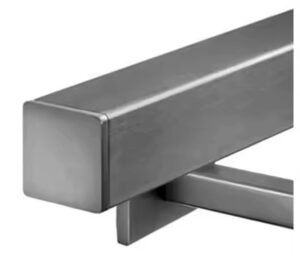
| 扶手 | Material grade, tube profile, finish, bracket type, and cleaning access | 扶手系统 |
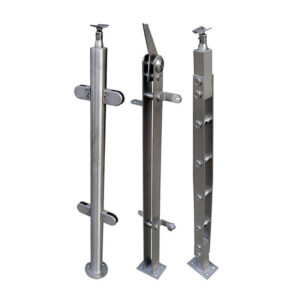
| Posts and base plates | Post shape, base plate, anchor type, drainage, and cover detail | 不锈钢柱 |
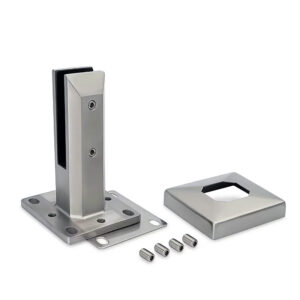
| Glass hardware | Spigots, clamps, standoffs, base shoes, glass thickness, and drainage | 玻璃栏杆五金件 |
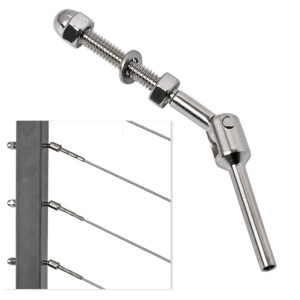
| Cable hardware | Cable fittings, tensioners, end fittings, spacer bars, and cable-ready posts | 电缆栏杆系统 |
| Anchors and brackets | Anchor material, substrate, fastener compatibility, edge distance, and corrosion exposure | 锚定系统 |
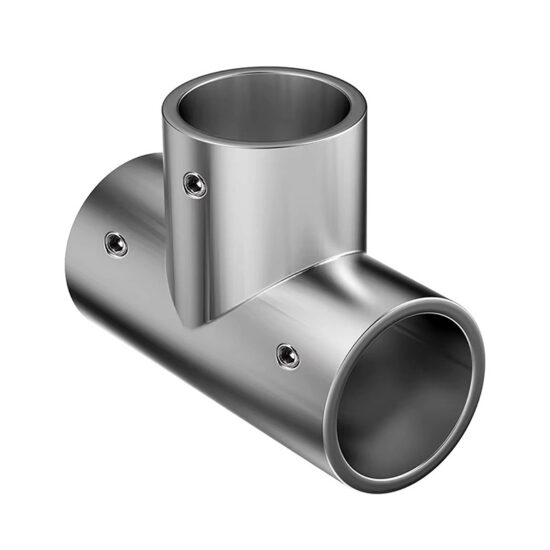
| Connectors and small fittings | Material grade, finish, exposed surfaces, and maintenance accessibility | 安装配件和支架 |
Coastal environments are more demanding because salt deposits can remain on stainless steel surfaces. Even when 316 or 316L stainless steel is selected, regular cleaning and correct installation details remain important.
| Exposure factor | 需要确认的内容 | 为何这很重要 |
|---|---|---|
| Salt air exposure | Distance from coastline, wind direction, and frequency of salt deposition | Salt deposits can increase staining and localized corrosion risk. |
| Direct splash or wet zones | Whether the railing is exposed to splash, pool water, rainwater, or standing water | Wet areas require more attention to drainage and cleaning. |
| Fastener compatibility | Anchor, screw, washer, nut, and bracket material compatibility | Small mismatched fasteners can create maintenance issues in coastal conditions. |
| Drainage and water traps | Base plates, channels, tube ends, covers, and low points where water can collect | Trapped moisture and salt can accelerate surface staining. |
| Finish and surface condition | Brushed, satin, mirror, or project-specified finish | Smoother and well-maintained surfaces are easier to clean. |
| Cleaning plan | Cleaning frequency, access, water quality, and approved cleaning method | Coastal stainless steel should be cleaned regularly to maintain appearance. |
ESANG marine and coastal railing systems can be manufactured according to project drawings and environmental requirements. Customers can specify material grade, handrail profile, post shape, glass thickness, cable layout, bracket type, anchor requirement, surface finish, packaging, and OEM or ODM requirements.
For marine-grade or coastal projects with standard-oriented requirements related to guardrail height, handrail height, opening limitations, material grade, corrosion resistance, or installation method, customers should provide the required drawings and specifications. ESANG can manufacture components to match those provided details, while final compliance depends on the complete installed system, structural design, installation method, and applicable local code.
Marine and coastal railing systems should be reviewed with the full exposure condition. The same stainless steel component may perform differently depending on salt air, wet zones, cleaning frequency, material grade, fastener compatibility, and installation details.
"(《世界人权宣言》) World Stainless marine applications guidance identifies 316 and 316L stainless steel as common choices for coastal land-based handrails and related marine applications. This should be treated as material selection guidance, not a substitute for project engineering or local approval.
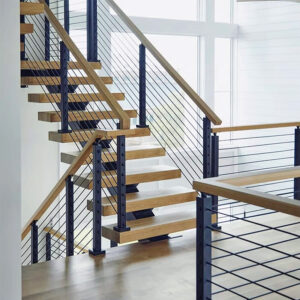
Coastal balcony railings may use stainless steel posts, handrails, glass hardware, cable hardware, base plates, and anchors selected for salt-air exposure. Material grade and maintenance access should be reviewed early.
Waterfront buildings, resorts, promenades, and sea-view terraces often require railing systems that balance appearance, corrosion resistance, drainage, and cleaning access.
Pier and dock railing systems may require stainless steel handrails, posts, base plates, cable hardware, or glass hardware selected for wet and marine-adjacent exposure. Structural fixing and fastener compatibility should be reviewed carefully.
Poolside railings may use glass spigots, base shoe systems, cable hardware, posts, or handrails. Moisture, cleaning chemicals, drainage, and exposed fittings should be considered together.
Marine-grade custom projects may require 316 or 316L stainless steel, special finishes, custom brackets, base plates, anchors, and packaging requirements. Drawings and environmental conditions are important for review.
A marine or coastal railing system should consider chloride exposure, material grade, fastener compatibility, drainage, exposed hardware, surface finish, and regular cleaning. The complete installed system should be reviewed for the actual site environment.
316 stainless steel is commonly selected for outdoor, coastal, poolside, and higher-corrosion environments because it provides better chloride resistance than 304 stainless steel in many exposed conditions. Final selection should follow the project specification and environment.
316L stainless steel may be used when the project specification calls for low-carbon stainless steel, improved weldability, or more demanding corrosion performance. It is often relevant for marine-grade, welded, or coastal custom railing projects.
No. Stainless steel is corrosion-resistant, not maintenance-free. In coastal or marine-adjacent environments, salt deposits and surface contamination should be cleaned regularly to help maintain appearance and reduce corrosion risk.
Yes. ESANG can manufacture marine and coastal railing components according to drawings, material grade, surface finish, handrail profile, post type, glass thickness, cable layout, bracket type, anchor requirement, packaging needs, and project environment.
Yes. Glass railing systems can be used in coastal environments when glass hardware, posts, base shoes, spigots, anchors, material grade, drainage, and maintenance are selected according to the exposure condition.
Yes. Cable railing systems can be used near the coast, but cable fittings, tensioners, end fittings, posts, spacer bars, material grade, and maintenance access should be reviewed carefully.
Important checks include anchor material, fastener compatibility, substrate, edge distance, base plate drainage, water traps, surface finish, and cleaning access.
Useful information includes project location, exposure condition, drawings, material grade, handrail profile, post type, glass or cable details, mounting method, anchor requirement, surface finish, quantity, and maintenance expectations.
Routine cleaning should use mild detergent, clean water, and a soft cloth. Avoid chloride-based cleaners, steel wool, and abrasive tools. Coastal, poolside, and marine-adjacent installations should be cleaned more regularly to remove salt deposits and surface contamination.
根据基材、负载路径、安装顺序以及允许的现场调整幅度,选择壁式安装或柱式安装。.
根据室内磨损、室外暴露、连续过渡和安装人员进出限制来选择楼梯扶手。.
壁装导轨故障通常始于支架和基体,而非导管;订购前应确定两者。.
定制轨道项目需要在取样前尽早锁定管材轮廓、支架几何形状、表面光洁度和包装。.
通过检查文件、配合公差、成品控制和出口支持,避免仅根据单价来确定供应商候选名单。.
使用此供应商镜头可筛选工厂能力、定制图纸、MOQ、包装方法和重复订单的一致性。.


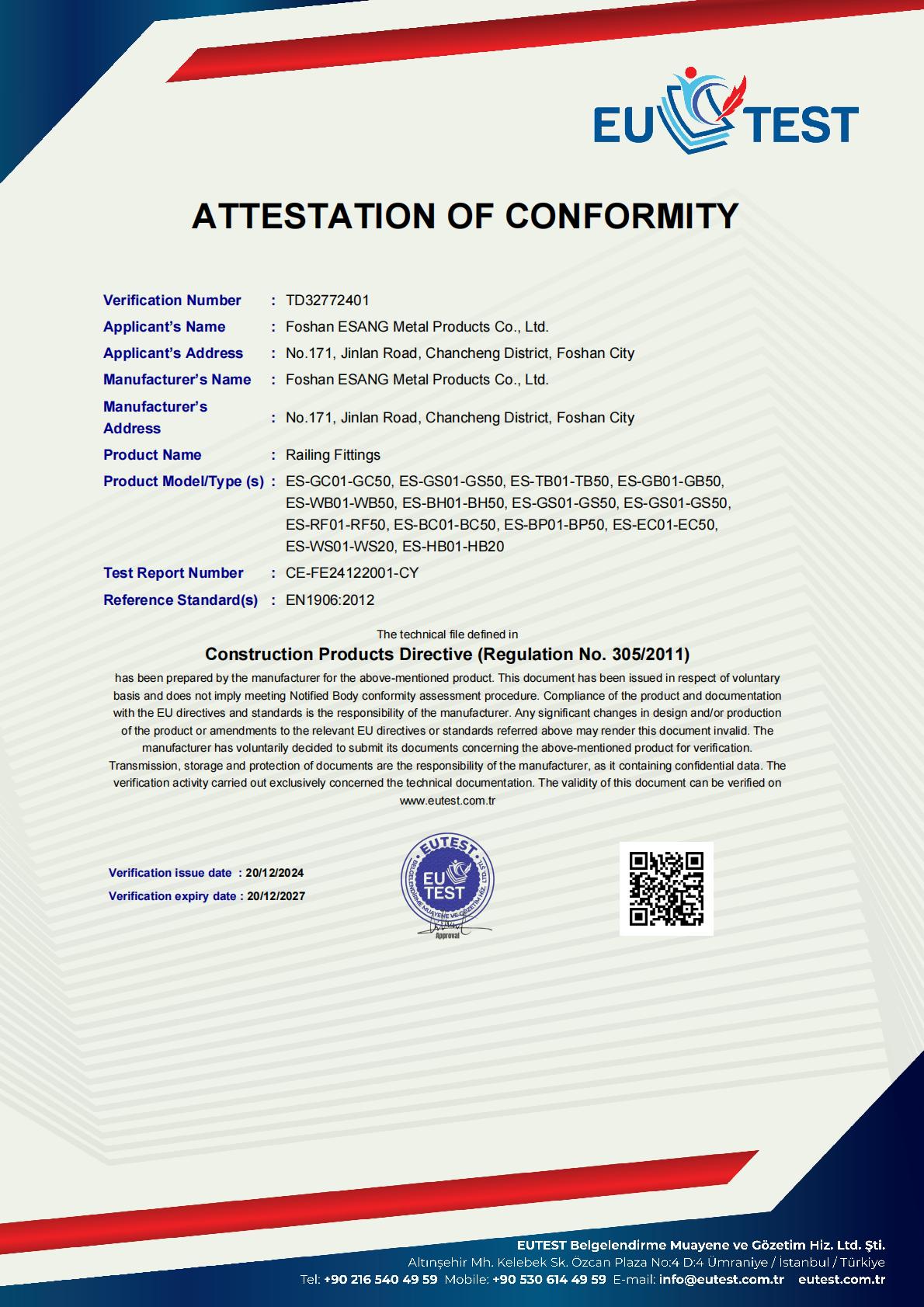
佛山伊桑金属制品有限公司自豪地保持着 CE 认证 (根据《建筑产品指令》(第 305/2011 号法规),我们获得了 TD32772401 认证(认证编号:TD32772401),这肯定了我们对欧洲最高安全和质量标准的承诺。
认证产品范围:
我们全面的栏杆配件组合--包括玻璃夹、张紧器、托架、墙面安装件、底座、扶手配件、电缆五金件和立柱组件--符合以下要求 EN1906:2012 标准,确保所有装置的结构完整性和性能可靠性。.
这对您的项目意味着什么?
✓ 完全符合欧洲和国际市场的法规要求
✓ 经独立验证的安全和耐用性能
✓ 为架构规范提供文档支持
✓ 由第三方提供质量保证,让您高枕无忧
认证有效期至 2027 年 | 测试报告:CE-FE24122001-CY