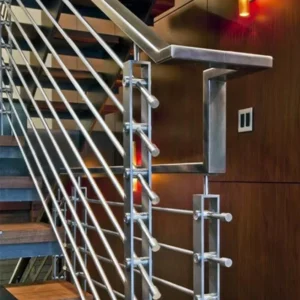
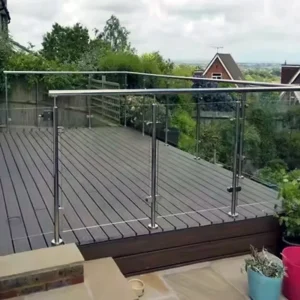
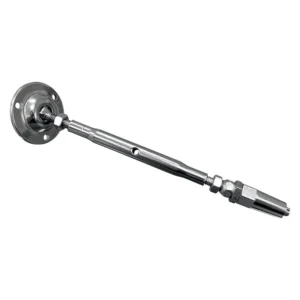
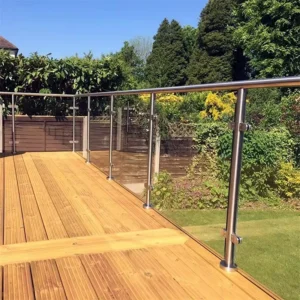
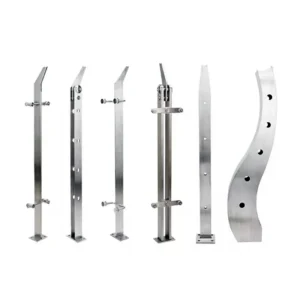
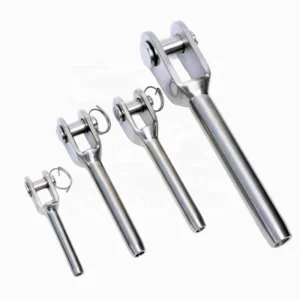
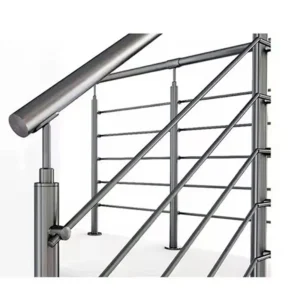
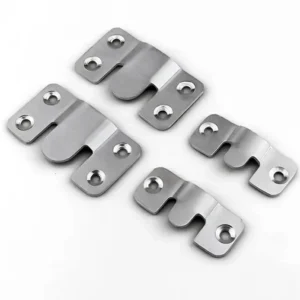
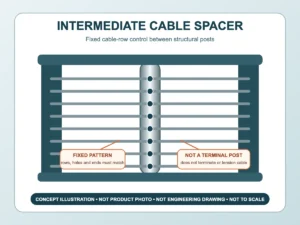
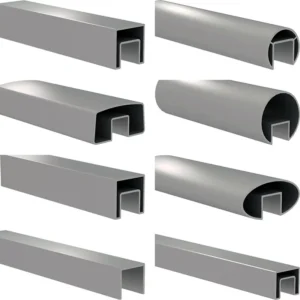
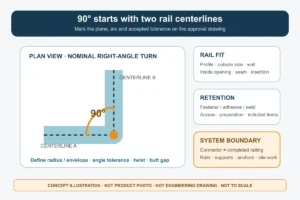
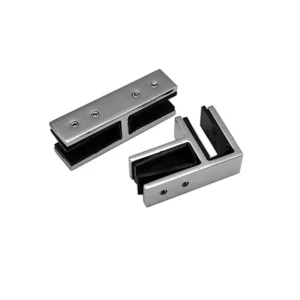
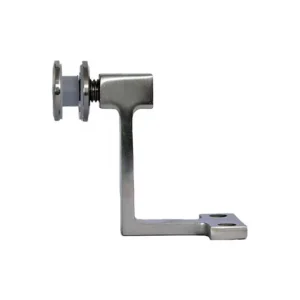
Cable pass-through fittings sit at holes where a cable continues through an intermediate post. Their job is to guide the cable, protect it from the post edge and finish the opening. They are not, by that role alone, fixed terminals or tension anchors. Select them from the cable, post wall and hole geometry, then specify separate end hardware to terminate and tension the run.
Discuss cable pass-through fittings on WhatsApp
Keep the guide role separate from the terminal role
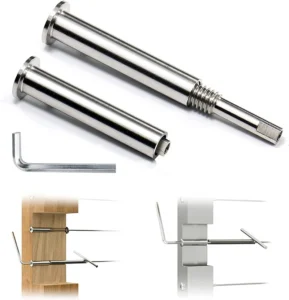
A fitting may have an external thread, hex flats or a locknut simply to retain it in the post wall. Those visible features do not prove that it grips the cable or transfers the cable’s terminal force. The cable should remain free to pass through the intermediate post as intended by the selected system, while the terminal hardware at the run ends carries and adjusts the cable force.

If an enquiry needs a load-bearing end fitting, identify it as a separate terminal requirement. Substituting a guide for a terminal can pull the fitting through the post wall, damage the hole, release the cable or overload a thin local surface. Conversely, using a bulky terminal body at every intermediate post can prevent the cable from moving during installation and adjustment.
Choose the body and retention detail from the post
Start with the post shape, outside size, wall thickness or solid depth, and access to the inside or back face. A round post gives a curved seating surface; a square post gives a flat face but may offer limited internal space. A thin hollow wall, thick hollow wall and solid timber post do not accept the same guide length or retention method.
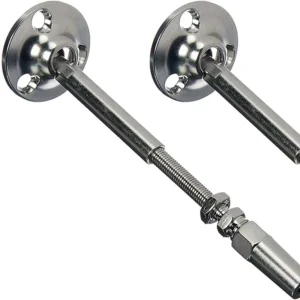
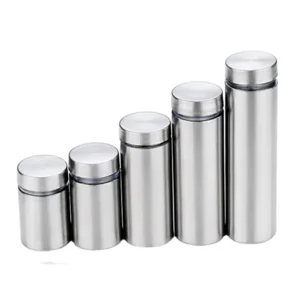
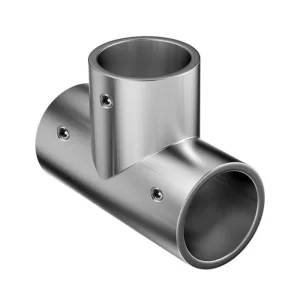
The current ESANG feature photograph shows four fittings with visible hex sections, stepped bodies, external threads and dark bores. These observations support comparison of visible form only. They do not confirm the cable diameter, bore liner, sealing function, material, thread or current application range.

Compare these interface fields in the proposed supply:
- Body length and shoulder: the guide must seat correctly without bottoming against the opposite wall or standing proud unintentionally.
- 留存率: press-fit, threaded, nutted or another proposed method must suit the post wall and the access available for assembly.
- Face seating: a curved post may need a shaped seat or a fitting face prepared for that radius; a flat locknut cannot be assumed to seat properly on every surface.
- Internal bore: it must give the selected cable enough clearance while preventing harmful contact with a sharp drilled edge.
- Exposed profile: projection, hex flats and finish affect appearance and may affect snagging or cleaning access.
Match the bore to cable diameter and construction
Give the nominal cable diameter and strand construction, not diameter alone. Cable stiffness and outer-strand behaviour affect how readily it passes through a line of holes and how it reacts at a stair angle or corner. The proposed guide should state the compatible cable input and the required drilled hole, while leaving the fixed and tensioning terminals to their own confirmed cable match.
A bore that is too small can scrape or bind the cable, make lacing difficult and prevent tension from equalising along a run. Excessive clearance can leave an unfinished opening or reduce edge protection. A liner or insert visible in a photograph must not be assumed to provide weather sealing, electrical isolation or a specific wear life unless the proposed product documentation says so.

Hole position and angle are part of the fitting selection
For a level run, the post holes should follow the intended straight cable axis. For a stair run, the cable crosses the post at the stair pitch. The drilled axis, guide shape and face seating need to agree with that slope. A straight fitting forced onto an angled cable can leave the cable rubbing at one edge even when the outside face appears seated.

Send a controlled vertical datum for every cable row, the stair rise/run or measured cable angle, and the post orientation. If holes are already drilled, provide the actual diameter, angle, spacing and clear photographs from both faces. Do not enlarge a misaligned hole on site until the replacement fitting and remaining bearing surface have been reviewed.
Coordinate the fixed end, tensioning end and corner
Pass-through fittings cover only the intermediate openings. The run still needs a fixed end, a tensioning end and a decision for every corner:
- identify which terminal is fixed and which provides adjustment;
- confirm the cable attachment method at both ends;
- leave tool and trimming access behind the tensioning end;
- terminate and restart at a corner unless a continuous corner route is specifically confirmed for the proposed cable, guide and post layout;
- treat a level-to-stair transition as an angled interface, not as an ordinary level hole.
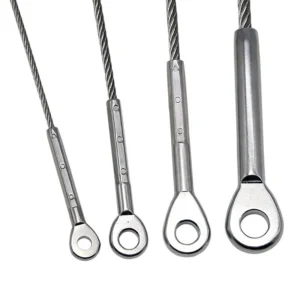
A pass-through fitting should never be used as evidence that the full run is compatible. The cable, end terminals, guide fittings, posts and local structure still have to be coordinated as one assembly.
Plan drilling, deburring and cable lacing
State whether the posts will be factory machined, supplied with a hole schedule for another fabricator, or drilled on site. The installer may need a template or jig, bits suited to the post material, a deburring tool, a method to clear chips from hollow posts, cable cutters suited to the cable construction and a lacing aid where multiple aligned holes make feeding difficult. Wrenches are needed only where the confirmed fitting uses accessible flats or nuts.
Field fabrication errors are difficult to hide with a fitting. Off-height holes produce visible cable waves; off-axis holes cause edge contact; burrs can damage strands; an oversized opening can leave too little seating surface; and a fitting installed before coating or finishing work is resolved may be difficult to remove cleanly. Freeze the hole schedule after the guide and cable match is confirmed.
State the supply boundary in the enquiry
Ask for the exact scope you need and require the response to list it. Relevant boundaries include:
- pass-through guides only, with required hole information;
- guides matched to a customer-specified cable;
- guides plus fixed and tensioning terminals for defined runs;
- hardware with pre-machined posts, where requested and confirmed;
- finishing caps, shaped washers, locknuts or inserts included with each guide;
- installation tools or jigs included or specifically excluded;
- posts, anchors, top rail, substrate reinforcement, cable cutting and final adjustment by others unless the response states otherwise.
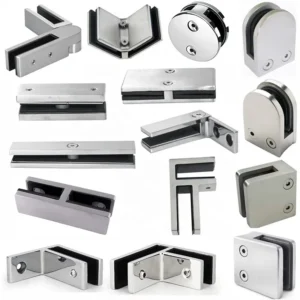
Do not infer a standard pack from a group photograph. ESANG should confirm the proposed item, quantity per post or cable row, mating parts, packaging basis and any components that must be sourced from the same system.
Enquiry fields that prevent rework
- project sketch with level runs, stairs, corners, terminal posts and intermediate posts;
- post shape, outside size, wall thickness or solid depth and material;
- hole diameter, centreline, angle and existing-hole status;
- cable nominal diameter, construction, source and finish request;
- quantity of holes by post type and whether both faces need visible fittings;
- indoor, outdoor, coastal, pool or other exposure for material confirmation;
- factory-prepared versus site-drilled boundary;
- required scope for fixed ends, tensioning ends, corner hardware and tools.
The proposed supply should return the guide body and retention detail, hole requirement, cable clearance, post-wall match, visible finish, included small parts, installation steps and exclusions. That allows buyers to compare two offers without mistakenly treating a cable guide as a terminal anchor.