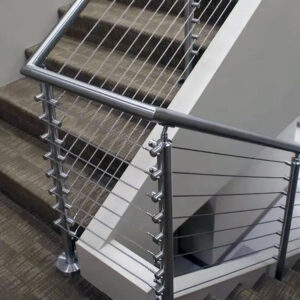
A cable railing system that has gone slack was tensioned correctly at installation. Deciding whether to retension one cable, a full run, or to stop and investigate the post and anchorage instead requires separating ordinary take-up from a condition that tension cannot fix. That decision has to be made before any fitting is touched, not after the first turnbuckle is turned.
Condition Record Before Any Adjustment
| Inspection item | Condition to record | 决策应用 |
|---|---|---|
| Cable sag | Location and observed sag before adjustment | Preserve the starting condition for comparison after retensioning |
| 候机厅座位 | Observed seating at each checked terminal | Help separate ordinary cable take-up from a damaged or displaced terminal |
| Exposed threads | Thread exposure before adjustment | Support the later check of remaining adjustment reserve |
| Locking features | Observed condition before the fitting is moved | Preserve the starting position and condition for the final check |
| 腐蚀 | Location and observed condition | Flag cable or hardware that may need a replacement decision rather than added tension |
| Post alignment | Alignment before adjustment | Identify a rotated post that extra cable tension must not be used to compensate for |
Retensioning changes the outcome of an inspection permanently: once a terminal is turned, the as-found condition is gone. The starting record is what allows anyone reviewing the work afterward to tell the difference between a cable that was simply slack from normal stretch and one that moved because something else in the assembly shifted. Cable sag by itself does not indicate a cause; a sagging cable next to a seated terminal in good condition points toward ordinary take-up, while the same sag next to a terminal that has rotated out of its seat points toward a hardware or installation problem that retensioning will mask rather than solve.
Terminal seating matters because a terminal that has not fully seated can still take up some tension and appear functional, while quietly reducing the load path the fitting was designed to carry. Recording how a terminal sits before touching it establishes whether any movement at that terminal during the inspection is adjustment or correction of a prior defect. Exposed thread length is the only reliable indicator of how much mechanical travel a tensioner has already used; without a record of exposed threads at the start, there is no way to later judge whether the remaining travel is adequate or whether the terminal is near the end of its usable range.
Locking features — set screws, locking collars, or similar devices depending on the system — hold a tensioned position once it is reached. Their condition before adjustment shows whether the system previously held tension correctly or whether the locking feature itself failed and allowed the cable to go slack independent of any stretch in the cable. Corrosion observed at this stage should be treated as a separate finding from tension, since corrosion at a terminal or along an exposed strand changes a replacement decision regardless of how the cable measures for sag. Post alignment recorded before adjustment protects the inspector from a predictable error: tensioning a cable against a post that has already rotated or shifted will tighten the cable to a frame that is out of position, which does not correct the alignment problem and can obscure it in the final result.
Terminal Seating Threads and Locking Features
These three items are grouped because they interact at the same physical point on the fitting, and misreading one in isolation can lead to the wrong adjustment. A terminal that looks correctly seated but has an unusual amount of thread exposed may already be near its travel limit, which changes what “correct seating” should mean for that specific fitting at that point in its service life. Thread exposure alone does not indicate a defect — some exposure is expected as the tensioner takes up normal cable movement — but exposure approaching the travel limit changes the interpretation of any further slack at that terminal from “needs retensioning” to “needs a replacement decision.”
Locking features depend on the terminal being seated correctly before they are engaged. Where a locking collar or set screw is tightened against a terminal that has not fully seated, the lock will hold the terminal in an incorrect position, and subsequent inspections may find the locking feature intact while the terminal underneath it is not performing as installed. This is why seating is checked and recorded before the locking feature’s condition is assessed, rather than inferring seating from the fact that a lock is present and tight.
The practical consequence for the inspector is that these three findings should be read together rather than individually. A terminal with full seating, moderate thread exposure, and an intact locking feature supports ordinary retensioning. A terminal with full seating but thread exposure near its limit supports retensioning now but flags that terminal for closer attention at the next inspection. A terminal with poor seating, regardless of thread exposure or lock condition, is a hardware finding that should be resolved before the cable is tensioned against it, because tensioning will not correct a seating problem and may make it harder to detect.
Retensioning Sequence Across Related Runs
Cable railing systems are specified as an assembly, and the sequence in which fittings are adjusted is part of that specification rather than a matter of inspector preference. Following the sequence specified for the named system keeps the load distribution across posts and terminals consistent with how the system was designed to behave once all cables reach their intended tension. Adjusting fittings out of sequence, even when each individual adjustment is correct in isolation, can leave intermediate posts carrying an uneven load for the period between the first and last adjustment, which is a different condition than the uneven load the system was designed to tolerate at rest.
Comparing adjustment across related runs — rather than correcting one visibly loose cable and considering the task complete — exists because a single loose cable is sometimes a symptom of a condition affecting the whole run rather than an isolated fault. Where one cable in a run has gone noticeably slack while the adjacent cables in the same run remain within their expected range, that pattern supports treating the loose cable as an isolated case. Where multiple cables across a run show similar sag, or where sag increases progressively from one end of a run to the other, that pattern points toward a shared cause — a shifting post, a settling anchorage, or a system-wide stretch condition — that retensioning each cable individually will not resolve.
This comparison step is what allows the inspector to distinguish between a maintenance item and a condition that needs to be escalated before further adjustment continues. It also protects the final tensioned result: a system retensioned cable-by-cable without comparison across the run can end up internally consistent at each terminal while still being uneven as an assembly, which is a result that a visual check immediately after the work may not catch but that becomes apparent as the system is used.
Frame and Anchorage Warning Signs
Two conditions sit outside what retensioning can correct: a loose base and a rotated post. Both are frame or anchorage conditions rather than cable conditions, and the defining judgment for the inspector is recognizing that additional cable tension applied to compensate for either one does not restore the assembly to its designed condition — it transfers the frame’s problem into the cable and the terminals carrying it.
A loose base indicates that the connection between the post and the structure it anchors to has lost its intended holding capacity. Where tension is increased to pull a visibly loose cable tight against a base that is itself moving under load, the cable will appear tensioned at the moment of inspection but will not hold that tension once the post moves again under normal use. The correct response is to treat the base condition as the finding and record it for project-specific review, rather than treating the cable’s apparent slack as the problem to solve.
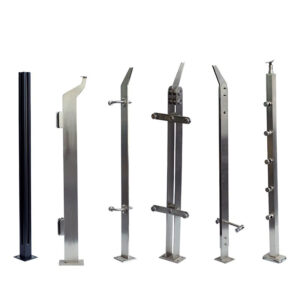
A rotated post presents a related but distinct risk. Where a post has rotated from its original position, the cable running through or across it is no longer aligned the way the system was designed to hold it, even if the cable’s own tension is otherwise correct. Retensioning in this condition can appear to succeed — the cable goes taut — while the post continues to carry the cable at an angle it was not designed to carry it at. This is why post alignment is part of the condition record taken before any adjustment: it allows the inspector to recognize, before tensioning begins, that a post found out of alignment needs its own resolution and that proceeding to tension the cables running through it will not address the underlying movement.
The shared boundary in both conditions is the same: cable tension is a cable-level adjustment, and it has no mechanism for correcting a structural or anchorage condition at the post or base. Where either condition is present, the appropriate action is to stop adjustment at that location and carry the frame condition forward as a separate finding, distinct from the cable inspection.
Remaining Travel and Replacement Decisions
| Observed condition | Retensioning boundary | Decision record |
|---|---|---|
| Adjustment reserve remains | Use only the sequence specified for the named system and compare adjustment across related runs | Record the remaining reserve after the final check |
| Terminal has reached its travel limit | Do not apply extra tension to compensate for exhausted travel | Carry the terminal or associated hardware into the replacement decision |
| Damaged strand | Do not use added tension as a substitute for the damaged cable condition | Schedule the cable for replacement |
| Damaged terminal | Treat the condition separately from ordinary cable take-up | Schedule the affected hardware for replacement |
| Loose base or rotated post | Do not use cable tension to compensate for frame or anchorage movement | Record the frame condition for project-specific review |
Not every finding from the inspection resolves through retensioning, and the inspector’s task at this stage is to sort what remains into what can still be adjusted and what has to be carried forward as a replacement decision instead. The distinguishing question is whether the component still has travel, strength, or seating capacity to work with, or whether it has reached a limit that tension cannot restore.
Where adjustment reserve remains at a terminal — meaning the tensioner still has usable travel and the terminal is seated correctly — retensioning using the sequence specified for the named system, compared across related runs, is the appropriate response. This is ordinary maintenance adjustment, and the remaining reserve after the adjustment becomes part of the record for future reference.
Where a terminal has reached its travel limit, the judgment changes. Applying additional tension beyond that limit does not produce a correctly tensioned cable; it forces a fitting past the range it was built to operate in, which is a different kind of risk than the condition the terminal was installed to prevent. A terminal at its travel limit belongs in the replacement decision, not the retensioning sequence, regardless of how the cable measures at that point.
Damaged strands and damaged terminals follow the same boundary from a different direction. A cable with a damaged strand may still accept tension and may even appear to hold it, but added tension is not a substitute for the structural condition of the strand itself — a damaged strand carries load differently than an intact one, and tensioning it further does not reverse the damage. The same applies to a damaged terminal: its mechanical condition, not the tension applied to it, determines whether it continues to perform its function. Both findings route to a replacement schedule rather than to the retensioning sequence.
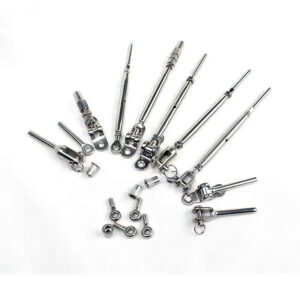
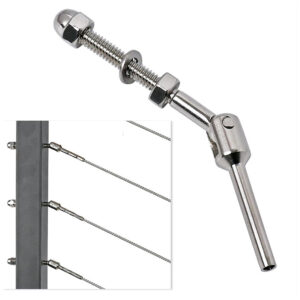
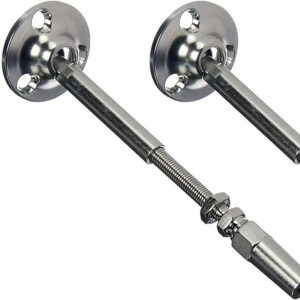
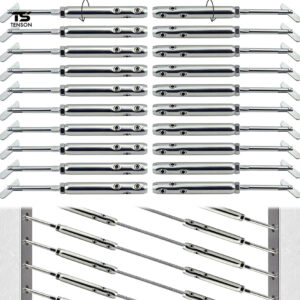
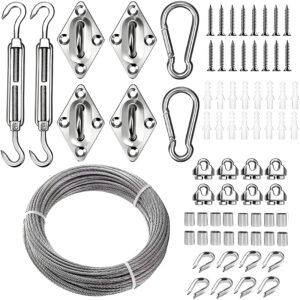
A loose base or rotated post, as its own category, reinforces the same principle from the frame side: cable tension has no corrective relationship to anchorage or post movement, and the correct record is a flagged frame condition for project-specific review, not an adjusted cable. Where the system under inspection includes adjustable cable tensioners 或 cable end stops as the terminal hardware, the travel limit and seating condition specific to that hardware type is what determines where this boundary falls for that installation.
Closeout Evidence After Retensioning
| Closeout item | Final record | 证据边界 |
|---|---|---|
| Fitting positions | Final position of each checked fitting | Documents the completed adjustment; it does not establish project-specific approval |
| Frame condition | Final base, post, and alignment condition | Shows whether frame concerns remain after retensioning |
| Adjustment reserve | Remaining travel after the final check | Records future take-up reserve without claiming a maintenance interval |
| Cable replacement | Any cable scheduled for replacement | Keeps damaged cable outside an ordinary take-up closeout |
| Hardware replacement | Any terminal or other hardware scheduled for replacement | Keeps unresolved hardware work visible in the closeout record |
The closeout record exists to carry forward exactly what changed during the inspection and what did not resolve, so that the next person working on the system — whether that is a future inspector, a maintenance contractor, or the project team evaluating the railing’s condition — is not working from the pre-adjustment record alone. Final fitting positions document what the retensioning sequence actually produced at each terminal, which allows a future inspection to measure change against this point rather than against the original installation.
Frame condition recorded at closeout shows whether the base and post concerns identified during the inspection were resolved, remain open, or were newly observed during the work. Where a loose base or rotated post was flagged earlier in the inspection, the closeout record should reflect whether that condition persists, since cable tension applied during retensioning does not change the frame’s condition one way or the other.
Remaining adjustment reserve recorded at closeout gives the next inspection a baseline for how much travel is left before terminals in this system begin reaching their limits. This is a record of current condition rather than a maintenance interval, and its value depends on being compared against the pre-adjustment record taken at the start of this same inspection.
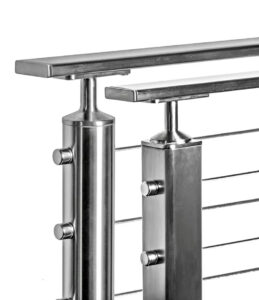
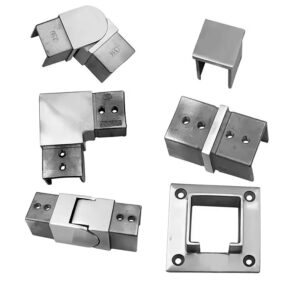
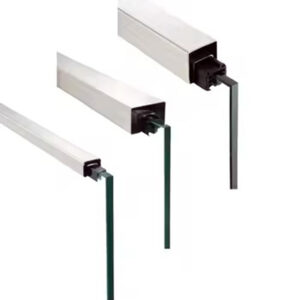
Cable and hardware scheduled for replacement are the items that the retensioning sequence could not resolve — damaged strands, terminals at their travel limit, or fittings with seating or locking defects identified during the terminal checks. Keeping these items visible in the closeout record, separate from the fittings that were simply retensioned, prevents a damaged component from being carried forward as though it had been addressed by the adjustment work when it was not. Where through post cable hardware or other fixed interface components were part of the inspection, their condition at closeout belongs in this same record, since their role in the assembly does not change based on whether the visible cable tension appears correct.
常见问题
问: When is cable railing retensioning appropriate instead of replacement?
A: Retensioning is appropriate for ordinary cable take-up when the cable, terminal, frame, and anchorage show no supported reason to stop and adjustment reserve remains. A damaged strand or terminal, exhausted terminal travel, loose base, or rotated post should be recorded for replacement or project-specific review rather than hidden with extra tension.
问: How can an inspector tell whether visible sag comes from the cable or from movement elsewhere in the railing?
A: Compare the cable sag and terminal seating with the condition of the base, post alignment, strands, and hardware before moving any fitting. If the base is loose, a post has rotated, or a strand or terminal is damaged, treat that condition separately from ordinary cable take-up.
问: Should one visibly loose cable be tightened by itself?
A: Do not assume that an isolated correction is sufficient. Follow the sequence specified for the named system and compare adjustment across related runs so the final record shows how the checked cables relate to one another.
问: Does a completed retensioning adjustment prove that the railing meets project requirements?
A: No. Final fitting positions, frame condition, and remaining adjustment reserve document the work performed, but they do not replace project-specific inspection criteria or approval. Confirm the applicable acceptance basis for the project separately.
问: What should the closeout record identify after retensioning?
A: Record the final fitting positions, base and post condition, alignment, remaining adjustment reserve, and every cable or hardware item scheduled for replacement. This keeps unresolved damage or exhausted travel visible instead of treating the adjustment as a complete closeout.