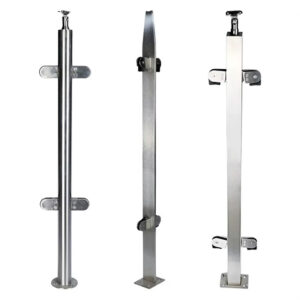
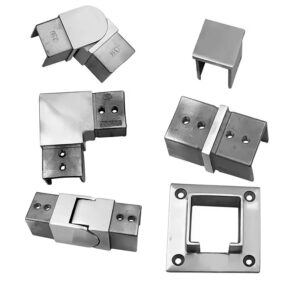
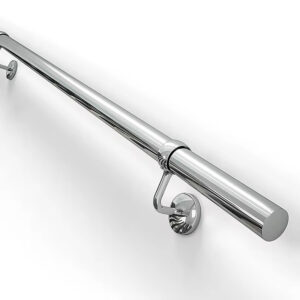
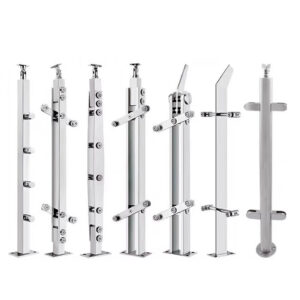
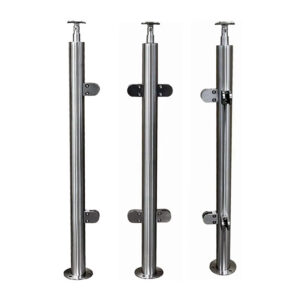
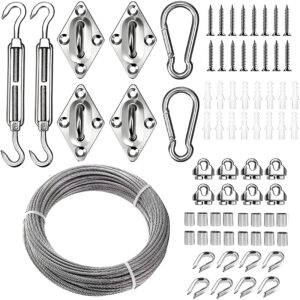
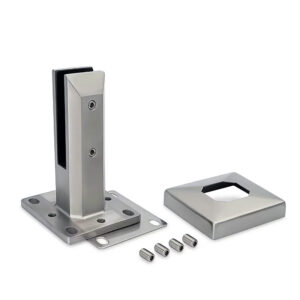
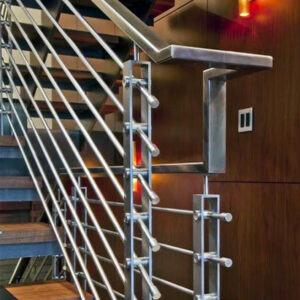
Sag and loose runs are rarely the result of a single overtightened cable. They are the cumulative result of decisions made before tensioning begins—post spacing locked in early, no recorded starting point, no defined threshold for when to stop. By the time an inspector identifies a problem at final walkthrough, the underlying cause may be a post that shifted during initial tensioning weeks earlier. The rework is not the tightening itself; it is correcting a structural condition that adjustment alone cannot fix. Understanding where each mistake enters the sequence helps crews and contractors make better calls before the problem is embedded in the finished installation.
Why Balanced Tensioning Sequence Matters
Tensioning all cables from one end or working top to bottom in sequence introduces cumulative lateral load into the end and corner posts before adjacent cables are in place to counteract it. The result is not always visible immediately. A post may shift slightly out of plumb during tensioning, and subsequent cables then lock that deflection in rather than correcting it. By the time the last cable is tightened, the openings between runs may be uneven even though every cable appears individually taut.
A practical method that addresses this is starting with the middle cable and alternating upward and downward from that point, bringing all runs up gradually rather than completing each one fully before moving to the next. This distributes lateral load across the post as tension builds, reducing the risk of pulling it inward or outward before opposing cables provide balance. The sequence does not change the total tension applied, but it changes when that load arrives at each post connection—which affects whether the post stays plumb through the process.
Skipping a balanced sequence is a recoverable mistake if caught early, but it is harder to catch than it sounds. A post pulled slightly out of plumb during tensioning may still pass a visual check, only creating visible problems at openings or at the terminal hardware under sustained load. Treating the tensioning sequence as a process discipline rather than an optional refinement reduces the likelihood of compounding a small early deflection into a broader inspection failure.
Post Movement Signals Hidden Overload
When a tensioner reaches the point where it cannot be turned further, that physical limit is not confirmation that the cable is correctly tensioned—it is a warning that the system may have already absorbed more load than the post and terminal connections were designed to carry. A post that begins to lean inward during this stage is not simply out of plumb; it is indicating that the accumulated lateral force has exceeded what the anchorage condition can hold without deformation.
The failure pattern here is that crews often interpret resistance in the tensioner as a sign they are approaching the right tension rather than as a sign they have passed the threshold where the post can respond correctly. Cranking through that resistance risks a concealed condition: the post deflects, the opening geometry shifts, and the hardware may appear functional while the underlying structure has moved. Visible lean is the clearest stop indicator, but deflection can also be present without obvious lean if the post base connection absorbs some of the movement before it propagates upward.
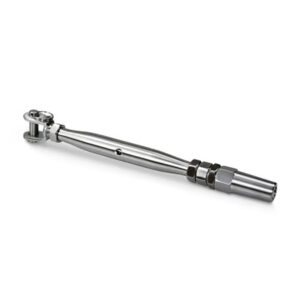
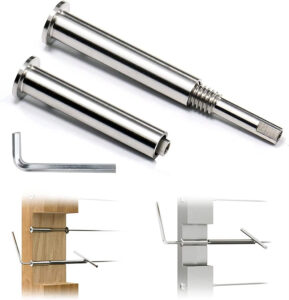
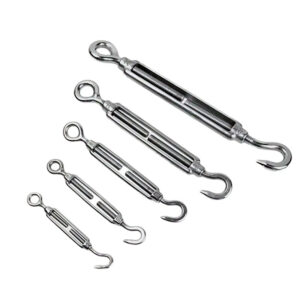
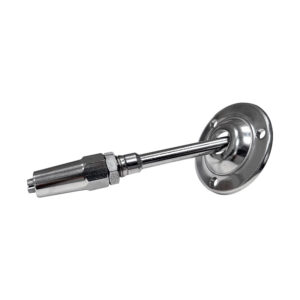
The practical implication is to treat any post movement during tensioning as a condition that requires correcting the support before continuing. Backing off tension and addressing the anchorage or post installation is a slower path than continuing, but continuing past visible movement does not resolve the structural problem—it conceals it until inspection or load testing surfaces it. Correctly selecting and setting up 缆索张紧系统 before runs begin is part of controlling this risk, since hardware that is already near its mechanical limit at installation has no reserve for structural settlement or seasonal movement later.
Initial Tension Versus Structural Demand
The relationship between post spacing and required tension is not linear, and it is easy to underestimate how quickly the demands shift as spans grow. Closing visible sag on a long span requires meaningfully higher tension than the same task on a short span, and that higher tension transfers directly into the end posts and terminal hardware. What looks like a rigging problem at 6 to 8-foot spans is often actually a structural problem: meeting the load threshold that building codes typically require—200 lbs of concentrated force in any direction for handrails, guardrails, and their structural supports—may demand enough cable tension to cause end posts to bend or lean before any external load is applied.
The consequence of overspacing is that it locks in a structural trade-off before installation begins. No amount of careful tensioning sequence or technique fully recovers from post spacing that forces the cable to carry the entire burden of stiffening a long span. Manufacturer planning guidance, including criteria from Keuka, suggests keeping post spacing to a maximum of 42 to 48 inches to maintain cable rigidity without requiring tension levels that load posts beyond their capacity. This is a planning criterion, not a code requirement, but it reflects the practical constraint that excessive tension cannot be cleanly separated from post integrity.
| Tension Scenario | 立柱间距 | Risk / Outcome |
|---|---|---|
| Insufficient initial tension | Any spacing | Slack cables, unstable railing, sagging, and loose runs |
| Overtensioning to meet code for long spans | 6–8 ft (long spans) | End posts may bend or lean inward due to the high tension required to meet the code-required 200 lb concentrated force |
| Proper tension within recommended spacing | 42–48 in (max spacing) | Maintains cable rigidity and meets code structural demands without excessive post loading or bending |
ASTM E935 provides a testing framework for evaluating the performance of permanent metal railing systems, and IBC Chapter 10 defines the load thresholds that completed installations must meet. Neither document resolves the planning decision about post spacing—that judgment must be made before cable is ordered. Setting spacing beyond the practical limit does not make a tighter cable; it makes a cable that requires more tension than the post system can safely absorb.
Baseline Records for Later Adjustment
Cable tension changes after installation. Thermal expansion and contraction cycle the system seasonally, and structural settlement—particularly in wood framing—can allow posts to shift slightly, altering tension across entire runs. Without a recorded baseline from the original installation, retensioning at six or twelve months becomes a judgment call with no reference point. Crews either overtighten relative to the original condition or fail to bring tension back to a level that maintains rigidity, neither of which is detectable without something to compare against.
A useful baseline record does not need to be elaborate. Noting the tensioner position, approximate torque applied, and any visual reference measurements at the time of installation gives a future crew enough information to identify what has changed and by how much. If a post has moved since the original installation, a baseline makes that visible before retensioning amplifies the problem. Without it, the retensioning process often reproduces the same conditions that created the original issue, because nothing in the record flags that the support condition has changed.
This is not a formal compliance requirement, but it is a review check that reduces rework risk. For contractors managing multiple installations or working on projects where ownership may transfer, a baseline record also provides documentation that the system was correctly installed—useful if a later inspection challenges whether current conditions reflect installation error or post-installation drift.
Stop-Work Conditions During Retensioning
Retensioning is typically treated as a minor maintenance task, which is why it is a common point for compounding an existing problem rather than resolving it. If a post has shifted since original installation, applying more tension pulls that post further out of position. If a terminal has begun to show distress, continuing to turn the tensioner increases load on hardware that may already be at its limit. The operational error is proceeding through visible warning signs under the assumption that adjustment alone will bring the system back into acceptable condition.
Conditions that warrant stopping retensioning before the task is complete include visible post movement during adjustment, uneven opening geometry developing between cable runs, unusual resistance in the tensioner that was not present at the same position during original installation, or any sign of deformation at terminal hardware. These are not pass/fail criteria tied to a specific standard—they are practical indicators that the condition requiring adjustment is structural, not tensional. Tightening a cable does not straighten a post; it only adds load to a post that is already out of position.
The correction sequence matters. When any of these conditions appear, the appropriate response is to back off tension, assess the supporting condition, and correct it before resuming adjustment. Proceeding past visible deformation because the cable still feels improvably loose is a judgment error that typically produces an installation that fails inspection at a structural level rather than a cosmetic one. For more detail on the full installation sequence and how retensioning fits into the larger process, Cable Railing Installation Step-by-Step covers the broader method in context.
The most consequential cable tensioning mistakes are not made during tensioning—they are made earlier, when post spacing is set and when no baseline is recorded. By the time a loose run or a leaning post is visible, the decision that caused it may be several steps back in the process. Confirming post spacing before cable is ordered, following a balanced sequence during installation, and documenting the starting condition creates a foundation that makes both inspection and future adjustment straightforward.
Where an installation has already reached the point of visible post movement or uneven openings, backing off and correcting the support is the only path that resolves the underlying condition. Retensioning into a compromised structure does not pass an inspection—it defers the failure to a point where correction is more disruptive and the cause is harder to trace.
常见问题
Q: My posts are already installed at 6-foot spacing and the cables are up. Is there any way to fix the sag without adding more posts?
A: No. Spans exceeding the practical maximum of 42–48 inches force the cable to bear the entire stiffening load, and no amount of retensioning can eliminate sag without bending the end posts. The only reliable correction is to add intermediate posts to shorten the spans, which requires detensioning, installing new posts, and re-running the tensioning sequence from the beginning.
Q: We backed off tension because a post started leaning. What specific correction steps should we take before re-tensioning?
A: First, inspect the post anchorage. For wood posts, check for splitting, movement at the base hardware, or softened wood; replace or reinforce any compromised sections. Brace the post plumb and ensure the substrate connection is solid. Reapply tension gradually using the balanced sequence, and stop immediately if the post shifts again—before that point, the supporting condition must be strengthened further.
Q: Do the same tensioning rules apply when using steel posts set in concrete instead of wood?
A: The balanced tensioning sequence still applies, but the overload warning signs change. Steel posts rarely lean visibly; instead, watch for tilting base plates, lifted anchors, or deformation at terminal connections. Halt work as soon as any of these appear, because they signal that the concrete anchorage is being overloaded. The principle remains the same: never tension past structural feedback, regardless of post material.
Q: Is it better to use a tension gauge to preset uniform cable tension rather than relying on hand-feel and tensioner resistance?
A: A tension gauge provides a useful reference and improves uniformity, but it does not replace the stop-work checks for post movement or opening geometry. While it helps prevent under-tensioning, it won’t reveal that a post is deflecting. Use it alongside a process that still monitors for structural distress and records baseline measurements, not as a standalone pass/fail tool.
Q: Given the risk of hidden damage from improper tensioning, is it worth the cost to hire a professional instead of doing it myself?
A: If you lack experience spotting subtle post movement and don’t have a reliable way to document baseline conditions, a professional installer can reduce long-term rework costs—especially on large decks or long runs. For shorter spans and stiff steel post systems, a detail-oriented DIY installer who follows a balanced sequence and stops at the first sign of distress can achieve good results; the real risk is not skill level but the discipline to stop when the structure warns you.