Wire mesh infill tends to be evaluated first as a visual railing choice, but the commercial decision should be filtered through opening geometry, fixing interfaces, finish environment, and project rules before any panel is specified. A semi-transparent mesh panel can suit many commercial railing openings, yet that general suitability does not confirm opening compliance, load acceptance, or installed durability. The practical issue is whether the inquiry defines the assembly conditions that a supplier can review, or only the desired appearance.
When Wire Mesh Is a Plausible Commercial Infill
Wire mesh infill can be considered where a railing opening needs a more continuous filled area while retaining some visual openness. ESANG identifies mesh as one option within its railing infill range for industrial, commercial, protective, and semi-transparent applications. The product-family route for a project-specific mesh panel inquiry is Vulpanelen van gaas, viewed alongside the broader Invulsystemen category.
Third-party application guidance from Banker Wire describes wire mesh as a railing infill option in commercial and architectural settings and points to openness, sightlines, pattern choice, and customization as relevant selection factors. That supports general screening, but it does not establish ESANG manufacturing capability, panel strength, code compliance, or installed performance. A mesh pattern that appears appropriate still needs to be checked against the project’s opening, finish, and interface requirements. Visual openness and a continuous filled opening are selection considerations, not proof of compliance or load capacity.
Conditions That Can Rule the Choice In or Out
Mesh infill may be ruled in or out early by the project’s stated appearance, opening-control, maintenance, and exposure requirements. The same panel concept can be acceptable in one commercial interior and unsuitable for another cleaning regime or outdoor location. The practical screening step is to define what the project actually requires before treating a pattern or material as the decision.
| Project consideration | What the buyer should define | Beslissingsgrens |
|---|---|---|
| Appearance and visibility | Desired visual openness and railing style | Does not determine compliance or strength |
| Opening control | Project-specified opening limitations | Final requirement comes from project documents and applicable rules |
| Cleaning and maintenance | Expected access and cleaning context | No maintenance interval is implied |
| Milieu | Indoor, outdoor, coastal, poolside, or other stated exposure | Material and finish remain project-specific |
This table is not a compliance conclusion. It frames the project conditions that should be confirmed before requesting a panel-specific review. A desired visual openness, for example, does not determine opening compliance; the final opening limitation must come from the project documents and applicable rules. Likewise, a stainless steel appearance does not by itself establish the required material grade or finish for a coastal or poolside condition.
If the comparison is still open across infill families, ESANG’s wire balcony balustrade comparison discusses adjacent infill-selection considerations, but it should not be used as a substitute for project-specific panel review.
The Railing Interfaces That Must Be Defined
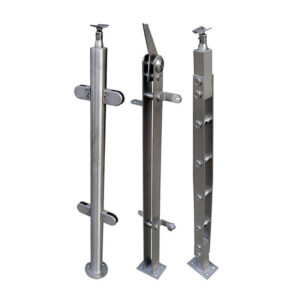
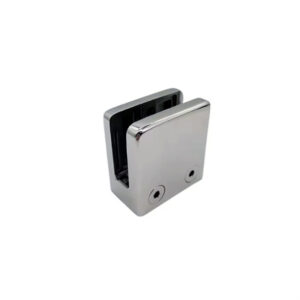
A wire mesh panel is part of a railing assembly, not a self-contained component. Post spacing and shape, top and bottom rail profiles, panel edge or frame treatment, and the selected fixing method must be coordinated together. If the panel edge is fixed with tabs, brackets, clamps, or sleeves, the available opening and the surrounding member details affect panel geometry and procurement. These dimensions and interfaces remain project inputs for a project-specific review.
| Interface | Information to coordinate | Why it affects the panel review |
|---|---|---|
| Berichten | Shape, spacing, and prepared connection points | Defines available panel openings and fixing locations |
| Top and bottom rails | Profiles and support arrangement | Affects edge and fixing coordination |
| Panel edge or frame | Required edge treatment or frame concept | Affects how mesh is contained and presented |
| Fixing | Tabs, brackets, clamps, sleeves, or project-defined alternative | Must match the surrounding railing details |
The interface table matters because a panel that fits the visible opening may still not match the connection condition at the post or rail. Until the interface drawings are confirmed, the panel review can only be conditional.
What to Send for a Project-Specific Review
To move from a general mesh preference to a supplier review, the inquiry should define the assembly as a package rather than sending only a pattern reference or a photograph. The following groups make the review boundary clearer.
| Input group | Include | Keep open for confirmation |
|---|---|---|
| Drawings and layout | Railing runs, stairs or balconies, and interface details | Final panel breakdown |
| Panel intent | Sizes or opening dimensions, mesh/pattern intent, and quantity | Feasible construction and edge treatment |
| Materials and finish | Project-specified material and finish | Supplier-specific availability and processing |
| Project conditions | Environment, installation condition, and governing specifications | Engineering, code, and installed-system acceptance |
Sending a pattern name or photo alone usually leaves too many unknowns. The table groups the minimum project inputs for ESANG to review whether a mesh panel can be manufactured against the stated requirements. ESANG’s role is bounded to reviewing and manufacturing against provided project requirements where feasible; design, code, load, and installed-system confirmation remain with the appropriate project parties.
Veelgestelde vragen
V: Is wire mesh worth considering if our commercial railing needs both visibility and a filled opening?
A: Yes, wire mesh can be considered where visual openness and a more continuous infill are part of the design brief. The choice still needs to be screened against the project’s opening limitations, appearance, cleaning expectations, and exposure; a semi-transparent appearance does not establish strength or compliance.
V: Can we specify panel sizes before the posts and rails are finalized?
A: Preliminary opening dimensions can start the discussion, but they are insufficient to finalize the panels. Post shape and spacing, rail profiles, panel edges or frames, and fixing locations need to be coordinated together so the proposed panel fits the surrounding assembly.
V: How should an outdoor location change our mesh-panel inquiry?
A: State the actual exposure and the required material and finish in the inquiry. Indoor, outdoor, coastal, and poolside conditions are distinct project inputs, and the panel review should also include the expected cleaning access rather than assume a universal material choice or maintenance interval.
V: What should we send to obtain a useful project-specific panel review?
A: Send the railing drawings and run layout, opening dimensions or proposed panel sizes, mesh-pattern intent, material and finish requirements, fixing concept, quantity, environment, and governing project specifications. This supports a review of feasible manufacturing and interface details; engineering, code, load, and installed-system confirmation remain with the appropriate project parties.