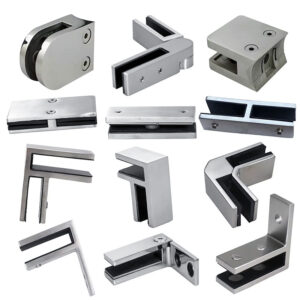
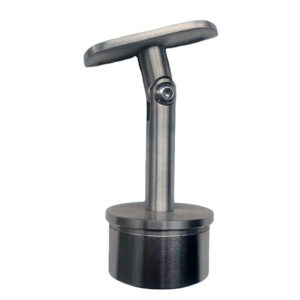
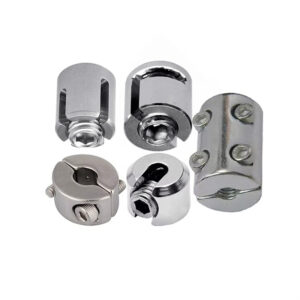
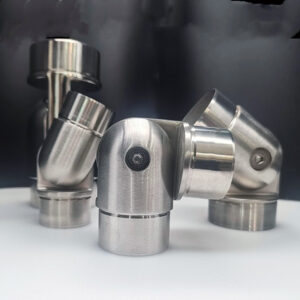
A wall-mount handrail bracket quotation can only be as accurate as the project information behind it. Before a supplier can price a bracket rather than guess at one, the buyer needs to decide what information belongs in the request, what remains a project-specific design question, and how to compare competing quotations on the same basis once they arrive.
Project Inputs Required Before a Wall Bracket Can Be Quoted
A wall-mount bracket sits at the interface between the handrail assembly and the building structure, which means its quotation depends on information from both sides of that interface at once. A supplier pricing a bracket in isolation, without the rail geometry it must accept and the wall condition it must attach to, is pricing a shape rather than a component that will function in a specific assembly. This is why an RFQ that states only a bracket type or finish produces a quotation that cannot be trusted to match the finished installation.
The inputs that matter fall into a small number of categories, and each category answers a different question the supplier must resolve before a price is meaningful. Rail and wall interface data establish the physical geometry the bracket must bridge. Material, finish, and quantity establish the commercial and environmental basis of the order. Documentation and evidence requirements establish what the buyer will accept before production proceeds. Anchor and connection questions establish where the RFQ’s responsibility ends and project-specific design confirmation begins. Read together, these categories describe not just what to write in an RFQ but why an incomplete RFQ produces a quotation that cannot be compared against another bidder’s quotation with any confidence.
Where a project is still in early design, some of this information may not yet be fixed, and the buyer has a choice: price a range of configurations to preserve flexibility, or delay the RFQ until the geometry and wall condition are settled enough to support a single, comparable quotation. Pricing a range keeps the schedule moving but increases the work needed later to confirm which configuration was actually quoted. Waiting protects the accuracy of the comparison but pushes the RFQ later into the project timeline. Neither choice is inherently correct; it depends on how firm the design is and how much schedule pressure the project is under. What does not work is submitting an RFQ that omits the interface data entirely and hoping the supplier will ask the right follow-up questions before quoting, because a returned quotation built on assumed geometry is not comparable to one built on stated geometry, even if both arrive with a price attached.
Rail Profile, Projection, Clearance, and Wall Interface Data
| Interface item | Information to include in the RFQ | Beslissingsgrens |
|---|---|---|
| Handrail profile | State the handrail profile and pair it with the bracket type. | Confirms the quotation is based on the intended rail geometry. |
| Uitsteekmaat van de beugel en afstand tot de muur | State the bracket projection and required wall clearance. | Keeps the quoted geometry tied to the required clearance. |
| Wall build-up | Describe the wall build-up. | Establishes the field condition to be considered without selecting an anchor. |
| Available fixing zone | Identify the available fixing zone. | Defines the connection area without claiming connection capacity. |
| Wall and rail interfaces | Provide the available interface drawings. | Gives the supplier the project interfaces while project-specific design confirmation remains separate. |
The handrail profile and the bracket type are paired decisions, not independent ones. A bracket is manufactured or selected to accept a particular rail profile at its clamping or fitting interface, so stating the bracket type without the rail profile leaves the supplier to assume a pairing that may not match the actual rail being installed. Where the rail profile changes late in a project, after brackets have already been quoted or ordered against an earlier profile, the mismatch surfaces at installation rather than at the quotation stage, which is a more disruptive point to discover it.
Projection and wall clearance work together to define how far the rail sits from the wall face, and this dimension is driven by more than aesthetic preference. Grab clearance, hand clearance past obstructions, and code-driven clearance expectations all inform what projection is required, and a supplier quoting a bracket without a stated projection will default to a standard dimension that may not satisfy the actual clearance requirement. Because projection is also tied to the bracket’s structural geometry, a change in required clearance can change which bracket configuration is even suitable, not merely how it is priced.
Wall build-up describes what the bracket’s fixing surface actually consists of, and this determines the field condition without yet resolving how the bracket is fixed to it. A solid masonry or concrete wall presents a different fixing zone than a stud wall with cladding, and the available fixing zone, meaning the depth and location within the wall build-up where a fixing can actually engage sound structure, is information the RFQ should state even though it does not by itself select the fixing method. Supplying wall and rail interface drawings where they exist gives the supplier this context in a form more reliable than a written description, and referencing the reasoning in resources such as the guidance on how projection, load path, and wall condition change the right bracket type helps clarify why these interface details are gathered together rather than treated as separate, unrelated fields.
Material, Finish, Quantity, and Standard-versus-Custom Scope
| Scope item | Information to state | Comparison use |
|---|---|---|
| Project environment | State the environment in which the brackets will be used. | Keeps the project condition visible when quotations are compared. |
| Materiaal | State the project material requirement. | Lets each quotation be checked against the same material basis. |
| Afwerking | State the required finish. | Prevents an unstated finish basis from obscuring the comparison. |
| Aantal | Provide the quantity breakdown. | Shows which quantities each quotation covers. |
| Geometry basis | State whether standard or custom geometry is being priced. | Makes the quoted configuration basis explicit. |
Material and finish decisions on a wall-mount bracket are driven by the project environment the brackets will actually occupy, and this environment is not always obvious from the building type alone. An interior corridor and a covered exterior walkway attached to the same building present different exposure conditions, and a bracket suitable for one may not be the appropriate specification for the other. Stating the project environment allows the supplier to align material recommendations with the exposure the brackets will face, rather than defaulting to a general-purpose specification that may or may not be adequate for the actual condition.
Material and finish are also separate decisions from each other, even though buyers sometimes treat them as a single line item. A material grade addresses the underlying corrosion resistance and mechanical properties of the stainless steel, while a finish addresses the surface treatment and visual appearance. Two brackets can share an identical finish while differing in base material, or share a base material while differing in finish, so an RFQ that specifies only one of the two leaves the other open to supplier assumption. Where the project has an architectural finish requirement tied to a broader palette of hardware across the building, this needs to be stated explicitly rather than left to visual matching against a sample or photograph, since appearance alone does not confirm that two finishes were produced to the same specification.
Quantity breakdown matters beyond the total count, particularly where a project uses more than one bracket configuration across different rail runs or wall conditions. A single total quantity across multiple configurations obscures which configuration each unit belongs to, which complicates both the quotation and later delivery tracking. Breaking the quantity down by configuration allows each bidder to price the actual mix being ordered rather than an average across configurations that may not reflect the real order.
The standard-versus-custom distinction changes both the pricing basis and the schedule basis of the quotation. A standard geometry draws on existing tooling and stock dimensions, while a custom geometry requires the supplier to treat the bracket as a project-specific item, which changes lead time expectations and may change minimum order considerations. Stating which basis is being priced prevents a bidder from quoting a custom solution against a standard-geometry request, or vice versa, which would make the resulting quotations impossible to compare directly.
Drawings, Samples, Inspection Documents, and Test Evidence to Request
| Requested item | What to request for approval | Bewijsgrens |
|---|---|---|
| Supplier drawings | Request the supplier drawings needed for approval, including the available wall and rail interface drawings. | Drawings do not by themselves confirm anchor selection or connection capacity. |
| Sample | Request the sample needed for approval. | Review it against acceptance criteria agreed before production. |
| Material documents | Specify the inspection documents required with the order. | An inspection-document type alone does not prove traceability, test validity, grade conformity, or certificate authenticity. |
| Test evidence | Request the test evidence actually needed for project approval. | Evaluate it against the project conditions and acceptance criteria rather than treating it as universal approval. |
| Acceptance criteria | Agree the criteria before production. | Use the agreed criteria as the basis for reviewing the requested submittals and evidence. |
The approval package for a wall-mount bracket order exists to confirm, before production, that what will be manufactured matches what the project actually requires. The value of this package depends entirely on requesting the items that are actually needed for the specific project’s approval process, rather than requesting a generic bundle of documentation regardless of whether the project’s acceptance process calls for each item.
Supplier drawings, including the wall and rail interface drawings referenced earlier in the RFQ, let the buyer confirm that the quoted bracket geometry matches the stated rail profile, projection, and clearance before production begins. But a drawing confirms geometry; it does not by itself confirm that the connection between bracket and wall will perform adequately, since that determination depends on project-specific anchor and capacity questions that a bracket drawing does not resolve.
A physical sample allows the buyer to confirm finish, surface quality, and fit against acceptance criteria that should be agreed before the sample is even requested, not evaluated informally against personal expectation once it arrives. Where acceptance criteria are established only after the sample is received, the buyer and supplier may find themselves negotiating over a standard that was never written down, which slows approval rather than speeding it.
Inspection documents accompanying the material delivery describe what type of documentation is being supplied with the order, following the structure set out in standards such as ISO 10474 for inspection documents on steel products. This framework defines document types and what they are meant to represent, but the existence of a named inspection document type does not, by itself, prove that the material shipped was actually tested as described, that the test was valid for the order, that the grade conforms to what was ordered, or that the certificate accompanying the shipment is authentic. Where traceability matters to the project, the buyer needs to confirm how the inspection document connects to the specific material batch being delivered, not simply that a document of the correct type was issued.
Test evidence, where requested, should be evaluated against the project’s actual conditions and acceptance criteria rather than treated as a universal pass regardless of context; a test performed under one loading or exposure condition does not automatically establish suitability under a different one, which is part of why anchor and connection performance remain separate confirmations from the bracket’s own documentation.
Anchor and Connection Questions Reserved for Project-Specific Design
| Project question | Information the RFQ can provide | Confirmation still required |
|---|---|---|
| Which anchor is suitable? | Wall build-up and the available fixing zone. | Project-specific anchor selection. |
| Is the connection capacity adequate? | Rail geometry, bracket projection, wall clearance, and wall and rail interface drawings. | Project-specific connection capacity confirmation. |
| Does the proposed solution meet the project criteria? | Supplier drawings, material documents, samples, and the requested test evidence. | Acceptance for the actual field conditions and project criteria by the responsible designer, specification writer, and authority. |
An RFQ can supply the wall build-up description and the available fixing zone, but neither of these, on their own, selects the anchor. Anchor selection depends on the specific fixing product’s rated performance in the specific base material present at the specific fixing location, evaluated against the loads the installed assembly will impose. A bracket catalogue entry describes the bracket; it does not describe the wall it will be fixed into on a given project, and treating a catalogue-listed anchor recommendation as a substitute for project-specific anchor selection introduces a gap between what was assumed and what the actual wall can support.
This distinction matters because the same bracket, mounted at the same projection, can face substantially different connection conditions depending on the wall it is fixed to. Where a solid masonry wall provides a fixing zone with consistent depth and material continuity, the anchor selection process differs from a case where the fixing zone consists of a stud wall with a cladding layer, requiring the fixing to engage framing members at specific, confirmed locations. An RFQ that supplies the wall build-up description gives the supplier the information needed to flag which of these conditions applies, but the anchor itself, and its rated capacity in that specific condition, is a design decision that belongs with the project’s structural or specification authority.
Connection capacity follows the same boundary. The RFQ can supply rail geometry, bracket projection, wall clearance, and the interface drawings needed to understand how loads will be transferred from the rail through the bracket to the wall, as discussed in the handrail anchorage guidance covering base plates, wall brackets, and fasteners. But whether that load path, once realized in the specific wall condition on this project, provides adequate capacity is a confirmation that depends on the actual anchor selected and the actual wall material present, not on the bracket’s dimensions alone. Standards such as ASTM E985 address basic design and load or deflection criteria for permanent metal railing systems, but applying such criteria to a specific field condition remains the responsibility of the designer, specification writer, and the authority governing the project, not an inference the buyer can draw from a bracket’s listed dimensions.
Where a buyer treats a bracket’s stated projection and geometry as sufficient confirmation that the installed connection will perform adequately, without separately confirming the anchor and its capacity in the actual wall condition, the RFQ has supplied information without closing the decision it was meant to inform.
Bid Comparison Fields That Expose Scope Gaps Before Award
| Comparison area | Matching quotation basis | Scope gap to resolve before award |
|---|---|---|
| Bracket and rail geometry | Bracket type, projection, handrail profile, and required wall clearance are stated on the same basis. | A field is omitted or a bid uses a different geometry basis. |
| Wall interface and connection boundary | Wall build-up and fixing zone are stated, while anchor selection and connection capacity remain subject to project-specific confirmation. | A wall condition is unstated or a bid assumes an anchor or capacity from the bracket catalogue. |
| Environment, material, and finish | Project environment, material requirement, and finish requirement are stated consistently. | A condition is omitted or differs between bids. |
| Quantity and geometry scope | Quantity breakdown and standard-versus-custom status are explicit. | The quantity breakdown or geometry basis is unclear. |
| Approval package | Requested supplier drawings, sample, material documents, and test evidence are identified. | A required approval item or its evidence boundary is unspecified. |
| Acceptance basis | Acceptance criteria are agreed before production. | No pre-production acceptance basis is stated. |
Once quotations arrive, the comparison task is different from the information-gathering task that produced the RFQ. The buyer is no longer deciding what to ask for; the buyer is checking whether each bidder answered the same questions on the same basis, and where they did not, identifying exactly which gap needs to be closed before an award decision is made.
A quotation that states a bracket type and price without restating the projection, handrail profile, and wall clearance it was priced against cannot be safely compared to one that states all three, because the silent bid may have assumed different geometry. The same applies to wall interface information: a bidder who priced against an assumed wall build-up, rather than the stated one, may have selected a different anchor allowance internally, even if neither bidder’s anchor decision is meant to be finalized at the quotation stage. The comparison is not about whether every bidder proposed the same anchor, since that remains a project-specific determination, but about whether every bidder is responding to the same wall condition and leaving the same connection questions open for project-specific confirmation.
Environment, material, and finish need the same consistency check. A price difference between two bidders means little if one priced against a stated exterior-exposure environment and the other silently priced against a general interior assumption. Quantity and geometry scope require similar scrutiny, particularly on projects using more than one bracket configuration, where a bidder’s total price needs to be traceable to the same quantity breakdown every other bidder used.
The approval package and acceptance basis close the comparison. A bidder who has not identified which drawings, sample, material documents, and test evidence they will supply has left open exactly the confirmations the buyer needs before production, and a bid that lacks any agreed acceptance basis leaves the standard for accepting that evidence undefined until after award, which is a later and more difficult point to negotiate it. Where every field lines up, the remaining decision is a business one; where a field does not line up, the gap identifies precisely what to raise with the bidder before treating the comparison as complete, drawing on the same submittal categories addressed in the guidance on stainless steel handrail project submittals covering drawings, mill test certificates, load reports, and finish samples.
Veelgestelde vragen
V: What if the final anchor has not been selected when the RFQ is issued?
A: The bracket RFQ can still proceed if it records the wall build-up, available fixing zone, rail geometry, bracket projection, required clearance, and available interface drawings. Keep anchor selection and connection capacity explicitly open for project-specific design confirmation rather than allowing the quotation to settle them by assumption.
V: How can buyers prevent standard and custom quotations from looking falsely comparable?
A: Require each quotation to state its geometry basis alongside the same quantity breakdown, material, finish, and project environment. Record every difference as a bid variance and resolve it before award so the comparison reflects the same scope.
V: Which approval items should be agreed before production?
A: Identify the supplier drawings, sample, material inspection documents, and test evidence actually needed for approval, then pair each item with the acceptance criterion it must address. This turns the approval package into a checkable decision set instead of an open-ended document request.
V: Does a material inspection document by itself prove that the bracket meets the project requirements?
A: No. The document type alone does not establish traceability, test validity, grade conformity, or certificate authenticity. State the order requirements and check the submitted document against those requirements and the agreed acceptance criteria.
V: How should a buyer handle a quotation that assumes an anchor type or connection capacity?
A: Treat the assumption as an unresolved scope gap. Ask which wall and interface information the assumption uses, then keep the final anchor and capacity decisions subject to project-specific confirmation for the actual field conditions.