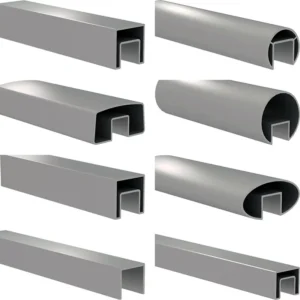
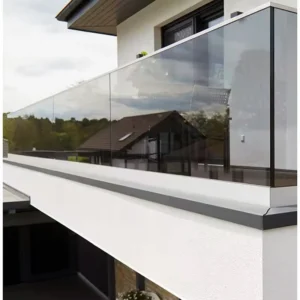
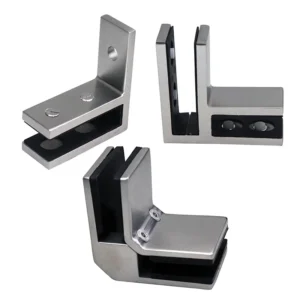
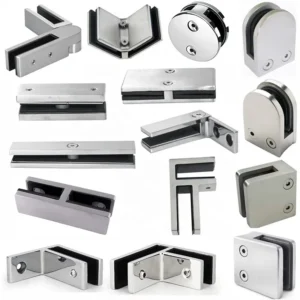
Choose this application gateway when the first purchasing question is where the railing will work, not yet which fitting to buy. The installation environment, user task, edge condition, substrate and maintenance access should narrow the route before handrails, posts, infill and mounting hardware are compared.
Route your railing inquiry on WhatsApp
Choose the application route first
Внутренние перильные системы
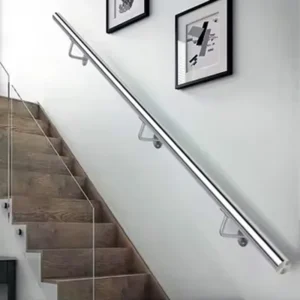
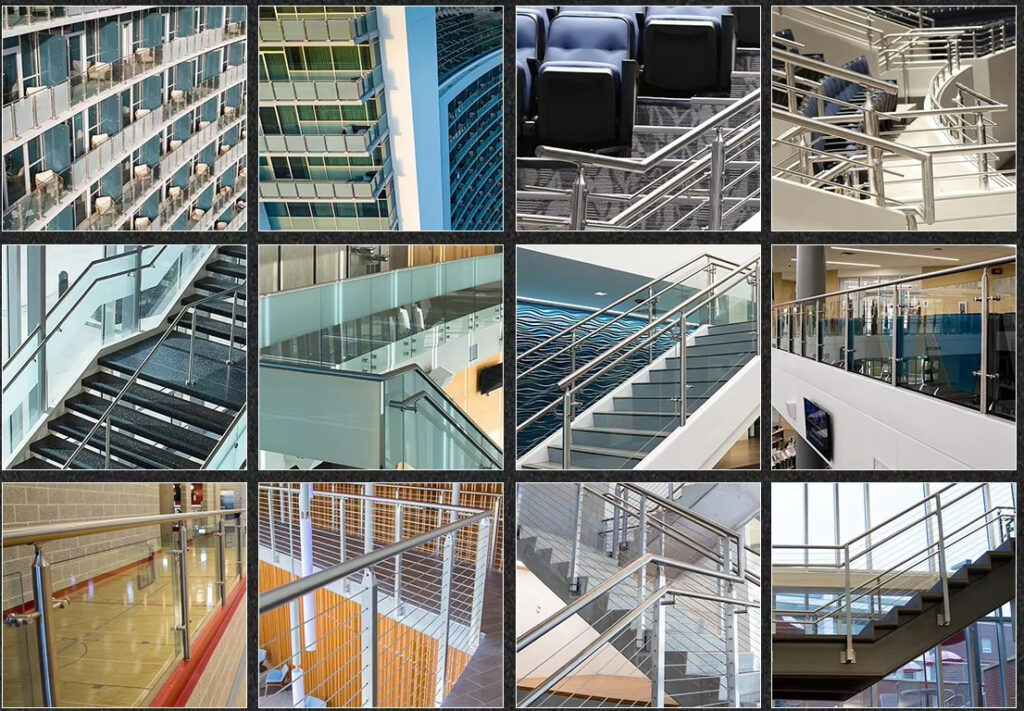
Start here for stairs, corridors, atriums, mezzanines and interior balcony edges. The main decisions are the handrail or guarding task, wall versus floor support, infill choice, finish coordination, cleaning conditions and the surrounding construction. “Indoor” does not by itself establish accessibility or code compliance.
Системы наружных перил
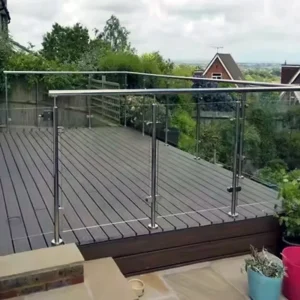
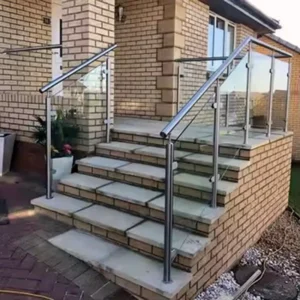
Start here for exterior stairs, decks, terraces and balconies exposed to some combination of rain, temperature change, pollution, sunlight or cleaning chemicals. The outdoor label is not a weather-resistance guarantee: grade, finish, fasteners, drainage, anchoring and maintenance must be selected for the actual exposure.
Морское и прибрежное применение
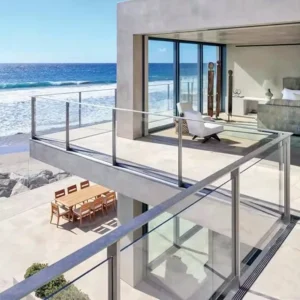
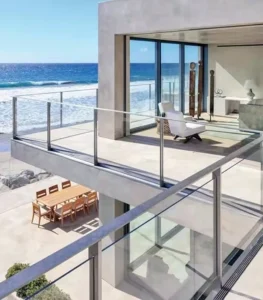
Use this route when salt deposition, sea spray, waterfront moisture, pool chemicals, splash, persistent humidity or marine-adjacent service materially changes the selection. A “316,” “316L” or “marine-grade” name is only a starting field to verify; it does not prove suitability, corrosion immunity or service life.
Set the system route before selecting components
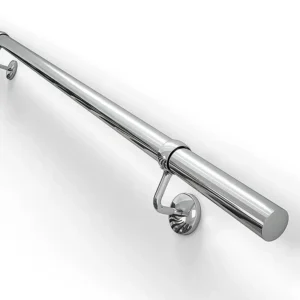
• Hand support only: define whether a wall-mounted or post-supported handrail is required, along with route geometry, support surfaces, transitions, returns and any project-set dimensions.
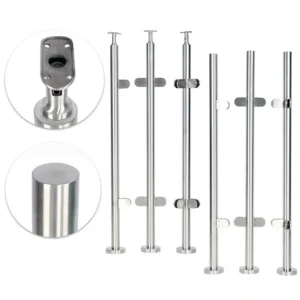
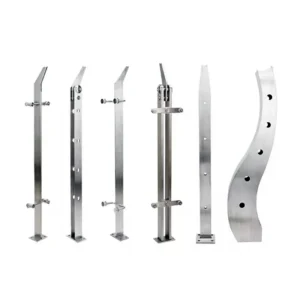
• Edge protection or guard assembly: identify the protected edge, required system height and opening criteria, then coordinate posts, rails, infill and mounting as one assembly.
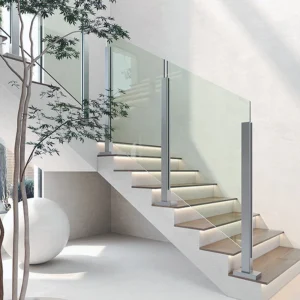
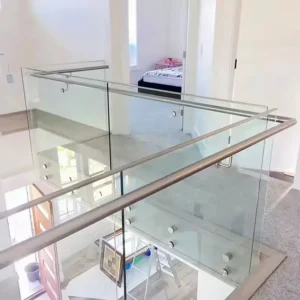
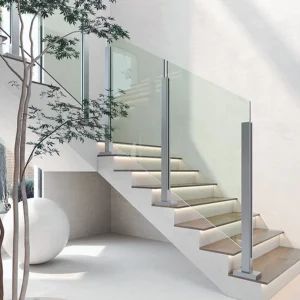
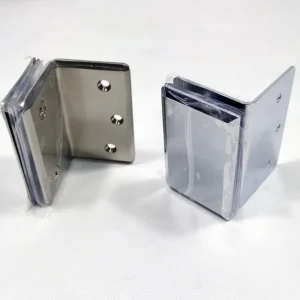
• Glass route: provide the panel build-up, edge condition, hole or no-hole preference, support concept and drainage needs before choosing clamps, spigots, standoffs or a base channel.
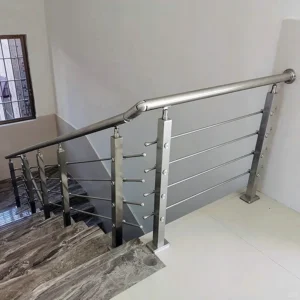
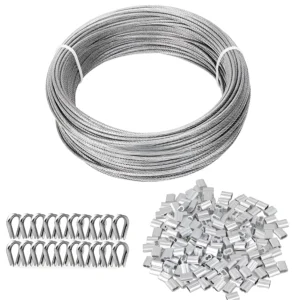
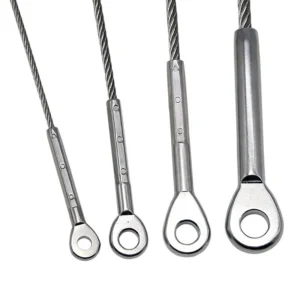
• Cable or bar infill route: define post layout, termination points, corner changes, infill direction and the project-set opening criteria before choosing tensioning or connection hardware.
• Mounting route: distinguish wall, top/surface, fascia/side, core or channel mounting. These routes place different demands on the substrate, edge distance, waterproofing and access for installation.
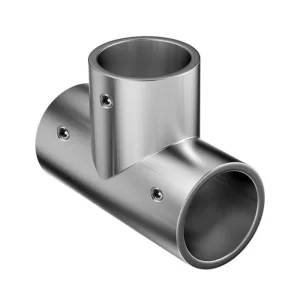
These alternatives are not interchangeable product names. A fitting can only be compared meaningfully when its mating tube, post, panel or cable, fixing surface, fasteners and installation access are known.
Define the site interfaces
A useful request separates the proposed ESANG supply from work that belongs to the building and installation team. Record the following before the system is frozen:
• location, occupancy and whether the assembly is a handrail, guard, barrier or combined system;
• indoor, sheltered outdoor, fully exposed, poolside, coastal, splash-zone or other stated environment;
• plan, elevations, slopes, corners, terminations, overall runs and estimated quantity;
• concrete, masonry, steel, timber, deck, tile, stone, finished wall or other substrate, including thickness and edge condition;
• glass, cable, bars, panels or another infill, including the project-defined geometry and interfaces;
• material or finish specification, cleaning access and expected maintenance conditions;
• who is responsible for structural design, local-code review, substrate acceptance, anchor design, waterproofing, installation and final inspection.
Unless the written quotation states otherwise, application routing does not make ESANG the designer or installer of the complete railing. The project engineer, designer, contractor and relevant authority remain responsible for the building interface, loads, local requirements and acceptance of the installed assembly.
What to send, and what the quotation should return
You can start with a sketch, site photos and an estimated quantity. Add drawings, specifications and material requirements when available. For a useful comparison, ask the proposed supply or quotation to identify:
• the chosen application route and the assumptions used;
• included handrails, posts, infill hardware, connectors, brackets, base parts and loose fasteners;
• material grade and finish for each exposed component rather than one label for the whole system;
• mating profiles, panel or cable interfaces and any items expected from others;
• mounting concept, proposed anchor information and exclusions for substrate or waterproofing work;
• drawing, sample or engineering information still required before production.
Send the application details on WhatsApp