在图纸审查阶段被搁置的提交文件包,很少是因为五金件本身有问题而遭拒。其失败原因在于文件无法证明五金件符合要求。当审查员无法追溯特定配件的经测试载荷等级,或无法确认钢缆的张力承载能力与所支撑立柱的承载能力相匹配时,该文件包就会被退回——审批流程也将重启。这种延误会带来实际成本:制造停滞、安装进度推迟,而且在审批周期中途引入的任何修订,都可能在已经流通的文件之间引发新一轮的冲突。决定商业缆索栏杆提交文件能否推进或陷入停滞的关键在于:每一段栏杆中的每个五金部件,能否从图纸标签经由产品数据追溯到相应的测试证据。.
“带标签的运行”如何将图纸与产品数据关联起来
如果绘制的电缆布线路径与针对每条线路提出的实际硬件之间没有直接关联,那么提交的文件就只是文档的集合,而非可验证的方案包。这一问题在涉及多种护栏产品的项目中最为常见——例如室内与室外采用不同的立柱系统,或者不同楼层高度的张紧器配置各异。当图纸上未明确标注这些产品的类型及安装位置时,审核人员便无法确认具体位置应适用哪项技术规范,而硬件清单也因此丧失了作为协调工具的功能。.
其实际后果往往迟迟显现。一套仅对管线进行通用标注的施工图——未将管件、紧固件和锚固件标注到具体位置——其缺陷可能直到审图员或检验员试图与产品数据进行交叉核对时才会暴露出来。届时,图纸中管线与特定管件类型之间的缺失关联,已不再是微不足道的标注问题;而是一个阻碍规范合规性验证的证据缺口。未标注具体位置的管件,会让人无法确定某条管线所指定的管件是否被替换、应用错误,或是被误认为可与适用于不同工况的管件互换使用。.
每份施工图都必须具备足够的详细程度,以便无需解释即可回答以下问题:该位置采用何种产品类型,该管线使用哪些管件,采用了哪些紧固件和锚固件,以及哪些配件用于完成安装。正是这种详细程度,将图纸上的几何形状与制造商的产品数据通过一条可追溯、可审查的链条联系起来。.
| 必填信息 | 施工图必须包含的内容 | 提交目的 |
|---|---|---|
| 产品类型与位置 | 确定每种缆索栏杆产品的类型及其确切位置 | 在项目中使用多种产品类型时,可避免歧义 |
| 配件 | 列出每个已标记运行的具体拟合类型 | 将绘制的电路图与制造商的产品数据表关联起来 |
| 紧固件 | 请按每个位置指定紧固件的类型和安装位置 | 确保所选紧固件符合结构荷载数据的要求 |
| 锚地 | 锚固构件及方法的详细说明 | 提供载荷额定锚固证据的可追溯性 |
| 配件 | 请列出每个地点所涉及的所有配件 | 完成硬件进度表,以便进行统一审查 |
带标签的运行记录的可追溯性功能仅在标签在包内所有文档中保持一致时才有效。如果某个配件在施工图上使用一个名称,而在产品数据表上却使用不同的目录编号,即使该硬件在物理上完全相同,也会在审核阶段导致追溯链中断。.
通用目录提交材料中缺少证据
产品目录页面并非提交文件,而是背景资料。当项目团队将未经修改的产品手册作为符合性证明提交,并认为制造商公布的规格说明足以满足方案审查要求时,二者之间的差距便会演变为项目问题。对于大多数商业项目而言,情况并非如此——因为产品目录描述的是产品系列的功能,而非该配置在该场地、在这些荷载条件下经验证可实现的功能。.
最关键的缺失环节是经认证的第三方测试数据。将缆绳系统描述为“商用级”或“专为高流量应用设计”的营销措辞,无法替代那些根据规范、工程要求及项目特定标准验证其性能的测试报告。ASTM E935-21 为评估永久性金属栏杆系统的性能提供了相关框架,而在提交材料中,若仅引用性能声明却未提供符合适用标准的测试证据,则在图纸审查阶段很难站得住脚。缺乏此类文件往往是提交材料被驳回并退回的唯一原因。.
产品目录文献通常会隐瞒的第二个漏洞是缆索与立柱之间的荷载协调问题。在未确认立柱和锚固件能否承受由此产生的侧向荷载的情况下,就指定高张力缆索组件,会导致系统层面的不一致性,而这种不一致性在两个组件的产品目录页面中可能都无法体现。钢缆产品的数据可能完全准确,立柱产品的数据也可能完全准确,但如果这两份文件均未说明它们在实际项目的复合荷载条件下如何协同工作,则提交的方案就无法证明所提议的系统是协调一致的。这种协调必须明确展示,而不能仅凭单个组件的额定值来推断。.
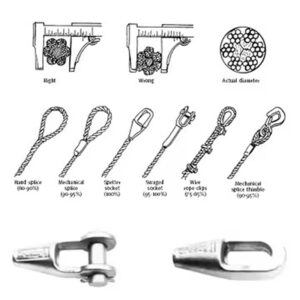
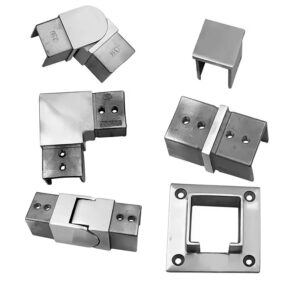
第三个常见缺失是管件的具体产品数据。提交文件必须提供拟采用的每种管件的清单,包括其描述、承载能力以及足以进行识别的照片或图纸。如果省略这些细节,评审人员将无法确定实际提案的内容,导致硬件清单无法核实。.
| 通用目录中缺失的证据 | 为何这会危及审批 | 提交材料必须包含的内容 |
|---|---|---|
| 经认证的第三方测试报告 | 没有经过核实数据的营销宣传内容无法通过方案审查 | 经认证的第三方测试报告,证实符合规范、工程和性能标准 |
| 缆索与立柱之间的荷载协调 | 高强度电缆与额定值不足的接线柱搭配使用,会导致系统无法有效工作 | 证明每段线路的缆索张力载荷与立柱承载能力已协调一致 |
| 针对特定配件的产品数据 | 省略具体细节会使审稿人对所提出的方案感到困惑 | 各配件清单,包括描述、承载能力以及照片或图纸 |
| 性能声明的验证 | 通用目录中的说明通常缺乏针对实际网站使用场景的背景信息 | 文档应与具体项目配置相匹配,而不仅仅是针对产品线的营销资料 |
这些缺口都呈现出相同的缺陷模式:产品目录资料虽然回答了关于产品系列的一般性问题,却未能解答与具体项目相关的问题。方案审查员和检查员评估的是具体项目,而非产品系列。.
针对具体项目的方案与未经筛选的文献
提交未经筛选的制造商资料夹会产生一种特定类型的模糊性,而简洁的项目专用资料包则不会:它迫使评审人员确定在广泛的产品线中,哪些组件实际上是针对该项目提出的。这一确定工作不应由评审人员负责——而应由提交团队负责。当提交材料未能明确这一点时,评审要么陷入停滞,要么被退回并附有要求澄清的评论,这实际上会因重新整理和重新提交所需的时间而延长审批周期。.
这一决策所蕴含的权衡关系在组装阶段并不明显。汇编完整的目录看似面面俱到——它涵盖了所有可能的情况,包含了所有可用的配置,并避免了遗漏的风险。然而,其结果却是一套篇幅庞大但精度较低的文档。针对特定项目的方案则接受另一种约束:它要求团队在方案发布前,就将安装的具体硬件做出明确承诺。正是这种承诺使得方案能够接受审查,因为审查者可以评估一个明确界定的范围,而不是一份开放式的清单。.
应针对项目中具体的栏杆配置(而非产品线的一般情况)索取并提交工程数据。当项目类型涉及与标准应用不同的条件时,这一点尤为重要——例如高暴露环境、非标准的立柱间距,或地势变化处的配置(在这些情况下,拉伸几何形状对立柱载荷的影响与平地段不同)。不同的项目背景需要提供能够反映这些具体条件的文件,即使其基础硬件规格相同也是如此。.
| 属性 | 未经筛选的产品目录资料 | Project-Specific Package |
|---|---|---|
| Engineering data | General specifications covering a product line | Engineering data for the exact railing configuration on the project |
| Documentation fit | Broad coverage without tailoring to project conditions | Documentation adapted to the specific project type and site requirements |
| Review burden | High volume of unfiltered information creates ambiguity | Concise set of relevant documents makes review faster and easier |
| Component certainty | Unclear which specific components are proposed for the job | Explicit listing of exactly which hardware will be used |
A concise project-specific package also makes a downstream consistency check more tractable. When the submitted documentation covers only the proposed components, mismatches between the hardware schedule, drawings, and test evidence are easier to identify before submission than they would be within several hundred pages of unfiltered catalog material. For teams sourcing cable assembly hardware kits, confirming that the kit configuration matches the exact run geometry shown on drawings is part of that assembly step.
Revision Conflicts Across Design and Installation Records
Structural calculations, product data sheets, and installer documentation rarely originate from the same party, and they rarely arrive on the same timeline. On commercial cable railing projects, this creates a predictable failure pattern: each document is internally consistent, but the set as a whole contains conflicts—different component names, mismatched revision dates, or load figures from an earlier design iteration that no longer matches the configuration shown on the current shop drawings.
The most avoidable source of these conflicts is unrecorded field measurement. Shop drawings prepared without field-verified dimensions carry forward whatever assumptions were made during design. When those assumptions differ from actual site conditions—a post bay that is 6 inches longer than shown, or an anchorage location that shifted due to structural interference—the fabricated hardware may not fit the as-built condition. The correction requires either refabrication or a field modification, and either outcome introduces a documentation discrepancy: what was approved does not match what was installed.
Recording field measurements on shop drawings before fabrication closes that gap at the right stage. It is not universally mandated by code in all jurisdictions, but it is a standard expectation in commercial project specifications and a necessary input for keeping the submittal defensible after installation. A submittal that reaches approval with unverified dimensions is carrying latent revision risk that surfaces at the worst possible time—during inspection or when field conditions require a deviation that must be reconciled against the approved documents.
The multi-party origin of submittal documents means that revision control requires deliberate coordination. When a structural engineer updates a post-load calculation and the product data sheet in the submittal still references an earlier-rated component, the package contains a conflict that neither party may notice independently. That conflict does not resolve itself. It surfaces during review, during inspection, or—at its most costly—when the discrepancy between approved documentation and field installation requires a formal resolution process.
Consistency Check Before Commercial Submission
The final review before a package is submitted is not a formality. It is the last point at which conflicts can be resolved without an external reviewer’s involvement—and therefore the last point at which the cost of correction is limited to internal time rather than resubmission delays and approval-cycle extension.
The specific check that most often catches late-stage problems is alignment between the installation instructions provided by the manufacturer and the layout shown on the submitted drawings. If the drawings depict a configuration that deviates from the manufacturer’s prescribed installation sequence or hardware arrangement, the approved package effectively authorizes something the manufacturer has not sanctioned. That misalignment creates risk for the installer, who must choose between following the drawings and following the instructions, and risk for the project record, which reflects an approval based on documentation that did not internally agree.
A workable consistency check before submission covers three alignments: component names in the hardware schedule match component names in the product data; revision dates across structural calculations, shop drawings, and product data are current and consistent; and installation instructions correspond to the configuration shown on the drawings. These are not design requirements—they are package-quality checks that protect the submittal from failing on correctable grounds. Resources like the cable railing 200-pound load testing and structural certification guide can help teams understand what inspectors expect to see confirmed in the documentation before sign-off.
The hidden cost of skipping this check is that mismatches discovered during review come back as comments that require a coordinated response from multiple parties—the designer, the manufacturer’s representative, and sometimes the installer. Each party’s correction may introduce a new revision that then requires the others to update their documents. A single pre-submission pass through the package, focused on name consistency and revision alignment, prevents that cascade.
The practical standard for a defensible commercial cable railing submittal is simple to state and demanding to execute: every component must be traceable from its location tag on the shop drawings through the hardware schedule to specific product data with load evidence, and every document in the package must reference the same components by the same names at the same revision. That chain does not assemble itself from a catalog binder, and it does not survive unverified field dimensions or uncoordinated updates from multiple contributing parties.
Before assembling the final package, the team’s most useful question is not whether the hardware is adequate—it is whether the documentation proves it is adequate for this project, at this configuration, with these site conditions. That distinction determines whether the package moves through review or cycles back, and it determines how much of the approval timeline is spent on verification versus rework.
常见问题
Q: Does this submittal advice apply if we’re working on a residential project, not a commercial one?
A: The same traceability and evidence principles apply, but the enforcement threshold and documentation expectations are generally lower for residential work. Many residential building departments will not require certified third-party test reports for cable railings unless the installation falls under a specific structural review. However, if the project goes through plan review and a reviewer asks for load evidence, the same submittal gaps will stall approval, so treating the package with the same discipline protects the timeline regardless of project type.
Q: We followed all the consistency checks and still got a submittal rejection. What should we do next?
A: Isolate the specific reviewer comment that triggered the return and address only that item, keeping all other documents unchanged. Most rejections point to a single unresolved gap—missing load data for a particular fitting, a tag mismatch, or a dimension conflict. Revising only the relevant sheet or specification and resubmitting a focused response avoids introducing new revision conflicts that could cascade through the rest of the package.
Q: When is it acceptable to submit a manufacturer’s standard catalog instead of a project-specific package?
A: Only when the reviewing authority has explicitly confirmed that generic literature is sufficient for the project’s scale and jurisdiction. In commercial work this is rare; some small retrofits or maintenance replacements in jurisdictions with light plan review may accept a catalog page, but assuming that without written confirmation is a common reason for an initial rejection. The safe default is a concise package covering only the components proposed.
Q: Which creates more approval delay: a tightly scoped submittal that may need a supplement later, or an exhaustive catalog binder?
A: An exhaustive catalog binder creates more delay because it forces the reviewer to determine which components are actually proposed, introducing ambiguity that often results in a blanket request for clarification. A tightly scoped package lets the reviewer evaluate a defined scope immediately, and if a field condition later requires an additional component, that change can be processed as a controlled supplement without reopening every line of the original approval.
Q: Do we really need third-party test reports for a small commercial upgrade with just one cable run?
A: Yes, if the work requires a building permit, because most manufacturers already provide project-relevant test data for their systems, and the effort to include it is minimal compared to the risk of a review stop or an inspector sign-off delay. The test evidence demonstrates that even a single run meets code-required performance criteria, and omitting it can turn a simple upgrade into a prolonged resubmission cycle.