A submittal package that stalls at plan review rarely fails because the hardware is wrong. It fails because the documentation cannot prove the hardware is right. When a reviewer cannot trace a specific fitting back to a tested load rating, or cannot confirm that the cable tension capacity is coordinated with the post capacity it bears against, the package goes back—and the approval cycle resets. That delay has real cost: fabrication holds, installer schedules shift, and any revision introduced mid-cycle risks creating a second set of conflicts between documents that were already in circulation. The judgment that determines whether a commercial cable railing submittal moves forward or stalls is whether every hardware component, in every run, can be traced from the drawing tag through the product data to supporting test evidence.
How Tagged Runs Connect Drawings to Product Data
Without a direct link between drawn cable runs and the physical hardware proposed for each one, the submittal becomes a collection of documents rather than a verifiable package. The problem is most common on projects where more than one cable railing product type appears—different post systems at interior versus exterior locations, or varying tensioner configurations across floor elevations. When those product types are not explicitly identified by type and location on the drawings, reviewers cannot confirm which specification applies where, and the hardware schedule loses its function as a coordination tool.
The practical consequence shows up late. A shop drawing set that labels runs generically—without tagging fittings, fasteners, and anchorages to specific locations—may not surface its gaps until a reviewer or inspector tries to cross-reference the product data. At that point, the missing link between a drawn run and a specific fitting type is not a minor annotation problem; it is an evidence gap that prevents code-compliance verification. Fittings without location-specific tagging leave open the question of whether the hardware specified for one run has been substituted, misapplied, or assumed interchangeable with hardware rated for different conditions.
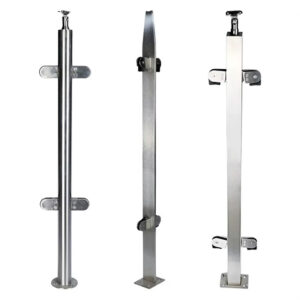
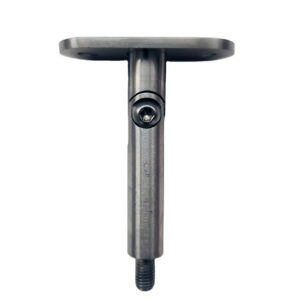
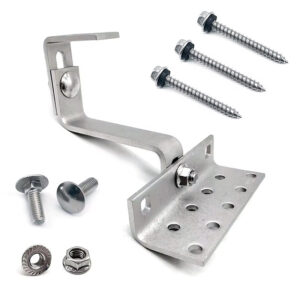
Each shop drawing must carry enough specificity to answer that question without interpretation: what product type is at this location, what fittings serve that run, what fasteners and anchorages are used, and what accessory items complete the installation. That level of detail is what connects the drawn geometry to the manufacturer’s product data in a traceable, reviewable chain.
| Required Detail | What the Shop Drawings Must Show | Purpose in Submittal |
|---|---|---|
| Product type & location | Identify each cable railing product type and its exact location | Prevents ambiguity when multiple product types are used on the project |
| التركيبات | List specific fitting types for each tagged run | Connects drawn runs to manufacturer product data sheets |
| السحابات | Specify fastener type and placement per location | Ensures fastener selection aligns with structural load data |
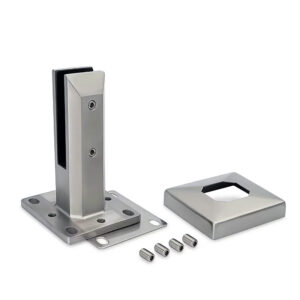
| Anchorages | Detail anchorage components and methods | Provides traceability to load-rated anchorage evidence |
| Accessory items | Include all accessory items referenced for each location | Completes the hardware schedule for consistent review |
The traceability function of tagged runs only works if the tags remain consistent across all documents in the package. A fitting referenced by one name on the shop drawing and a different catalog designation on the product data sheet breaks the chain at review, even if the hardware is physically identical.
Evidence Missing From Generic Catalog Submittals
Generic catalog pages are not submittals. They are background literature. The gap between the two becomes a project problem when a team submits an unmodified product binder as evidence of compliance, assuming that a manufacturer’s published specifications are sufficient for plan review. For most commercial projects, they are not—because the catalog describes what the product line can do, not what this configuration, at this site, under these loads, has been verified to do.
The most consequential missing element is certified third-party test data. Marketing language describing a cable system as “commercial grade” or “engineered for high-traffic applications” cannot substitute for test reports that verify performance against code, engineering, and project-specific criteria. ASTM E935-21 provides a relevant framework for evaluating the performance of permanent metal railing systems, and submittals that reference performance claims without supporting test evidence aligned to applicable standards are difficult to defend at plan review. The absence of that documentation is often the single reason a package is rejected and returned.
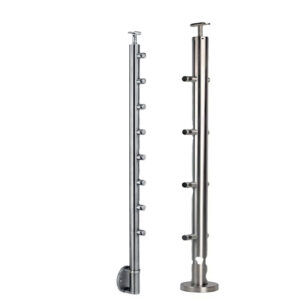
A second gap that catalog literature routinely hides is cable-to-post load coordination. Specifying a high-tension cable assembly without confirming that the posts and anchorages can carry the resulting lateral loads creates a system-level inconsistency that may not be visible in the catalog pages for either component. The cable product data might be entirely accurate, and the post product data might be entirely accurate, but if neither document addresses how they perform together under the combined loading conditions of the actual project, the submittal cannot demonstrate that the proposed system is coherent. That coordination must be shown explicitly, not assumed from individual component ratings.
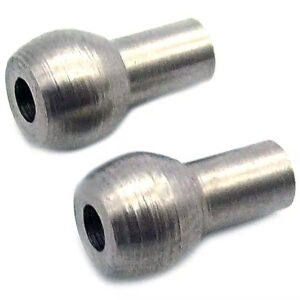
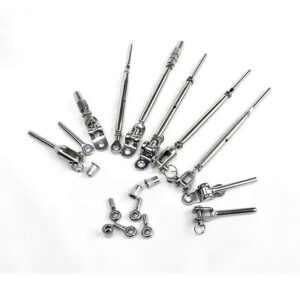
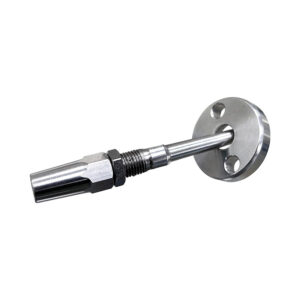
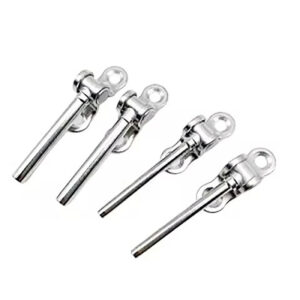
The third common gap is fitting-specific product data. A submittal must provide a list of each fitting being proposed, with its description, load capability, and a photograph or drawing sufficient for identification. Omitting that level of detail leaves reviewers uncertain about what is actually being proposed and makes the hardware schedule unverifiable.
| Missing Evidence in Generic Catalog | Why It Jeopardizes Approval | What the Submittal Must Include |
|---|---|---|
| Certified third-party test reports | Marketing claims without verified data cannot pass plan review | Certified third-party test reports confirming code, engineering, and performance criteria |
| Cable-to-post load coordination | Heavy-duty cable paired with under-rated posts creates an ineffective system | Evidence that cable tension loads and post capacities are coordinated for each run |
| Fitting-specific product data | Omitting fitting details leaves reviewers uncertain about what is being proposed | List of each fitting with description, load capability, and a photograph or drawing |
| Verification of performance claims | Generic catalog assertions often lack context for the actual site use case | Documentation aligned with the specific project configuration, not just product-line marketing |
Each of these gaps shares the same failure pattern: the catalog literature answers a general question about the product line while leaving the project-specific question unanswered. Plan reviewers and inspectors are evaluating the project, not the product family.
Project-Specific Packages Versus Unfiltered Literature
Submitting an unfiltered manufacturer binder creates a specific kind of ambiguity that a concise project-specific package does not: it forces the reviewer to determine which components from across a broad product line are actually proposed for the job. That determination is not the reviewer’s responsibility—it is the submitting team’s. When the package does not resolve it, the review either stalls or returns with a comment requesting clarification, which effectively extends the approval timeline by however long it takes to reassemble and resubmit.
The trade-off embedded in this decision is not obvious at the time of assembly. Pulling together the full catalog feels thorough—it covers every contingency, includes all available configurations, and avoids the risk of omitting something. The result, however, is a document set with high volume and low precision. A project-specific package accepts a different constraint: it requires the team to commit to exactly which hardware will be installed before the package goes out. That commitment is what makes the package reviewable, because the reviewer can evaluate a defined scope rather than an open-ended inventory.
Engineering data should be requested and submitted for the exact railing configuration on the project, not for the product line in general. This is particularly relevant when the project type introduces conditions that vary from standard applications—elevated exposure environments, non-standard post spacing, or configurations at grade changes where tension geometry affects post loading differently than a flat run. Different project contexts require documentation that reflects those specific conditions, even when the underlying hardware specification is the same.
| Attribute | Unfiltered Catalog Literature | Project-Specific Package |
|---|---|---|
| Engineering data | General specifications covering a product line | Engineering data for the exact railing configuration on the project |
| Documentation fit | Broad coverage without tailoring to project conditions | Documentation adapted to the specific project type and site requirements |
| Review burden | High volume of unfiltered information creates ambiguity | Concise set of relevant documents makes review faster and easier |
| Component certainty | Unclear which specific components are proposed for the job | Explicit listing of exactly which hardware will be used |
A concise project-specific package also makes a downstream consistency check more tractable. When the submitted documentation covers only the proposed components, mismatches between the hardware schedule, drawings, and test evidence are easier to identify before submission than they would be within several hundred pages of unfiltered catalog material. For teams sourcing مجموعات أدوات تجميع الكابلات, confirming that the kit configuration matches the exact run geometry shown on drawings is part of that assembly step.
Revision Conflicts Across Design and Installation Records
Structural calculations, product data sheets, and installer documentation rarely originate from the same party, and they rarely arrive on the same timeline. On commercial cable railing projects, this creates a predictable failure pattern: each document is internally consistent, but the set as a whole contains conflicts—different component names, mismatched revision dates, or load figures from an earlier design iteration that no longer matches the configuration shown on the current shop drawings.
The most avoidable source of these conflicts is unrecorded field measurement. Shop drawings prepared without field-verified dimensions carry forward whatever assumptions were made during design. When those assumptions differ from actual site conditions—a post bay that is 6 inches longer than shown, or an anchorage location that shifted due to structural interference—the fabricated hardware may not fit the as-built condition. The correction requires either refabrication or a field modification, and either outcome introduces a documentation discrepancy: what was approved does not match what was installed.
Recording field measurements on shop drawings before fabrication closes that gap at the right stage. It is not universally mandated by code in all jurisdictions, but it is a standard expectation in commercial project specifications and a necessary input for keeping the submittal defensible after installation. A submittal that reaches approval with unverified dimensions is carrying latent revision risk that surfaces at the worst possible time—during inspection or when field conditions require a deviation that must be reconciled against the approved documents.
The multi-party origin of submittal documents means that revision control requires deliberate coordination. When a structural engineer updates a post-load calculation and the product data sheet in the submittal still references an earlier-rated component, the package contains a conflict that neither party may notice independently. That conflict does not resolve itself. It surfaces during review, during inspection, or—at its most costly—when the discrepancy between approved documentation and field installation requires a formal resolution process.
Consistency Check Before Commercial Submission
The final review before a package is submitted is not a formality. It is the last point at which conflicts can be resolved without an external reviewer’s involvement—and therefore the last point at which the cost of correction is limited to internal time rather than resubmission delays and approval-cycle extension.
The specific check that most often catches late-stage problems is alignment between the installation instructions provided by the manufacturer and the layout shown on the submitted drawings. If the drawings depict a configuration that deviates from the manufacturer’s prescribed installation sequence or hardware arrangement, the approved package effectively authorizes something the manufacturer has not sanctioned. That misalignment creates risk for the installer, who must choose between following the drawings and following the instructions, and risk for the project record, which reflects an approval based on documentation that did not internally agree.
A workable consistency check before submission covers three alignments: component names in the hardware schedule match component names in the product data; revision dates across structural calculations, shop drawings, and product data are current and consistent; and installation instructions correspond to the configuration shown on the drawings. These are not design requirements—they are package-quality checks that protect the submittal from failing on correctable grounds. Resources like the cable railing 200-pound load testing and structural certification guide can help teams understand what inspectors expect to see confirmed in the documentation before sign-off.
The hidden cost of skipping this check is that mismatches discovered during review come back as comments that require a coordinated response from multiple parties—the designer, the manufacturer’s representative, and sometimes the installer. Each party’s correction may introduce a new revision that then requires the others to update their documents. A single pre-submission pass through the package, focused on name consistency and revision alignment, prevents that cascade.
The practical standard for a defensible commercial cable railing submittal is simple to state and demanding to execute: every component must be traceable from its location tag on the shop drawings through the hardware schedule to specific product data with load evidence, and every document in the package must reference the same components by the same names at the same revision. That chain does not assemble itself from a catalog binder, and it does not survive unverified field dimensions or uncoordinated updates from multiple contributing parties.
Before assembling the final package, the team’s most useful question is not whether the hardware is adequate—it is whether the documentation proves it is adequate for this project, at this configuration, with these site conditions. That distinction determines whether the package moves through review or cycles back, and it determines how much of the approval timeline is spent on verification versus rework.
الأسئلة الشائعة
Q: Does this submittal advice apply if we’re working on a residential project, not a commercial one?
A: The same traceability and evidence principles apply, but the enforcement threshold and documentation expectations are generally lower for residential work. Many residential building departments will not require certified third-party test reports for cable railings unless the installation falls under a specific structural review. However, if the project goes through plan review and a reviewer asks for load evidence, the same submittal gaps will stall approval, so treating the package with the same discipline protects the timeline regardless of project type.
Q: We followed all the consistency checks and still got a submittal rejection. What should we do next?
A: Isolate the specific reviewer comment that triggered the return and address only that item, keeping all other documents unchanged. Most rejections point to a single unresolved gap—missing load data for a particular fitting, a tag mismatch, or a dimension conflict. Revising only the relevant sheet or specification and resubmitting a focused response avoids introducing new revision conflicts that could cascade through the rest of the package.
Q: When is it acceptable to submit a manufacturer’s standard catalog instead of a project-specific package?
A: Only when the reviewing authority has explicitly confirmed that generic literature is sufficient for the project’s scale and jurisdiction. In commercial work this is rare; some small retrofits or maintenance replacements in jurisdictions with light plan review may accept a catalog page, but assuming that without written confirmation is a common reason for an initial rejection. The safe default is a concise package covering only the components proposed.
Q: Which creates more approval delay: a tightly scoped submittal that may need a supplement later, or an exhaustive catalog binder?
A: An exhaustive catalog binder creates more delay because it forces the reviewer to determine which components are actually proposed, introducing ambiguity that often results in a blanket request for clarification. A tightly scoped package lets the reviewer evaluate a defined scope immediately, and if a field condition later requires an additional component, that change can be processed as a controlled supplement without reopening every line of the original approval.
Q: Do we really need third-party test reports for a small commercial upgrade with just one cable run?
A: Yes, if the work requires a building permit, because most manufacturers already provide project-relevant test data for their systems, and the effort to include it is minimal compared to the risk of a review stop or an inspector sign-off delay. The test evidence demonstrates that even a single run meets code-required performance criteria, and omitting it can turn a simple upgrade into a prolonged resubmission cycle.