Procurement teams that write “stainless steel railing” in a quote request and receive back three quotes they cannot compare have usually created that problem before the first supplier was contacted. The terminology gap between railing and balustrade carries implicit assumptions about infill style, top rail treatment, and post presentation — assumptions different fabricators will resolve differently, producing figures that look like bids on different products. The downstream cost appears at scope reconciliation, when one supplier has included a handrail as a line item and another has treated it as out of scope, or at installation, when a coastal project receives 304-grade material that was compliant with a specification that never locked in 316 marine grade. What resolves that exposure is not switching terminology but understanding which specification decisions change supplier interpretation and which omissions give fabricators a compliant route to a different product than the one intended.
Balustrade language that shifts supplier interpretation
Two wording decisions consistently produce quote divergence before any dimensions are discussed: stainless steel grade and infill bar orientation. Neither appears in most quote requests, and both change what suppliers include by default.
Grade specification is a supplier-alignment control, not a minor material preference. A specification that reads “stainless steel” without locking in 316 marine grade gives fabricators a compliant route to quote 304, which is the more commonly stocked and less expensive option. In coastal and saline environments, 304 tea stains and corrodes at a rate that 316 resists, so the consequence is not aesthetic inconsistency — it is a material failure the owner inherits after installation. Naming 316 marine grade explicitly closes that substitution route before the quote is issued.
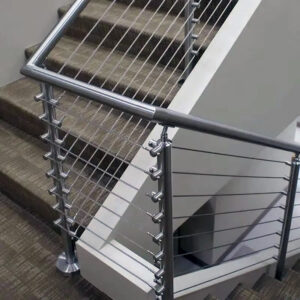
Infill bar orientation carries a scope consequence that teams underestimate. Vertical infill bar systems require a handrail to comply with fall-protection intent because the bars themselves do not function as a continuous graspable element. If the quote request specifies vertical infill without naming handrail as a separate line item, suppliers may reasonably exclude it, and the buyer only discovers the gap at invoice reconciliation. Horizontal bar systems have a different implication — ground-level placement must be addressed because horizontal rails create a climbable surface that may conflict with safety requirements. The orientation choice is not purely visual; it determines what components a complete system actually includes.
| Specification Detail | Risk If Unclear | 为何重要 |
|---|---|---|
| 不锈钢等级 | Suppliers may quote 304 instead of 316 | 304 tea stains and corrodes in coastal/saline environments; 316 marine grade is required for longevity |
| Infill bar orientation (horizontal or vertical) | Vertical bars require a handrail; supplier may exclude handrail from quote | Missing handrail leads to scope gaps and later cost disputes |
Treating these two points as early specification decisions rather than late fabrication details shifts the risk upstream, where it is easier and cheaper to resolve.
Railing versus balustrade wording gaps in quote requests
Switching between “railing” and “balustrade” across a quote request and drawings does not create a formal compliance problem, but it does create a procurement accuracy problem. The two words carry different architectural connotations, and suppliers interpret them with different default assumptions about system composition, visual intent, and included components.
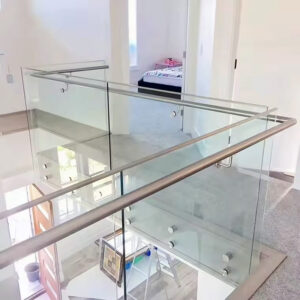
Railing language generally signals a functional-system focus: the request is for a barrier that meets load and height requirements. Balustrade language signals a composition focus: the request is for a coordinated assembly where infill style, post presentation, and top rail treatment are expected to read as a considered whole. When a request opens with “railing” and the drawings are titled “balustrade elevation,” fabricators face an interpretive gap they will resolve based on their own defaults. One supplier quotes a bare-bones functional barrier; another quotes a finished architectural assembly with matching fixings and a handrail included. The figures are incomparable, but the terminology made that outcome predictable.
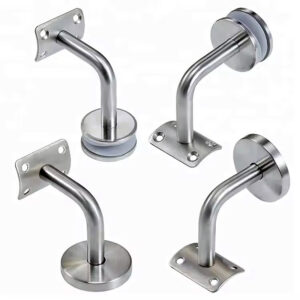
The most practical correction is handrail treatment as a named, separate line item. When handrail is listed explicitly — with material grade, diameter, and fixing method — it removes the single largest scope ambiguity in balustrade quotes. A supplier who reads a request with handrail as a separate line item with defined specification cannot reasonably exclude it from scope and cannot assume it is covered under another trade. That single addition to a quote request converts a common source of scope dispute into a settled input before pricing begins.
Consistent terminology is worth less than consistent specificity. A request that uses “railing” throughout but names every component with a material grade, finish, and dimension produces more comparable quotes than one that uses “balustrade” correctly but leaves infill orientation, handrail inclusion, and fixing grade unresolved.
Architectural intent turned into measurable fabrication detail
Balustrade language is genuinely more precise for architectural intent than generic railing language — but only up to the point where it still needs to become a fabrication brief. A specification that describes a balustrade as “a clean stainless steel vertical bar assembly with a continuous top rail” communicates visual intent clearly enough for a design review and produces three different products when sent to three fabricators. The gap between architectural description and fabrication output closes only when exact numbers are attached.
Frameworks like ASTM E985-24 for permanent metal railing systems and the ANSI/NAAMM AMP 521-01 pipe railing systems manual provide useful structural logic for why measurable thresholds matter — load capacity, post sizing, and height ranges exist within a performance framework, not as arbitrary preferences. The specific design figures a project uses will depend on jurisdiction and project classification, but the practice of naming them explicitly is what gives the specification its alignment function.
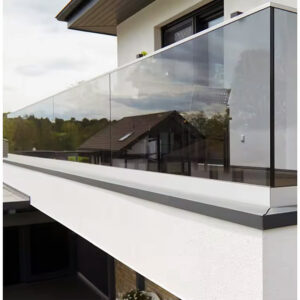
Post diameter and wall thickness, bar diameter, and bar thickness are the dimensions most commonly left to supplier discretion in under-specified briefs. When those figures are absent, fabricators use their standard production sizes, which differ across suppliers and may differ from what the architect’s elevation drawings assumed. Height range is similarly consequential: the 800–1100 mm range is a common design parameter, with 1100 mm typically indicated where fall height exceeds 3 m, and a specification that does not name a specific height within that range leaves the fabricator to choose. Build class and corresponding line load capacity — with A+ class typically requiring ≥1.0 kN/m and A and B classes at ≥0.5 kN/m — determine structural design across suppliers and should appear as a named requirement, not an assumed default. For glass infill in coastal environments, nano-coating is a specification addition that prevents salt and sand opacification; without it, clear glass systems degrade in appearance and require earlier replacement.
| 规格类别 | Measurable Requirement | 为何重要 |
|---|---|---|
| Infill bar diameter | 12 mm | Ensures consistent bar strength and visual uniformity |
| Post diameter & thickness | 42 mm diameter, 2 mm wall thickness | Defines structural posts and affects load capacity |
| Bar thickness | 1.5 mm | Impacts infill rigidity and safety |
| 栏杆高度 | 800–1100 mm; 1100 mm where fall >3 m | Complies with safety codes for drop risk |
| Build class & load capacity | A+ ≥1.0 kN/m; A and B ≥0.5 kN/m; drop heights per class | Ensures consistent structural design and compliance across suppliers |
| Glass infill coating | Nano-coating for coastal environments | Prevents salt/sand opacification, maintains appearance |
A specification that names these figures does more than support accurate quoting — it creates a reference against which delivered product can be measured, which is the condition that makes a supplier contractually accountable for substitution.
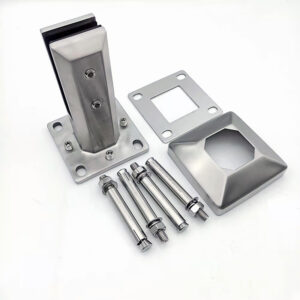
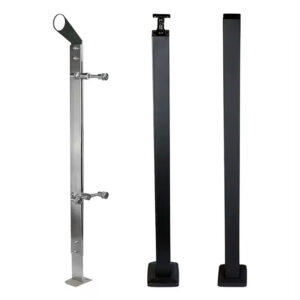
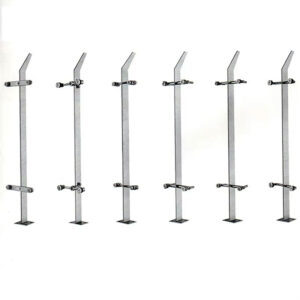
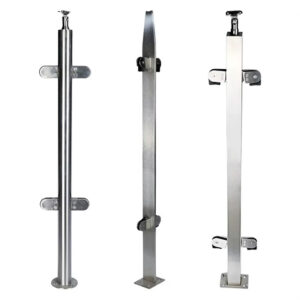
For projects involving 方形不锈钢柱, confirming wall thickness as a named specification input is particularly important because posts of similar external diameter can carry significantly different load capacity depending on section thickness.
Drafting mistakes that allow multiple scope readings
The compounding problem with specification omissions is not that any single one is fatal — it is that multiple omissions in the same document give suppliers a consistent route to a lower-cost interpretation that is technically compliant with what was written. A fabricator who quotes 304 instead of 316 grade, A2 fixings instead of A4, and a top-down attachment method when lateral was assumed has not done anything that a silent specification prevented. Each omission operates independently, but they accumulate into a delivered product that performs and looks different from what the project intended.
The 316 versus 304 grade distinction and the A4 versus A2 fixings distinction are related but separate failure risks. Grade substitution affects the surface material’s long-term resistance to corrosion and tea staining — a visible degradation that typically surfaces within the first few years in coastal environments. Fixing substitution affects structural integrity at a different level: A2 fixings in marine conditions create conditions for corrosion at the connection points, which risks loosening or disintegration over time and compromises the system’s load capacity at the post base. Specifying 316 marine grade without specifying A4 fixings does not close the structural risk, and vice versa. Both need to be named.
Attachment method and substrate type are the omissions most likely to produce installation problems rather than material performance problems. A specification that does not state whether posts are top-down or laterally fixed leaves the fabricator to assume, and that assumption may be incompatible with the actual substrate or structural edge detail. A specification that does not identify the substrate — timber decking versus reinforced concrete, for example — creates conditions for incorrect screw selection and risks structural instability at the fixing point. These are not rare failure modes; they are the predictable result of treating attachment as an installation-stage decision rather than a specification-stage input.
| Omission | What Supplier May Assume | Risk |
|---|---|---|
| Not specifying 316 marine grade stainless steel | May quote 304 grade | Tea staining, corrosion, especially in coastal zones |
| Omitting A4 marine-grade fixings | May use A2 fixings | Fixings disintegrate, compromising structural integrity |
| Not specifying attachment method (top-down or lateral) | Assumes method incompatible with substrate | Installation failure, rework needed |
| Omitting substrate type (wood or concrete) | Incorrect screw selection | Structural instability, installation failure |
| Not specifying bar spacing | Vertical infill: defaults to 100 mm max; horizontal bars: may allow climbing | Safety non-compliance, climbing risk for horizontal infill |
Bar spacing is the final compounding risk. Omitting spacing for vertical infill typically defaults to a 100 mm maximum, which may or may not match the project’s intent, but at least has a functional safety reference. Horizontal bar spacing carries an additional risk: without explicit specification of ground-level bar placement, horizontal rails can create a climbable configuration that conflicts with safety requirements for the use type. That is not a detail a fabricator will raise unprompted — it is one the specification needs to resolve in advance. If you are evaluating whether your current supplier handles these omission risks proactively, the 7 signs of a trustworthy stainless steel railing supplier is a useful reference for supplier qualification criteria.
Specification precision that improves supplier alignment
Three specification areas that commonly appear as afterthoughts — finish type, compliance standard, and maintenance expectation — function as supplier-alignment controls when they are named explicitly in the brief. None of them are bureaucratic additions; each one reduces interpretation latitude in a way that shifts responsibility toward the supplier and away from the owner.
Surface finish is the most visually consequential of the three. A specification that names mirror or satin finish as a requirement gives the supplier a concrete deliverable and gives the owner a basis for rejection if the delivered finish does not match. Without that specification, both mirror and satin are plausibly “stainless steel,” and the supplier defaults to whichever finish their production run is set up for. The result is not always wrong, but when it is wrong, it is difficult to dispute without a named requirement.
CE marking to EN 1090-1 is a useful benchmark to name in specifications because it gives buyers and suppliers a recognized framework for structural load testing — not because it is the sole or universal compliance standard for all balustrade installations, but because naming it explicitly gives both parties a common reference for what “structural compliance” means in the context of the quote. A supplier who is asked to confirm CE marking to EN 1090-1 knows they are being held to a recognized external benchmark, not just the buyer’s internal interpretation of adequate performance.
Maintenance frequency is worth including in the specification document itself, not just in a handover package. Specifying cleaning 1–3 times per year, with higher frequency in coastal or high-salinity environments, sets owner expectations at the procurement stage and reduces the risk that future corrosion claims are attributed to product failure when the cause is inadequate maintenance. That is a responsibility boundary that is easiest to establish before the system is installed.
| 规格区域 | 应说明的内容 | Benefit |
|---|---|---|
| 表面处理 | Mirror or satin | Ensures visual consistency and avoids rework |
| Compliance standard | CE marking to EN 1090-1 | Guarantees recognized structural load-testing benchmark |
| Maintenance expectations | Cleaning frequency 1–3 times/year (more near sea) | Sets owner responsibility, reduces future corrosion claims |
Together, these three specification areas close the gap between a supplier who delivers what they interpreted and a supplier who delivers what was defined. The practical effect of naming them is not more paperwork — it is fewer disputed invoices and fewer post-installation disputes about finish, compliance, or material condition.
The most reliable way to assess whether a 阳台栏杆 specification will produce comparable quotes is to read it as a fabricator would: identify every point where a supplier could make a reasonable assumption and arrive at a different product than the one intended. Those points are where specification language needs to resolve into a number, a named grade, or a defined method. Balustrade language sets the right architectural frame but does not do that work on its own.
Before a quote request goes out, the practical check is whether the document names stainless steel grade and fixing grade separately, defines infill orientation and bar spacing explicitly, identifies attachment method and substrate type, and lists handrail as a distinct scope item with its own material and dimensional requirements. A specification that passes that review produces quotes that can be compared on price and lead time rather than on what each supplier assumed the scope to be.
常见问题
Q: Does this specification approach still apply if the project uses a single supplier rather than multiple competing fabricators?
A: Yes, and arguably more so. With a single supplier, there is no quote comparison to reveal scope gaps — errors surface at delivery or installation instead. Naming grade, fixing type, attachment method, substrate, and infill orientation explicitly creates a contractual reference point regardless of how many suppliers are involved. Without it, disputes about what was agreed become a matter of interpretation rather than a documented requirement.
Q: After the specification is written and quotes come back, what is the most useful check before awarding the contract?
A: Read each quote line by line against the specification and flag any component where the supplier’s assumption differs from what was named. The highest-risk gaps to check first are stainless steel grade, fixing grade, handrail inclusion, and attachment method — these are the items most commonly reinterpreted at the quoting stage. A supplier who has substituted 304 for 316 or omitted A4 fixings without flagging it is signalling how they will handle ambiguity during fabrication.
Q: At what point does precise balustrade specification stop being worth the drafting effort — for example, on small residential jobs?
A: The effort threshold shifts when the project has only one edge run, one supplier, and no architectural consistency requirement across drawings. Below that threshold, a simplified brief naming grade, height, infill orientation, and handrail inclusion as a line item captures most of the alignment value without a full specification document. The full approach becomes necessary as soon as multiple suppliers, multiple balcony faces, or coastal exposure is involved, because each of those conditions multiplies the cost of a single omission.
Q: Is specifying 316 marine grade and A4 fixings sufficient for a coastal balcony, or are there other material decisions the article doesn’t fully resolve?
A: Those two specifications close the main corrosion risk paths for metal components, but glass infill in coastal environments introduces a separate material decision the article flags without resolving: nano-coating. Without it, salt and sand degrade glass clarity over time in ways that neither 316 grade nor A4 fixings address. For coastal projects with glass infill, nano-coating should be treated as a named specification requirement on the same level as grade and fixing selection.
Q: How does a buyer decide between glass infill and vertical bar infill when both are architecturally viable and the article presents them as distinct system types?
A: The deciding factor is maintenance commitment and environment, not just visual preference. Glass infill in coastal conditions requires nano-coating and more frequent cleaning to maintain appearance, and any cracking or opacification affects the entire infill panel. Vertical bar infill tolerates coastal exposure more predictably when 316 grade is specified, and individual bars do not degrade as a unit. Glass reads as a premium finish choice; bar infill is the lower-maintenance choice in high-salinity or high-traffic settings. The specification implications differ in both cases — glass requires coating and framing decisions, bar infill requires spacing and handrail inclusion to be resolved explicitly.