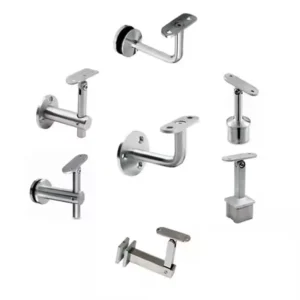
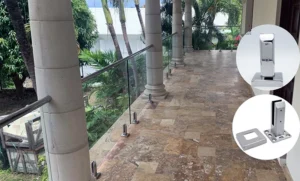
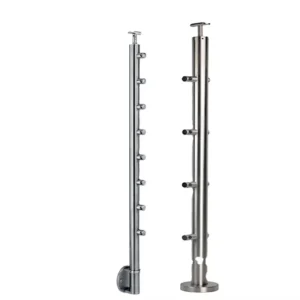
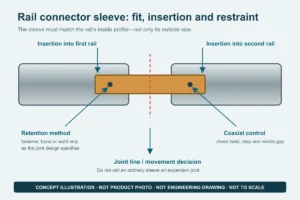
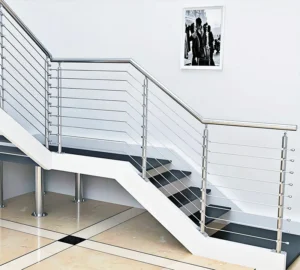
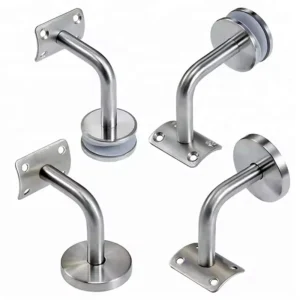
Surface-mount cable hardware is the practical route when a cable run must terminate on the face of a post or wall instead of passing through it. The buying decision is not just the visible fitting: the mounting face, fastener or anchor, fitting base, cable connection and opposite-end adjustment must work as one assembly. Send a photo of the support, the cable route and an estimated quantity to start a useful quotation.
Discuss Surface-Mount Cable Hardware on WhatsApp
Choose the mounting interface before the fitting shape
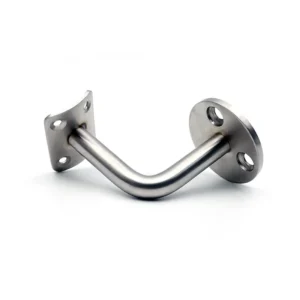
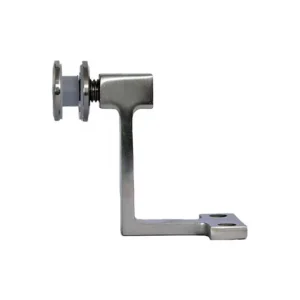
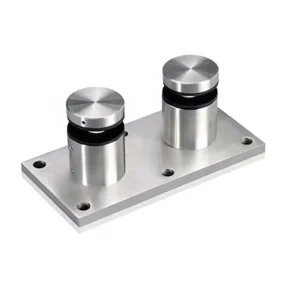
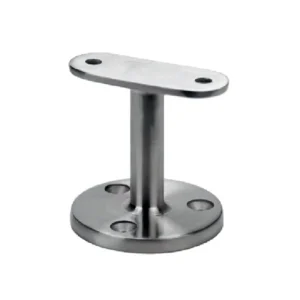
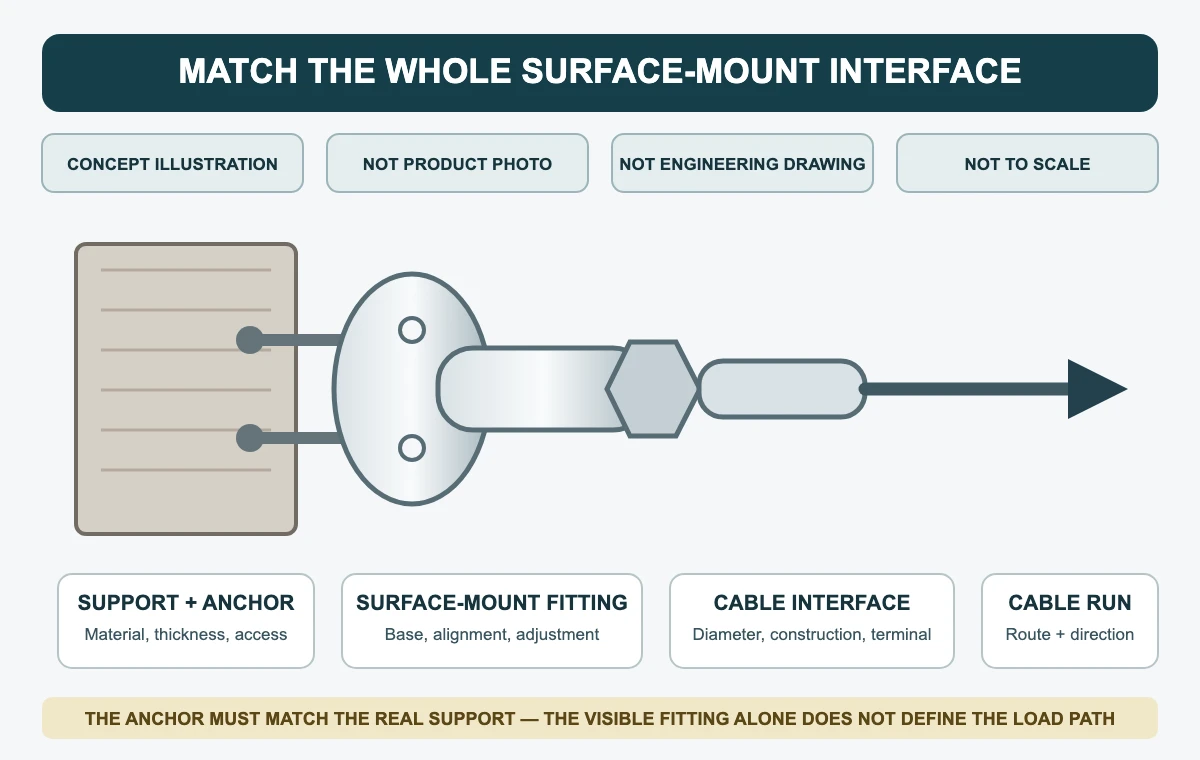
A surface fitting transfers the cable force into the face of the supporting member. A neat flange does not make a weak face, thin wall or unsuitable anchor acceptable. Start with the actual support and make the quotation state how the fitting is intended to attach.
1. Support material and access
Identify whether the termination face is timber, hollow metal, solid metal, masonry or another built-up member. Include the face width, member thickness where known, rear access and any finish or cladding between the fitting and the structural support. These details change the fastener type, required engagement and whether a face-mounted route is sensible at all.
2. Cable direction at the termination
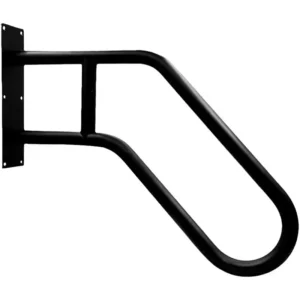
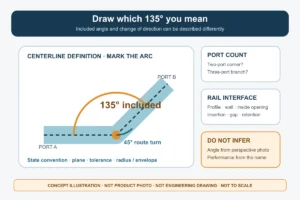
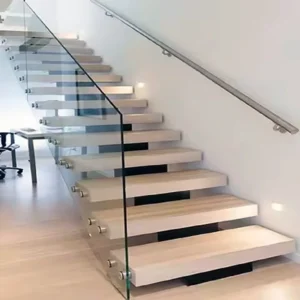
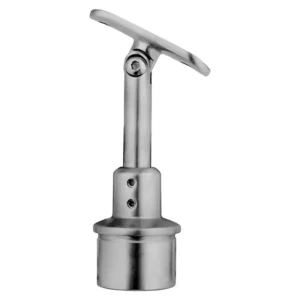
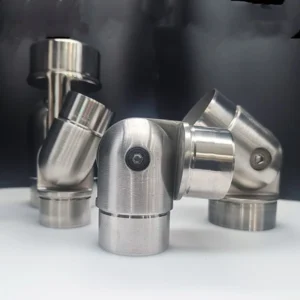
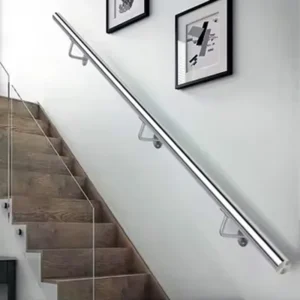
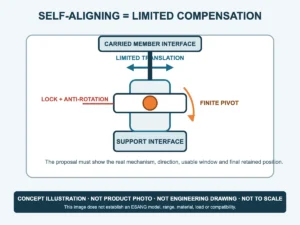
A level run can meet the face squarely; a stair or sloping run approaches at an angle. Ask whether the proposed fitting is fixed, pivots, or needs a separate angled base. Forcing an angled cable into a straight-only connection creates a poor line of pull and can interfere with adjustment.
3. Cable connection method
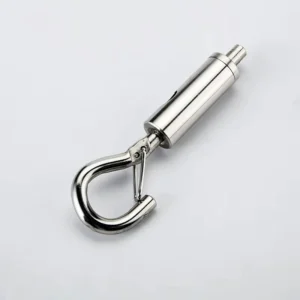
Match the cable diameter and construction to the terminal method. A field-swaged fitting, a mechanical-grip fitting and a factory-finished cable assembly have different tooling, preparation and replacement implications. The quotation should name the proposed termination method and the tools or factory work it requires.
Give both ends of the cable run a defined job
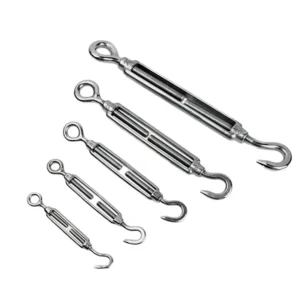
Every continuous cable run needs retention at both ends and a planned way to set tension. A typical arrangement uses a fixed or retaining end opposite an adjustable end, while some systems place adjustment at both ends or combine angle accommodation with one of those roles. Do not order identical-looking end pieces until the role of each end is clear.
| Run-end question | What the quotation should identify | Risk if left open |
|---|---|---|
| Which end provides adjustment? | The tensioning end, usable adjustment and tool access | No practical way to tension or re-adjust the completed run |
| How is the opposite end retained? | Fixed-end or retaining fitting and its cable connection | Mismatched terminal method or an incomplete pair |
| Is either end on a stair or angled face? | Required cable angle and the proposed alignment feature | Side loading, poor alignment or inadequate tool clearance |

Define the assembly boundary
A clear comparison separates the items that may be quoted as hardware from the conditions that belong to the project structure. Ask the proposal to list the supplied surface fitting, cable terminal, opposite-end hardware, adjustment pieces and any fitting-specific fasteners or tools. Separately, record the supporting member, anchor design, edge distances, waterproofing and final structural acceptance as project interfaces unless the proposal explicitly assigns them.
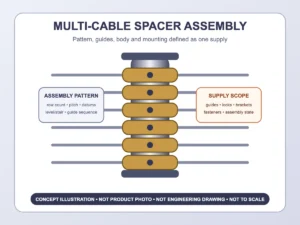
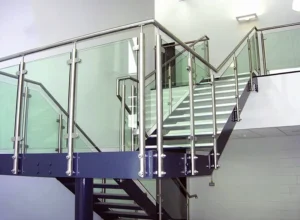
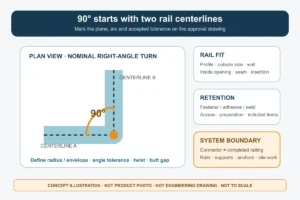
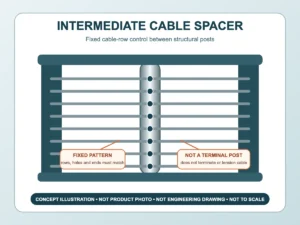
Intermediate posts, sleeves or guides also affect the cable route, but they do not replace the end fittings. Show every corner and change in elevation: a cable that turns a corner is not the same procurement problem as a straight run between two faces.
What to send for a comparable quotation
You can begin with incomplete information. A phone photo and a marked-up sketch are enough for the first review. Before the final configuration is accepted, the following fields should be resolved:
- support material, face width, known wall thickness and rear access;
- straight, stair or other angled route, with a photo of each termination face;
- number of cable runs, approximate run lengths and estimated total quantity;
- cable diameter and construction if already specified, or the matching requirement if not;
- preferred field-assembled or factory-finished cable approach;
- exposure conditions and required surface appearance;
- which end must remain accessible for adjustment after installation.
The resulting quotation should make comparison easy by stating the proposed end pair, cable compatibility, connection method, angle capability, adjustment provision, included fasteners or tools, finish, pack quantity and any project-side items that are excluded.
Start with the support and cable route
Send ESANG the clearest termination-face photo you have, plus a sketch of the cable path. The first review can identify the missing dimensions and separate a surface-mount fitting request from the anchor and structural questions that still belong in the project design.