A post-to-glass adapter connects a post-side support to a prepared glass panel. It is one connection component, not proof of a complete railing system. The useful buying decision is therefore not simply “which adapter looks right?” It is whether the proposed adapter body, post-side fixing, glass build-up, hole and gasket set, and site installation responsibility have been matched as one connection.
Request a post-to-glass adapter quotation on WhatsApp
You can start with a photo or marked-up detail, an estimated quantity, and the post and glass information already available. Final dimensions do not need to be settled before the first inquiry, but the connection must be defined before manufacture or installation.
First identify the adapter being purchased
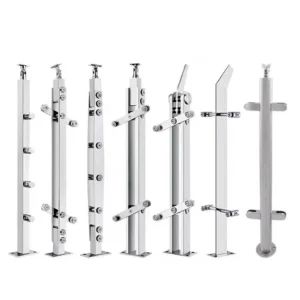
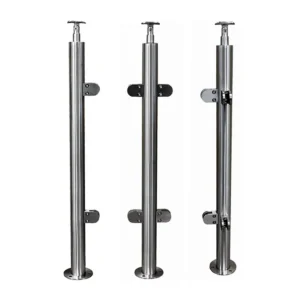
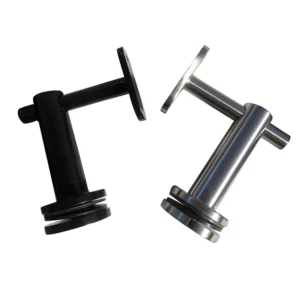
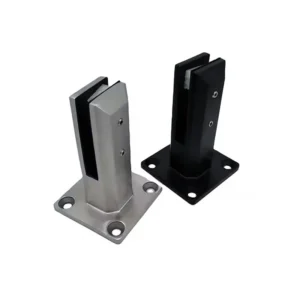
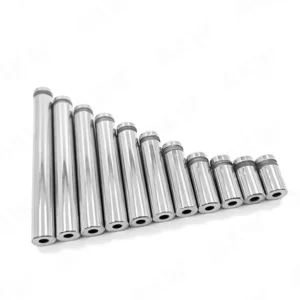
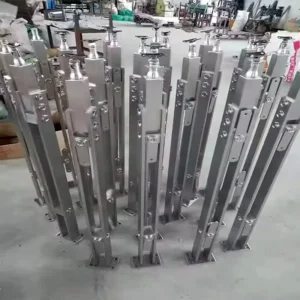
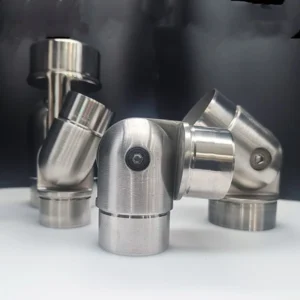
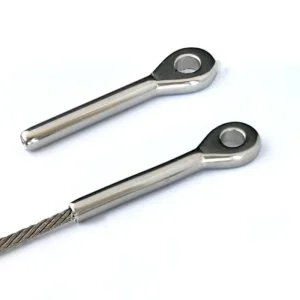
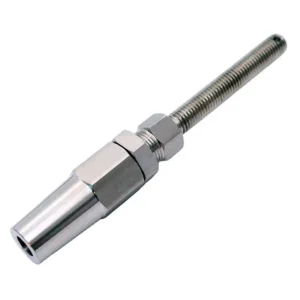
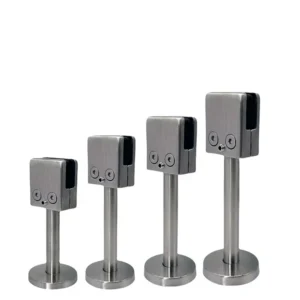
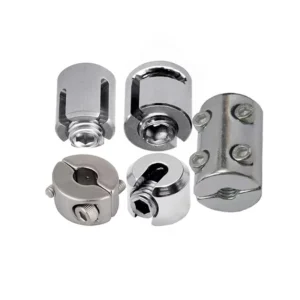
The current ESANG public product image shows a rectangular plate with mounting holes, two cylindrical bodies, black isolation rings, and front caps. That visible form is useful for identifying the product direction. It does not establish the internal fixing, material grade, load rating, compatible glass, fastener package, or the rest of the railing.
For comparison, ask each quotation to describe the proposed adapter as a component:
- Post-side form: the seating plate or body shape, mounting-hole pattern, projection from the post, and required access for assembly.
- Glass-side form: cap shape, gasket or isolator set, prepared-hole requirement, and the glass thickness range proposed for that exact configuration.
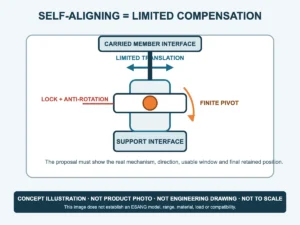
- Adjustment: whether alignment is fixed, shimmed, or adjustable, and where any adjustment is locked.
- Appearance: visible body and cap finish requested for the project, without assuming that appearance proves the base material.

Separate the post side from the glass side
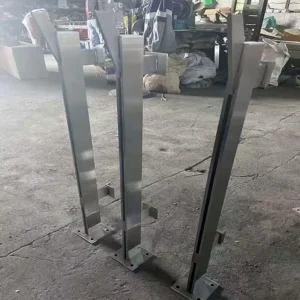
The adapter body cannot compensate for an undefined post connection. The RFQ should show whether it seats on a flat plate, a shaped post face, a welded or inserted support, or another prepared interface. State the post profile, outside dimensions, wall or support condition, proposed hole pattern, inside access, and any conflict with nearby rails or fittings. If only a site photo is available, include a ruler or known reference in the image and mark which face receives the adapter.
The post, its internal reinforcement or backing, and its connection to the structure remain part of the project load path. An adapter quotation should not be read as approval of the post, backing, anchors, or complete guard. The responsible designer or installer must define those items and verify that the chosen connection can be installed and inspected.
Define the glass before fixing the hardware
Point-style glass connections commonly depend on prepared holes and non-metallic isolation between glass and metal. The exact glass composition and preparation are configuration-specific. Before a final adapter is released, provide:
- glass type and build-up, including whether the panel is monolithic or laminated and the nominal thickness;
- panel dimensions, edge condition, hole diameter, hole location, and the approved edge distances;
- the number and layout of connection points per panel;
- the gasket, sleeve, or other isolating parts required between the fitting and the glass;
- panel slope, corners, steps, or other geometry that changes access or alignment.
Do not order the glass from a generic adapter photo. The glass designer or fabricator should freeze the hole and edge geometry against the approved fitting detail. If the panel is already fabricated, send an accurate hole schedule and close-up photos rather than assuming the adapter can absorb the difference.
Keep fasteners and tightening responsibility explicit
Ask the proposal to separate the visible adapter body from all post-side fasteners, glass-side caps, gaskets, sleeves, washers, backing parts, and installation consumables. The quotation should name which of those items are included and which are by the installer or another supplier.
Fastener type, engagement, tightening sequence, and tightening value cannot be selected from the product image. They depend on the proposed adapter, post support, glass build-up, gasket set, and approved system design. The installation team should receive the final fitting detail and follow the project-specific sequence rather than applying an assumed “standard” torque.
Use the quotation to compare like with like
| Comparison field | 拟议的供货单应包含哪些内容 | Why it changes the result |
|---|---|---|
| Adapter identity | Body/cap form, projection, finish, quantity, and drawing reference | Prevents a similar-looking but incompatible part from being substituted |
| 帖子界面 | Seating face, hole pattern, fastener route, access, and included backing parts | Determines whether the fitting can be fixed and inspected at the actual post |
| Glass interface | Accepted glass build-up, hole preparation, gasket/sleeve set, and cap sequence | Avoids metal-to-glass contact and late conflict with fabricated holes |
| Responsibility | Included parts, excluded anchors/backing, drawing approval, and installation instructions | Keeps a component quotation from being mistaken for complete system approval |
What to send for a useful first response
- a marked photo or sketch showing the post face and the glass position;
- post profile and available fixing access, even if dimensions are preliminary;
- glass build-up, panel size, hole status, and connection-point layout;
- estimated adapter quantity and any left/right, corner, stair, or slope conditions;
- requested visible finish and the service environment;
- a list of parts you want ESANG to consider, such as adapter bodies, caps, gaskets, sleeves, or fasteners.
The resulting quotation should identify the exact proposed configuration and supply boundary. Glass design, post capacity, anchors, final tightening requirements, and complete railing compliance remain subject to the approved project design.