Tempered vs Laminated Glass for Stainless Steel Railing Hardware: Specification Boundaries

Glass type looks like a materials decision. In practice, it controls hole fabrication sequence, hardware sizing, weight loading, and jurisdictional compliance simultaneously — and none of those dependencies recover cheaply once procurement moves. The most common failure pattern is not selecting the wrong glass outright; it is allowing the glass supplier to finalize build-up after hardware openings, gaskets, and channel dimensions have already been ordered. At that point, holes drilled for a 10 mm tempered panel cannot be repositioned, and bite depths sized for tempered are wrong for 12.76 mm laminated, turning a coordination gap into a fabrication restart. What follows gives specifiers, hardware buyers, and project coordinators a structured way to identify where the glass-to-hardware boundary sits before those commitments are made.

Glass build-up changes hardware compatibility

Glass build-up is not a late-stage substitution variable. It determines hole placement feasibility, gasket profile, bite depth, support loading, and in frameless configurations, whether the hardware system is viable at all — before a single component ships.

The most immediate constraint is fabrication sequence. Tempered glass cannot be cut, drilled, or resized after production. Every hole position, edge profile, and cutout must be finalized before the glass enters the tempering furnace. If hardware dimensions or mounting layouts shift after that point, the glass panel cannot be adjusted. That is not a scheduling inconvenience; it is a fabrication restart. Hardware orders that lock in hole spacing, clamp positions, or channel depths before the glass build-up is confirmed are absorbing that risk by default.

Weight is the second dimension teams consistently underweight. Laminated glass at the same nominal thickness carries up to 50% more mass than a single-lite tempered panel. That differential is not absorbed by the glass specification alone — it propagates into hardware load capacity assumptions, post and bracket sizing, and structural framing design. A project that moves from 10 mm tempered to a laminated build-up of equivalent nominal dimension without revisiting those load assumptions has introduced a quiet error into the hardware selection. The cost ratios are directionally significant as well: 10 mm tempered is the 1.0× baseline; a 10.38 mm PVB laminated construction runs approximately 1.8–2.0×; tempered laminated assemblies reach 2.5–3.0×. These are illustrative benchmarks, not market prices, but they indicate the scale of specification drift when build-up is treated as interchangeable.

For frameless railing configurations specifically, laminated glass is not a preference — it is the logical boundary of the system. Frameless hardware relies on the glass panel to maintain the barrier after an impact event. Tempered glass, which offers 0% residual structural capacity after breakage, cannot fulfill that function without a top rail or secondary retention element. The requirement for laminated glass in frameless systems is driven by that post-breakage retention logic, confirmed at the jurisdiction level. Treating glass build-up as a variable to be resolved later in that context creates a system that is compatible on paper and indefensible in review.

Tempered glass behavior and edge requirements

Tempered glass is approximately 4–5 times stronger than annealed glass of the same thickness, and that strength advantage is real and useful. The hardware consequences of how it behaves on failure, and of what cannot be done to it after production, are where specification errors concentrate.

On failure, tempered glass produces small, blunt fragments with no residual structural capacity. From a hardware standpoint, this means the hardware design must assume full panel drop-out — no retained load transfer, no partial support. In guardrail applications, that assumption is load-bearing in the most literal sense: if the panel exits the system, the barrier function is gone. Hardware selected for a tempered panel in a guardrail context must account for that scenario at the system level, not treat glass retention as a given.

The span sensitivity of tempered glass is a planning criterion that generic thickness rules cannot resolve. A 12 mm panel may satisfy structural requirements at a 900 mm span under a given load condition and fall short at 1200 mm under the same load. That is not an unusual threshold — it is an illustration of why hardware compatibility cannot be confirmed from a thickness specification alone. Actual span, load condition, and support configuration must be verified by engineering calculation before hardware is released for order. Hardware suppliers and project coordinators who rely on nominal thickness as a proxy for structural adequacy are working from an incomplete input.

财产What It Means for Hardware为何重要
Post-breakage behaviorShatters into small blunt pieces; 0% residual structural capacityNot suitable for guardrails without secondary retention; hardware must assume full panel drop-out
Post-fabrication modificationCannot be cut, drilled, or resized after temperingAll edge profiles, hole positions and cutouts must be finalized before tempering; no field adjustments possible
Strength vs annealed4–5 times strongerHigher strength allows thinner panels, but span must still be verified by engineering calculation
Span sensitivityA 12mm panel may pass at 900 mm span but fail at 1200 mm under the same loadGeneric thickness rules are insufficient; hardware compatibility depends on verified span/load calculations

The fabrication sequence point deserves a direct consequence framing. Because post-fabrication modification is impossible, any hardware detail that requires a hole, notch, or edge treatment — point-fixed clamps, base shoe adapters with drainage cutouts, top rail receivers — must be confirmed against the glass drawing before tempering. If a contractor discovers a mounting position conflict after the glass is produced, the cost is a new panel, a fabrication cycle, and a schedule impact that was preventable.

Laminated retention and thickness consequences

Laminated glass does not simply add a layer — it changes the failure behavior, the nominal-to-actual thickness relationship, and the edge conditions that gaskets and channels must accommodate. Each of those consequences lands differently in hardware specification.

Post-breakage retention is the defining characteristic. PVB interlayers, the more common construction, retain approximately 15–20% of structural capacity after breakage. SGP interlayers retain approximately 40–60%. These are design figures for planning purposes, not values attributed to a single test standard. The practical consequence is that interlayer choice affects what the hardware can defensibly assume after an impact event — a relevant consideration in guardrail applications where post-breakage barrier function matters. For exterior applications specifically, SGP interlayer carries a practical advantage in edge stability across temperature ranges. PVB edge stability degrades more at temperature extremes, which over time can compromise gasket sealing and the long-term integrity of the glass-to-hardware interface. That is a maintenance and durability argument, not a code requirement, but it is a real planning criterion for outdoor railing systems exposed to seasonal cycling.

夹层类型Residual Post-Breakage CapacityEdge Stability Across TemperaturesOutdoor Suitability
PVB15–20%Lower stability at temperature extremesLess recommended for exterior railing
SGP40–60%Superior stability across temperature rangesRecommended for outdoor applications

The interlayer comparison maps to hardware selection in the following way.

ThicknessGlass Make-UpHardware Implication
10.38 mm2×5 mm + PVBBite depth and gasket sizing must match actual thickness, not nominal
12.76 mm2×6 mm + PVB or SGPBite depth and gasket sizing must match actual thickness, not nominal
16.76 mm2×8 mm + PVB or SGPBite depth and gasket sizing must match actual thickness, not nominal

The thickness make-up table carries the specific combinations; the consequence for hardware is consistent across all of them: bite depth and gasket sizing must be matched to actual laminated thickness, not the nominal dimension the panel is referred to by. A 10.38 mm laminated panel is not a 10 mm panel with a slight oversize tolerance — it is a defined construction whose actual dimension controls the hardware opening. Specifying a gasket or channel sized for 10 mm tempered against a 10.38 mm laminated build-up produces an undersized grip that is both a structural and an aesthetic problem. For 12.76 mm and 16.76 mm constructions, the gap between nominal and actual is proportionally more significant. Hardware orders must reference the confirmed laminated build-up, not a nominal thickness shorthand.

Hole, gasket and channel details after glass choice

Once glass build-up is confirmed, the hardware detail work is a translation problem: every dimension that contacts the glass edge must be recalculated against actual laminated or tempered geometry, not nominal assumptions.

For tempered glass with point-fixed hardware — spigots, patch fittings, or glass clamps — hole position and diameter are irreversible once tempering is complete. This means the hardware layout must be finalized, the hole drawing must be confirmed against the hardware mounting template, and both must be approved before the glass fabrication order is released. Any clamp or glass mounting adapter that requires a countersunk or through-hole detail needs to be dimensionally confirmed at this stage. A position that works at one post spacing may not work at another if the glass panel dimensions change, and there is no field correction available.

For laminated glass, the fabrication constraint is different but equally binding. Laminated panels can be cut after assembly, but edge treatment following cutting requires re-sealing to protect the interlayer — particularly in exterior applications where moisture ingress at the cut edge degrades the PVB or SGP bond over time. Specifying a laminated panel with field-cut edges without accounting for edge sealing is a long-term durability failure that is invisible at installation and visible as delamination later.

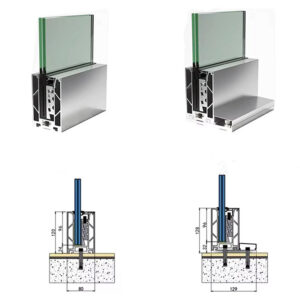
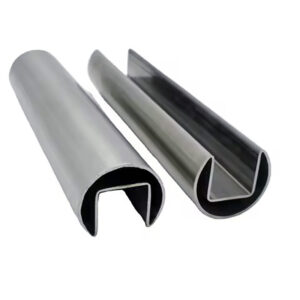
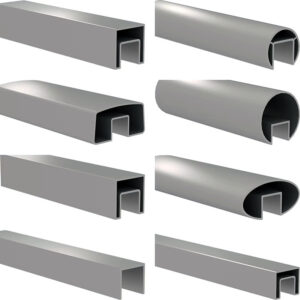
Gasket selection is where build-up thickness errors most commonly appear in finished hardware. Gaskets compress to function, but they have tolerance ranges. A gasket profiled for 10 mm tempered glass will either over-compress or fail to seal against a 12.76 mm laminated panel. For channel-based systems — 玻璃底座鞋道 being the most direct example — the slot width must accommodate the actual panel thickness plus the gasket material on both faces, without reducing the bite depth below what the system requires for structural grip. If the channel was sourced against a tempered specification and the glass build-up shifted to laminated, the slot geometry may be wrong, and the bite depth may be inadequate. That is not a field-adjustable condition.

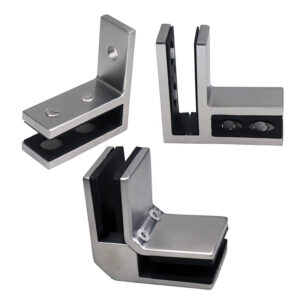
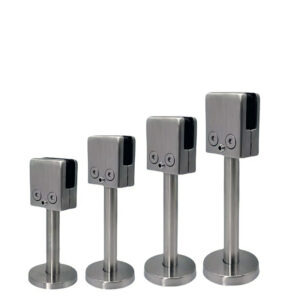
重型玻璃夹 carry the same dependency: jaw opening, pad thickness, and clamping torque specifications are calibrated to a specific glass thickness range. Moving from a thinner tempered panel to a laminated build-up without reconfirming clamp compatibility risks under-grip on the panel, uneven load distribution across the jaw contact area, and potential edge stress concentration at the glass-to-pad interface. None of these are visible at installation without deliberate inspection.

The practical review step is sequential: confirm glass build-up first, extract actual thickness, confirm hole or edge details from that geometry, then release hardware dimensions. Any deviation from that sequence increases the probability that a hardware item ordered early becomes a mismatch that cannot be corrected without replacement.

Specification boundary before hardware order release

The compliance dimension of glass build-up is not a soft risk to be managed through project judgment. In key jurisdictions, it sets a hard boundary that determines whether the installed system can pass inspection.

IBC 2021 Section 2407 requires laminated glass with a minimum 0.38 mm PVB interlayer for guards, or a tested top rail system documented per ASTM E2353. That is a pre-order verification point, not a post-installation adjustment. A project that specifies tempered glass for a guardrail application under IBC jurisdiction to reduce cost is not taking a calculated risk — it is creating a hard inspection failure that requires material replacement after installation. The cost of tempered glass relative to laminated is not recoverable against the cost of rework at that stage.

NBC 2020 holds a comparable position: laminated glass is required for guardrails, and tempered-only specifications are generally not accepted. Projects in Canadian jurisdictions that reference tempered glass in guardrail positions need to verify local adoption of NBC 2020 and ensure the laminated specification is in place before hardware is ordered.

代码/标准要求Verification Before Order
IBC 2021 第 2407 节Laminated glass (min 0.38 mm PVB) for guards, or tested top rail system per ASTM E2353Confirm guard configuration and glass build-up meet IBC requirements
NBC 2020Laminated glass required for guardrails; tempered-only generally not permittedVerify local NBC adoption and ensure laminated specification is included
AS 1288:2021Laminated glass required for barriers with fall height >5 m; tempered may be acceptable below 5 m with engineering assessmentConfirm fall height and obtain engineering assessment if tempered is proposed

AS 1288:2021 introduces a height-dependent condition: laminated glass is required for barriers with a fall height greater than 5 m; below that threshold, tempered may be acceptable subject to an engineering assessment. For projects governed by Australian standards, the fall height must be confirmed as part of the pre-order review, and where tempered is proposed below 5 m, the engineering assessment must be in place before hardware is released. The height boundary is a jurisdiction-specific planning criterion, not a universal rule, but it illustrates that compliance thresholds vary by code and that assuming tempered is acceptable without jurisdiction-specific verification is a defensibility failure.

For a more detailed treatment of laminated glass specification against a specific safety glass standard, the ANSI Z97.1 Class A laminated glass specification guidance for stainless steel railing systems provides a useful reference for US-market projects where that standard applies alongside IBC.

The pre-order review checklist is not complex, but it must happen in sequence: confirm jurisdiction and applicable code; confirm guard or infill configuration; confirm glass build-up and interlayer type; confirm that laminated requirements are satisfied where they apply; then release hardware dimensions against confirmed build-up geometry. Skipping any of those steps in the interest of schedule compresses the timeline on the front end and expands it significantly on the back end if the inspection fails.

The most defensible position before a hardware order releases is a confirmed glass build-up with jurisdiction-specific compliance verified and actual thickness dimensions in hand. Glass type controls too many downstream variables — hole fabrication sequence, gasket sizing, bite depth, weight loading, and code defensibility — to be treated as a parallel decision that can be resolved after hardware is sourced. The friction point is always the same: glass build-up is finalized by the glass supplier after hardware has already been ordered, and by then, the geometry is locked.

Before releasing any hardware, confirm glass type, interlayer, actual thickness, and whether the jurisdiction requires laminated in the application position. If any of those inputs are unresolved, the hardware order is premature. Resolving them upstream is a specification discipline problem, not a supply chain problem, and the cost of that discipline is a fraction of what a fabrication restart or a failed inspection creates.

常见问题

Q: Can a framed railing system with a top rail use tempered glass where laminated would otherwise be required by code?
A: In some jurisdictions, yes — a tested top rail system documented per ASTM E2353 can substitute for the laminated glass requirement under IBC 2021 Section 2407, but this is a jurisdiction-specific determination, not a universal workaround. The top rail system must be tested and documented to that standard before it is treated as a compliant alternative. Confirming this path with the authority having jurisdiction before hardware is ordered is the only defensible position; assuming equivalence without verification carries the same inspection failure risk as specifying tempered outright.

Q: If the glass build-up shifts from tempered to laminated after hardware is already ordered, what specifically needs to be reconfirmed before anything ships?
A: At minimum, four items must be reconfirmed in sequence: bite depth and slot width on any channel or base shoe against the actual laminated thickness; gasket profiles against the new panel geometry; jaw opening and pad specifications on any glass clamps; and structural load capacity on posts, brackets, and framing against the weight increase of up to 50% that laminated construction introduces. None of these are field-adjustable after installation, so reconfirmation must happen before fabrication, not after delivery.

Q: Is SGP interlayer always worth the cost premium over PVB for outdoor railing applications?
A: For exterior railing systems exposed to significant seasonal temperature cycling, SGP is the more defensible choice — not because code requires it, but because PVB edge stability degrades at temperature extremes in ways that compromise long-term gasket sealing and the glass-to-hardware interface. The cost premium for SGP over PVB sits within the broader cost step from tempered to laminated construction, which is already 1.8–2.0× at baseline. If the railing is in a sheltered interior or climate-controlled environment, PVB may be adequate. For exposed exterior applications where delamination and edge bond degradation are realistic long-term risks, the SGP premium is generally justified against the cost of future remediation.

Q: At what point in the project timeline is it too late to change the glass build-up without triggering hardware replacement?
A: The hard cutoff is before the glass enters the tempering furnace for tempered panels, and before hardware with fixed slot, jaw, or hole geometry is fabricated or ordered for either glass type. Once tempered glass is produced, holes and edges are irreversible. Once a base shoe channel, glass clamp, or point-fixed adapter is manufactured to a specific thickness range, it cannot be adjusted to accommodate a different build-up. In practice, this means glass build-up must be confirmed before hardware dimensions are released for fabrication — not before delivery, not before installation, but before the fabrication order is placed.

Q: Does the AS 1288:2021 fall height threshold of 5 m apply to the finished floor level or to the drop on the unprotected side of the barrier?
A: The threshold applies to the fall height on the unprotected side — the vertical distance a person could fall if the barrier failed — not to the floor level at which the railing is installed. This distinction matters on sloped sites, mezzanines, or terraced structures where the installed floor elevation and the actual fall exposure differ. For projects governed by AS 1288:2021 where tempered glass is being considered below the 5 m threshold, the engineering assessment must be based on the confirmed fall height in that specific application position, and that assessment must be in hand before hardware is released.

相关职位:

Ivy Wang 的图片

Ivy Wang

Ivy Wang 是 esang.co 的技术撰稿人和产品专家,在不锈钢栏杆系统方面拥有 6 年经验。现年 29 岁的她已经参与了 200 多个定制五金项目,帮助客户解决从船舶级安装到商业合规要求等各种问题。Ivy 的工作方法侧重于以客户为中心的实用解决方案,而不是 "一刀切 "的建议。她擅长将复杂的技术规格转化为建筑师、承包商和业主的可行建议。.
立即联系我们 !