La elección del tipo de vidrio parece una simple decisión sobre el material. En la práctica, determina simultáneamente la secuencia de fabricación de los orificios, el dimensionamiento de los herrajes, la carga de peso y el cumplimiento de la normativa vigente; y ninguna de esas dependencias se puede subsanar a bajo coste una vez que el proceso de adquisición ha avanzado. El error más habitual no es elegir directamente un vidrio inadecuado, sino permitir que el proveedor de vidrio finalice la composición del conjunto una vez que ya se han encargado las aberturas para los herrajes, las juntas y las dimensiones de los canales. En ese momento, los orificios taladrados para un panel templado de 10 mm no pueden reubicarse, y las profundidades de calado dimensionadas para el vidrio templado resultan inadecuadas para el vidrio laminado de 12,76 mm, lo que convierte una falta de coordinación en un reinicio de la fabricación. Lo que sigue ofrece a los prescriptores, compradores de herrajes y coordinadores de proyectos una forma estructurada de identificar dónde se sitúa el límite entre el vidrio y los herrajes antes de que se asuman dichos compromisos.
La incorporación de cristal afecta a la compatibilidad del hardware
La acumulación de vidrio no es una variable de sustitución en una fase avanzada. Determina la viabilidad de la colocación de los orificios, el perfil de la junta, la profundidad de encaje, la carga sobre los soportes y, en configuraciones sin marco, si el sistema de herrajes es viable en absoluto, antes incluso de que se envíe un solo componente.
La limitación más inmediata es la secuencia de fabricación. El vidrio templado no se puede cortar, taladrar ni redimensionar una vez fabricado. La posición de cada orificio, el perfil de los bordes y cada recorte deben estar definidos antes de que el vidrio entre en el horno de templado. Si las dimensiones de los herrajes o la disposición de montaje cambian a partir de ese momento, el panel de vidrio no se puede ajustar. No se trata de un simple inconveniente de planificación, sino de tener que reiniciar todo el proceso de fabricación. Los pedidos de herrajes en los que se fijan la separación entre orificios, la posición de las abrazaderas o la profundidad de los canales antes de que se confirme la confección del vidrio asumen ese riesgo de forma implícita.
El peso es la segunda dimensión que los equipos suelen subestimar sistemáticamente. El vidrio laminado, con el mismo espesor nominal, tiene hasta 50% más masa que un panel templado de una sola capa. Esa diferencia no queda compensada únicamente por la especificación del vidrio, sino que se repercute en las hipótesis sobre la capacidad de carga de los herrajes, el dimensionamiento de los montantes y los soportes, y el diseño de la estructura. Un proyecto que pasa de un vidrio templado de 10 mm a un conjunto laminado de dimensión nominal equivalente sin revisar esas suposiciones de carga ha introducido un error silencioso en la selección de los herrajes. Las relaciones de coste también son significativas en términos de tendencia: el vidrio templado de 10 mm es la referencia 1,0×; una construcción laminada con PVB de 10,38 mm cuesta aproximadamente entre 1,8 y 2,0 veces más; los conjuntos de vidrio templado laminado alcanzan entre 2,5 y 3,0 veces más. Se trata de valores de referencia ilustrativos, no de precios de mercado, pero indican la magnitud de la desviación en las especificaciones cuando se considera que los conjuntos son intercambiables.
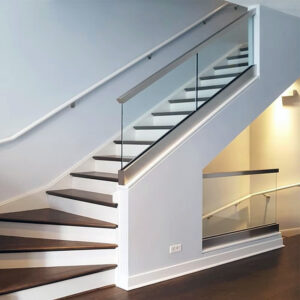
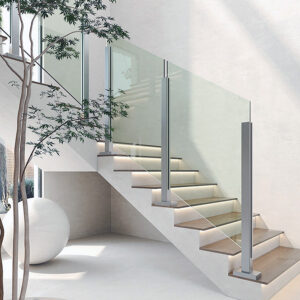
En el caso concreto de las configuraciones de barandillas sin marco, el vidrio laminado no es una opción preferida, sino que constituye el límite lógico del sistema. Los herrajes sin marco dependen del panel de vidrio para mantener la barrera tras un impacto. El vidrio templado, que ofrece una capacidad estructural residual de 0% tras la rotura, no puede cumplir esa función sin un travesaño superior o un elemento de retención secundario. La exigencia de utilizar vidrio laminado en los sistemas sin marco se debe a esa lógica de retención tras la rotura, confirmada a nivel jurisdiccional. Considerar la estructura de vidrio como una variable que se resolverá más adelante en ese contexto da lugar a un sistema que es compatible sobre el papel, pero indefendible en caso de revisión.
Comportamiento del vidrio templado y requisitos relativos a los bordes
El vidrio templado es aproximadamente entre 4 y 5 veces más resistente que el vidrio recocido del mismo grosor, y esa ventaja en cuanto a resistencia es real y útil. Las consecuencias técnicas derivadas de su comportamiento en caso de rotura, así como de lo que no se le puede hacer una vez fabricado, son los aspectos en los que se concentran los errores de especificación.
En caso de rotura, el vidrio templado produce fragmentos pequeños y romos sin capacidad estructural residual. Desde el punto de vista de los herrajes, esto significa que el diseño de los mismos debe prever la caída total del panel: sin transferencia de carga retenida ni soporte parcial. En las aplicaciones de barandillas de seguridad, esa suposición es determinante en el sentido más literal: si el panel se sale del sistema, la función de barrera desaparece. Los herrajes seleccionados para un panel de vidrio templado en el contexto de una barandilla de seguridad deben tener en cuenta ese escenario a nivel del sistema, y no dar por sentada la retención del vidrio.
La sensibilidad a la luz libre del vidrio templado es un criterio de diseño que las normas genéricas sobre espesor no pueden resolver. Un panel de 12 mm puede cumplir los requisitos estructurales en una luz libre de 900 mm bajo una condición de carga determinada y no ser suficiente en una luz libre de 1200 mm bajo la misma carga. Ese umbral no es inusual; es un ejemplo de por qué la compatibilidad de los herrajes no puede confirmarse únicamente a partir de una especificación de espesor. La luz real, las condiciones de carga y la configuración de los apoyos deben verificarse mediante cálculos de ingeniería antes de dar luz verde al pedido de los herrajes. Los proveedores de herrajes y los coordinadores de proyectos que se basan en el espesor nominal como indicador de la idoneidad estructural están trabajando con información incompleta.
| Propiedad | Qué significa esto para el hardware | Por qué es importante |
|---|---|---|
| Comportamiento tras la rotura | Se rompe en pequeños fragmentos romos; capacidad estructural residual 0% | No apto para barandillas sin retención secundaria; los herrajes deben soportar la caída completa del panel |
| Modificación posterior a la fabricación | No se puede cortar, taladrar ni modificar su tamaño tras el templado | Todos los perfiles de los bordes, las posiciones de los orificios y los recortes deben estar definidos antes del templado; no es posible realizar ajustes in situ. |
| Resistencia frente a recocido | entre 4 y 5 veces más fuerte | Una mayor resistencia permite utilizar paneles más finos, pero la luz debe verificarse mediante cálculos de ingeniería. |
| Sensibilidad de la envergadura | Un panel de 12 mm puede soportar una luz de 900 mm, pero fallar a 1200 mm bajo la misma carga. | Las normas generales sobre espesor son insuficientes; la compatibilidad del material depende de cálculos verificados de luz y carga. |
El punto de la secuencia de fabricación merece una explicación clara de sus consecuencias directas. Dado que no es posible realizar modificaciones tras la fabricación, cualquier detalle de herrajes que requiera un orificio, una muesca o un tratamiento de los bordes —abrazaderas de fijación puntual, adaptadores de zócalo con aberturas de drenaje, receptáculos del riel superior— debe confirmarse con respecto al plano del vidrio antes del templado. Si un contratista descubre un conflicto en la posición de montaje una vez fabricado el vidrio, el coste será un nuevo panel, un ciclo de fabricación y un retraso en el calendario que se podría haber evitado.
Retención laminada y consecuencias en el espesor
El vidrio laminado no se limita a añadir una capa, sino que modifica el comportamiento ante la rotura, la relación entre el espesor nominal y el real, y las condiciones de los bordes a las que deben adaptarse las juntas y los canales. Cada una de estas consecuencias se refleja de forma diferente en las especificaciones de los herrajes.
La retención tras la rotura es la característica definitoria. Las capas intermedias de PVB, que son las más habituales, conservan aproximadamente entre el 15 y el 20% de su capacidad estructural tras la rotura. Las capas intermedias de SGP conservan aproximadamente entre el 40 y el 60%. Se trata de cifras de diseño con fines de planificación, no de valores atribuidos a una única norma de ensayo. La consecuencia práctica es que la elección de la capa intermedia influye en lo que los herrajes pueden soportar de forma justificada tras un impacto, una consideración relevante en aplicaciones de barreras de seguridad, donde la función de barrera tras la rotura es fundamental. En el caso concreto de las aplicaciones en exteriores, la capa intermedia de SGP ofrece una ventaja práctica en cuanto a la estabilidad de los bordes en distintos rangos de temperatura. La estabilidad de los bordes del PVB se degrada más a temperaturas extremas, lo que con el tiempo puede comprometer el sellado de las juntas y la integridad a largo plazo de la interfaz entre el vidrio y los herrajes. Se trata de un argumento relacionado con el mantenimiento y la durabilidad, no de un requisito normativo, pero sí es un criterio de planificación real para los sistemas de barandillas exteriores expuestos a ciclos estacionales.
| Tipo de capa intermedia | Capacidad residual tras la rotura | Estabilidad de los bordes a diferentes temperaturas | Idoneidad para actividades al aire libre |
|---|---|---|---|
| PVB | 15–20% | Menor estabilidad a temperaturas extremas | Menos recomendable para barandillas exteriores |
| SGP | Entre cuarenta mil y sesenta y un mil cuatrocientos cuarenta y cuatro | Estabilidad superior en todos los rangos de temperatura | Recomendado para uso en exteriores |
La comparación entre capas se corresponde con la selección de hardware de la siguiente manera.
| Espesor | Maquillaje para el cristal | Repercusiones en el hardware |
|---|---|---|
| 10,38 mm | 2 × 5 mm + PVB | La profundidad de encaje y las dimensiones de la junta deben coincidir con el espesor real, no con el nominal. |
| 12,76 mm | 2×6 mm + PVB o SGP | La profundidad de encaje y las dimensiones de la junta deben coincidir con el espesor real, no con el nominal. |
| 16,76 mm | 2 × 8 mm + PVB o SGP | La profundidad de encaje y las dimensiones de la junta deben coincidir con el espesor real, no con el nominal. |
La tabla de cálculo de espesores recoge las combinaciones específicas; la consecuencia para los herrajes es la misma en todas ellas: la profundidad de encaje y el tamaño de la junta deben ajustarse al espesor real del laminado, no a la dimensión nominal con la que se designa el panel. Un panel laminado de 10,38 mm no es un panel de 10 mm con una ligera tolerancia de sobredimensión, sino una construcción definida cuya dimensión real determina la abertura del herraje. Especificar una junta o un canal dimensionado para un panel templado de 10 mm en una estructura laminada de 10,38 mm da lugar a un agarre insuficiente, lo que supone un problema tanto estructural como estético. En el caso de las estructuras de 12,76 mm y 16,76 mm, la diferencia entre el espesor nominal y el real es proporcionalmente más significativa. Los pedidos de herrajes deben hacer referencia a la estructura laminada confirmada, y no a una abreviatura del espesor nominal.
Detalles de los orificios, las juntas y los canales tras la elección del vidrio
Una vez confirmada la presencia de vidrio, el trabajo de detalle de los herrajes se convierte en un problema de adaptación: todas las dimensiones que entran en contacto con el borde del vidrio deben recalcularse en función de la geometría real del vidrio laminado o templado, y no a partir de valores nominales.
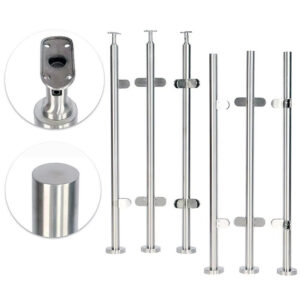
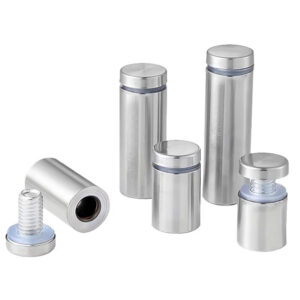
En el caso del vidrio templado con herrajes de fijación puntual —espigas, herrajes de parche o abrazaderas para vidrio—, la posición y el diámetro de los orificios son irreversibles una vez finalizado el proceso de templado. Esto significa que la disposición de los herrajes debe estar definida, que el plano de los orificios debe confirmarse con la plantilla de montaje de los herrajes y que ambos deben ser aprobados antes de dar luz verde al pedido de fabricación del vidrio. Cualquier abrazadera o adaptador de montaje para cristal Cualquier detalle que requiera un orificio avellanado o pasante debe confirmarse dimensionalmente en esta fase. Una posición que resulte adecuada para una determinada distancia entre montantes puede no serlo para otra si cambian las dimensiones del panel de vidrio, y no es posible realizar correcciones in situ.
En el caso del vidrio laminado, la restricción de fabricación es diferente, pero igualmente vinculante. Los paneles laminados pueden cortarse tras su montaje, pero el tratamiento de los bordes tras el corte requiere un nuevo sellado para proteger la capa intermedia —especialmente en aplicaciones exteriores, donde la entrada de humedad por los bordes cortados degrada con el tiempo la unión del PVB o del SGP—. Especificar un panel laminado con bordes cortados in situ sin tener en cuenta el sellado de los bordes supone un fallo de durabilidad a largo plazo que es invisible en el momento de la instalación y se manifiesta posteriormente en forma de delaminación.
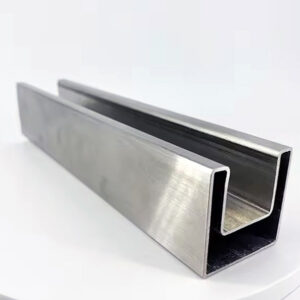
La elección de las juntas es donde suelen producirse con mayor frecuencia los errores de espesor acumulado en los herrajes acabados. Las juntas se comprimen para funcionar, pero tienen unos márgenes de tolerancia. Una junta diseñada para un cristal templado de 10 mm se comprimirá en exceso o no sellará correctamente contra un panel laminado de 12,76 mm. En el caso de los sistemas basados en canales — canales para zapatas base de cristal Siendo este el ejemplo más claro: la anchura de la ranura debe ser suficiente para albergar el grosor real del panel más el material de la junta en ambas caras, sin reducir la profundidad de agarre por debajo de lo que el sistema requiere para garantizar la sujeción estructural. Si el canal se ha fabricado según una especificación para vidrio templado y la composición del vidrio ha pasado a ser laminada, es posible que la geometría de la ranura sea incorrecta y que la profundidad de agarre resulte insuficiente. Esta no es una situación que se pueda ajustar in situ.
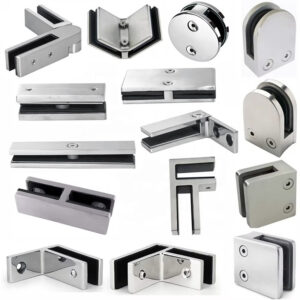
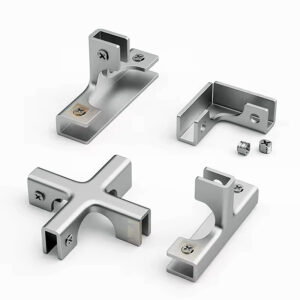
Pinzas para vidrio de alta resistencia presentan la misma dependencia: la apertura de las mordazas, el grosor de la almohadilla y las especificaciones de par de sujeción se calibran para un rango específico de grosor del vidrio. Pasar de un panel templado más fino a un conjunto laminado sin volver a confirmar la compatibilidad de las abrazaderas conlleva el riesgo de una sujeción insuficiente del panel, una distribución desigual de la carga en la zona de contacto de las mordazas y una posible concentración de tensiones en los bordes en la interfaz entre el vidrio y la almohadilla. Ninguno de estos problemas es visible durante la instalación sin una inspección minuciosa.
El proceso de revisión práctica es secuencial: primero hay que confirmar la estructura del vidrio, determinar su grosor real, verificar los detalles de los orificios o los bordes a partir de esa geometría y, a continuación, facilitar las dimensiones de los herrajes. Cualquier desviación de esta secuencia aumenta la probabilidad de que un herraje encargado con antelación resulte ser incompatible, lo que no podrá corregirse sin sustituirlo.
Límites de las especificaciones antes de la autorización del pedido de hardware
El aspecto normativo de la acumulación de vidrio no es un riesgo secundario que pueda gestionarse basándose en el criterio del proyecto. En las jurisdicciones clave, establece un límite estricto que determina si el sistema instalado puede superar la inspección.
La sección 2407 del IBC 2021 exige el uso de vidrio laminado con una capa intermedia de PVB de al menos 0,38 mm para las barandillas, o bien un sistema de barandilla superior sometido a ensayo y documentado según la norma ASTM E2353. Se trata de un punto de verificación previo al pedido, no de un ajuste posterior a la instalación. Un proyecto que especifique vidrio templado para una barandilla bajo la jurisdicción del IBC con el fin de reducir costes no está asumiendo un riesgo calculado, sino que está provocando un fallo grave en la inspección que requerirá la sustitución del material tras la instalación. El ahorro en el coste del vidrio templado respecto al laminado no compensa el coste de la reelaboración en esa fase.
La norma NBC 2020 establece una disposición similar: se exige el uso de vidrio laminado para las barandillas, y por lo general no se aceptan especificaciones que prevean únicamente el uso de vidrio templado. En los proyectos de jurisdicciones canadienses que hagan referencia al vidrio templado para las barandillas, es necesario verificar la adopción local de la norma NBC 2020 y asegurarse de que se haya establecido la especificación de vidrio laminado antes de realizar el pedido de los herrajes.
| Código / Norma | Requisito | Verificación previa al pedido |
|---|---|---|
| IBC 2021 Sección 2407 | Vidrio laminado (PVB de 0,38 mm como mínimo) para barandillas, o sistema de barandilla superior homologado según la norma ASTM E2353 | Comprueba que la configuración de la protección y el espesor del vidrio cumplan los requisitos del IBC |
| NBC 2020 | Para las barandillas se requiere vidrio laminado; por lo general, no se permite el uso exclusivo de vidrio templado. | Comprueba que se cumplan las normas locales de la NBC y asegúrate de que se incluya la especificación laminada |
| AS 1288:2021 | Se requiere vidrio laminado para barreras con una altura de caída superior a 5 m; el vidrio templado puede ser aceptable por debajo de los 5 m, previa evaluación técnica. | Confirmar la altura de caída y solicitar un informe técnico si se propone el uso de vidrio templado. |
La norma AS 1288:2021 introduce una condición dependiente de la altura: se exige el uso de vidrio laminado para barreras con una altura de caída superior a 5 m; por debajo de ese umbral, el vidrio templado puede ser aceptable, siempre que se realice una evaluación técnica. En los proyectos regidos por las normas australianas, la altura de caída debe confirmarse como parte de la revisión previa al pedido y, cuando se proponga el uso de vidrio templado por debajo de los 5 m, deberá disponerse de la evaluación técnica antes de que se entreguen los herrajes. El límite de altura es un criterio urbanístico específico de cada jurisdicción, no una norma universal, pero ilustra que los umbrales de cumplimiento varían según la normativa y que dar por sentado que el vidrio templado es aceptable sin una verificación específica de la jurisdicción constituye un fallo de defendibilidad.
Para obtener información más detallada sobre las especificaciones del vidrio laminado con arreglo a una norma concreta de vidrio de seguridad, consulte el Guía sobre las especificaciones de vidrio laminado de clase A según la norma ANSI Z97.1 para sistemas de barandillas de acero inoxidable constituye una referencia útil para los proyectos destinados al mercado estadounidense en los que dicha norma se aplica junto con el IBC.
La lista de comprobación previa al pedido no es compleja, pero debe seguirse en orden: confirmar la jurisdicción y la normativa aplicable; confirmar la configuración de los protectores o rellenos; confirmar la composición del vidrio y el tipo de capa intermedia; confirmar que se cumplen los requisitos de laminado cuando sean aplicables; y, a continuación, determinar las dimensiones de los herrajes en función de la geometría confirmada de la composición. Saltarse cualquiera de estos pasos para acelerar el calendario acorta el plazo en la fase inicial y lo alarga significativamente en la fase final si la inspección no supera la inspección.
La posición más sólida antes de dar luz verde a un pedido de herrajes es disponer de un diseño de acristalamiento confirmado, con el cumplimiento normativo específico de cada jurisdicción verificado y las dimensiones reales del espesor en mano. El tipo de vidrio influye en demasiadas variables posteriores —la secuencia de fabricación de los orificios, el dimensionamiento de las juntas, la profundidad de mordida, la carga de peso y la justificación ante la normativa— como para tratarlo como una decisión paralela que pueda resolverse una vez adquirido el herraje. El punto de fricción es siempre el mismo: el proveedor de vidrio finaliza la composición del vidrio cuando el herraje ya se ha encargado y, para entonces, la geometría ya está fijada.
Antes de realizar cualquier pedido de herrajes, hay que confirmar el tipo de vidrio, la capa intermedia, el espesor real y si la normativa local exige que el vidrio esté laminado en la posición de aplicación. Si alguno de estos aspectos no está claro, el pedido de herrajes es prematuro. Resolverlos en las fases iniciales es una cuestión de disciplina en las especificaciones, no un problema de la cadena de suministro, y el coste de esa disciplina es una fracción de lo que supone reiniciar la fabricación o no superar una inspección.
Preguntas frecuentes
P: ¿Se puede utilizar vidrio templado en un sistema de barandilla con marco y travesaño superior cuando la normativa exija, en su lugar, vidrio laminado?
R: En algunas jurisdicciones, sí: un sistema de barandilla superior sometido a ensayo y documentado según la norma ASTM E2353 puede sustituir al requisito de vidrio laminado establecido en la sección 2407 del IBC 2021, pero se trata de una decisión específica de cada jurisdicción, no de una solución alternativa universal. El sistema de barandilla superior debe someterse a ensayo y estar documentado conforme a dicha norma antes de que se considere una alternativa conforme. Confirmar esta opción con la autoridad competente antes de realizar el pedido de los herrajes es la única postura defendible; dar por sentada la equivalencia sin verificación conlleva el mismo riesgo de no superar la inspección que especificar directamente el uso de vidrio templado.
P: Si el tipo de vidrio cambia de templado a laminado después de haber realizado ya el pedido de los herrajes, ¿qué hay que volver a confirmar concretamente antes de que se envíe el pedido?
R: Como mínimo, deben volver a confirmarse cuatro elementos en orden: la profundidad de mordida y la anchura de la ranura en cualquier canal o zapata de base, en función del espesor real del laminado; los perfiles de las juntas, en función de la nueva geometría del panel; la apertura de las mordazas y las especificaciones de las almohadillas en cualquier abrazadera para vidrio; y la capacidad de carga estructural de los montantes, soportes y armazón, en función del aumento de peso de hasta 50% que introduce la construcción laminada. Ninguno de estos elementos se puede ajustar in situ tras la instalación, por lo que la reconfirmación debe realizarse antes de la fabricación, no después de la entrega.
P: ¿Merece siempre la pena el sobrecoste de la capa intermedia de SGP frente al PVB en aplicaciones de barandillas para exteriores?
R: Para los sistemas de barandillas exteriores expuestos a importantes variaciones estacionales de temperatura, el SGP es la opción más recomendable, no porque lo exija la normativa, sino porque la estabilidad de los bordes del PVB se ve mermada ante temperaturas extremas, lo que compromete la estanqueidad a largo plazo de las juntas y la unión entre el vidrio y los herrajes. El sobrecoste del SGP respecto al PVB se enmarca en el aumento general de costes que supone pasar de una estructura de vidrio templado a una laminada, que ya es de entre 1,8 y 2,0 veces mayor en condiciones normales. Si la barandilla se encuentra en un interior protegido o en un entorno climatizado, el PVB puede ser adecuado. Para aplicaciones exteriores expuestas, en las que la delaminación y la degradación de la unión en los bordes son riesgos reales a largo plazo, el sobrecoste del SGP suele estar justificado frente al coste de una futura reparación.
P: ¿En qué momento del calendario del proyecto es demasiado tarde para cambiar la estructura del cristal sin que ello implique la sustitución de los herrajes?
R: El plazo límite es antes de que el vidrio entre en el horno de templado, en el caso de los paneles templados, y antes de que se fabriquen o se encarguen los herrajes con ranuras, mordazas o orificios de geometría fija para cualquiera de los dos tipos de vidrio. Una vez fabricado el vidrio templado, los orificios y los bordes son irreversibles. Una vez que se fabrica un canal de base, una abrazadera de vidrio o un adaptador de fijación puntual para un rango de espesor específico, no se puede ajustar para adaptarse a un espesor total diferente. En la práctica, esto significa que el espesor total del vidrio debe confirmarse antes de que se aprueben las dimensiones de los herrajes para su fabricación —no antes de la entrega, ni antes de la instalación, sino antes de que se realice el pedido de fabricación—.
P: ¿El umbral de altura de caída de 5 m establecido en la norma AS 1288:2021 se aplica al nivel del suelo acabado o a la caída en el lado sin protección de la barrera?
R: El umbral se aplica a la altura de caída en el lado sin protección —la distancia vertical que una persona podría caer si la barrera fallara— y no al nivel del suelo en el que está instalada la barandilla. Esta distinción es importante en emplazamientos con pendiente, entreplantas o estructuras en terrazas, donde la cota del suelo en el que está instalada la barandilla y la exposición real a la caída difieren. En el caso de proyectos regulados por la norma AS 1288:2021 en los que se esté barajando el uso de vidrio templado por debajo del umbral de 5 m, la evaluación técnica debe basarse en la altura de caída confirmada en esa posición de aplicación específica, y dicha evaluación debe estar disponible antes de que se entreguen los herrajes.