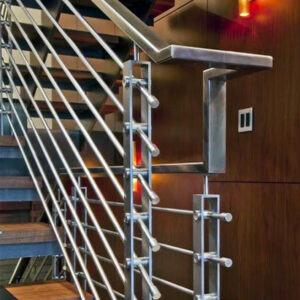
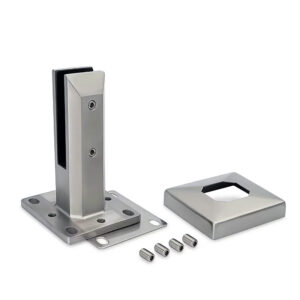
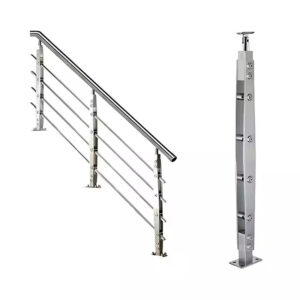
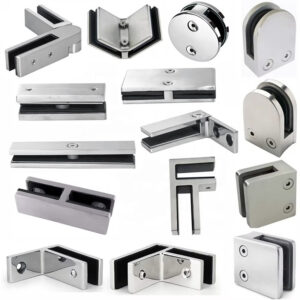
A railing installation stalls most often not because the main tube shipment is late, but because a single bracket offset is wrong, an end cap is dimensionally tied to the wrong handrail profile, or a connector was never listed on the procurement form at all. By the time these gaps surface, the tube is already on site and the installer is standing in front of an incomplete mounting condition. The cost is field labor, schedule compression, and sometimes reordering parts with lead times that the project timeline never absorbed. The decision that prevents this is treating the parts list as complete only when every rail termination and every mounting point has a named, confirmed component — not when the tube footage is accounted for.
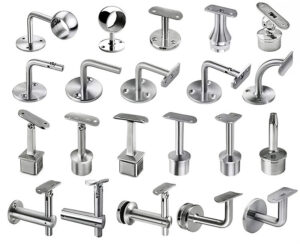
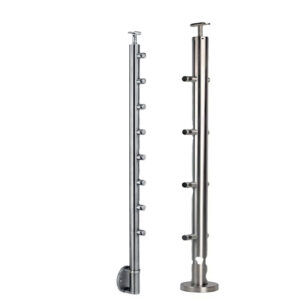
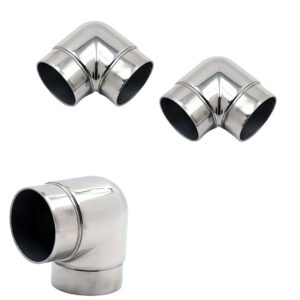
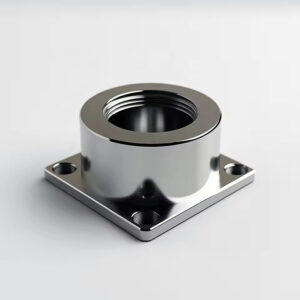
Component map for tubes, posts, brackets, caps, and connectors
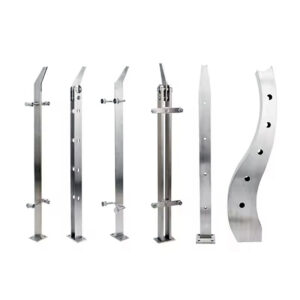
The mistake that creates downstream problems is treating the handrail tube as the system and everything else as accessories. Tubes, posts, brackets, end caps, and connectors are interdependent at the dimensional level, and selecting any one of them without confirming compatibility with the others produces fit problems that cannot be resolved without reordering.
Handrail tubes are commonly stocked in 1″, 1-1/2″, and 2″ diameters in 304 grade stainless steel. These are standard supplier stock sizes, not code-mandated dimensions, and the significance of selecting a tube diameter is not structural alone — it locks the bracket saddle size and the end cap profile. An end cap is not matched to a tube diameter in the abstract; it is matched to the specific handrail model width, which may differ by fractions of an inch between product families. A bracket designed for a 1-1/2″ round tube will not seat correctly on a 2″ tube, and swapping one for the other in the field is not a workable fix.
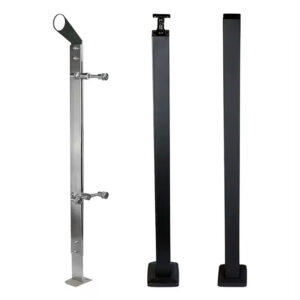
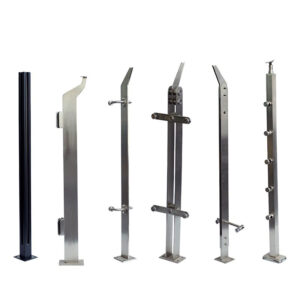
Post material grade is a separate decision from tube grade, and it matters in a different way. Prefabricated posts in 316 stainless steel are available for outdoor and coastal applications where 304 would corrode prematurely in the mounting hardware — a condition that is harder to inspect and more expensive to remediate than surface corrosion on a visible rail. The visible spec can appear correct while the hidden hardware degrades faster than the finish it supports.
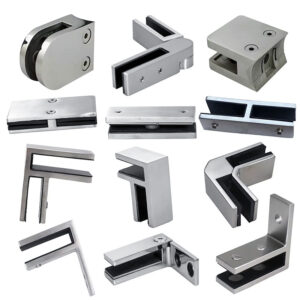
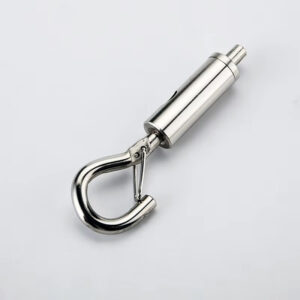
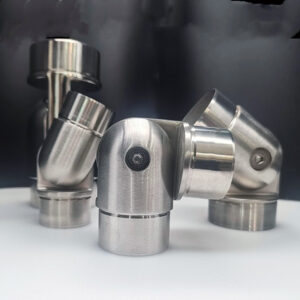
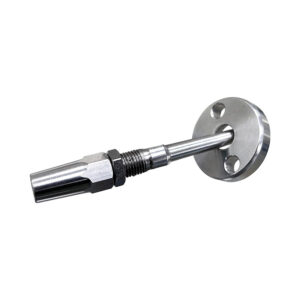
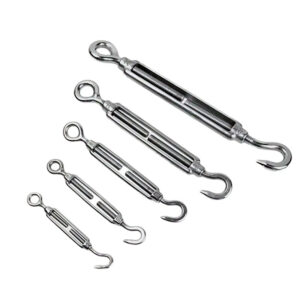
Connectors — ball fittings, flush fittings, flanges, finials — are the components most likely to be omitted from an initial parts list because they feel like incidentals. They are not. Missing a single connector type can halt assembly even after every tube section, bracket, and cap has arrived correctly.
| 组件 | Common Options/Specs | What to Confirm Before Ordering |
|---|---|---|
| Handrail Tube | 1″, 1-1/2″, 2″ diameters; 304 grade standard (316 for outdoor/coastal) | Tube diameter matches bracket and end cap selection |
| Post | Prefabricated 316 stainless steel for outdoor/coastal | Material grade matches exposure; post diameter compatible with base plate |
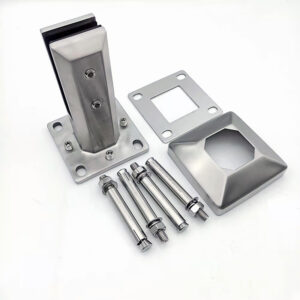
| Bracket | Base diameters 2-3/4″ and 3-3/4″ round plates | Base plate diameter determines anchor layout; confirm hole pattern matches wall/post |
| End Cap | Square terminal (3-1/2″ length), volute, lamb’s tongue, curled ends | Cap is matched to handrail width/profile, not just tube diameter |
| Connector | Ball, flush, flange, finial types | All required connector types are listed; missing one halts assembly |
The practical use of this component map is at the ordering stage, before lead times start running. Confirming that each component in the table has a named part number — not a generic description — is the check that prevents stock discovery problems later. Every interface between components listed here is a potential dimensional mismatch if sourced independently without cross-referencing the supplier’s compatibility documentation.
Bracket and tube compatibility before shop drawings freeze
Shop drawings freeze the geometry. After that point, a bracket with the wrong offset or a saddle that accepts only flat stock when the specified rail is round becomes a formal change, not a field adjustment. The compatibility check that belongs before shop drawings freeze is not a final quality review — it is a prerequisite for the drawings to be correct in the first place.
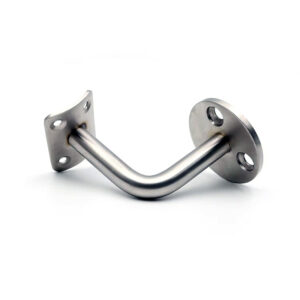
Bracket wall-to-rail offset is the dimension most likely to be treated as a detail and confirmed too late. Offsets across supplier catalogs range from approximately 2-3/8″ to 3-1/2″, and the right offset for a project is determined by the required clearance between the rail and the wall surface — a dimension that appears in the architectural drawings, not in the bracket spec. If the bracket selected does not match the required offset, the rail will not land in the correct position, and correcting it after installation means removing and repositioning anchors. That is avoidable if the confirmation happens before shop drawings lock.
Shape compatibility is a less obvious check that catches installers off guard. Some brackets accept round pipe only; others accommodate flat or square profiles. If the handrail profile changes during design development — which happens more often than it should — and the bracket specification does not update with it, the mismatch will not appear until assembly. The same applies to mounting hole sizes: bracket rail mounting holes are typically 3/16″ or 1/4″ in diameter, while wall mounting holes are commonly 3/8″ or 1/2″. These are design figures from specific supplier catalogs, not universal thresholds, but they determine the fastener specification and anchor hardware that must be on site. A mismatch between the specified hole size and the anchors a contractor has sourced independently creates a delay that is entirely avoidable with a pre-drawing cross-check. For more on how contractors work through these confirmation steps in practice, the process is covered in detail in 不锈钢扶手五金件:承包商如何在车间图纸冻结前匹配管材级支架和安装细节.
The material grade point deserves a direct statement: specifying 304 stainless brackets on a coastal project where the tube is 316 satisfies the visible surface requirement while leaving the mounting hardware exposed to accelerated corrosion. This is not a theoretical concern — salt air and moisture reach hidden bracket hardware, and 304 in that environment often corrodes significantly faster than the visible rail above it. The trade-off with 316 is cost, which is real, but the cost of replacing corroded brackets behind a finished wall or on an installed post is substantially higher.
| Compatibility Factor | 为何重要 | What to Confirm Before Shop Drawings Freeze |
|---|---|---|
| Bracket wall-to-rail offset | Offsets range 2-3/8″ to 3-1/2″; wrong offset causes misalignment | Required offset matches bracket specification |
| Bracket shape acceptance | Some brackets accept round pipe only; others accept flat or square | Bracket accepts the specified handrail profile |
| Mounting hole sizes | Rail holes 3/16″ or 1/4″; wall holes 3/8″ or 1/2″; mismatched fasteners cause field delays | Fastener diameters correspond to mounting hole sizes and field anchor hardware |
| End cap dimensional match | Caps are tied to handrail width (e.g., MCR1 at 1-19/32″) | Part number matches handrail model width, not just tube diameter |
| Material grade for exposure | 304 in coastal environments leads to premature corrosion | Brackets and posts specified as 316 for outdoor/coastal projects |
The consequence of missing any of these compatibility checks before shop drawings freeze is not a field conversation — it is a formal revision with associated cost and schedule impact. Confirming offset, shape acceptance, hole sizes, cap part numbers, and material grade before the drawings are issued treats these as design decisions, where they belong.
Joint and base plate details that change field installation speed
Base plate configuration is one of the installation details that looks equivalent on paper and is not equivalent in the field. A bracket with a three-hole base plate requires more anchor drilling than a two-hole rosette design — more drill setups, more anchors, and more time per mounting point. Across a long stair run with many bracket positions, that difference accumulates into meaningful labor cost. These are design figures from specific product lines, not universal standards, but the hole count is a field labor planning variable worth specifying explicitly rather than discovering on delivery day.
The welded bracket option — where no base plate exists and the bracket is welded directly to the structure — eliminates anchor drilling entirely. That is a real installation speed advantage in contexts where welding is acceptable and skilled labor is available. The trade-off is twofold: welding introduces finish risk at the joint, and it requires a competent welder on site at the time of installation, not just a general installation crew. If either condition is not confirmed in advance, the welded connection becomes a delay rather than an efficiency.
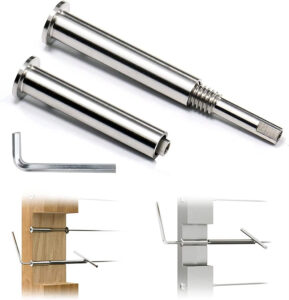
Field adjustability in rail ends is another detail that affects scheduling. Certain ductile iron channel systems can be cold-bent on site up to approximately 30 degrees, which allows an installer to adjust rail end geometry without ordering prefabricated custom bends. This is a specification detail tied to specific product types, not a general capability of stainless steel components, but where it applies, it reduces dependence on fabrication lead times for non-standard angles. The wall anchor hole size — whether a bracket calls for a 3/8″ or 1/2″ hole — determines what drill bit and anchor type the crew needs to have ready. A mismatch between the specified hole size and the anchors staged for the job causes a prep delay that is difficult to absorb mid-installation.
| Detail/Feature | Impact on Field Installation Speed | What to Specify or Check |
|---|---|---|
| Base plate hole count | 3-hole base requires more anchor drilling than 2-hole rosette, increasing labor and anchor costs | Hole count to manage drilling time |
| Welded bracket (no base plate) | Eliminates anchor drilling but needs skilled labor and may affect finish | Confirm welding is acceptable and skilled labor available |
| Ductile iron channels bent on site | Cold-bendable up to 30°; reduces need for prefabricated bends, speeding adjustment | Verify channels can be field-bent to avoid custom bends |
| Wall anchor hole size | 3/8″ vs 1/2″ dictates drill bit and anchor type; mismatch delays prep | Confirm hole size matches supplied anchors |
| Specialized assembly tools/expertise | Unplanned requirements slow installation | Identify tool and skill needs before scheduling |
The common thread across these details is that each one is easy to confirm before mobilization and difficult to resolve after the crew is on site. Identifying tool requirements, anchor types, base plate configurations, and whether welding or mechanical fastening applies should be part of the pre-installation review, not a discovery process during installation. For a deeper look at how these fitting and connector details interact with installation sequencing, see 不锈钢扶手配件:哪种接头底板和连接件细节决定现场安装速度.
Finish matching across visible and hidden hardware
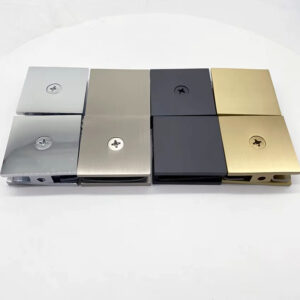
Stainless steel railing components are available in mirror, brushed, and matte black finishes, and most suppliers offer brackets and end caps in the same finish families as the tube. The finish coordination question that gets missed is not whether the tube and cap match — that is usually confirmed — but whether the brackets and fasteners match when the design makes them visible.
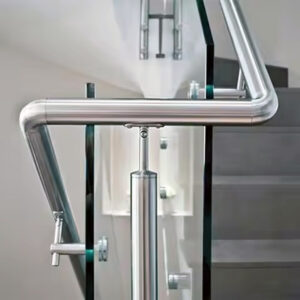
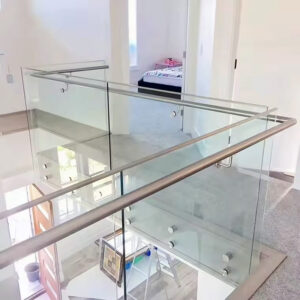
In a standard wall-mounted handrail with a recessed bracket saddle, the bracket face is a design element, not a hidden interface. In glass railing systems with exposed clamps, or in open commercial stair designs where bracket arms are part of the visual field, the finish on every visible component becomes part of the specification. Hardware that was procured as a functional component — without a finish requirement — can produce an aesthetic defect that is difficult and expensive to correct after installation.
The failure pattern here is straightforward: hidden hardware gets ordered efficiently without a finish spec, because it is assumed to be hidden. When the design changes or the as-built condition exposes that hardware, the mismatch is already locked in. The prevention is treating finish specification as applying to all components that might be visible in any foreseeable installation condition, not only the components that are visible on the drawing as issued. This applies specifically to brackets, fasteners, and any clamp or connector hardware in systems where the mounting method is part of the visible design language.
No referenced standard governs aesthetic consistency between visible and hidden hardware — this is a specification coordination judgment, not a code compliance check. But the downstream consequence of getting it wrong is a finish remediation or component replacement that is more costly than confirming the finish requirement before the purchase order is placed.
Parts list completeness before supplier quotation
The parts list for a handrail system is complete when every rail termination and every mounting point has a named component with a confirmed part number. A parts list that accounts for tube footage, bracket count, and post quantity but leaves end caps described generically or omits cable tensioning hardware or glass clamps is an incomplete list, regardless of how thorough it appears.
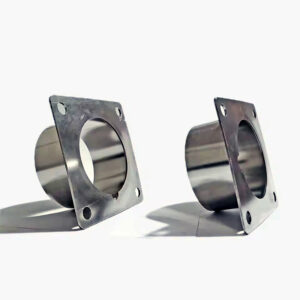
End caps are the most common source of this gap. Because they are small and ordered in low quantities, they are often described by type — “volute end cap” or “square terminal” — rather than by the exact part number tied to the handrail model. But end caps are dimensionally matched to specific handrail profile widths, not to tube diameter alone. A cap for one profile will not fit another profile with the same nominal tube diameter if the handrail widths differ. The procurement consequence is receiving a cap that cannot be installed, and the installation consequence is a halt while the correct cap is identified and reordered. Lead times on small specialty parts are often longer than their size suggests.
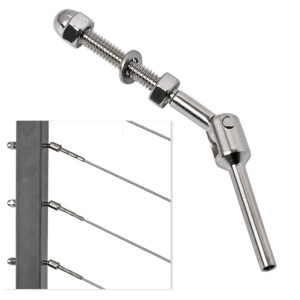
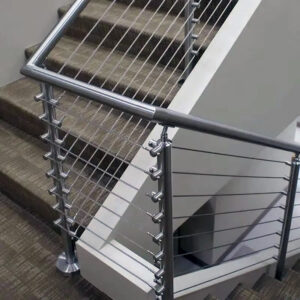
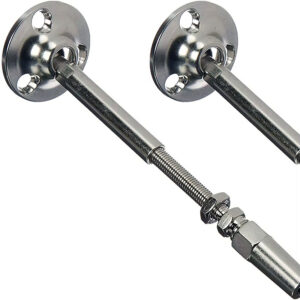
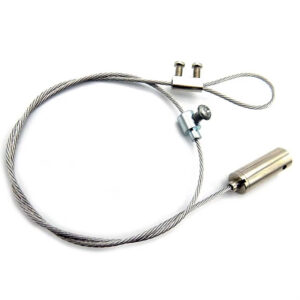
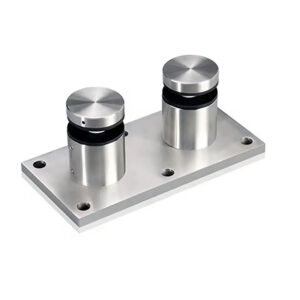
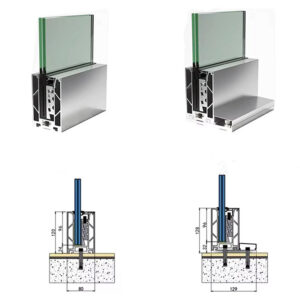
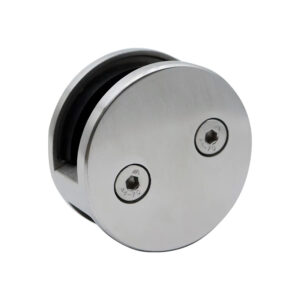
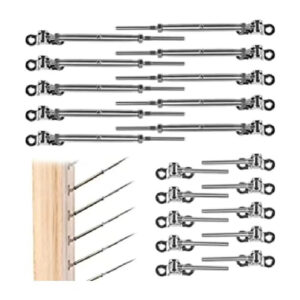
System-specific connectors carry a parallel risk. Cable railing systems require tensioning hardware; glass systems require clamps with specific load ratings and finish compatibility. These items do not appear automatically on a parts list built from a standard bracket-and-tube template, and their omission is not visible until assembly reaches the connection point. By then, the rest of the system may be installed and waiting.
Part number precision matters in a way that generic procurement processes often underestimate. Multiple part numbers can exist for end caps that appear identical in description but are matched to different handrail models — a distinction that is invisible in a text description and critical at the installation point. Using exact catalog part numbers, sourced from the supplier’s current product documentation, is the only reliable way to close this gap. It is also worth confirming stock availability for all items at the time of quotation, not as a formality, but because small-quantity specialty parts are legitimately subject to stockout conditions that can delay a project even when the parts list is entirely correct.
| Potential Gap | Consequence If Overlooked | What to Verify Before Quotation |
|---|---|---|
| End cap matched to handrail width | Wrong cap stops installation | Part number corresponds to handrail model width (e.g., MCR1 vs MCR112) |
| System-specific connectors | Missing cable tensioning hardware or glass clamps halts assembly | All connector types for the railing system are included |
| Part number precision | Generic description leads to wrong part | Exact part numbers from supplier catalog are used |
| Stock availability | Correct parts list may still be delayed if stock is depleted | Stock status confirmed for all items with supplier |
The practical value of a complete parts list before quotation freezes is that it converts latent delays into confirmable conditions. Every gap that is identified at the quotation stage can be addressed through lead time management, substitution, or supplier confirmation. Every gap that surfaces during installation converts into field labor, schedule impact, and reordering cost that the project budget did not plan for.
For contractors working through the parts specification process for wall-mounted systems, 圆管扶手系统 和 可调节墙壁扶手支架 are available with matched component sets that reduce the risk of dimensional incompatibility across the tube, bracket, and end cap selections.
The central implication of working through this component sequence is that the tube is the easiest part of a handrail system to specify correctly, and the parts most likely to stall installation are the ones treated as secondary: the bracket with the mismatched offset, the end cap ordered by type rather than by model-specific part number, the connector that was never listed at all. Each of these is a small component that creates a full installation halt.
Before a supplier quotation is finalized, the useful check is not whether the total footage and bracket count are correct, but whether every termination has a named end cap, every mounting point has a specified anchor configuration, every connector type has an exact part number, and every finish-exposed surface has a confirmed finish spec. That is what a complete parts list looks like, and it is the most direct way to keep a railing project moving once materials begin arriving on site.
常见问题
Q: What happens if a project uses a mix of 304 and 316 stainless parts — is that ever acceptable?
A: It depends on where each grade is installed, not whether mixing grades occurs at all. Using 316 for exposed outdoor posts and brackets on a coastal project while using 304 for fully interior components is a defensible specification. The failure risk is using 304 in hidden mounting hardware — bracket anchors, fasteners, sleeve connections — in environments where salt air or persistent moisture reaches those interfaces, even if the visible tube is 316. The hidden hardware corrodes first, is the hardest to inspect, and is the most expensive to replace. Grade selection should follow exposure conditions at each interface, not a single blanket spec for the whole system.
Q: At what project scale does pre-matched component sourcing make more sense than open sourcing individual parts?
A: Pre-matched systems become more defensible as the number of mounting points and terminations increases, because each independently sourced part introduces one more dimensional compatibility risk to confirm. On a short residential run with three or four brackets and two end caps, an experienced specifier can cross-reference compatibility manually without significant risk. On a commercial stair with dozens of bracket positions, multiple handrail profiles, and specialty connectors, the coordination burden of open sourcing grows faster than the cost savings justify. The tipping point is not a fixed bracket count — it is whether the procurement process has enough time and documentation discipline to confirm every interface before lead times start running.
Q: After the parts list is confirmed and the supplier quotation is placed, what should be verified before installation begins?
A: Stock availability for small-quantity specialty parts — end caps, connectors, and finish-matched fasteners — should be reconfirmed at the time of order acknowledgment, not assumed from the quotation. These items are legitimately subject to stockout conditions that can emerge between quotation and fulfillment. Beyond stock, the pre-installation check should confirm that anchor hardware on site matches the wall mounting hole sizes specified for each bracket, that the correct drill bits and tools for those anchor sizes are available, and that any welded connections have a qualified welder confirmed for the installation date. These are the gaps most likely to surface as mid-installation delays if not resolved before mobilization.
Q: Does finish specification apply to fasteners as well, or only to visible brackets and end caps?
A: Fasteners require a finish decision in any design where the fastener head is visible — which includes exposed bracket arms, glass clamp assemblies, and open commercial stair configurations. The article’s body addresses finish matching for brackets and connectors, but fasteners are a separate omission risk because they are often procured through a general hardware channel rather than the railing supplier. A fastener head in a contrasting finish against a brushed or mirror-finish bracket creates the same aesthetic defect as a mismatched end cap, and correcting it after installation is equally disruptive. ISO 3506-1:2020 governs mechanical properties of corrosion-resistant stainless fasteners but does not address finish matching — that remains a specification coordination judgment, not a compliance check.
Q: Can standard stainless handrail parts be used in applications requiring ADA-compliant graspability, or does compliance require dedicated product lines?
A: Standard 1-1/2″ round tube is the most common size that satisfies ADA graspability requirements for circular cross-sections, which call for an outside diameter between 1-1/4″ and 2″. However, tube diameter alone does not determine ADA compliance — wall clearance, bracket offset, handrail height, and continuous graspability past the top and bottom of a stair run all factor into compliance. A standard round tube combined with a bracket that produces less than the required wall clearance, or a termination detail that interrupts graspability, can fail compliance despite using a nominally compliant tube. Compliance review should treat the assembled system as the unit being evaluated, not individual components in isolation.