Most budget overruns on balcony railing projects are not caused by material price swings — they are caused by comparing quotes that cover different things. A contractor accepts a low per-linear-foot rate, then discovers after mobilization that installation labor, glass panels, and site weld polishing were never in the number. The rework and change orders that follow often cost more than the grade upgrade that was quietly dropped to win the bid. Knowing which cost elements to separate before the first quote arrives — and which supplier inclusions actually justify a higher figure — is what determines whether the price you accepted matches the total you paid.
Cost buckets that must be separated before pricing
Bundling everything into a single unit rate is the most common reason price comparisons produce the wrong answer. When a quote arrives as one line item — say, a per-linear-foot figure with no further breakdown — it is impossible to tell whether that number includes glass, accounts for a specific finish, reflects a fixed fixing method, or assumes a handrail is part of the scope. Comparing that figure to a competitor’s rate that was built on different assumptions produces a ranking that has no connection to actual project cost.
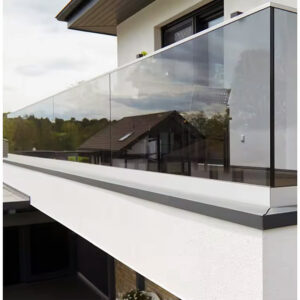
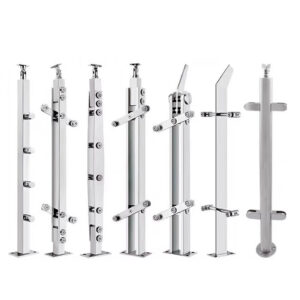
Before reviewing any quotation, separate the scope into at least seven distinct buckets: glass inclusion or exclusion, stainless steel grade, finish type, fixing method, handrail inclusion, system type, and total linear footage. Each of these can move the final number independently of the others. A quote that includes glass in a frameless post system is structurally different from one that prices posts only — even if both arrive with the same per-foot headline.
A useful grounding point is that material-plus-fabrication cost for stainless steel railing starts around US$38 per linear foot at the low end — and that figure explicitly excludes installation and glass. Treating that as a floor rather than a reference helps clarify how quickly additional scope elements accumulate. A project that begins at $38 per linear foot for fabricated material can look very different once finish, freight, site adaptation, and glass are added back in. The discipline is not to find the lowest line item; it is to ensure that every line item covers the same scope before any comparison is made.
Grade and finish mismatches that distort comparisons
Grade and finish are two independent price variables that are frequently read as a single one. A quote for 316-grade material with tighter finish control and export packaging will sit above a quote for 304-grade material with basic polishing — but the difference in the per-foot figure does not tell you how much of the gap is grade and how much is finish specification. If the comparison does not separate those two inputs, the buyer ends up attributing cost differences to the wrong driver and making a grade decision based on incomplete information.
For outdoor balcony applications, the specification question is not really whether to choose 316 over 304 — it is how to confirm that the quote actually reflects 316. ISO 9223:2012 classifies atmospheric environments by corrosivity, and outdoor balcony exposures, particularly in coastal or urban pollution zones, correspond to conditions where 304 does not reliably maintain surface integrity over time. The practical planning criterion is straightforward: 316 for any outdoor balcony, 304 only where the environment is fully controlled indoors. Specifying the wrong grade for the environment leads to early surface degradation, and catching that mistake after fabrication means a complete replacement rather than an adjustment.
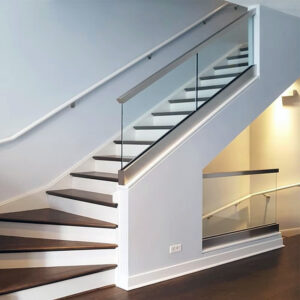
What often surprises buyers is how narrow the actual cost gap between grades can be. For glass railing posts, the price difference between 304 and 2205 duplex — two grades that bracket most commercial balcony specifications — runs roughly $210–$335 versus $230–$355 per linear foot for 3/8″ glass configurations. That overlap means a single scope change, such as switching from a core mount to a surface mount system or adding a premium polished finish, can easily exceed the entire grade delta. Overweighting grade as a cost driver while underweighting system and finish choice is a reliable path to a misread comparison.
Scope confusion larger than the raw material delta
The clearest evidence that scope drives cost more than material grade is visible in project-level figures rather than per-foot material tables. An identical linear footage can produce a project cost of $4,500 with standard posts and 3/8″ tempered glass, or $13,560 when brass standoff pin mounting is specified instead. The material in both cases is stainless steel; the grade difference, if any, is far smaller than the $9,060 gap. That gap belongs entirely to system and mounting choice.
| System & Mounting Choice | Approximate Project Cost | 主要成本驱动因素 |
|---|---|---|
| Standard posts with 3/8″ tempered glass | $4,500 | Basic post and glass system |
| Brass standoff pin mounting system | $13,560 | Premium hardware and complex mounting |
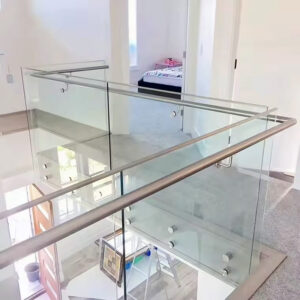
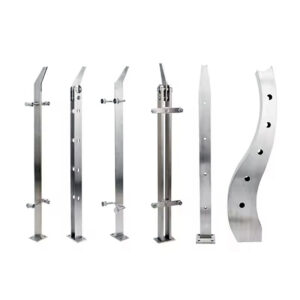
The broader range across glass railing systems runs from approximately $170 to $680 per linear foot, depending on glass type, thickness, post material, and mounting system. A buyer who compares two quotes without confirming that both use the same system type and mounting method is not comparing prices — they are comparing numbers that represent different projects. The mounting system alone — whether it is a surface mount base plate recessed into a finished deck or a core mount base system cast into structure — changes both the installed cost and the downstream site preparation required. Confirming that both quotes reflect the same fixing method is not a detail check; it is the primary comparison step.
The downstream consequence of scope confusion appears after contract award. A lower quote accepted on the assumption that it matched a higher competitor’s scope will surface its differences as change orders during installation. Corner fitting, anchor adjustments, and site weld finishing that were never priced become billable once the installer is on-site. At that stage, the buyer has lost negotiating position and often ends up paying more in total than the higher original quote would have cost.
Hidden fitting and polishing work after first quote
The first commercial quote for a railing project often carries a line that reads “material + project” with explicit exclusions for installation and glass. This is a standard commercial practice, not a deceptive one — but buyers who do not read the exclusions into their budget frequently face a second invoice that restructures the economics of the entire project. The quoted rate looked competitive precisely because it priced only what was included.
| Possible Exclusion | Risk If Omitted | What to Confirm in Quotation |
|---|---|---|
| 安装人工费 | Unexpected site costs and project delays | Installation is included in the quoted price |
| Glass panels (where applicable) | Major material cost missing from budget | Glass supply and delivery are part of the package |
| Wire railing components (loops, screws, drill bits, special tools) | Unplanned purchases and installation standstills | All fasteners and necessary tools are listed and included |
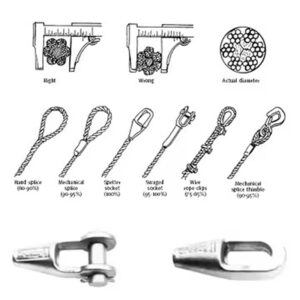
Beyond the glass and installation line items, wire railing systems introduce a second category of hidden cost: incomplete component kits. If the package does not explicitly include loops, screws, drill bits, and any special tensioning tools, those items will need to be sourced separately before installation can proceed. A missing tensioning tool does not delay the project by the cost of the tool — it delays the project by however long it takes to identify, source, and deliver the right component to site. Verifying that every quotation carries an itemized component list, not just a system description, eliminates this category of risk before it materializes.
Site weld polishing is the cost most commonly omitted from initial commercial quotes and most commonly disputed on final invoices. When posts are field-welded to correct for substrate variation or alignment error, the weld surface needs to be ground and polished to match the original finish specification. That labor is rarely included in the material-plus-fabrication figure and may not appear in a base installation rate either. Confirming before acceptance whether weld finishing is in scope — and who is responsible for it — is the specific review check that prevents the most common category of post-acceptance cost growth.
Installation-ready scope that earns the higher price
A higher quoted price is defensible when it eliminates the work that a lower quote transfers to the buyer’s site team. The question to ask before declining a higher figure is not “why is this more expensive?” but “what would I need to spend to reach the same outcome starting from the lower quote?” When the answer includes sourcing components separately, managing certification documentation, and absorbing field correction labor, the price premium often disappears before the arithmetic is complete.
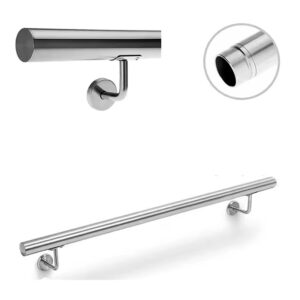
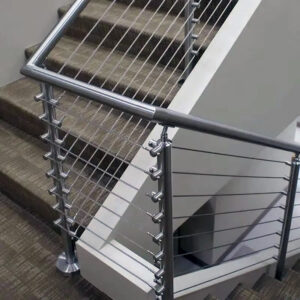
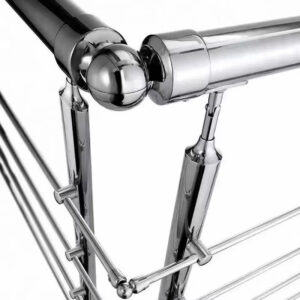
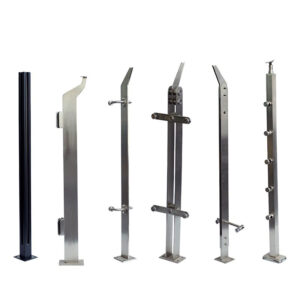
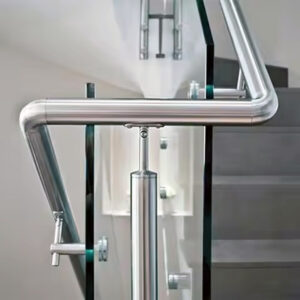
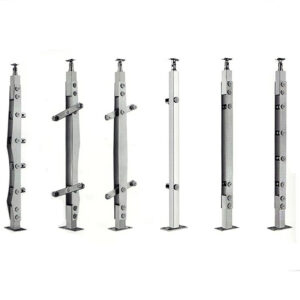
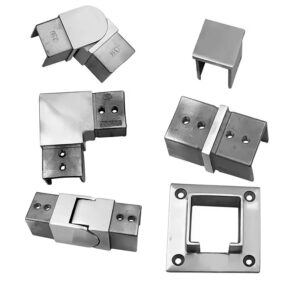
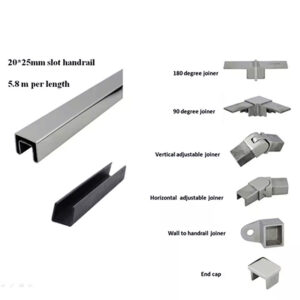
对于 不锈钢阳台栏杆 systems, an installation-ready package typically means the full component set — posts, glass panels, handrails, and hardware — arrives under a single supply arrangement with no sourcing gaps. It also means the documentation is complete before delivery: CE certification, load compliance evidence, and assembly instructions that guide installation without requiring interpretation. Each of those items has a downstream cost attached to its absence. Missing CE documentation can delay handover inspections. Absent load compliance records can create liability exposure in high-fall-risk environments where a minimum 1 kN/m load capacity is the relevant performance threshold for Build class A+ certification. These are not abstract risks; they are specific project-stage frictions that surface during final inspection or — worse — after a post-occupancy incident.
| Inclusion | What It Typically Includes | How It Justifies a Higher Price |
|---|---|---|
| Full component set (posts, glass, handrails, hardware) | All structural and aesthetic parts in one package | Eliminates sourcing gaps and site adaptation costs |
| CE 认证 | Compliance with EU safety standards | Reduces liability and inspection delays |
| A+ load capacity certification | Minimum 1 kN/m load resistance for high-fall-risk balconies | Ensures code compliance and structural safety, avoiding retrofits |
| DIY-compatible support (assembly videos, measurement templates) | Guides for error-free installation | Lowers installation errors and costly corrections |
DIY-compatible documentation — assembly videos, measurement templates, and fit-out guides — is worth pricing explicitly when the installation team is working without specialized railing experience. The cost of an installation error in a glass railing system is not the cost of the mistake itself; it is the cost of disassembly, component replacement, and re-inspection. A supplier who provides structured installation support reduces that risk at the front end rather than transferring it to site.
The practical filter when evaluating a higher-priced quote is to identify which of the inclusions in the table above are present and which are missing, then estimate the cost of providing the missing elements independently. If that exercise narrows or closes the gap between the two quotes, the higher price is not a premium — it is the more accurate cost of the project scope you actually need. Buyers who apply this filter before accepting the lower quote are the ones who avoid the gap between the price they signed and the total they ended up paying. For a more detailed framework on evaluating supplier scope and documentation before committing to a bulk order, this supplier evaluation guide addresses how to structure that assessment systematically.
Before the next quotation round, the most productive step is not to find a lower number — it is to define the scope precisely enough that every quote is answering the same question. That means confirming grade, finish, system type, fixing method, glass inclusion, and component completeness in writing before prices are submitted, not after they arrive. The cost buckets that seem like procurement details are the same ones that generate change orders, delayed handovers, and retrofit invoices.
The real price decision happens before the quotes land: when you define what the number must cover. A quotation that includes the correct grade for the environment, a controlled finish specification, certified load compliance, and complete component delivery is pricing a finished project. One that excludes installation, glass, or site finishing work is pricing a starting point. Knowing which one you are comparing protects the budget more reliably than negotiating the per-foot rate.
常见问题
Q: Does the grade and scope advice still apply if the balcony is semi-enclosed, such as under a covered pergola or within a recessed building facade?
A: The 316 specification still applies unless the environment is fully controlled indoors with no exposure to outdoor air. Semi-enclosed structures remain subject to humidity, condensation, and airborne chlorides that ISO 9223:2012 associates with corrosive atmospheric conditions — a pergola or recessed facade does not eliminate that exposure. The practical test is whether outdoor air contacts the railing surface regularly; if it does, 304 carries the same degradation risk it would in an open setting.
Q: Once scope buckets are confirmed in writing and a quote is accepted, what should happen before fabrication begins?
A: Request a pre-production scope confirmation that lists every agreed item — grade, finish, fixing method, glass inclusion, component kit contents, and certification documents — as a single written record both parties sign off on. This step converts the verbal or email scope alignment into a fabrication brief that the supplier works from directly. Without it, scope items confirmed during negotiation can revert to default assumptions at the production stage, reintroducing the same gaps the pre-quote exercise was meant to close.
Q: At what project scale does the price gap between a lower unbundled quote and a fully inclusive quote typically justify the administrative effort of line-by-line scope verification?
A: For projects below roughly 50 linear feet, the absolute dollar gap may not warrant the full audit — but the risk of post-acceptance change orders remains regardless of scale, particularly for site weld polishing and missing component kits. For any project where glass is included or where the fixing method involves structural substrate work, scope verification is worth the effort at any length because the downstream correction costs scale with the complexity of the system, not just the footage.
Q: How does the advice change for a contractor managing multiple balcony projects simultaneously across different buildings — is a single supplier with consistent scope more valuable than the lowest rate on each individual job?
A: Consistent scope across a supplier relationship reduces per-project administration cost and eliminates the re-verification work that a different supplier on each job requires. When the same grade, finish, and component set arrives predictably, the buyer stops spending time re-auditing exclusions and starts recovering that time elsewhere. The per-linear-foot rate on any single job may be slightly higher, but the total cost across a program — accounting for change order frequency, site delays, and documentation management — typically favors the supplier with stable, well-defined scope over the one offering the sharpest individual quote.
Q: Is a higher-priced quote from an overseas manufacturer likely to include CE certification and load compliance documentation as standard, or does that need to be negotiated separately?
A: CE certification and load compliance records are not automatically included and must be confirmed explicitly before contract award — they are regularly absent from base commercial quotes regardless of supplier location. The absence matters most at project handover, where missing documentation can stall final inspections, and in high-fall-risk environments where the 1 kN/m load threshold for Build class A+ certification creates a direct liability exposure. Treating certification documentation as a negotiation point rather than a default inclusion is the reliable way to ensure it arrives with the shipment rather than being chased after delivery.