When a custom stainless steel handrail order arrives on site and the mounting holes don’t align with the wall anchors, the fix isn’t a quick design tweak — it’s drilling into finished stainless in the middle of an active job, or replacing brackets that were manufactured to a dimension that was never formally locked. The root cause almost always precedes production: a visual finish sample is approved, but hole positions, bracket geometry, and wall clearance were left fluid, so the batch rolls out to a specification that no one officially signed. On top of that, handrails drawn as a single continuous line on the architectural plan can end up shipping in two or three pieces because of length thresholds that no one flagged during procurement, adding splice alignment work to a schedule that wasn’t built for it. The decision to move from approved sample to full batch is not triggered by finish alone; it depends on a concurrent sign-off of the drawing revision, the tolerance-critical dimensions, and the packing configuration that will deliver the hardware. Understanding which specifications must be locked together, where the revision gaps open, and how shipping constraints reshape installation planning will let you order custom stainless steel handrail systems that arrive ready to mount, not ready to rework.
Project-based procurement scope for custom handrail systems
The procurement scope for a custom handrail system isn’t a catalogue pick-list — it’s a set of geometry parameters that, if left open beyond the design phase, cascade into bracket mismatch, field cutting and hardware substitution. The risk accelerates when a project treats the sample as the first firm commitment but defers dimensional sign-off, because production then uses whichever data is most current in the shop file, which may not match the latest site measurement or the hardware that was actually intended. The consequence is a batch of handrail components that must be modified on site, undoing the very reason to order a custom system.
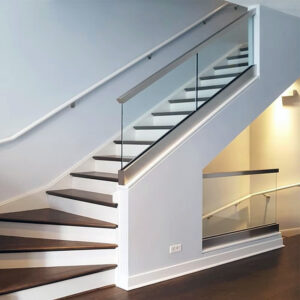
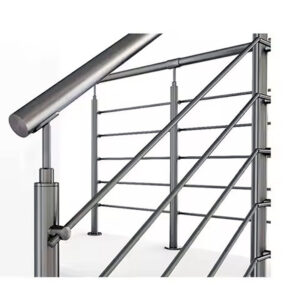
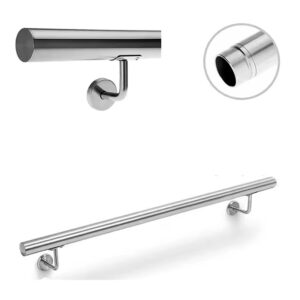
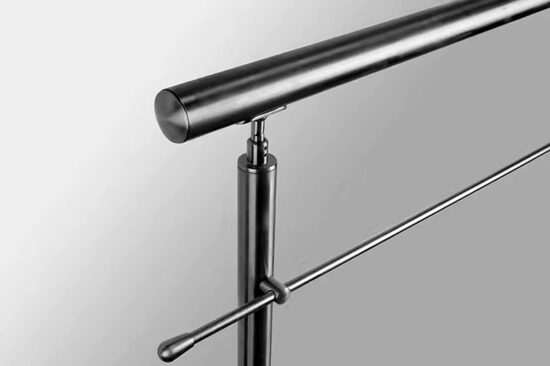
Freezing the tube profile early — in this supplier’s configuration, 1.5‑inch round 16‑gauge — locks the outside diameter and wall thickness that determine bracket grip, bending feasibility and structural stiffness. Wall clearance is equally load‑bearing as a decision: specifying 1.5‑inch spacing from the finished wall (yielding a 3‑inch total projection) ensures the bracket’s offset leg is cut to the right reach, preventing the installer from having to shim or re‑drill anchors on site. Mounting hardware must be specified by part type and size — Circle L Brackets, self‑tapping screws, lag bolts — because substituting a similar‑looking fastener can change the pull‑out capacity or require a different pilot hole, shifting the entire installation sequence from pre‑drilled to improvisation. For staircases, adding 12 inches to the distance between step noses accounts for the landing return and prevents a handrail that arrives short, necessitating an unsightly field splice just to make code‑required termination points.
The logistics boundary also sits inside this scope. Custom lengths fall between 1 ft and 22 ft; beyond that range, shipping costs are no longer standard and require a dedicated freight quote — a procurement trigger that can surprise a project manager who assumed all cut‑to‑length items ship under the same rate. Locking all of these parameters before the first sample is approved prevents a hidden discrepancy: what looked correct on the sample photograph may have been built to an earlier drawing revision, while the production packing list now carries different numbers that no one reconciled.
| What to Specify | Required Value / Condition | Risk if Not Frozen |
|---|---|---|
| Tube profile | 1.5 in round 16 GA | Geometry changes after sample approval |
| Handrail length range | 1 ft to 22 ft (outside range requires custom shipping quote) | Logistics boundary undefined; possible surcharges |
| 墙壁间隙 | 1.5 in spacing from wall (3 in total projection) | Bracket geometry mismatch; site modification needed |
| Mounting hardware | Circle L Brackets, self-tapping screws, lag bolts | On-site hardware substitution may affect fit |
| Staircase measurement | Add 12 in for landing to distance between step noses | Handrail length incorrect; field cutting required |
Leaving any row unresolved transfers risk directly to the installer. A handrail that was meant to sit 1.5 inches off the wall but ships with brackets drilled for 2 inches means the tube will float too far from the surface, potentially violating graspability requirements and forcing rework. The same mismatch can happen if the mounting hardware type changes after sample approval — for example, if lag bolts are specified but set screws are packed, the bracket may fail to grab solid substrate. For more on evaluating manufacturing partners that can hold these specification lock‑points through production without drift, see our guide on choosing a stainless steel handrail supplier.
Fabrication steps that change welding, bending, and installation planning
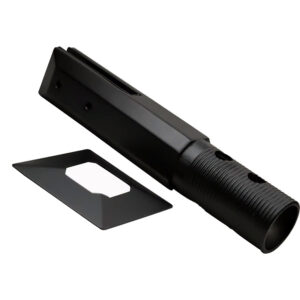
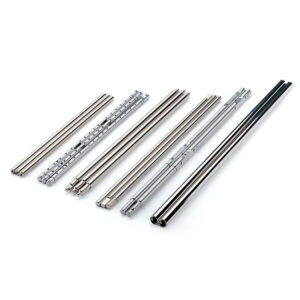
The shift from a single continuous handrail to a mechanically spliced assembly is a fabrication decision that changes everything from shop‑floor sequencing to on‑site accountability for seam alignment. The trigger is length: once a rail exceeds 7.5 ft, standard handling and freight constraints force the component to be split and joined via a tube splicer. On the drawing, it still looks like one uninterrupted line; in the field, the installation sequence must now accommodate a splice joint that requires concentric alignment and often a mechanical or welded connection — work that wasn’t part of a single‑piece install.
Welding itself, whether performed on a splice in the fabrication shop or used to attach brackets, introduces a qualification layer that project teams seldom examine. A supplier may certify its welders under ISO 9606‑1, which establishes that fusion welding on stainless steel components meets a tested skill level. While this standard doesn’t dictate the specific joint design, it provides a credentialing framework that gives confidence the shop can execute the required welds consistently. More immediately, a splice junction also changes bending planning: if a custom handrail includes an architectural curve, the bend start‑point must be kept clear of the splice zone, or the tube distortion at the joint can make a clean line impossible. Fabricators must sequence bending before final cut‑to‑length so that the splice location falls on a straight section, not a radius. When that is missed, the result is a visible kink or a joint that won’t seat fully into the internal connector — an alignment problem that no amount of field finesse can fully hide.
For site managers, the installation implication is straightforward: every splice multiplies the hands‑on time needed to match seam faces, clock the tube rotation, and torque set screws or make the field weld. Where a drawing shows a 20‑ft run as a single piece, the real order may arrive as two 10‑ft segments requiring mid‑run alignment, which needs to be explicitly scheduled. A deeper look at the fabrication methods behind this split — including bending techniques and how weld sequencing affects the final product — is covered in our article on custom stainless steel handrail fabrication for industrial applications.
Fitting and connector details that prevent site modification
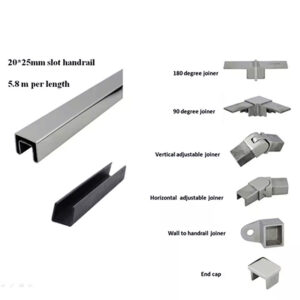
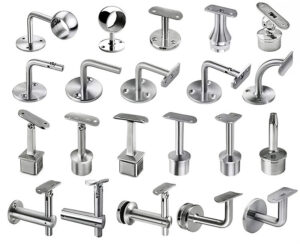
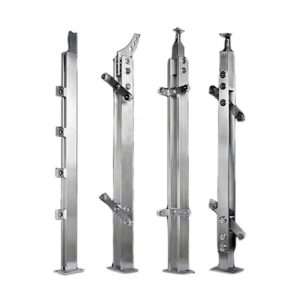
A custom handrail kit is either a complete closure of the system or an open invitation for the installer to improvise. The difference hangs on whether every end condition, connector, and mounting point is specified and supplied in the same kit — tubes, wall brackets, wall returns or end caps, tube splicer, and screws — before the order cuts. When any of those items is missing or substituted on site, the installer is forced to re‑create a fit from whatever hardware is available, losing the dimensional control that a custom order was supposed to deliver.
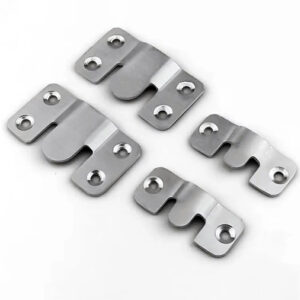
The most expensive mistake pattern starts earlier, at the sample stage. Approving a visual finish sample without simultaneously locking hole positions and bracket geometry means the production run may use a generic hole pattern that was never matched to the actual wall layout. The batch arrives with pre‑drilled base plates that don’t align with the installed anchors, leaving the crew to drill new holes into the stainless bracket or, worse, into the handrail tube itself. This is the revision‑gap problem in its most physical form: the sample photo showed a clean wall return and tight bracket fit, but the dimensions behind that image weren’t the ones that governed production.
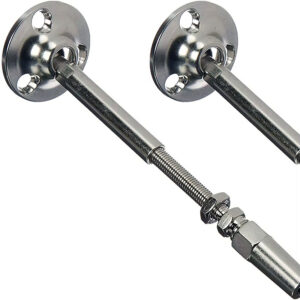
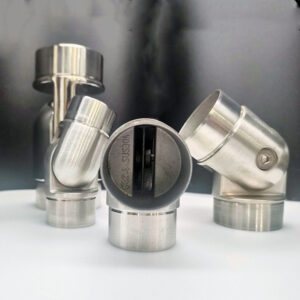
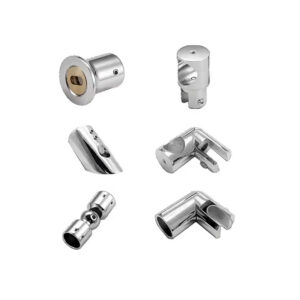
Keeping the kit complete means also specifying the small details that affect installation speed without requiring rework. Wall returns and end caps must have a defined engagement depth — if a closed‑end cap is swapped for a flanged plug, the overall cut length changes, creating a gap at the opposite termination. The tube splicer must be the correct diameter and include set screws that match the tube wall thickness; a loose internal connector can shift under load and cause perceptible joint movement. The fastener set — whether it is self‑tapping screws for steel stud or lag bolts for wood blocking — dictates the drill bit diameter and embedment depth, and the site should never have to guess. Where a small amount of angular correction is still needed on site without modifying the bracket, angle adjustable brackets can absorb wall irregularities while keeping the hardware standardized and replaceable.
For a fuller analysis of how joint base plates, splicers, and connector choices directly determine the speed and accuracy of field installation, see our article on stainless steel handrail fittings and connector details.
Prefabricated versus custom assemblies under schedule pressure
Schedule pressure changes the arithmetic of handrail procurement because the length thresholds that govern how a system ships — in one piece, two, or three — are often invisible until the order is about to be placed. The trade‑off isn’t simply about cost; it’s about how many splice joints the installation crew must align, and how that multiplication steals time from a critical path that was planned around a single‑piece drop‑in.
| Length Threshold | Shipping Configuration | Logistics & Assembly Impact |
|---|---|---|
| Custom single piece | Requires custom shipping quote | No splice needed; fastest install, but shipping cost variable |
| Over 7 ft 6 in up to 14 ft 1 in | Ships in two pieces | One splice join; alignment adds to installation time |
| Over 14 ft 1 in | Ships in three pieces | Two splices; longest on-site assembly time |
A single‑piece rail above common carrier limits may demand a custom freight quote, but it eliminates the splicer entirely and gives the installer a clean, uninterrupted tube that can be set in one motion. The hidden exposure is transport: a 16‑ft single piece is more vulnerable to handling bowing or finish abrasion than two shorter segments packed in a shared crate. Once on site, a bent rail means a return cycle that no schedule can absorb. Two‑piece and three‑piece configurations reduce that logistical fragility but introduce one or two splice alignment sequences per run. Each splice adds roughly the same alignment steps — checking concentricity, rotating the tube to match grain direction, tightening connectors — and when a project has multiple long corridors or staircase flights, the cumulative splice time can shift the installation window by days, not hours.
The decision consequence is that the number of splices must be evaluated against the available on‑site labor window and the condition of the substrate. If walls are irregular, splice joints that sit mid‑span can also telegraph wall unevenness more visibly than end‑bracket connections, making alignment harder to achieve. The procurement decision, therefore, isn’t simply “prefabricated single piece is better” — it’s a judgment of whether the saved installation time is worth the higher freight cost and handling risk, and whether the splice‑assembly work fits inside the existing schedule buffer without cascading delays. That judgment must also be locked across all documents: a drawing revision that moves a splice point by six inches must be reflected in the production packing list, or the on‑site team will align to the wrong location, creating a mismatch that forces late‑stage re‑drilling.
Custom order readiness after drawings and finish samples are approved
The period between approving a finish sample and releasing the batch is the last clear chance to catch the discrepancies that turn a 2‑to‑3‑week lead time into a site‑side crisis. Readiness is not the same as sample approval, and treating it that way is the single most frequent cause of custom handrail procurement failure. The sample proves that the supplier can produce the correct material, weld appearance, and surface finish; it does not prove that the dimensions, bracket positions, splice locations, and packing configuration match the latest revision of the project’s design intent.
| Readiness Item | 需要确认的事项 | Impact on Order |
|---|---|---|
| Feasibility check | Provide rough sketch/drawings before confirmation | Ensures design can be produced; avoids unnecessary order holds |
| 交货期 | 2–3 weeks after order placement | Sets project timeline expectations |
| Custom cutting fee | Exact measurements may incur an additional cutting charge | Cost-benefit tradeoff when finalizing batch from sample |
| Shipping condition | Products may ship disassembled for safe delivery | Affects unpacking and on-site assembly planning |
Before the order moves into production, a rough sketch or drawing must be reviewed for producibility. This isn’t a bureaucratic step — it’s a feasibility check that catches conflicts like a bend radius that can’t be formed in the specified tube profile or an end return that interferes with a door swing. A design that passes this review early avoids production holds and last‑minute redesigns that eat into the lead time window. The 2‑to‑3‑week lead time assumption holds only when all such checks are complete; if a dimensional uncertainty is still floating, the clock hasn’t truly started and the project schedule needs to reflect that.
The custom cutting fee adds a cost‑versus‑precision trade‑off. Cutting to an exact field‑verified measurement eliminates the need for the installer to trim tube ends on site, but it increases the unit price and puts the full length accountability on the measurement that was taken. For runs where the wall framing is already dimensionally stable and verified, that extra cost may be justified. Where field conditions are still shifting, ordering a slightly longer standard length and performing a controlled site cut can be the safer and less expensive path, provided the installer has the right tooling and a way to re‑finish the cut end without compromising corrosion resistance.
Products may ship disassembled to protect the polished surface during transit. That means the packing list is not just a shipping document — it’s the assembly map. If the packing list carries a revision that doesn’t match the signed‑off drawing, the installers will unknowingly build to the wrong configuration. The friction point that practitioners describe — an uncontrolled revision history meandering between design drawings, sample photos, and packing lists — becomes fatal here. The only reliable release gate is a joint sign‑off that covers three things: the drawing revision, every tolerance‑sensitive dimension (tube length, hole spacing, bracket projection), and the packing configuration that names all splices, returns, and hardware. Certificates of material conformity, which suppliers may provide under processes aligned with standards like ISO 10474, offer traceability that the right grade of stainless was used, but they don’t validate that the geometry was frozen at the right numbers. Confusing the two is a costly oversight.
The readiness decision, therefore, is not a milestone — it’s a hard check: can the same document revision be traced from the approved sample, through the production order, into the packing list, and onto the installer’s layout drawing? If the answer isn’t a clean yes, the order isn’t ready, no matter how good the sample looked.
The big mistake in custom stainless steel handrail procurement isn’t a fabrication flaw or a late shipment — it’s signing off on finish while leaving the dimensions that determine fit still moving between documents. The remedy isn’t complex but it’s exact: before a single batch rail goes into production, confirm that the drawing revision that matches the approved sample is the same revision the factory will build to, and that the packing list spells out the shipping configuration, splice count, and hardware that the site expects. When those three artifacts align, the 2‑to‑3‑week lead time is a realistic planning window. When they don’t, the project buys a batch of stainless steel that looks right but doesn’t install right — and the cost of fixing that mismatch on site far exceeds any fee for custom cutting or an extra round of sample verification.
常见问题
Q: What happens if field measurements change after the batch order has already been released to production?
A: A mid-production measurement change will likely cause a misfit on site unless the factory can pause and reissue the production order against a new drawing revision. The safer path is to delay batch release until wall framing is dimensionally stable and verified — the 2–3 week lead time only holds when all geometry is frozen before production starts, not after.
Q: Should custom cutting to exact field dimensions be specified upfront, or is a controlled site cut a viable alternative?
A: It depends on how stable the substrate is at the time of ordering. Custom cutting to an exact verified measurement eliminates field trimming but adds cost and places full accountability on a single measurement. If wall framing is still shifting, ordering a slightly longer length and performing a controlled site cut is less expensive and carries less risk — provided the installer has appropriate tooling and can refinish the cut end to maintain corrosion resistance.
Q: Does a material conformity certificate, such as one issued under ISO 10474, confirm that the geometry was correctly locked before production?
A: No — a conformity certificate confirms the stainless steel grade and material traceability, not dimensional accuracy. It tells you the right alloy was used; it does not verify that tube length, hole spacing, or bracket projection were frozen to the correct drawing revision. Both documents are needed, but they answer different questions and should not be treated as interchangeable release gates.
Q: Is a prefabricated single-piece handrail always the better choice over a multi-piece assembly when budget allows?
A: Not necessarily. A single piece above standard carrier limits reduces splice alignment work on site but increases handling risk during transport — a 16 ft tube is more susceptible to bowing or finish abrasion in transit than two shorter segments. The right choice depends on whether the saved installation time outweighs the higher freight cost and the risk of a return cycle if the piece arrives damaged.
Q: What is the earliest point at which a rough sketch or drawing should be submitted for a feasibility check?
A: Before the sample is ordered, not after. Submitting a rough sketch for a producibility review early catches conflicts — such as a bend radius that can’t be formed in the specified tube profile or an end return that interferes with an adjacent structure — before they cause production holds. Waiting until after sample approval means any redesign required will compress or restart the lead time window.