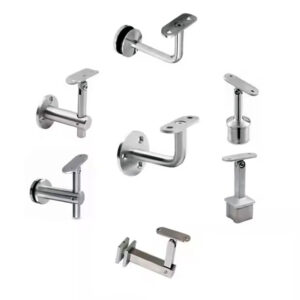
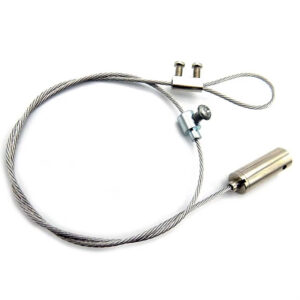
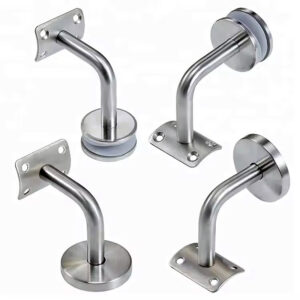
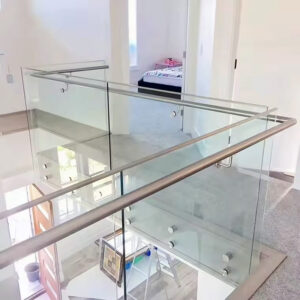
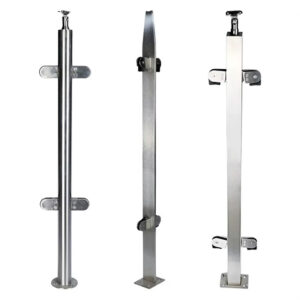
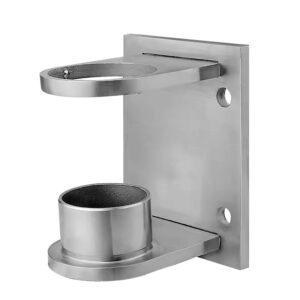
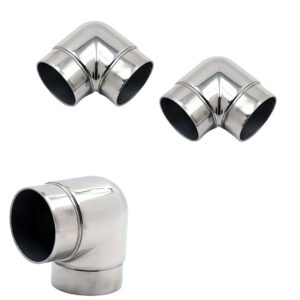
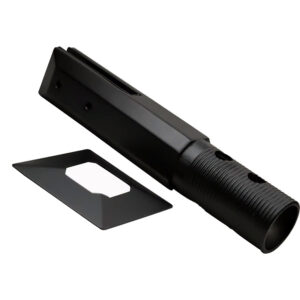
A distributor that approves a supplier based on a clean ISO certificate and a tidy sample kit may not discover the problem until corroding cable fittings start coming back from installation sites six months later. By then, the root cause—a silent shift to lower-grade stainless bar stock, or a finishing step quietly handed to an unapproved subcontractor—is difficult to trace and nearly impossible to recover from without field replacements and damaged client relationships. The audit process that prevents this outcome is not a single checklist event; it is a sequence of verification steps that must reach behind supplier answers to the records, lot data, and process observations that either confirm or contradict what a supplier claims. What follows will help you judge whether a supplier’s quality controls are actually in use, currently scoped to your SKUs, and supported by evidence that holds up when a real order runs through their factory.
Tracing One SKU Through the Factory System
Starting a factory audit with a management briefing and a tour of finished goods is the most common way to miss the decisions that actually determine hardware quality. A more useful approach is to arrive during active production and follow a single SKU—ideally one that matches a pending or recent order—from the point where raw material enters the process through to packing and outbound inspection. That sequence surfaces patterns that no document can fully replicate: how material is staged and identified between operations, whether operators perform checks at intermediate stages or only at final inspection, and how workforce familiarity with a specific hardware type shows up in handling and setup decisions.
The practical limit of this method is worth naming clearly. Tracing one SKU lot during one visit is a snapshot. It reveals how that process was running on that day for that part, and it creates a reasonable basis for inference about standard practice, but it does not prove that every lot receives identical treatment. What it does do is give an auditor something concrete to compare against the supplier’s documented procedures: if the work instruction calls for incoming material verification and no one performs it during the observed run, that gap is visible in a way it would never be in a document review.
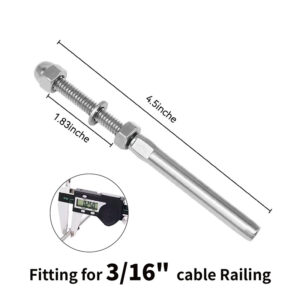
For railing hardware specifically—cable fittings, post anchors, glass clamps—the material identification step is worth close attention during the trace. Grade substitution risk is highest at the point where bar stock or casting blanks enter the line, before any surface treatment or marking obscures origin. Asking to see the material receipt record tied to the lot currently in production, and comparing it against the supplier’s approved material list, turns an otherwise abstract supplier claim into a verifiable linkage.
Risks Hidden by Document-Only Audits
A supplier can pass a document review and still present serious procurement risk. The approved vendor list may accurately name the correct stainless steel mill, but it cannot show whether that source was used for the specific batch shipped on the last order. Quality manuals may describe subcontracting controls without disclosing that a polishing or passivation step was moved to a third-party shop whose process has never been independently verified. The document record closes the loop on paper; the actual production history may not match it.
Two failure patterns appear consistently in hardware procurement: unauthorized material substitution and outsourced finishing without corresponding quality transfer. Both are invisible to an audit that reviews procedures and certificates without verifying their application to specific production runs. Third-party inspection services offer a practical verification layer here—not as a mandatory step in every jurisdiction, but as a tool for confirming dimensional accuracy, load-bearing performance, and finish durability on an actual shipment lot before it ships. That verification is particularly relevant for marine-grade stainless steel cable fittings where surface treatment quality directly affects long-term corrosion resistance and is difficult to assess visually after installation.
| Risk Area | What Document-Only Audits Might Miss | Verification Method |
|---|---|---|
| Raw material sourcing & subcontracting | Documents may list approved sources without revealing unauthorized substitutions or subcontractors | Validate raw material sources and subcontracting policies directly |
| Product dimensional & performance compliance | Standard documents may not reflect the actual batch’s dimensional accuracy, load-bearing capacity, or finish durability | Use third-party inspection services to verify dimensional accuracy, load-bearing capacity, and finish durability before shipment |
The subcontracting risk deserves specific follow-up during the audit conversation. Ask the supplier to identify every process step that occurs outside their own facility, and then ask to see the qualification records for those external parties. The answer to the second question is more informative than the answer to the first. Suppliers with genuine subcontractor controls can produce approval records and inspection criteria; suppliers whose controls exist only in policy language typically cannot.
System Coverage Versus Product-Process Depth
ISO 9001 certification tells an auditor something meaningful: the supplier has invested in documented procedures, internal audits, and management review cycles consistent with a recognized quality management framework. That discipline matters for long-term relationship stability. What it does not confirm is whether the tensile strength of a specific cable swage fitting lot meets the mechanical property requirements relevant to the load-bearing application it will enter, or whether the salt spray performance of a batch of post bases reflects the passivation quality actually achieved in production.
The trade-off between system-level audits and product-process audits is a real procurement decision, not a theoretical distinction. Broad system audits reveal management maturity; product-process audits reveal whether the hardware you are sourcing was made correctly. Both have limitations that make them complementary rather than substitutable.
| Audit Type | What It Evaluates | Potential Limitation | What to Confirm |
|---|---|---|---|
| System-level certification (e.g., ISO 9001) | Management discipline and document control | May not guarantee product-specific quality for your SKUs | Verify certification scope covers the production location and relevant process steps |
| Product-process testing (tensile strength, salt spray) | Mechanical properties and corrosion resistance of actual hardware | Does not validate overall system consistency | Request specific test reports for the SKUs being audited |
| Third-party certification (e.g., TÜV) | Strength, manufacturing quality, and consistency | Certificate scope may be limited to certain locations or product lines | Confirm the certification applies to the exact production site and SKU process steps |
Third-party certifications such as TÜV add another layer, but they carry a scoping constraint that auditors frequently overlook. A certificate issued to a manufacturer may apply to a specific product family tested at a specific facility during a specific period. Accepting the certificate without confirming that its scope covers the exact production location and the process steps used for your SKUs converts a meaningful verification into a false assurance. The correct audit question is not “do you have a TÜV certificate?” but “does this certificate apply to this part, made at this facility, using the current process?”
Confirming a supplier’s technical familiarity with the specific hardware types in your order—glass clamps, post anchors, cable tension fittings—serves a related purpose. A supplier experienced with one product category may have limited process depth for another, and that depth gap rarely appears in system-level documentation. For distributors evaluating suppliers across a broad hardware catalog, asking the supplier to describe in-process controls for the least common or most tolerance-sensitive SKU in the order often reveals more than any certificate review.
Records Needed Behind Supplier Answers
Supplier answers during an audit are starting points, not endpoints. The follow-up discipline that separates a useful audit from a document collection exercise is asking to see the record that proves the stated control was applied to a specific production lot—not a sample record from a previous period, and not a procedure document describing what should happen.
In-process inspection records should show checkpoint results tied to a lot or batch identifier, not just a signature on a generic form. Tensile strength test reports should reference the applicable standard—ASTM A276 for stainless steel bar and wire product—and identify the specific material heat or lot tested. Salt spray test reports should include the exposure duration, the surface condition evaluated, and the finish process parameters in effect when the tested parts were produced. BS EN 1090 compliance documentation, where structural components are involved, should specify the execution class and confirm applicability to the components in scope.
| Evidence Record | What It Proves | Applicable Standard/Reference |
|---|---|---|
| In-process inspection records | Quality checks are performed during production, not just at final inspection | – |
| Tensile strength test reports | Stainless steel meets required mechanical properties | ASTM A276 |
| Salt spray test reports | Corrosion resistance of surface treatments | – |
| BS EN 1090 compliance documentation | Structural components conform to execution class requirements | BS EN 1090 |
The pattern to watch for is a supplier who provides records that are real but not current, or current but not traceable to the SKUs being audited. A salt spray report from two years ago on a different product family demonstrates that the supplier can conduct the test; it does not demonstrate that the specific passivation process used on your last order produced a corrosion-resistant finish. Lot traceability in the record—the ability to link a specific test result back to the material and process conditions of a specific production run—is the criterion that makes the record meaningful rather than decorative.
For a practical sense of what trustworthy supplier documentation looks like before reaching the audit stage, reviewing 7 signs you have found a trustworthy stainless steel railing supplier provides a useful framing for the pre-audit screening process.
Partnership Approval After Risk Closure
Approving a long-term supplier after a single successful audit visit is a premature closure if the audit identified process risks that were acknowledged but not yet resolved. The final verification checkpoint before partnership approval should confirm that every major risk identified—whether in raw material traceability, subcontractor controls, or product-process test coverage—has documented evidence of closure, a named owner, and a confirmed effective date.
Third-party audit reports and material certifications such as SGS test reports serve a legitimate role at this stage as independent verification of supplier claims. Their limitation is that they confirm what was true at the time of the inspection; they do not retroactively validate processes that were not observed during the audit. If a subcontractor’s finishing shop was never included in the audit scope, an SGS report on finished goods still leaves the process gap unresolved.
The practical threshold for approval is not perfection—it is closure. A supplier with two open risks, each with a documented corrective action, a responsible engineer, and a thirty-day resolution date, is in a more defensible position than a supplier with no open risks because no process depth was ever tested. Distributors who treat partnership approval as a formality after a passed document review often discover six to twelve months into the relationship that the controls they assumed were in place were never confirmed for the SKUs they actually order. Conditional approval with a defined re-audit trigger tied to specific evidence milestones is a more reliable long-term structure than a clean sign-off based on a smooth audit conversation.
A railing hardware supplier audit that reaches partnership approval without tracing a live SKU through production, without demanding lot-traceable test records, and without confirming the scope of any certificates presented is essentially an opinion about the supplier rather than a verification of their process. The most consequential decisions happen before the first large order ships: confirming that material sourcing controls apply to actual production batches, that subcontracted process steps have been qualified and monitored, and that in-process inspection records connect specific results to specific lots.
Before approving a long-term partnership, confirm that every major process risk identified during the audit has evidence of closure with a named owner and a date—not a verbal commitment and not a policy reference. That confirmation is the difference between a supplier relationship built on documented process understanding and one built on the assumption that a clean certificate means a controlled process.
Frequently Asked Questions
Q: What if I can’t visit the factory in person for a production audit?
A: You can still gather meaningful verification remotely. Request a live video walkthrough of the exact SKU being produced, demand lot-traceable test records from that run, and ask to see material receipt documents shared in real time over the call. This cannot fully replace on-site observation of operator handling and staging practices, but it substantially raises the evidence bar beyond a document-only review.
Q: After a successful audit, what should I include in the first trial order to confirm consistent quality?
A: Structure the trial order around the same SKU lot traced during the audit, require full lot-traceable inspection and test records packed with the shipment, and set explicit acceptance thresholds for dimensional accuracy and surface finish. This turns the audit snapshot into a repeatable verification that process control holds when a real purchase runs through the factory.
Q: Does this audit methodology still apply if I’m sourcing through a trading company rather than a manufacturer?
A: Yes, but the audit must extend to the actual production facility. A document review of the trading company alone cannot verify material sourcing, subcontractor controls, or in-process inspections. Insist on a joint factory visit to the production line that will make your hardware, and require records traceable to that specific manufacturing location.
Q: If I only have limited time on site, should I prioritize the system audit or the product-process trace?
A: Prioritize the product-process trace for the SKU you will purchase. Observing one live production lot immediately reveals material identification gaps, operator practice slips, and missing in-process checks that system-level documents often hide. A system audit can be supplemented later with an ISO 9001 certificate review; a missed process risk on your actual product creates direct field failure exposure.
Q: Is this level of audit detail justified for a small distributor placing modest-volume orders?
A: Usually yes, because the cost of a single field-failure batch—replacements, shipping, and damaged client relationships—often exceeds the investment in a focused audit. Scale the effort to your highest-risk SKUs such as marine-grade fittings or structural components, and concentrate on material traceability and outsourced finishing steps, which are the most common sources of latent quality failures.