Most project teams that encounter problems with frameless glazing on balconies discover the issue far too late — not during design review, but during installation, when custom glass panels are already cut and hardware is sitting on site. At that point, the substrate has failed a check that nobody scheduled: slab flatness is outside acceptable range, edge cover is insufficient, or the concrete chemistry is incompatible with epoxy-based fixings. Recovering from that position means remediation costs, schedule compression, and in some cases reordering glass to a different thickness specification. The judgment that prevents this outcome is not made during procurement — it is made before design is locked, when the structural conditions of the substrate can still influence the hardware specification. What follows will help you identify when a project genuinely supports frameless glazing and what has to be verified, in sequence, before hardware fabrication begins.
Premium project goals that justify frameless glazing
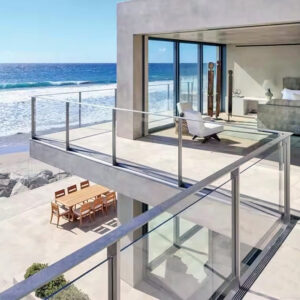
The case for specifying frameless glazing is not primarily aesthetic, even though unobstructed sight lines are the most visible outcome. The underlying argument is about project positioning: when a development is competing on view value — waterfront units, elevated terraces, high-floor residential towers — every visual interruption in the balcony envelope carries a measurable cost against that positioning. A mid-rail or post-supported system that would perform adequately on a standard residential build is no longer adequate when the view is the primary price driver. That context changes the cost-benefit math on execution risk.
What frameless glazing actually demands is structural investment that happens upstream of hardware. The sight line is clean precisely because there are no posts or mid-rails absorbing or distributing load — the glass panels and their base connections carry the full lateral and gravity demands. That structural concentration means the substrate, the fixing method, and the glass specification have to be coordinated from the beginning, not resolved as installation details. Projects that treat this as a late-stage decision consistently encounter the same pattern: a premium finish system that requires precision substrate conditions arrives on a slab that was never checked against those conditions.
The projects where this trade-off resolves in favor of frameless glazing are those where the view premium is real and quantifiable, where the structural and scheduling investment required to control substrate conditions has been budgeted, and where the specification team has enough site access before design lockdown to verify anchor embedment, slab edge geometry, and drainage routing. When those conditions are present, the system performs as specified. When any of them is assumed rather than confirmed, the execution risk that premium buyers are paying to avoid gets deferred into installation.
Substrate checks required before hardware release
The costliest mistake in frameless glass balcony railing procurement is releasing hardware for fabrication before substrate conditions have been confirmed. Because custom glass panels are sized to the fixed channel geometry, and because channel geometry depends on anchor embedment and slab edge dimensions, any substrate condition that forces a post-fabrication change to the fixing method will require re-fabricating at least part of the system. That sequence — discover, remediate, reorder — is expensive in both cost and schedule, and it is entirely avoidable if the verification happens before fabrication begins.
Three checkpoints drive this review. Glass thickness requirements differ between residential and commercial applications — 12.7 mm toughened glass for residential, 16 mm toughened glass for commercial, with laminating recommended in commercial contexts to prevent glass fall in the event of breakage. These thresholds are not universal regulatory minimums applicable in all jurisdictions, but they represent compliance-linked sizing requirements that affect which hardware systems can be specified and how anchor loads are calculated. The fixing agent compatibility check is equally important: epoxy-based chemical bonding is the preferred method, and substrate porosity, contamination, or surface preparation deficiencies can prevent reliable bond formation. This check must be resolved before hardware release, not during installation. Mounting orientation also affects load paths: fascia mounting — attaching to beam sides and ends — is generally stronger than deck mounting, which bears on deck surfaces with lower pull-out capacity. That difference affects anchor embedment depth and the edge cover margin required for structural integrity.
| Checkpoint | Requirement | Why It Matters |
|---|---|---|
| Glass thickness | Residential: 12.7 mm toughened glass; Commercial: 16 mm toughened glass (laminating recommended) | Ensures compliance with safety standards for fall protection |
| Fixing agent | Must be chemical bonding type, preferably epoxy-based | Prevents bond failure from substrate incompatibility |
| Mounting orientation | Fascia mount is generally stronger than deck mount because beam sides are stronger | Affects anchor embedment depth and edge cover required for structural integrity |
Missing any of these checks does not simply create a compliance gap — it creates a fabrication sequencing problem. If the substrate cannot support the specified fixing method and the glass is already cut to the channel geometry that fixing method requires, the project is in a retrofit position on a system that was never designed to be retrofitted. The review process exists to prevent that position, and it has to be scheduled before fabrication, not treated as a site-phase activity.
Base shoe systems compared with exposed spigots
System selection between base shoe channels and exposed spigot hardware is a procurement decision with installation discipline consequences that are not always visible at the specification stage. Both systems achieve a frameless appearance from the primary view angle, but they distribute structural, drainage, and alignment demands differently — and selecting one without accounting for those differences trades visible simplicity for hidden complexity.
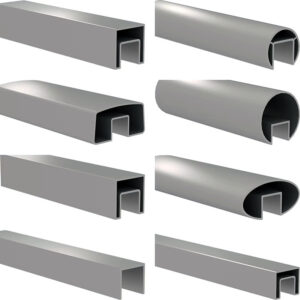
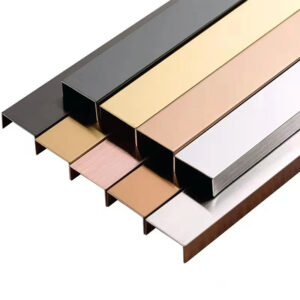
Base shoe systems use an aluminum U-channel — such as the Glass Base Shoe Channels available for frameless applications — to enclose the glass base within a continuous profile. Hardware is concealed within the channel, which produces a clean sight line at deck level. Built-in drainage channels address water management, but they require planning: the channel profile must be positioned and sloped correctly during installation to route water away from the glass base and anchor zone. Anodized aluminum construction keeps overall system mass lower than stainless steel alternatives, but the base shoe demands more precise installation discipline than a spigot — the Safety Wedge that sets glass alignment within the channel must be correctly positioned during the initial assembly, because adjustment after the glass is fully set is limited.
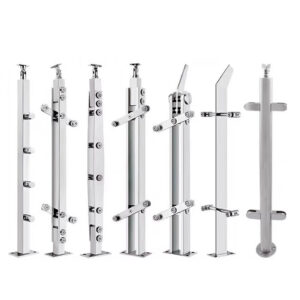
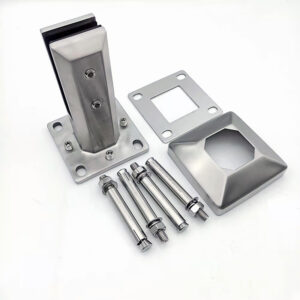
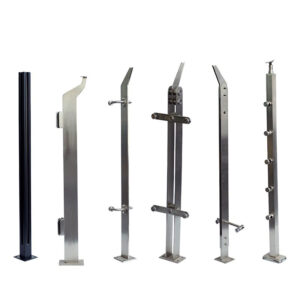
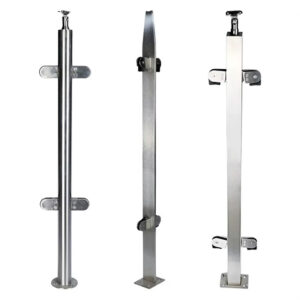
Standoff and exposed spigot systems use 316-grade stainless steel and expose the fixing hardware as a visible element. The trade-off is inversion: what base shoe systems conceal, spigot systems leave visible, but what spigot systems offer is two-way fixing that allows precise glass panel alignment to be adjusted during installation. That adjustability is a meaningful feature on sites where minor slab level variation or channel alignment drift is already present — the hardware compensates for what the substrate cannot be made to hold exactly.
| Feature | Base Shoe System | Standoff (Exposed Spigot) System |
|---|---|---|
| Material | Lightweight anodized aluminum | 316-grade stainless steel |
| Water drainage | Built-in drainage channels | Not specified |
| Alignment control | Integrated Safety Wedge (set during installation) | Two-way fixing allows precise adjustment to compensate for slab errors |
| Hardware visibility | Hardware concealed within U-channel | Hardware exposed |
The practical selection question is not which system looks better in a specification document, but which system the installation conditions and installation team can actually support. A base shoe system on a slab with imprecise drainage slope planning and a team unfamiliar with Safety Wedge setting procedures creates a different failure pattern than the same system installed by a crew that has managed those details before. Spigot systems with two-way fixing are more forgiving of minor substrate imprecision, but they carry visible hardware that not every premium project’s design brief will accept. That tension between concealment and adjustability is the real selection criterion — and it is a project-specific judgment, not a ranked hierarchy.
Tolerance buildup across long balcony runs
A single frameless glass panel installed correctly is a relatively controlled problem. A continuous run of frameless panels across a long balcony is a cumulative tolerance problem, and it behaves differently. Small errors — in slab level survey, in glass panel sizing, in channel alignment — do not stay isolated to the panel where they originate. They stack. By the time the run reaches its far end, a misalignment that measured within acceptable range at the start may have compounded into a visible offset or a gap that cannot be closed without modifying glass that has already been cut.
The practical precision threshold is measurement to within 1/4 inch across the full run before glass is sized. That figure is not a codified regulatory specification — it is a field-verified design requirement where the consequence of exceeding it is not a failed inspection but a glass panel that does not fit its allocated position without remediation. Custom glass cannot be trimmed in the field; panels that fall outside tolerance have to be recut, and recut panels mean schedule impact on a trade that typically has no float built in for rework.
| Tolerance Factor | Requirement / Risk | Mitigation Approach |
|---|---|---|
| Slab and measurement precision | Small errors in slab level, glass sizing, and channel alignment compound across long runs | Measure to within 1/4 inch |
| On-site assembly adjustment | Rigid systems without adjustment can amplify cumulative errors | Dry glaze systems enable faster installation and easier on-site adjustments |
| Hardware alignment | Slab level or channel misalignment causes glass panel offset | Two-way fixing in standoff systems allows precise alignment compensation |
Two hardware and process approaches address cumulative tolerance risk without eliminating the need for measurement discipline. Dry glaze systems allow faster installation and easier on-site adjustment, which creates more opportunity to identify and correct tolerance drift before it compounds further down the run. Two-way fixing in standoff systems allows individual panels to be aligned independently of the channel, compensating for slab level or alignment variation without requiring the channel itself to be repositioned. Neither approach eliminates the need for measurement discipline — they provide adjustment range within which the system can be made to work correctly. When measurement errors exceed that range, adjustment hardware cannot recover the sight line without structural intervention.
For projects with balcony runs exceeding several bays, the tolerance management plan should be treated as a fabrication prerequisite, not a site-phase response. That means confirming slab survey data against panel sizing before glass is ordered, not after the first panels have been set and the alignment problem has already propagated.
View value that offsets higher execution risk
The structural and process investment that frameless glazing requires is justified when the view it delivers has genuine project value — not as a design preference, but as a positioning and lifecycle argument that holds against scrutiny. The clearest case is a development where sight lines directly affect unit pricing or marketability: waterfront properties, elevated terraces, or premium urban residential buildings where a partly obstructed balcony view is a measurable liability against competing inventory.
The lifecycle maintenance comparison reinforces that argument over time. Glass railing systems require periodic cleaning with glass cleaner rather than the rot inspection, refinishing, and component replacement cycles that wood railing systems demand. That difference is not quantified in cost terms in the available inputs, but the directional trade-off is clear: frameless glazing’s higher upfront execution cost is offset across the asset’s lifecycle by lower maintenance burden. For a commercial or premium residential asset that will be held or managed over years, that trade-off is a legitimate planning input, not a marketing claim.
The risk side of this argument deserves equal weight. Frameless glazing on a project where view value is modest, the structural investment has not been made, or the installation team does not have experience managing base shoe discipline or cumulative tolerance across long runs is an execution risk that the project’s positioning cannot justify. The choice resolves correctly when the view value is real, the substrate conditions have been confirmed, and the installation sequence is planned before design is locked. When those conditions are not present, the premium execution risk does not disappear — it simply goes unmanaged until it becomes an expensive site problem.
The decision to specify a frameless glass balcony railing should be made before design is locked, not after fabrication has started. The substrate checks — glass thickness, fixing agent compatibility, and mounting orientation — have to be scheduled as pre-fabrication review steps, because the cost of discovering a substrate problem after glass is cut is not a minor adjustment. It is a remediation event on a system that was never designed to be remediated.
For projects where view value genuinely drives the specification, the next step is confirming which hardware approach — base shoe or exposed spigot — fits both the site conditions and the installation team’s discipline level, and then building the tolerance management plan before glass sizing is finalized. Explore the Structural Glass Base Rails and the broader Glass Balcony Railing range as starting points for that hardware evaluation, using the substrate data and run dimensions already confirmed to narrow the selection before procurement.
Frequently Asked Questions
Q: What happens if the slab survey is completed but the data isn’t reconciled against glass panel sizing before the order is placed?
A: The panels will likely arrive cut to dimensions that don’t match the installed channel geometry, forcing a reorder rather than a minor adjustment. Slab survey data has to be cross-checked against the panel sizing schedule before glass is ordered — not after the first panels are set — because custom glass cannot be trimmed in the field and the schedule typically carries no float for that kind of rework.
Q: Is a frameless glass balcony railing a realistic specification on a project where the concrete substrate hasn’t been tested for epoxy bond compatibility?
A: No — not without scheduling that test before hardware fabrication begins. Epoxy-based chemical bonding is the required fixing method, and substrate porosity, contamination, or surface preparation deficiencies can prevent reliable bond formation. If compatibility is confirmed during installation rather than before fabrication, the glass panels are already sized to a channel geometry that may need to change, which puts the project in a retrofit position the system wasn’t designed to handle.
Q: When does the adjustability advantage of a spigot system outweigh the cleaner sight line a base shoe channel delivers?
A: When the site has measurable slab level variation or the installation team doesn’t have documented experience with Safety Wedge setting procedures, spigot systems with two-way fixing are the more defensible choice. The two-way adjustment compensates for substrate imprecision that a base shoe cannot recover from after the glass is fully set. The sight-line trade-off is real, but it is secondary to whether the installation conditions can actually support the concealment system’s discipline requirements.
Q: At what point does balcony run length make tolerance management a fabrication prerequisite rather than a site-phase activity?
A: As soon as the run spans more than a few bays, the tolerance plan should be treated as a pre-fabrication step. The 1/4-inch measurement threshold applies across the full run, not per panel, and errors compound rather than stay isolated. Once the run length means that alignment drift at the far end cannot be visually corrected without modifying already-cut glass, the plan has to be confirmed before the glass order is placed — not diagnosed after the first panels expose the problem.
Q: If a project’s view premium is modest rather than primary to its pricing, does the lifecycle maintenance advantage of glass over wood justify the frameless specification on its own?
A: Unlikely, for most commercial or mid-tier residential projects. The maintenance trade-off — periodic glass cleaning versus rot inspection, refinishing, and component replacement — is a real lifecycle input, but it doesn’t offset the structural investment, substrate verification discipline, and installation precision that frameless glazing requires unless the project is being held and managed over a long horizon. Where view value isn’t driving the specification, a post-supported system that performs reliably under standard site conditions is a more defensible procurement decision.