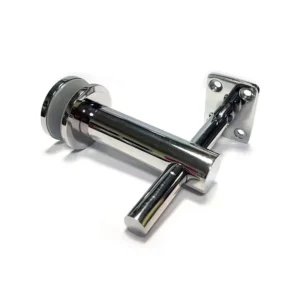
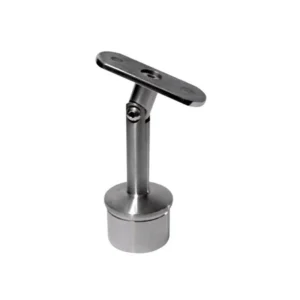
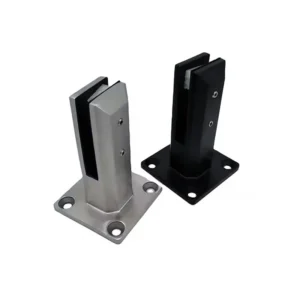
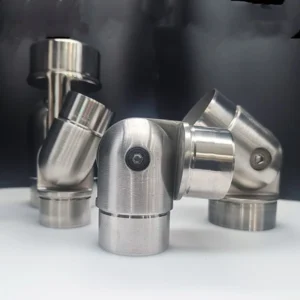
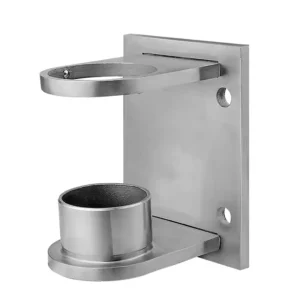
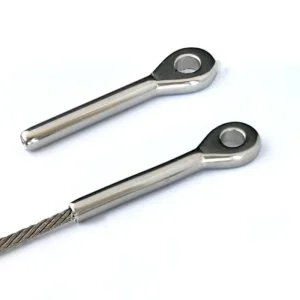
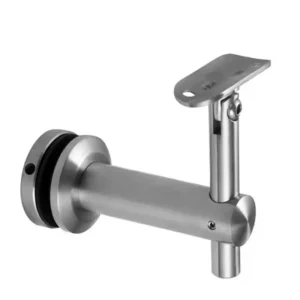
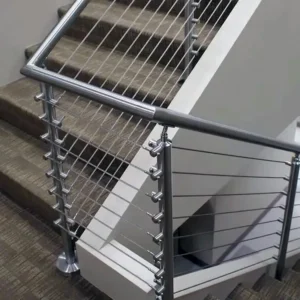
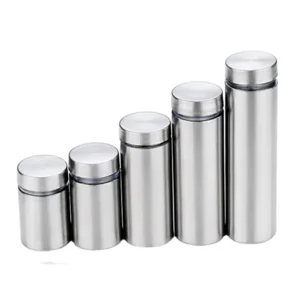
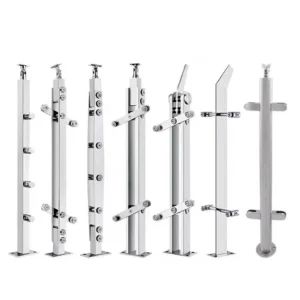
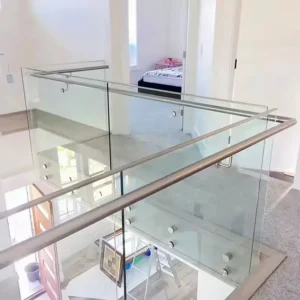
Glass panel support brackets hold, locate or restrain a glass edge at selected points. The useful starting question is not simply “which bracket looks right?” It is whether the connection must carry the panel’s vertical weight, restrain lateral movement, join two glass edges, or provide a local mounting point to another support. That decision changes the bracket geometry, glass preparation, pad set, fasteners and supporting structure.
You can start with a marked-up photo or sketch, estimated quantity, glass build-up and the surface or frame receiving the bracket. ESANG can then identify the missing dimensions and state the proposed supply in the quotation.
Discuss glass panel support brackets on WhatsApp
Start with the bracket’s actual job
Bearing support
A bearing bracket receives some or all of the panel’s vertical weight. Its seat depth, liner and position relative to the glass edge matter because a small hard contact area can concentrate stress. The project drawing should show which brackets are intended to bear weight and which are only restraints; installers should not have to infer this from appearance.
Lateral restraint
A restraint controls movement without automatically becoming the primary vertical support. It still needs the correct gap, pad thickness and fixing direction. Treating every restraint as a bearing point can change the load path, while leaving excessive clearance can allow visible movement or glass-to-metal contact.
Glass-to-glass alignment
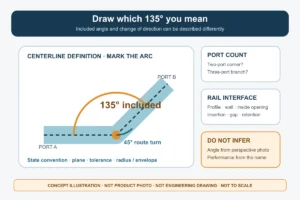
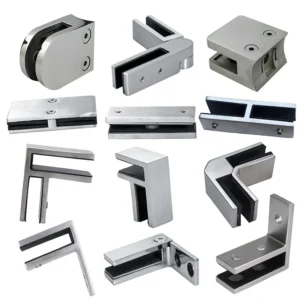
Inline, corner and T-junction brackets manage different panel relationships. Confirm the included angle, panel edge alignment and whether the joint must remain open, sealed or accessible. A bracket that fits both panes individually may still be wrong if its centreline creates an unwanted step or gap.

Choose the glass preparation route before ordering
- Edge-clamped route: the glass sits between protected faces without a through-hole in the illustrated connection. Confirm overall glass build-up, edge finish, panel tolerance and the exact insert or gasket set.
- Point-fixed route: a bolt or body passes through a prepared glass hole. Hole diameter, position, edge distance, countersink if any, and protective sleeves or washers must match the proposed hardware.
- Notched or slotted route: the bracket geometry depends on the processed edge. Slot dimensions and corner radii must be coordinated with the glass processor rather than improvised on site.
Heat-treated glass should not be treated as field-drillable material. Any holes, notches or other required fabrication should be frozen with the glass processor before heat treatment. For laminated glass, state the ply build-up and interlayer rather than supplying only one nominal thickness; the complete stack determines pad fit and edge behaviour.

Match the support geometry to the layout
Send the glass outline together with every connection centreline. The bracket must suit the intended straight joint, corner, return, lower edge or upper restraint, and the receiving member must be in the right plane. Check these fields before glass fabrication:
- panel width, height, build-up and finished edge condition;
- bracket count and centre-to-centre positions;
- joint angle, glass-to-glass gap and required alignment;
- stand-off or seat depth from the receiving surface;
- which connection bears weight and which only restrains movement;
- clearance for tools, covers and later glass removal.
A wrong bracket centreline can make preprocessed glass unusable. A shallow seat can reduce edge engagement; an oversized gap can leave liners unsupported; and a corner bracket selected from a front view alone may turn the panels into the wrong plane.
Pads, liners and protective layers are matched parts
Metal should not bear directly on an unprotected glass surface or edge. The quotation should identify the proposed pads, sleeves or liners and the glass build-up they are intended to match. Do not substitute a different pad thickness to correct alignment: doing so can change clamping pressure, engagement and the visible glass line.
If the glass is laminated, ask how the proposed insert controls slip and protects the edge. If the bracket is exposed to water or cleaning chemicals, identify those conditions so the proposed pad and finish can be considered together. Appearance alone cannot confirm pad material, durability or suitability.
Bracket, fixing and structure are separate responsibilities
A support bracket does not validate the glass panel, fastener, anchor, post, wall, floor or completed barrier. The project designer must establish the actions and required performance for the full assembly. ESANG’s proposed supply should be compared against that project information, including any required calculations, test evidence or local approvals.
For each interface, record who supplies and verifies it:
- Bracket body and covers: proposed geometry, quantity and finish must be stated in the quotation.
- Glass-contact parts: pads, sleeves, setting pieces and their intended glass build-up must be listed.
- Bracket fasteners: confirm whether screws, pins or bolts are included and where they engage.
- Anchors and backing: the receiving structure, anchor design, edge distance and installation are not implied by the bracket photograph.
- Glass and engineering: glass make-up, hole plan, bracket spacing and complete-system performance remain project decisions unless the quotation explicitly includes a defined service.
Plan installation and replacement access
Confirm which side remains reachable for final tightening, whether caps hide fasteners, and whether an adjacent panel blocks the tool path. For a lower support, establish how the glass is temporarily held while pads and fasteners are set. For a corner or double-panel bracket, define the installation sequence so tightening one panel does not move the other.
Before accepting the glass, installers should compare the delivered bracket, pad set and hole or edge preparation against the approved drawing. Do not force a bracket over an oversized laminate or use tightening to pull a misaligned panel into position.
Exposure changes the request, not just the finish
Tell ESANG whether the bracket is indoors, outdoors, near salt spray, around a pool, exposed to industrial contaminants, or subject to aggressive cleaning. Also identify adjacent metals and any trapped-water detail. Request the proposed base material, finish and maintenance assumptions in writing; the photographs show visible forms and surfaces but do not prove a material grade or corrosion performance.
Information for a useful quotation
A photo and estimated quantity are enough to begin. To freeze the bracket and glass together, provide or request:
- application and whether the glass is a guard, screen, partition or other panel;
- glass type, ply build-up, overall thickness, edge finish and processor drawing;
- support role: bearing, restraint, glass-to-glass joint or another defined duty;
- straight, corner or T geometry with joint angle and panel gap;
- hole, notch or slot drawing where applicable;
- receiving member, mounting face, available depth and tool access;
- indoor/outdoor exposure, nearby chemicals, salt and adjacent metals;
- quantity, finish preference and any document or packaging requirements.
The resulting quotation should identify the proposed bracket form, matched glass range or exact build-up, included pads and fasteners, proposed material/finish, exclusions, and the information still required before production. This makes two offers comparable without assuming that similarly shaped brackets are interchangeable.