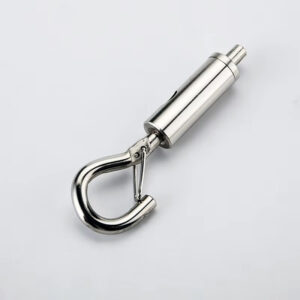
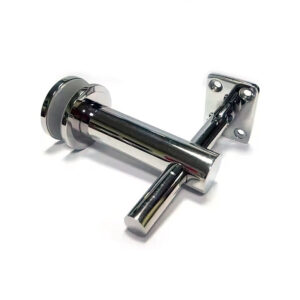
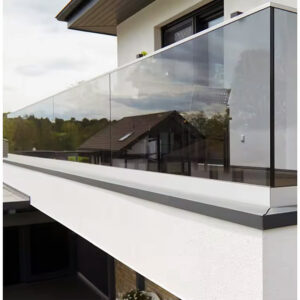
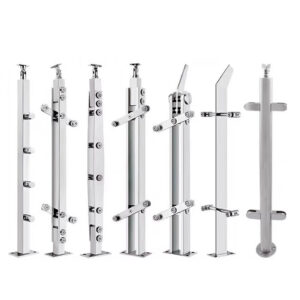
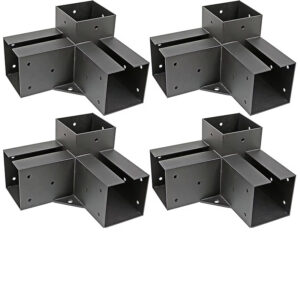
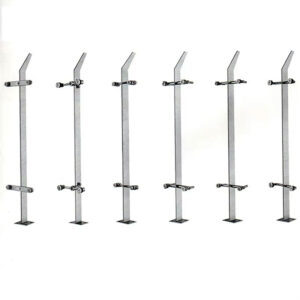
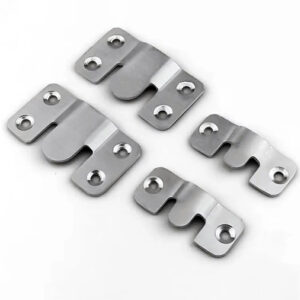
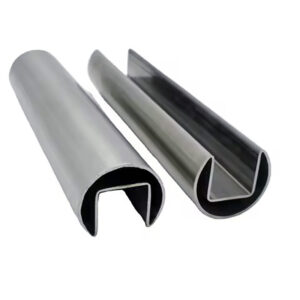
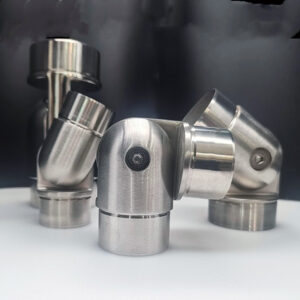
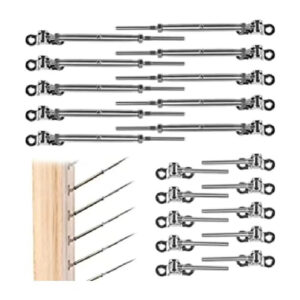
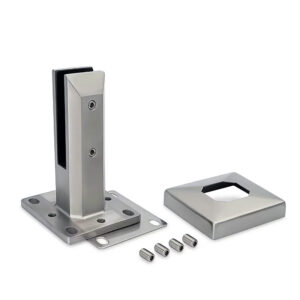
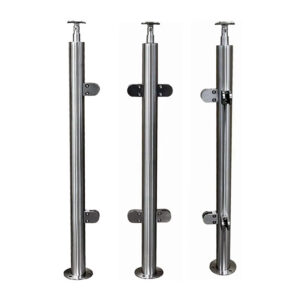
Glass Brackets & Adapters
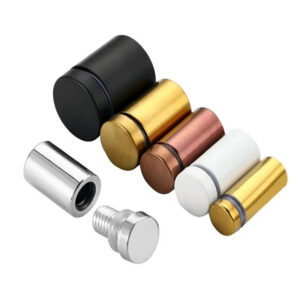
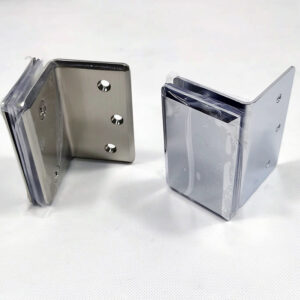
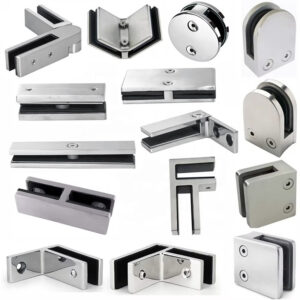
Glass Brackets & Adapters
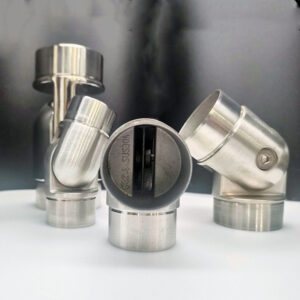
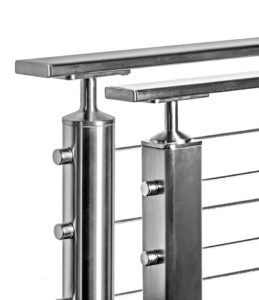
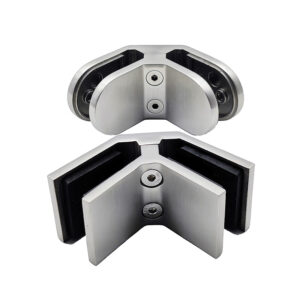
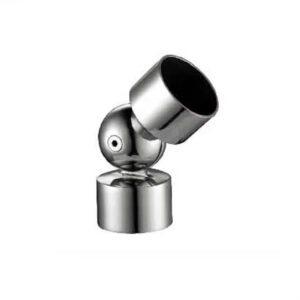
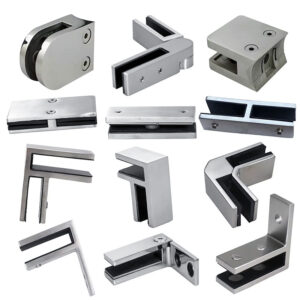
ESANG glass brackets and adapters are used to connect glass panels to walls, posts, structural surfaces, and custom railing assemblies. These components help solve connection details that are not fully covered by standard glass clamps, spigots, standoffs, or base shoe channels.
This category includes Glass Panel Support Brackets, Wall to Glass Connectors, Glass Mounting Adapters, Structural Glass Brackets, and Post to Glass Adapters.
For contractors, distributors, fabricators, and project buyers, glass bracket and adapter selection should consider glass thickness, mounting surface, post shape, wall condition, offset distance, hole position, support direction, material grade, surface finish, and project layout. ESANG can manufacture glass brackets and adapters according to drawings, samples, dimensions, material grade, finish requirements, and installation conditions.
Glass Bracket and Adapter Options
| Bracket or adapter option | Best used for | Key selection questions |
|---|---|---|
| Glass Panel Support Brackets | Supporting glass panels from posts, walls, side structures, or custom railing frames | What glass thickness, support direction, bracket size, and fixing surface are required? |
| Wall to Glass Connectors | Glass panels connected to walls, stair stringers, side surfaces, or structural partitions | What wall material, glass hole layout, offset distance, and fixing method are needed? |
| Glass Mounting Adapters | Custom glass connections, non-standard mounting surfaces, and transition details | What mounting interface, glass condition, adapter shape, and installation tolerance are required? |
| Structural Glass Brackets | Glass railing projects requiring stronger support review or project-specific bracket design | What glass size, support load path, substrate, and project specification should be reviewed? |
| Post to Glass Adapters | Connecting glass panels to round, square, rectangular, or custom stainless steel posts | What post shape, glass thickness, adapter position, and finish should match the railing? |
How to Choose Glass Brackets and Adapters
Glass brackets and adapters are selected when a project needs a specific connection between glass and another structure. The first question is not only what the glass panel looks like, but what it must connect to.
| Project condition | Recommended direction | Why it matters |
|---|---|---|
| The glass panel connects directly to a wall or side structure | Use wall to glass connectors or side-mounted glass support brackets | Wall material, offset distance, glass holes, and anchor method must be coordinated. |
| The glass panel connects to stainless steel posts | Use post to glass adapters or glass panel support brackets | Post shape and adapter position affect alignment and visible fit. |
| The project has a custom mounting interface | Use glass mounting adapters or project-specific connector designs | Adapters help bridge non-standard surfaces, profiles, or layout conditions. |
| The project requires stronger support review | Use structural glass brackets or project-reviewed bracket layouts | Glass size, substrate strength, bracket spacing, and load path should be reviewed together. |
| The glass layout includes stairs, corners, or transitions | Use custom brackets, adapters, or adjustable connection details where needed | Stair pitch, angle, offset, and transition points can require non-standard hardware. |
| The project uses standard post-supported glass panels | Review whether glass clamps are more suitable than adapters | Standard clamps may be simpler when the mounting surface and glass thickness match. |
Glass-to-Wall, Post-to-Glass, and Structural Bracket Differences
Different glass bracket types solve different connection problems. A wall-to-glass connector, post-to-glass adapter, and structural bracket should not be treated as interchangeable.
| Connection type | Main function | Common considerations |
|---|---|---|
| Glass-to-wall connection | Fixes glass panels to a wall, stair stringer, fascia, or side support | Wall material, anchor type, glass hole position, offset distance, and edge clearance |
| Post-to-glass connection | Connects glass panels to stainless steel posts or post-supported frames | Round or square post shape, adapter position, glass thickness, and finish match |
| Glass panel support bracket | Provides support at specific panel points or custom connection areas | Bracket spacing, glass size, support direction, and fixing method |
| Structural glass bracket | Supports project-specific glass loads or stronger connection requirements | Project drawings, substrate review, glass specification, and complete system design |
| Glass mounting adapter | Bridges glass to a special surface, profile, or non-standard connection detail | Adapter shape, tolerance, finish, fasteners, and installation sequence |
Mounting Surface and Glass Preparation
Glass brackets and adapters require accurate coordination between the glass panel, support surface, and fixing method. Before production or installation, the project team should confirm glass thickness, hole positions, edge distances, support geometry, and mounting surface condition.
| Item to confirm | Why it matters | Typical buyer input |
|---|---|---|
| Glass thickness | Bracket slot, gasket, adapter shape, and fixing hardware must match the glass | Glass thickness, glass type, and project specification |
| Glass hole positions | Many brackets and adapters depend on accurate drilled hole locations | Glass drawings, hole diameter, hole spacing, and edge distance |
| Mounting surface | Wall, post, steel frame, stair stringer, fascia, or custom support affects fixing method | Surface material, thickness, photos, drawings, and installation detail |
| Post shape | Round, square, rectangular, or custom posts require different adapter shapes | Post dimensions, profile drawings, and finish requirement |
| Offset distance | Side-mounted glass may require a specific distance from the support structure | Projection dimension, wall condition, and visual requirement |
| Connection direction | Support may be vertical, side-mounted, angled, or project-specific | Railing layout, stair angle, panel position, and connection drawing |
Materials, Finishes, and Custom Manufacturing
ESANG glass brackets and adapters can be manufactured according to project requirements, including bracket shape, adapter interface, glass thickness range, mounting surface, screw layout, offset distance, material grade, surface finish, and packaging requirements.
| Material or finish | Typical use | Notes |
|---|---|---|
| 304 stainless steel | Interior glass railings, commercial interiors, residential stairs, and dry environments | A common option for many indoor glass bracket applications. |
| 316 stainless steel | Outdoor glass railings, balconies, poolside projects, humid areas, and higher-corrosion environments | Usually preferred where better corrosion resistance is required. |
| 316L stainless steel | Projects requiring improved weldability or more demanding corrosion performance | Suitable when the specification calls for low-carbon stainless steel. |
| Brushed or satin finish | Commercial glass railings, stair glass, balcony systems, and most architectural applications | Helps reduce the visibility of fingerprints and minor handling marks. |
| Mirror polish | Decorative interiors, hotels, villas, and selected premium visual applications | Provides a bright appearance but requires more careful handling and cleaning. |
For non-standard glass railing projects, customers can provide drawings, glass thickness, hole positions, mounting surface details, bracket or adapter requirements, finish requirements, and installation conditions. ESANG can review the requirements and manufacture glass brackets or adapters to match the project specification where feasible.
Compatibility with Glass Hardware and Railing Systems
Glass brackets and adapters should be selected together with the surrounding glass railing system. The best connector depends on whether the glass is post-supported, side-mounted, bottom-supported, or integrated with a handrail or cap rail.
- For standard post-supported glass panels, review Glass Clamps and Connectors where a clamp is more suitable than a custom adapter.
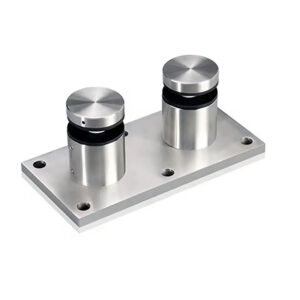
- For side-mounted glass, coordinate adapters with Glass Spigots and Standoffs when standoff-style support is required.
- For bottom-supported frameless glass, review Base Shoe Systems instead of side or post brackets.
- For post-supported systems, coordinate adapters with Stainless Steel Posts, post shape, and post spacing.
- For top edge finishing or handrail integration, coordinate with Cap Rails or related handrail components.
Customization for Project Requirements
Many glass bracket and adapter projects are customized according to glass thickness, support surface, offset distance, post profile, and project layout. ESANG can support custom glass panel support brackets, wall-to-glass connectors, glass mounting adapters, structural glass brackets, post-to-glass adapters, and related stainless steel connection hardware.
When a project has standard-oriented requirements related to guardrail height, glass type, glass thickness, opening limitations, material grade, or installation method, customers should provide the required drawings and specifications. ESANG can manufacture glass brackets and adapters to match those provided details, while final compliance depends on the complete installed system, glass specification, structural design, installation method, and applicable local code.
Installation and Project Considerations
Glass brackets and adapters should be reviewed before glass production and site installation. Glass holes, edge distances, bracket spacing, support surface strength, and hardware alignment can affect the complete glass railing system.
- Glass thickness, height, and panel width
- Tempered or laminated glass specification
- Glass hole positions, hole diameter, and edge distances
- Wall, post, fascia, stair stringer, steel frame, or custom mounting surface
- Bracket spacing, adapter offset, and support direction
- Material grade for indoor, outdoor, coastal, or poolside environments
- Surface finish and maintenance requirements
- Compatibility with handrails, cap rails, posts, or other glass hardware
- Local building code and project specification requirements
Glass drilling, notching, hole layout, and edge preparation should be confirmed with the glass supplier, project designer, installer, or local authority. ESANG can manufacture hardware to match provided glass and project requirements, but the complete installed system should be reviewed as a whole.
Application Scenarios
Wall-Mounted Glass Panels
Wall to glass connectors are used when glass panels connect to walls, stair stringers, side structures, or architectural surfaces. Wall material, hole position, offset distance, and anchor method should be confirmed.
Post-Supported Glass Railings
Post to glass adapters are used where glass panels connect to round, square, rectangular, or custom stainless steel posts. Post shape, glass thickness, adapter position, and finish should be coordinated.
Stair Glass and Side-Mounted Glass
Stair glass projects may require brackets or adapters that follow stair angles, stringer positions, landings, or offset requirements. Drawings and glass hole layouts are important for review.
Commercial Glass Railing Systems
Hotels, offices, shopping centers, public buildings, and transport facilities may require custom glass brackets and adapters for repeatable installation, consistent finish, and project-specific connection details.
Custom Architectural Glass Assemblies
Custom projects may require special adapter profiles, structural brackets, project-specific hole layouts, or non-standard mounting interfaces. ESANG can review drawings and manufacture components to match the required design where feasible.
Related Product Categories
- Glass Panel Support Brackets
- Wall to Glass Connectors
- Glass Mounting Adapters
- Structural Glass Brackets
- Post to Glass Adapters
- Glass Clamps and Connectors
- Glass Spigots and Standoffs
- Base Shoe Systems
- Stainless Steel Posts
Frequently Asked Questions
What are glass brackets and adapters used for?
Glass brackets and adapters are used to connect glass panels to walls, posts, structural surfaces, stair stringers, fascia surfaces, or custom railing frames. They are useful when standard clamps, spigots, or base shoe systems do not fully match the project connection detail.
What is the difference between glass clamps and glass brackets?
Glass clamps typically hold glass panels to posts, walls, or flat surfaces with clamp bodies and gaskets. Glass brackets and adapters are broader connection components used for wall-to-glass, post-to-glass, structural, or custom mounting conditions.
When should wall to glass connectors be used?
Wall to glass connectors are used when glass panels need to connect directly to walls, stair stringers, side supports, or structural surfaces. Wall material, glass hole layout, offset distance, and fixing method should be confirmed before production.
When should post to glass adapters be used?
Post to glass adapters are used when glass panels connect to stainless steel posts and the project needs a specific adapter shape, offset, or connection detail. Post shape, glass thickness, and adapter position should be reviewed together.
What are structural glass brackets?
Structural glass brackets are brackets used where the glass support condition requires stronger or project-specific review. The project team should confirm glass size, support surface, bracket spacing, and complete system requirements.
Can ESANG customize glass brackets and adapters?
Yes. ESANG can manufacture glass brackets and adapters according to drawings, samples, glass thickness, hole positions, mounting surface, post shape, material grade, finish, and packaging requirements.
Can glass brackets be used with stainless steel posts?
Yes. Glass brackets and post-to-glass adapters can be used with stainless steel posts. The post shape, adapter interface, glass thickness, hole position, and finish should be confirmed before ordering.
Should I choose 304 or 316 stainless steel brackets?
304 stainless steel is commonly used for interior and dry environments. 316 stainless steel is usually preferred for outdoor, coastal, poolside, humid, or higher-corrosion environments. The final grade should be selected according to project exposure and specification.
What information is needed for a glass bracket or adapter inquiry?
Useful information includes glass thickness, glass size, hole positions, mounting surface, post shape, bracket or adapter type, offset distance, material grade, finish, quantity, drawings, and project environment.
How should stainless steel glass brackets and adapters be maintained?
Routine cleaning normally uses mild detergent, clean water, and a soft cloth. Avoid chloride-based cleaners, steel wool, and abrasive tools. Outdoor, poolside, and coastal installations should be cleaned more regularly to reduce surface contamination and maintain appearance.
Related Posts:
Passivation Requirements for Stainless Steel Fasteners, Brackets and Anchoring Hardware
Specify treatment by part condition, manufacturing route and exposure rather than applying one generic passivation statement to every component.
Cleaning 316 Stainless Steel Cable and Glass Railing Hardware in Marine Environments
Clean cable terminals, glass clamps, fasteners and crevices without trapping chemicals or damaging polished and brushed finishes.
How Fabrication Residue Causes Tea Staining on Stainless Steel Railings
Trace tea staining to embedded particles, heat tint, abrasive transfer and residue trapped in finish lines or crevices.
Pickling vs Passivation for Stainless Steel Railing Hardware: Scope and Risk Differences
Pickling removes scale and altered surface layers; passivation addresses surface condition after cleaning, with different controls and risks.
Coastal Railing Hardware Maintenance Plan: Salt, Crevices, Fasteners and Surface Finish
Build maintenance around exposure, salt retention, crevices, dissimilar metals, fastener condition and finish appearance.
Jobsite Cleaning Rules for Stainless Steel Railings After Cutting, Welding and Installation
Remove grinding dust, weld residue, cement deposits and carbon-steel contamination before handover to prevent avoidable staining.
Esang's Projects

Esang's Certificate
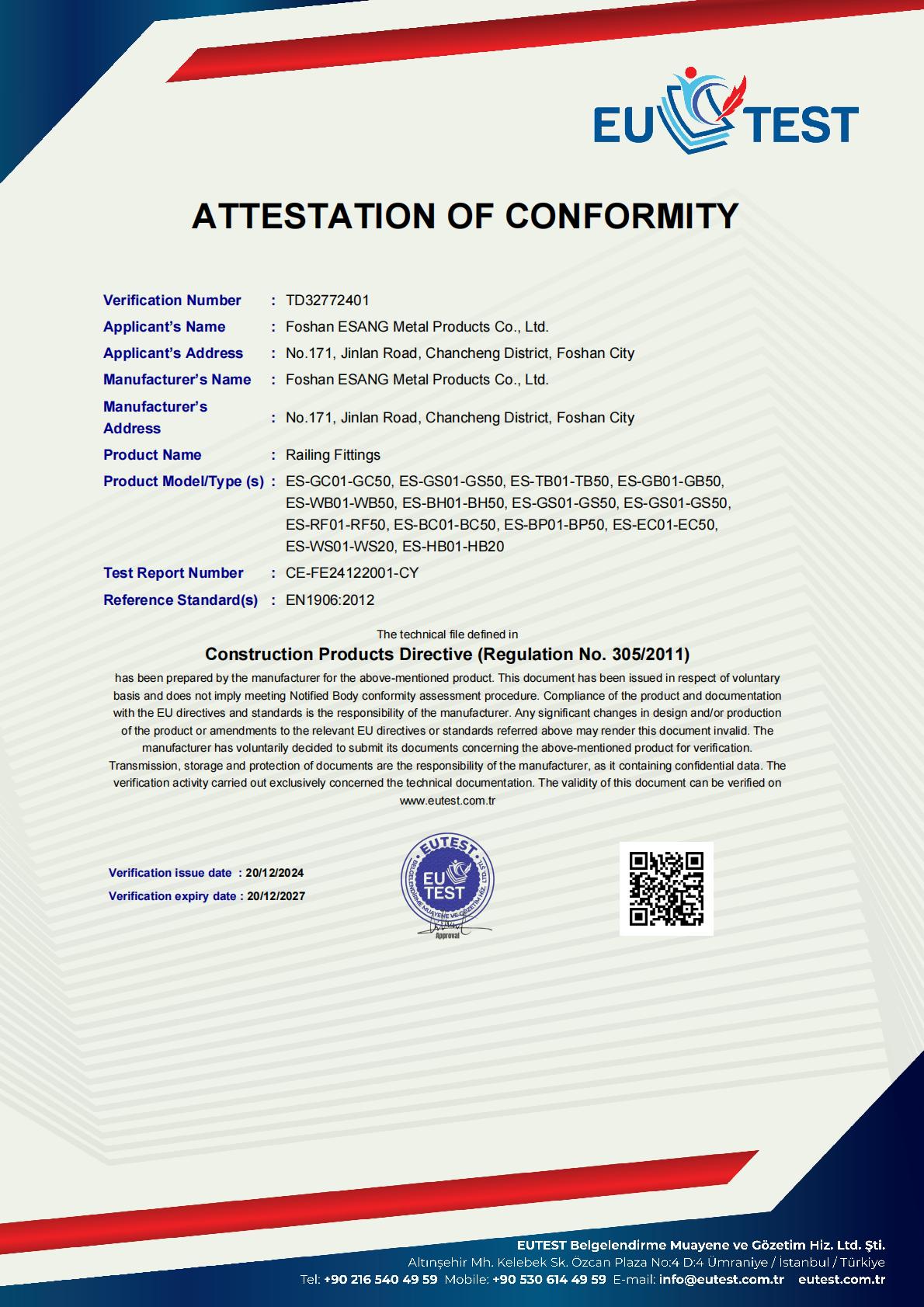
Foshan ESANG Metal Products proudly maintains CE certification (Verification No. TD32772401) under the Construction Products Directive (Regulation No. 305/2011), affirming our commitment to the highest European safety and quality standards.
Certified Product Range:
Our comprehensive railing fittings portfolio—including glass clamps, tensioners, brackets, wall mounts, base shoes, handrail fittings, cable hardware, and post components—meets EN1906:2012 standards, ensuring structural integrity and performance reliability across all installations.
What This Means for Your Project:
✓ Full regulatory compliance for European and international markets
✓ Independently verified safety and durability performance
✓ Documentation support for architectural specifications
✓ Peace of mind from third-party quality assurance
Certification valid through 2027 | Test Report: CE-FE24122001-CY
Esang's Projects

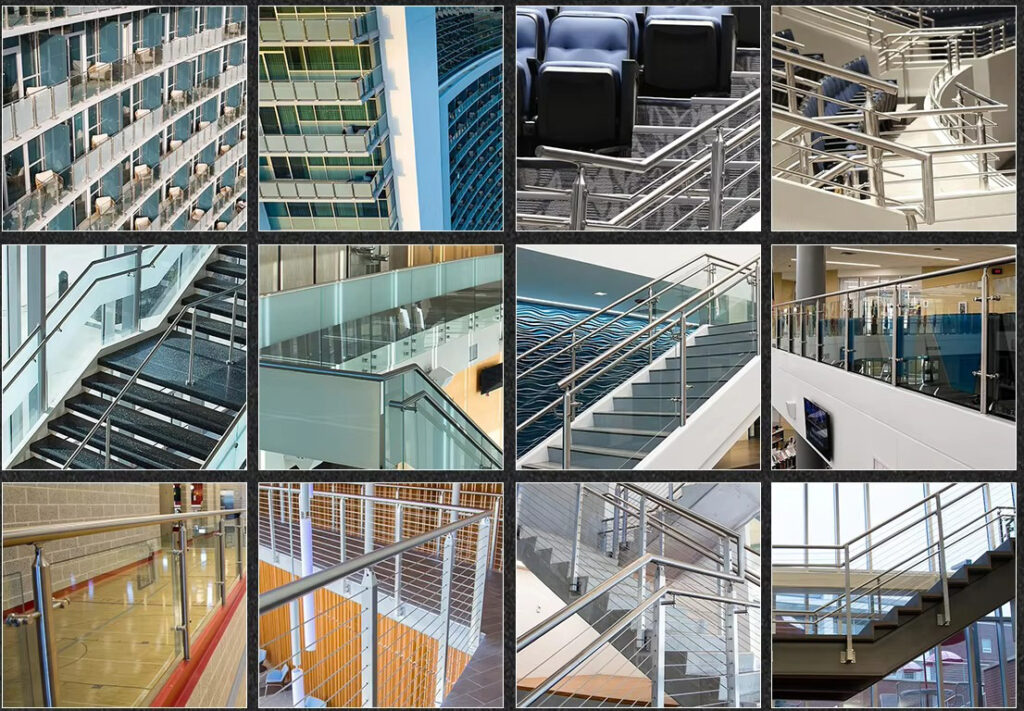
Reference Products