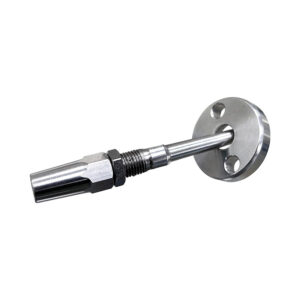
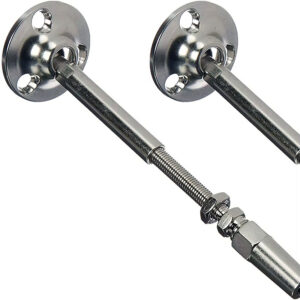
Tensioners & Turnbuckles
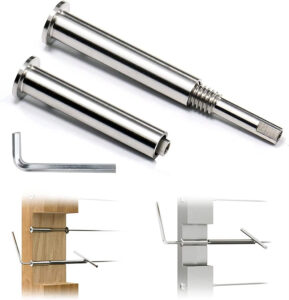
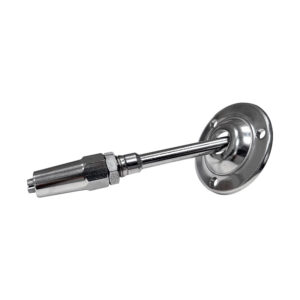
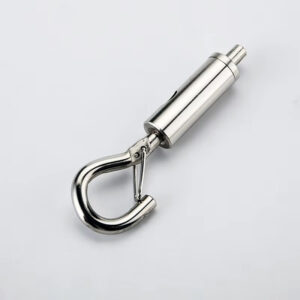
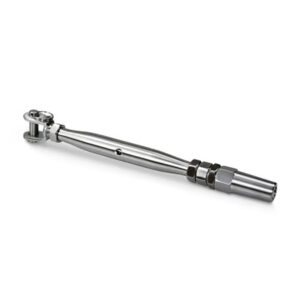
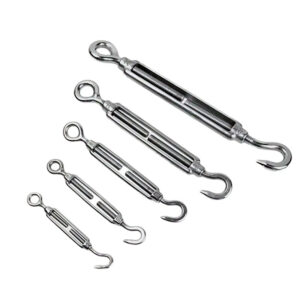
Tensioners & Turnbuckles
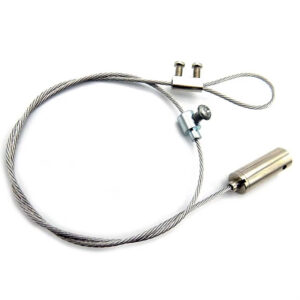
ESANG cable tensioners and turnbuckles are used to adjust and maintain cable tension in stainless steel cable railing systems. They help keep cable lines aligned across stairs, decks, balconies, terraces, and architectural railing projects.
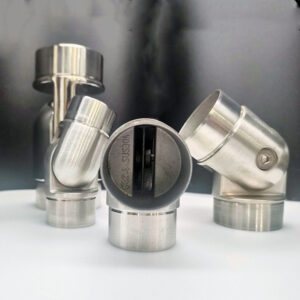
This category includes Cable Tensioner Systems, Adjustable Cable Tensioners, Heavy Duty Turnbuckles, Multi-Angle Cable Tensioners, and Swageless Cable Tensioners.
For contractors, distributors, fabricators, and project buyers, cable tensioner selection should consider cable diameter, adjustment range, terminal post condition, cable angle, fitting style, swaged or swageless assembly method, material grade, finish, and installation environment. ESANG can supply and manufacture cable tensioning hardware according to drawings, cable size, material grade, finish requirements, and project installation conditions.
Cable Tensioner and Turnbuckle Options
| Tensioning option | Best used for | Key selection questions |
|---|---|---|
| Cable Tensioner Systems | General cable railing assemblies that need tension adjustment and cable alignment | What cable diameter, post condition, tensioning location, and adjustment range are required? |
| Adjustable Cable Tensioners | Projects requiring field adjustment, fine-tuning, or repeated tension control | How much adjustment is needed, and where will the tensioner be accessible? |
| Heavy Duty Turnbuckles | Longer runs, outdoor systems, commercial cable railings, and stronger tensioning conditions | What cable size, run length, post strength, and environmental exposure should be reviewed? |
| Multi-Angle Cable Tensioners | Stair railings, angled runs, corners, and non-straight cable layouts | What cable angle, stair pitch, corner direction, and fitting articulation are required? |
| Swageless Cable Tensioners | Projects that prefer cable tensioning without traditional swaged terminal preparation | What cable diameter, assembly method, installation tools, and adjustment range are required? |
How to Choose Cable Tensioners
Cable tensioners should be selected according to where the cable will be adjusted and how the cable run is laid out. A straight balcony run, a stair run, and a corner condition may require different tensioning details.
| Project condition | Recommended direction | Why it matters |
|---|---|---|
| The cable run is straight and simple | Use standard cable tensioner systems or adjustable cable tensioners | Standard tensioners can provide controlled adjustment for typical straight cable runs. |
| The project needs fine adjustment during installation | Use adjustable cable tensioners with suitable thread or adjustment range | Field adjustment helps align cable lines and correct installation tolerance. |
| The cable run is longer or more demanding | Use heavy duty turnbuckles or project-reviewed tensioning hardware | Longer runs may need more adjustment range and stronger terminal support. |
| The cable follows stairs or angled layouts | Use multi-angle cable tensioners or angle-compatible fittings | Angled cable runs require correct articulation and alignment at the post connection. |
| The project avoids traditional swaging | Use swageless cable tensioners where suitable | Swageless tensioners can simplify assembly but must match the cable and installation method. |
| The project is outdoor, coastal, poolside, or humid | Consider 316 stainless steel tensioners and suitable maintenance requirements | Corrosion resistance is more important in wet or chloride-exposed environments. |
Tensioner Location and Cable Layout
The location of the tensioner affects installation access, appearance, adjustment, and maintenance. Tensioners are often placed near terminal posts, end posts, or designated adjustment points in the cable railing run.
| Layout factor | What to confirm | Related hardware |
|---|---|---|
| Terminal post location | Where the cable starts, ends, and is tensioned | Cable tensioners, turnbuckles, end fittings, terminal post hardware |
| Adjustment access | Whether the tensioner can be reached after installation | Adjustable tensioners, exposed turnbuckles, hidden tensioning hardware |
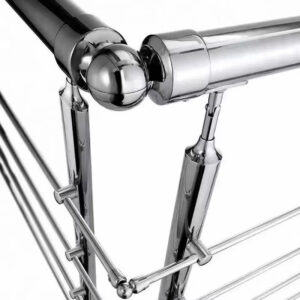
| Cable angle | Straight, stair, angled, or corner cable direction | Multi-angle tensioners, corner post hardware, angle-compatible fittings |
| Cable run length | Length between terminal points and adjustment range needed | Heavy duty turnbuckles, adjustable tensioners, cable end fittings |
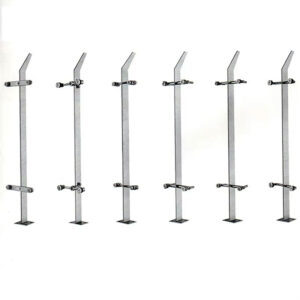
| Post design | Round, square, rectangular, terminal, or corner posts | Through-post hardware, surface mount hardware, terminal fittings |
Turnbuckles, Adjustable Tensioners, and Swageless Tensioners
Tensioning hardware should be selected by installation method and adjustment need. Different tensioner types may look similar but require different cable preparation and installation sequence.
| Tensioning type | Main function | Common considerations |
|---|---|---|
| Cable tensioner systems | Provide general cable tension adjustment for railing runs | Cable diameter, post condition, adjustment range, and installation access |
| Adjustable cable tensioners | Allow fine adjustment during or after installation | Thread length, adjustment range, locking method, and visibility |
| Heavy duty turnbuckles | Provide stronger or more visible tensioning hardware for demanding layouts | Cable run length, post strength, terminal condition, and project environment |
| Multi-angle cable tensioners | Support angled or non-straight cable runs | Angle range, stair pitch, corner condition, and fitting articulation |
| Swageless cable tensioners | Allow tensioning without traditional swaged terminal preparation | Cable compatibility, assembly sequence, installer experience, and adjustment method |
Materials, Finishes, and Custom Manufacturing
ESANG cable tensioners and turnbuckles can be supplied or manufactured according to project requirements, including cable diameter, thread detail, adjustment range, end connection style, material grade, surface finish, and packaging requirements.
| Material or finish | Typical use | Notes |
|---|---|---|
| 304 stainless steel | Interior cable railing systems, commercial interiors, residential stairs, and dry environments | A common option for many indoor cable railing projects. |
| 316 stainless steel | Outdoor cable railings, coastal projects, poolside areas, decks, terraces, and humid environments | Usually preferred where better corrosion resistance is required. |
| 316L stainless steel | Projects requiring improved weldability or more demanding corrosion performance | Suitable when the specification calls for low-carbon stainless steel. |
| Brushed or satin finish | Commercial cable railings, decks, balconies, and most architectural cable railing projects | Helps reduce the visibility of minor handling marks and fingerprints. |
| Mirror polish | Decorative or selected premium applications | Provides a brighter appearance but requires more careful handling and cleaning. |
For non-standard cable railing projects, customers can provide drawings, cable diameter, post type, terminal condition, tensioning location, adjustment range, finish requirements, and project environment. ESANG can review the requirements and manufacture cable tensioning hardware to match the project specification where feasible.
Compatibility with Cable Hardware and Posts
Cable tensioners and turnbuckles should be selected together with cable fittings, end fittings, posts, and pass-through hardware. A tensioner works only as part of a complete cable railing assembly.
- For general fitting selection, coordinate tensioners with Cable Hardware Fittings.
- For cable termination, coordinate with Cable End Fittings.
- For cable passing through posts, review Through-Post Hardware and post hole layout.
- For post-supported cable systems, coordinate with Stainless Steel Posts, terminal posts, intermediate posts, and corner posts.
- For longer runs or spacing support, review Cable Spacer Bars where needed.
Customization for Project Requirements
Many cable tensioner projects are customized according to cable diameter, post layout, cable direction, terminal condition, adjustment range, and installation environment. ESANG can support custom cable tensioner systems, adjustable cable tensioners, heavy duty turnbuckles, multi-angle cable tensioners, and swageless cable tensioners.
When a project has standard-oriented requirements related to guardrail height, cable spacing, opening limitations, material grade, corrosion resistance, or installation method, customers should provide the required drawings and specifications. ESANG can manufacture cable tensioning components to match those provided details, while final compliance depends on the complete installed system, structural design, installation method, and applicable local code.
Installation and Project Considerations
Cable tensioning hardware should be reviewed as part of the complete cable railing layout. Cable length, post spacing, terminal condition, and adjustment access should be confirmed before production or ordering.
- Cable diameter and cable construction
- Terminal post and end post location
- Tensioner type and adjustment range
- Swaged or swageless assembly method
- Thread detail, end connection, and locking method
- Stair angle, corner condition, or straight run layout
- Post type, post hole layout, and cable direction
- Material grade for indoor, outdoor, coastal, or poolside environments
- Local building code and project specification requirements
For deck, balcony, stair, terrace, and public-access cable railing projects, the complete installed system should be reviewed by the project designer, engineer, contractor, or local authority. ESANG can manufacture tensioning hardware to match provided requirements, but final compliance depends on the full assembly and site conditions.
Application Scenarios
Deck and Balcony Cable Railings
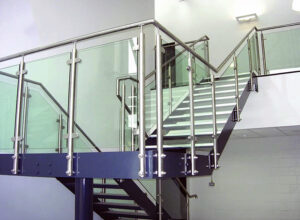
Cable tensioners are commonly used in deck and balcony railing systems to maintain cable alignment across horizontal runs. Cable length, post spacing, and terminal post conditions should be confirmed before ordering.
Stair Cable Railings
Stair cable railings may require multi-angle tensioners or angle-compatible fittings. Stair pitch, post layout, and cable direction should be reviewed together.
Commercial Cable Railing Systems
Commercial buildings, offices, public areas, and hospitality projects may use cable tensioners and turnbuckles for clean, repeatable cable railing installations with consistent finish and adjustment access.
Outdoor and Coastal Cable Railings
Outdoor, poolside, coastal, and humid environments require more attention to corrosion resistance, cleaning, and material grade. 316 or 316L stainless steel may be considered for more demanding exposure conditions.
Custom Cable Railing Assemblies
Custom projects may require specific tensioner lengths, thread details, end connections, multi-angle movement, or swageless assembly methods. Drawings and installation conditions help confirm the correct hardware.
Related Product Categories
- Cable Tensioner Systems
- Adjustable Cable Tensioners
- Heavy Duty Turnbuckles
- Multi-Angle Cable Tensioners
- Swageless Cable Tensioners
- Cable Hardware Fittings
- Cable End Fittings
- Through-Post Hardware
- Stainless Steel Posts
Frequently Asked Questions
What are cable tensioners used for?
Cable tensioners are used to adjust and maintain tension in stainless steel cable railing systems. They help keep cable lines aligned and reduce looseness across railing runs.
What is the difference between a cable tensioner and a turnbuckle?
A cable tensioner is any hardware used to adjust cable tension. A turnbuckle is a specific type of adjustable tensioning device. The right choice depends on cable diameter, post condition, visibility, adjustment range, and project layout.
When should adjustable cable tensioners be used?
Adjustable cable tensioners are useful when cable tension needs to be fine-tuned during installation or maintenance. They are commonly used near terminal posts or designated tensioning points.
When should heavy duty turnbuckles be considered?
Heavy duty turnbuckles may be considered for longer cable runs, commercial systems, outdoor railings, or projects requiring stronger visible tensioning hardware. Cable size, post strength, and run length should be reviewed together.
When are multi-angle cable tensioners useful?
Multi-angle cable tensioners are useful for stairs, angled cable runs, corners, and non-straight railing layouts where the cable direction does not meet the post at a simple straight angle.
What are swageless cable tensioners?
Swageless cable tensioners are designed to tension cable without traditional swaged terminal preparation. They can support on-site assembly when the cable diameter and installation method match the fitting design.
Can ESANG customize cable tensioners and turnbuckles?
Yes. ESANG can manufacture cable tensioners, adjustable tensioners, turnbuckles, multi-angle fittings, and swageless tensioners according to cable diameter, thread detail, material grade, finish, and project drawings.
Should I choose 304 or 316 stainless steel cable tensioners?
304 stainless steel is commonly used for interior and dry environments. 316 stainless steel is usually preferred for outdoor, coastal, poolside, humid, or higher-corrosion environments. The final grade should be selected according to project exposure and specification.
What information is needed for a cable tensioner inquiry?
Useful information includes cable diameter, cable layout, post type, post spacing, terminal condition, tensioner type, adjustment range, material grade, finish, quantity, drawings, and project environment.
How should stainless steel cable tensioners be maintained?
Routine cleaning normally uses mild detergent, clean water
Related Posts:
Pier and Dock Railing Layout: Posts, Infill, Access, and Mounting
Plan pier and dock runs around post locations, infill modules, corners, gates, access routes, substrate edges, and mounting responsibility.
Coastal Railing Exposure: Salt Air, Splash, and Cleaning Access
Separate airborne salt, direct splash, retained wetness, deposits, and cleaning access before choosing coastal railing materials and details.
Replacing Core-Mounted Posts With Surface Bases: Precheck
Check the existing opening, slab condition, edge geometry, drainage, and revised load path before converting an embedded post to a surface base.
Railing Post Base RFQ Checklist for Project Buyers
Request comparable base hardware, substrate inputs, finishes, drawings, anchor boundaries, samples, and inspection documents in one project RFQ.
Adjustable Railing Post Bases for Sloped or Uneven Surfaces
Compare adjustable bases against the actual slope, bearing surface, leveling range, finish interface, and fixing access before selecting a detail.
Railing Post Base Anchors: Inputs for Engineering Review
Define substrate, geometry, loads, exposure, and anchor evidence before engineering review so a hardware label is not mistaken for a connection design.
Esang's Projects

Esang's Certificate
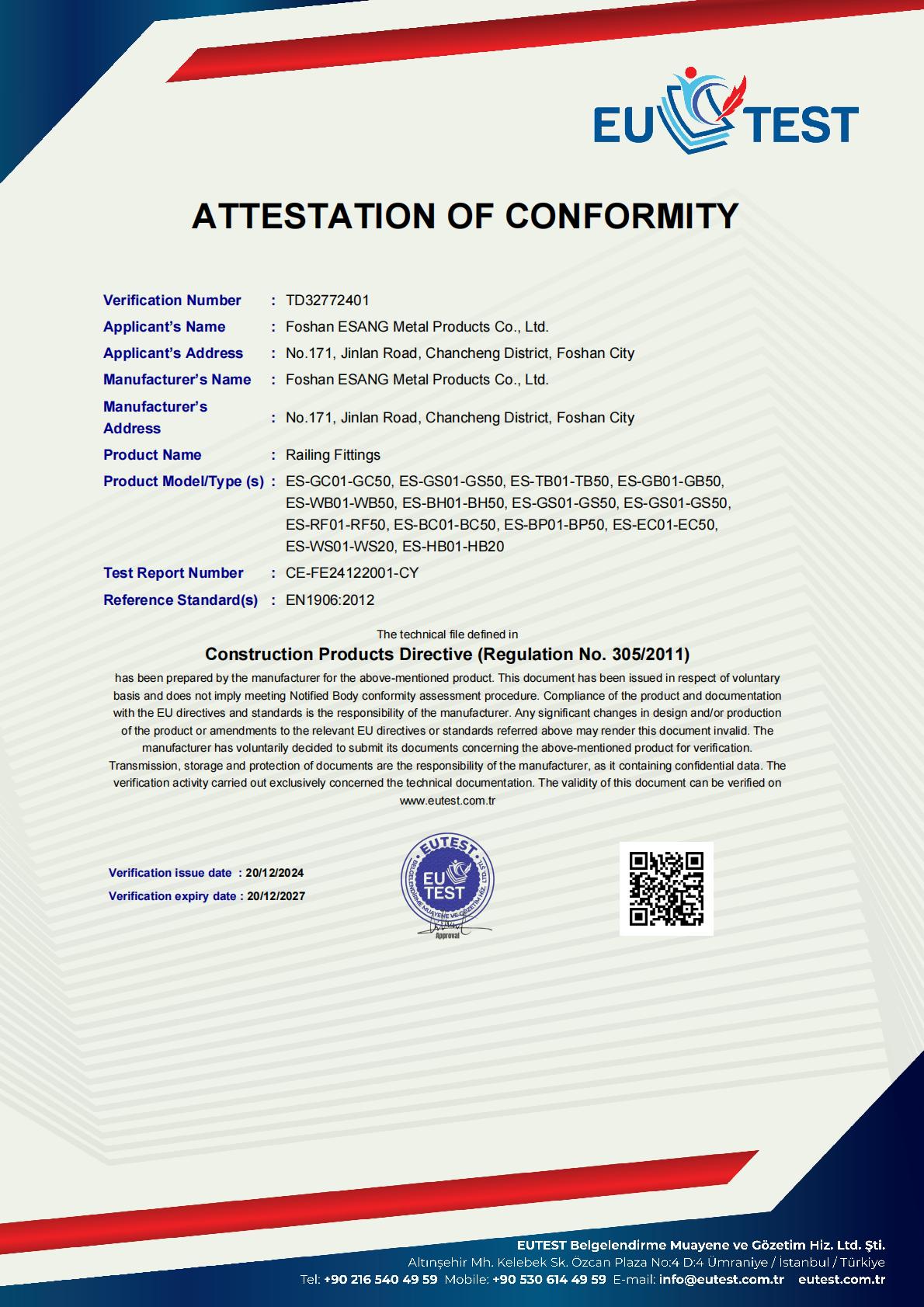
Foshan ESANG Metal Products proudly maintains CE certification (Verification No. TD32772401) under the Construction Products Directive (Regulation No. 305/2011), affirming our commitment to the highest European safety and quality standards.
Certified Product Range:
Our comprehensive railing fittings portfolio—including glass clamps, tensioners, brackets, wall mounts, base shoes, handrail fittings, cable hardware, and post components—meets EN1906:2012 standards, ensuring structural integrity and performance reliability across all installations.
What This Means for Your Project:
✓ Full regulatory compliance for European and international markets
✓ Independently verified safety and durability performance
✓ Documentation support for architectural specifications
✓ Peace of mind from third-party quality assurance
Certification valid through 2027 | Test Report: CE-FE24122001-CY
Esang's Projects

Reference Products