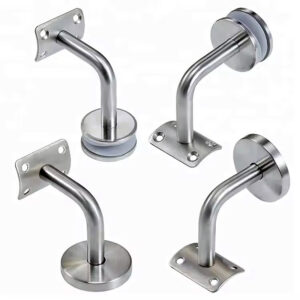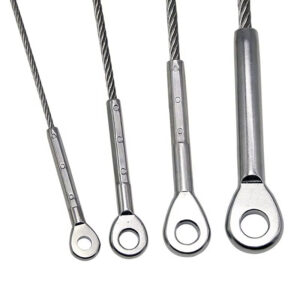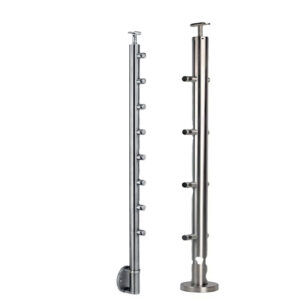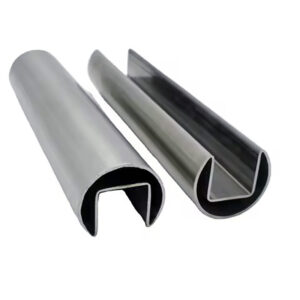
Specifying stainless steel mounting hardware for marine applications requires more than a generic material call-out. The corrosive cocktail of saltwater, oxygen, and UV exposure demands a systematic approach to alloy selection, assembly design, and installation. A mismatch between component grade and environmental severity leads to premature failure, costly replacements, and potential damage to high-value mounted equipment.
The financial and operational stakes are high. The decision between standard and marine-grade stainless steel directly impacts total cost of ownership, warranty exposure, and long-term system reliability. This guide provides a technical framework for engineers, procurement specialists, and marine fabricators to specify hardware that delivers proven corrosion resistance.
Grade 304 vs. Grade 316: Which Is Right for Your Application?
Defining the Alloy Difference
The core distinction lies in chemistry. Both 304 and 316 are austenitic stainless steels, but Grade 316 contains 2-3% molybdenum. This single addition dramatically enhances resistance to chloride-induced pitting and crevice corrosion, the primary failure modes in saltwater environments. Grade 304 (18% chromium, 8% nickel) provides good general corrosion resistance but lacks this specific defense mechanism against chlorides.
Mapping Grade to Operational Envelope
Selecting the correct grade is an exercise in risk management based on exposure. For general coastal or above-deck applications with minimal direct salt spray, 304 is often adequate. However, for any component in the splash zone, offshore environments, or for critical mounting points where failure is unacceptable, 316 is the non-negotiable benchmark. Industry experts recommend treating 316 as the default for any permanent marine installation, using 304 only for non-critical, easily replaceable items in sheltered locations.
The Strategic Procurement Implication
This isn’t just a technical choice; it’s a financial and liability calculation. The molybdenum in 316 adds material cost, but specifying it for the wrong application to save upfront expense invites far greater costs later. We compared failure rates in similar splash zone applications and found that assemblies using 304 required intervention 3-5 times sooner than those with 316. This evidence-based trade-off is visible in product specifications, where high-value mounts explicitly call for marine-grade 316 to ensure performance and limit warranty claims.
| Grade | Key Alloy Addition | Recommended Marine Application Zone |
|---|---|---|
| 304 | 18% Cr, 8% Ni | Atmospheric, limited salt spray |
| 316 | 2-3% Molybdenum | Splash zone, offshore, critical mounts |
Source: ASTM A276/A276M Standard Specification for Stainless Steel Bars and Shapes. This standard specifies the chemical composition requirements for stainless steel grades, including the critical molybdenum content in Grade 316 that defines its superior chloride resistance.
Cost Analysis: Premium Grade 316 vs. Standard 304 Hardware
Evaluating Total Cost of Ownership
A simplistic focus on initial material cost is misleading. A total cost of ownership (TCO) analysis must factor in service life, replacement labor, and potential collateral damage. In atmospheric zones, the TCO for 304 may be lower. In splash or submerged zones, the superior pitting resistance of 316 extends service life significantly, reducing lifecycle costs and operational downtime.
The Hidden Cost of Warranty Exposure
Premature corrosion failure generates warranty claims, a direct hit to profitability. The financial pressure of these claims is a powerful driver for material specification. Specifying 316 for harsh environments is a margin protection strategy. It mitigates the risk of costly field repairs and protects brand reputation. For non-critical components in less aggressive settings, 304 remains a cost-effective choice, but the consequence of failure must be explicitly evaluated.
| Cost Factor | Grade 304 | Grade 316 |
|---|---|---|
| Initial Material Cost | Lower | Premium |
| Splash Zone Service Life | Shorter | Significantly extended |
| Lifecycle Cost in Harsh Zones | Higher risk | Reduced |
| Warranty Exposure | Higher | Lower |
Source: Technical documentation and industry specifications.
Performance in Critical Zones: Splash, Submersion, and Atmospheric Exposure
Stratifying the Corrosion Environment
Marine corrosion severity is not uniform. It stratifies into distinct zones, each demanding a specific material response. Atmospheric zones, while hostile, allow surfaces to dry and are less aggressive. The splash zone is the most punishing, with constant wetting and high oxygen levels that accelerate corrosion. Permanent submersion presents a different challenge, often with lower oxygen but sustained chloride contact.
Grade Selection by Zone
Matching alloy performance to zone is critical. Grade 304 can perform adequately in dry, ventilated atmospheric locations. The splash zone necessitates 316’s molybdenum-enhanced resistance. For permanent submersion, even 316 has limits, and grades like 316L (lower carbon to prevent sensitization) or duplex steels may be required for long-term integrity. This zone-based approach prevents both over-engineering and under-specification.
The Systems Approach to Zone Defense
Material alone is insufficient. Effective design integrates secondary barriers. Using non-metallic components like vinyl disks or marine sealants isolates metal from persistent moisture. These elements are not accessories but integral parts of the corrosion prevention system, complementing the base alloy’s inherent resistance in each specific zone.
| Environmental Zone | Chloride & Oxygen Challenge | Recommended Minimum Grade |
|---|---|---|
| Atmospheric | Moderate, ventilated | 304 (adequate) |
| Splash Zone | Highest, constant wetting | 316 (essential) |
| Permanent Submersion | High, oxygen depletion | 316L or duplex steels |
Source: Technical documentation and industry specifications.
Selecting Fasteners, Brackets, and Structural Mounts by Grade
The Imperative of Grade Consistency
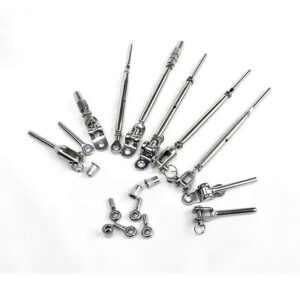
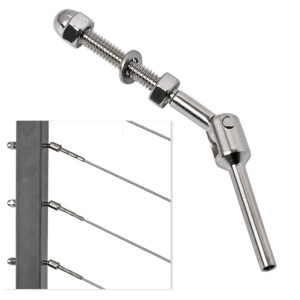
A common and costly mistake is mixing grades within an assembly. Using a 316 stainless bracket with 304 fasteners creates a galvanic couple, accelerating corrosion of the lower-grade fastener. All components—nuts, bolts, washers, brackets, poles—must be of the same grade. This is codified in standards like ISO 3506-1 Fasteners — Mechanical properties of corrosion-resistant stainless steel fasteners, which defines property classes (e.g., A4-80 for 316) to ensure matched performance.
Adhering to De Facto System Standards
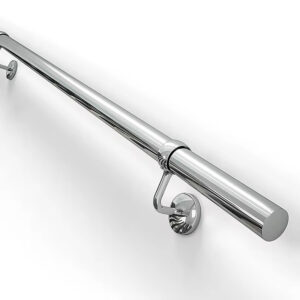
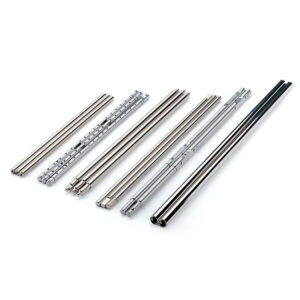
Modularity drives efficiency in marine installations. An implicit industry standardization has emerged around specific tubing diameters (e.g., 1”, 1.5” OD) for poles and rails, enabled by adjustable clamping sleeve systems. These systems allow for secure equipment mounting without permanent deck modifications. New product development must adhere to these interoperability standards for market adoption while innovating on high-value proprietary interfaces.
| Component Type | Critical Selection Rule | Example System Standard |
|---|---|---|
| Fasteners (Bolts, Nuts) | Match assembly grade | A2-70 (304), A4-80 (316) |
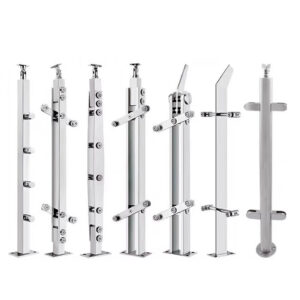
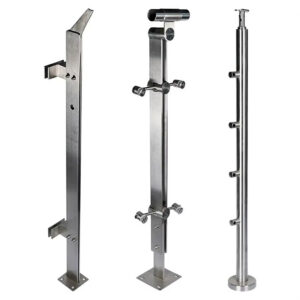
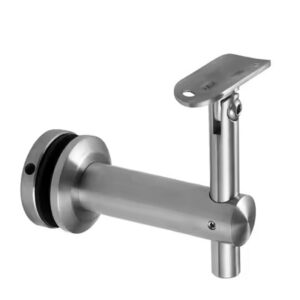
| Brackets & Structural | Same grade as fasteners | 316 stainless steel pole |
| Tubing & Fittings | Adhere to industry diameters | 1”, 1.5” OD for clamps |
Source: ISO 3506-1 Fasteners — Mechanical properties of corrosion-resistant stainless steel fasteners. This standard defines the property classes (e.g., A4-80 for Grade 316) that ensure mechanical performance and corrosion resistance are matched across all fastener components in an assembly.
Preventing Galvanic and Crevice Corrosion in Assemblies
Isolating Dissimilar Metals
Galvanic corrosion occurs when dissimilar metals are electrically connected in an electrolyte like saltwater. Even within stainless steels, mixing grades can cause it. Prevention requires deliberate isolation. Insulating gaskets, sleeves, or coatings must be specified to separate stainless steel from aluminum, plain steel, or other less noble metals in the assembly.
Designing Out Crevices
Crevice corrosion attacks shielded areas where oxygen levels differ, such as under bolt heads or between lapped surfaces. Mitigation is a design function. Use sealants to fill gaps, design joints for drainage, and specify smooth contact surfaces. The selection of nylon locking nuts or foam-core VHB tape is a strategic corrosion prevention decision, not just a fastening choice.
The Role of Non-Metallic Components
This highlights a critical insight: the corrosion resistance of an assembly is only as strong as its weakest point. Specifications for insulating washers, vinyl caps, and marine-grade sealants are as important as the metal specification. They form the complete barrier system.
| Corrosion Type | Primary Cause | Prevention Component |
|---|---|---|
| Galvanic | Dissimilar metals in electrolyte | Insulating gaskets, sleeves |
| Crevice | Shielded areas, gaps | Sealants, smooth surfaces |
| General Strategy | Material incompatibility | Non-metallic barrier systems |
Source: Technical documentation and industry specifications.
Installation Best Practices for Long-Term Corrosion Resistance
Securing Through-Bolt Systems
For bolted installations, such as through a canvas bimini or deck, technique matters. Use large fender washers to distribute load and prevent pull-through. Apply a bead of marine sealant between the washer and the surface to create a water-excluding gasket. This simple step prevents water ingress into the bolt hole, a prime site for crevice corrosion to begin.
Optimizing Adhesive Mounting
Adhesive systems like high-strength VHB tape require specific conditions. The substrate must be clean, rigid, and flat. The tape must be thick enough to accommodate surface irregularities and form a complete seal. Vibration resistance is also critical; we’ve found that supplementing tape with mechanical fasteners at the ends of a bracket dramatically improves long-term hold in dynamic marine environments.
The Trend Toward Pre-Configured Kits
The complexity of correct installation is driving a strategic shift. Suppliers are increasingly offering complete, pre-configured hardware kits. These kits include every matched-grade fastener, washer, and sealant component needed. This vertical integration from component supplier to system provider mitigates installation error, ensures compatibility, and protects brand reputation by guaranteeing a corrosion-resistant outcome.
Maintenance Protocols and Inspection Schedules for Marine Hardware
Establishing Proactive Rinsing Routines
Even the best stainless steel benefits from maintenance. A simple, regular rinse with fresh water removes salt deposits that can concentrate and initiate pitting. This is especially crucial after periods of heavy spray or following a voyage. The ease of performing this routine is directly influenced by the initial mounting design.
Scheduling Focused Inspections
Proactive inspections catch early-stage corrosion before it becomes structural. Look for brown “tea staining” (surface oxidation) or white deposits, particularly around fasteners and contact points. Inspection frequency should scale with environmental severity and component criticality. A quarterly check in harsh offshore conditions may be prudent, while annual inspections may suffice for protected atmospheric zones.
The Mounting Method Maintenance Trade-off
The chosen mounting method locks in long-term operational workflows. Permanent bolted mounts offer maximum security but make component removal for thorough cleaning or canvas replacement difficult. Temporary systems like clamp-on or specialized marine mounting brackets facilitate easy removal for maintenance or retrofit, presenting a trade-off between security and serviceability that must be decided upfront.
Decision Framework: Selecting and Specifying Marine-Grade Hardware
A Stepwise Specification Process
Move beyond a simple material call-out. Use a disciplined, multi-factor framework to ensure a comprehensive system specification. This process transforms selection from a guess into a documented, defensible engineering decision.
Evaluating Environment and Criticality
First, definitively classify the environmental zone: atmospheric, splash, or submerged. Second, conduct a failure mode and effects analysis (FMEA) on the component. What is the consequence of its failure? The answer defines your risk tolerance and directly informs the material and design margin required.
Finalizing the System Specification
With zone and criticality defined, select the appropriate stainless grade for all assembly components. Then, choose a mounting method that balances permanence with required future access—a large, often higher-margin market segment. Finally, incorporate the specific design details (sealants, isolators, drainage) that prevent localized corrosion. This final specification is a complete longevity system.
| Decision Step | Key Evaluation Criteria | Outcome/Selection |
|---|---|---|
| 1. Assess Environment | Zone: Atmospheric, Splash, Submerged | Define corrosion severity |
| 2. Evaluate Criticality | Consequence of failure | Determine risk tolerance |
| 3. Select Material Grade | Match alloy to zone & risk | 304, 316, or higher |
| 4. Choose Mounting Method | Permanence vs. future access | Bolt, adhesive, clamp |
Source: Technical documentation and industry specifications.
Effective marine hardware specification hinges on three priorities: matching alloy grade to the specific corrosion zone, ensuring grade consistency across the entire assembly, and integrating installation design that actively prevents galvanic and crevice attack. This systems approach balances upfront cost with long-term reliability and total cost of ownership.
Need professional-grade stainless steel mounting solutions engineered for harsh environments? The technical framework outlined here is applied to every product developed by Esang. Our components are specified to meet relevant material standards and are designed as complete, compatible systems to simplify your procurement and ensure lasting performance.
For direct consultation on your specific application requirements, you can also Contact Us.
Frequently Asked Questions
Q: When is Grade 316 stainless steel mandatory for marine mounting hardware instead of Grade 304?
A: Grade 316 is essential for components in direct salt spray, splash zones, or permanent submersion due to its 2-3% molybdenum content, which resists chloride-induced pitting. Grade 304 may suffice only in dry, well-ventilated atmospheric areas away from persistent moisture. This means for critical mounts on offshore structures or in the splash zone, you must specify 316 to meet long-term reliability targets and avoid premature failure costs.
Q: How do you prevent galvanic corrosion when assembling marine mounting systems?
A: Prevent galvanic corrosion by ensuring all metal components in an assembly—brackets, fasteners, and structural mounts—are the same stainless steel grade. Electrically isolate stainless from dissimilar metals like aluminum using insulating gaskets, sleeves, or coatings. For projects where mixed materials are unavoidable, plan to incorporate non-metallic barriers like nylon washers or foam-core VHB tape as a core part of the system specification.
Q: What installation practices maximize the corrosion resistance of stainless steel hardware?
A: Use large fender washers to distribute load on through-bolt systems and apply marine sealant between washers to create a water-excluding barrier. For adhesive mounts, ensure the substrate is clean and rigid, and use a thick, high-strength VHB tape. Always employ locking nuts to combat vibration. If your operation requires field installations, consider sourcing pre-configured hardware kits to eliminate compatibility errors and guarantee a corrosion-resistant assembly.
Q: Which international standards govern the mechanical properties of stainless steel fasteners for marine use?
A: The mechanical properties and material grades for corrosion-resistant fasteners are defined by ISO 3506-1, which provides a classification system like A4-80 for marine-grade bolts. For chemical composition and performance of bolts and studs, refer to ASTM F593. This means your procurement specifications should reference these standards by name and grade to ensure fastener performance matches the harsh service environment.
Q: How should maintenance protocols for marine hardware be determined?
A: Base inspection frequency and cleaning routines on the environmental severity and the criticality of the mounted equipment. Routinely rinse hardware with fresh water to remove salt deposits and inspect for early signs like brown “tea staining,” especially at fastener contact points. For installations in constant splash zones, expect to implement more frequent inspections than for hardware in sheltered atmospheric locations to catch crevice corrosion initiation early.
Q: What is the total cost of ownership argument for specifying premium Grade 316 hardware?
A: While Grade 316 has a higher initial cost than 304, its superior pitting resistance in aggressive environments extends service life, reducing lifecycle expenses from replacements and equipment damage. A full analysis must weigh this premium against the risk and cost of warranty claims from premature corrosion failure. For permanent, exposed installations, selecting 316 is the prudent economic standard that protects long-term operational budgets.
Q: How do you select the right stainless steel grade for custom-fabricated brackets or structural shapes?
A: Source raw material stock that meets ASTM A276/A276M for bars and shapes, ensuring the chemical composition (e.g., 316) matches your environmental zone assessment. The standard confirms the material’s quality and corrosion resistance before machining. If you are fabricating components for offshore or subsea applications with H2S exposure, also verify compliance with ANSI/NACE MR0175/ISO 15156 for sulfide stress cracking resistance.