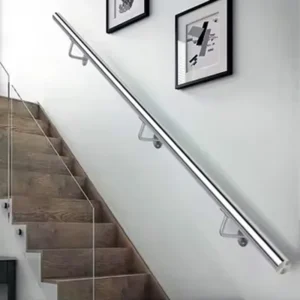
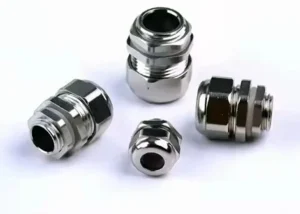
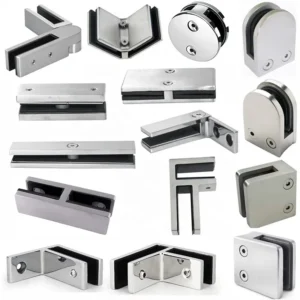
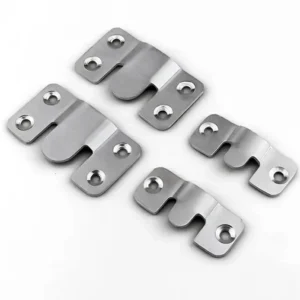
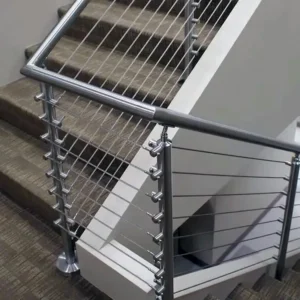
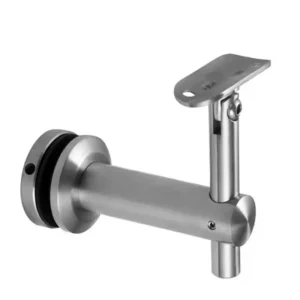
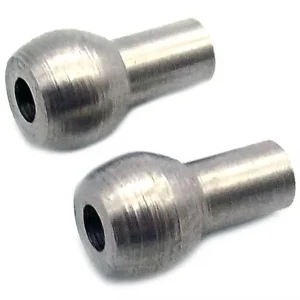
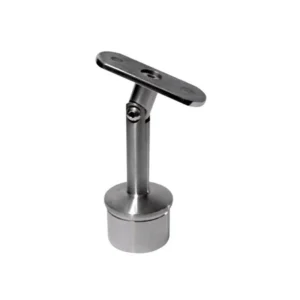
ADA compliance is an installed-project condition, not a label that can be assigned to a loose handrail or bracket. The route, height, gripping profile, clearance, continuity, extensions, fittings, wall conditions and surrounding circulation must all be coordinated. ESANG can review a request for interior handrail components against the dimensions and conditions you provide, but the project team and authority having jurisdiction must confirm the governing requirements and the completed installation.
Request an Accessible Handrail Review
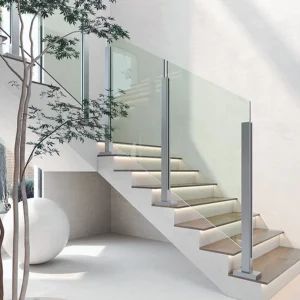
Separate handrails from guards
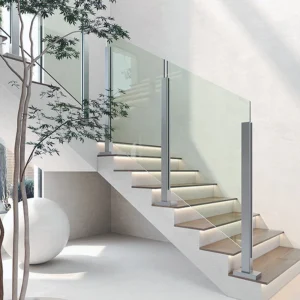
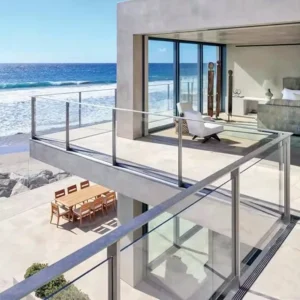
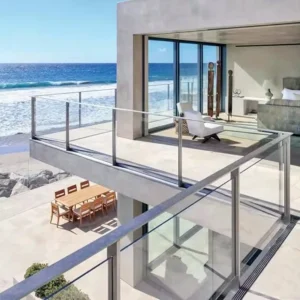
A guard protects an open edge. A handrail provides a continuous graspable surface along a stair, ramp or walking surface where required. A guard top, glass cap or wide decorative rail is not automatically a compliant handrail. A handrail may be mounted to a wall or attached to a guard only when the resulting route and all applicable dimensions and clearances are satisfied.
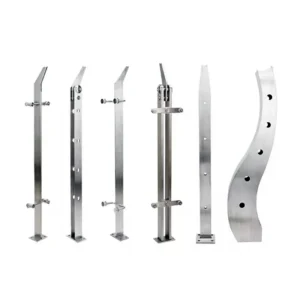
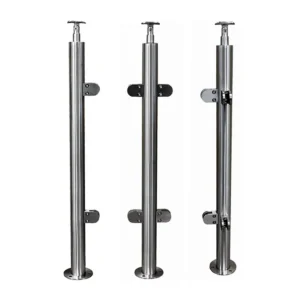
This distinction affects the quotation. A wall-handrail request needs rail, brackets, returns, connections and verified backing. A stair or ramp package may also need posts, guard infill, separate handrail brackets and transitions, but the guard system and the handrail route should remain identifiable in the drawings.
Use the official criteria as a design checklist
The U.S. Access Board’s published 2010 ADA Standards, Section 505, provides the following handrail criteria for covered stairs, ramps and walking surfaces. Confirm the applicable standard and any local building-code requirements for the actual project.
| Section 505 item | Published ADA criterion | What the buyer should show |
|---|---|---|
| Where required | Handrails are provided on both sides of stairs and ramps, subject to stated exceptions | Both routes on plan and every exception being relied on |
| Continuity | Continuous for the full length of each stair flight or ramp run; inside rails at switchback or dogleg routes are continuous between flights or runs | Start, stop, landing and inside-turn geometry |
| Height | Top of gripping surface 34–38 in (865–965 mm) above walking surfaces, stair nosings and ramp surfaces, at a consistent height | Dimensioned rail centerline and reference surface |
| Wall clearance | 1½ in (38 mm) minimum between gripping surface and adjacent surface | Finished wall build-up, bracket projection and nearby trim |
| Circular gripping surface | 1¼–2 in (32–51 mm) outside diameter | Requested rail outside diameter and fittings |
| Non-circular gripping surface | 4–6¼ in (100–160 mm) perimeter and 2¼ in (57 mm) maximum cross-section dimension | Profile drawing with rounded edges and dimensions |
| Surface and fittings | No sharp or abrasive elements; rounded edges; rail must not rotate within fittings | Joint, bracket, return and fitting details |
| Extensions | Extensions and returns differ for ramps, stair tops and stair bottoms, with listed exceptions | Dimensioned end conditions rather than a generic return symbol |
Source: U.S. Access Board, ADA Accessibility Standards, Chapter 5 and Section 505. This official reference is a starting point for U.S. ADA criteria; it does not determine which other codes, editions or local amendments govern a specific project.

Select the route before selecting brackets
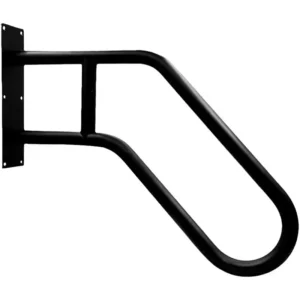
Wall-mounted corridor or walking-surface handrail
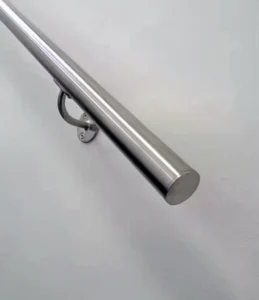
Confirm the required route, finished wall surface, backing, bracket locations, door and casework conflicts, protrusions, end returns and changes in level. A bracket can meet a nominal projection yet still lose required clearance after wall protection, trim or acoustic panels are installed.
Stair handrail
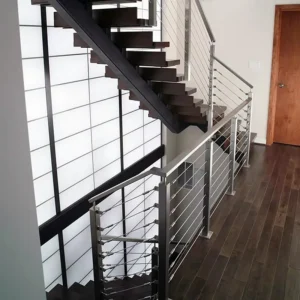
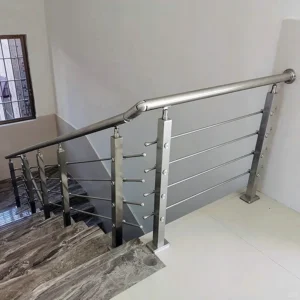
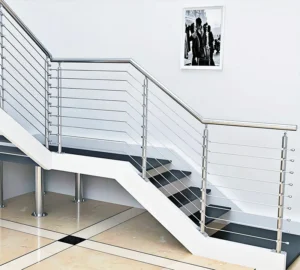
Show every flight, landing, inside turn, top extension, bottom extension and return. A sloped rail must transition to level or returned sections without interrupting the graspable route. If a separate guard is present, coordinate its top, infill and posts so they do not obstruct the handrail.
Ramp handrail
Ramp rails require their own run and extension layout. Identify landings, direction changes, edge protection, wall or guard mounting and the path around doors. Do not transfer a stair-end detail onto a ramp without checking the applicable extension condition.
Handrail attached to a guard
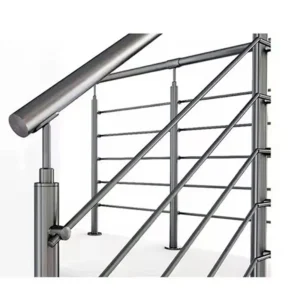
This route can keep the handrail and guard visually connected, but it adds bracket, clearance and post-spacing coordination. The guard structure and handrail gripping route must each be checked for their separate responsibilities.
Coordinate the parts that determine the installed result
- Gripping rail: profile, actual outside dimensions, finish, joint locations and any changes in shape.
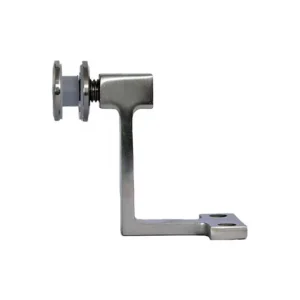
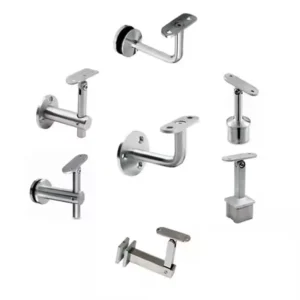
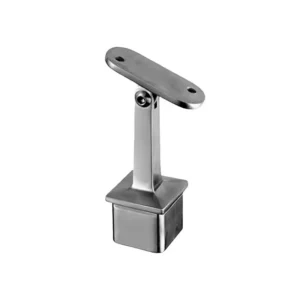
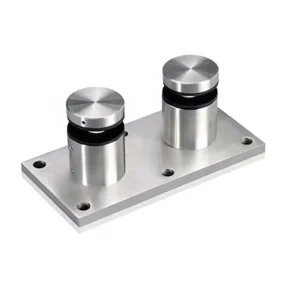
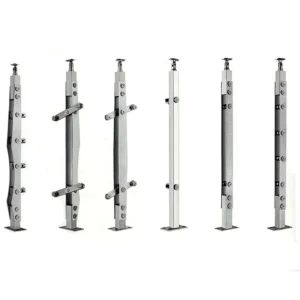
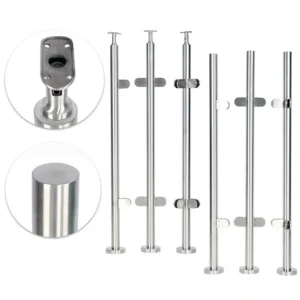
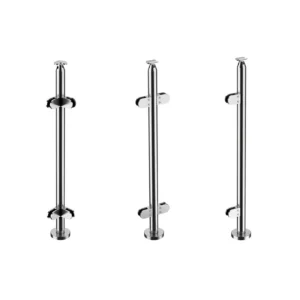
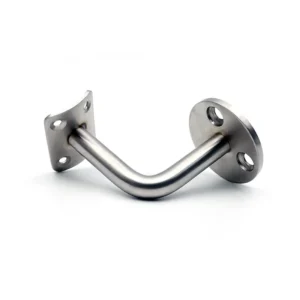
- Brackets and supports: clearances, support surface, fasteners, exposed projections and compatibility with wall or guard geometry.
- Returns and extensions: direction, length basis, termination surface and conflicts with circulation or doors.
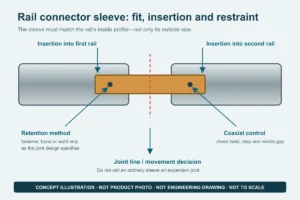
- Connections: splice location, anti-rotation approach, field assembly and access for tightening or inspection.
- Substrate: wall backing, concrete, steel, timber or other verified support; finishes alone do not define the anchor.
- Adjacent work: wall protection, trim, signs, glazing, guard infill, door maneuvering zones and floor or stair finishes.
The project’s responsible design professional must verify the substrate, anchors, complete rail support and all governing structural criteria. A gripping profile that meets Section 505 dimensions does not by itself establish the capacity or compliance of the complete installed system.
Material and finish still need an exposure review
304 stainless can be requested for dry, conditioned interiors. Indoor pool atmospheres, chloride-containing cleaners, food-service chemicals, coastal salt and other aggressive conditions may justify a different grade or finish review; published stainless-steel guidance notes that 316 has better corrosion resistance than 304 in chloride environments.
For a grasped surface, also define texture, edge treatment, weld blending and cleanability. The ADA criteria require surfaces and adjacent areas to be free of sharp or abrasive elements. Do not infer this from a finish name alone; approve the proposed profile and fittings as a complete route.
What an accessible handrail quotation should state
Ask the proposed supply to identify:
- rail profile and actual dimensions;
- material grade and finish by component;
- bracket type, proposed spacing basis and mounting surface;
- straight, sloped, corner, splice, return and extension components;
- field-cutting, field-joining or welding requirements;
- fasteners, anchors and backing included or excluded;
- dimensions held for field verification;
- requested documents, samples, testing or engineering deliverables;
- packing units, labeling and any spare components.
A supplier quotation can state that a proposed configuration is intended to address defined Section 505 criteria. Final compliance should not be promised until the actual drawings, governing rules, substrates, installation and field conditions have been reviewed by the responsible parties.
What to send for an initial review
Send the destination jurisdiction, facility type, required standard or code edition, stair/ramp/walking-surface plans, route lengths, height and profile criteria, wall or guard mounting conditions, photos of existing conditions, finish direction and estimated quantity. If some measurements are not final, mark them as provisional rather than delaying the first configuration discussion.
Before order release, provide dimensioned end conditions and confirm wall backing or other supporting structure. This is especially important in renovations, where finishes can hide gaps, weak backing or obstacles that are not visible in a plan.
Accessibility questions to resolve early
Does a 1½-inch wall gap make the full installation compliant?
No. Clearance is one criterion. Height, continuity, gripping profile, obstructions, surfaces, fittings, extensions, mounting and the surrounding circulation also matter.
Can a decorative square rail be used?
A non-circular profile may qualify when its perimeter, maximum cross-section dimension, rounded edges and other Section 505 conditions are satisfied. Request the actual profile drawing instead of relying on the word “square.”
Can the rail stop at the last bracket?
Do not assume so. Stair and ramp extensions and returns have specific route-dependent criteria and exceptions. Show the full end geometry for review.
Does ESANG certify the completed project as ADA compliant?
This page does not provide that certification. ESANG can quote components against stated criteria; the governing authority and responsible project team must confirm the complete installed work.