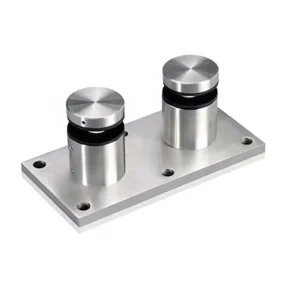
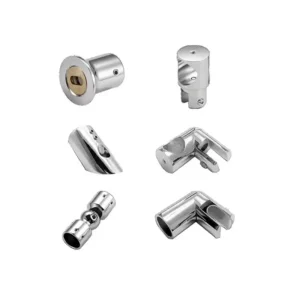
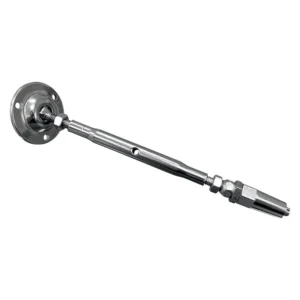
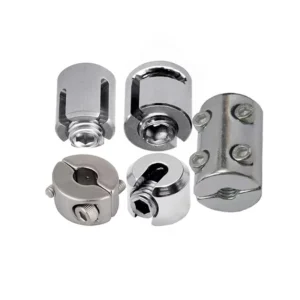
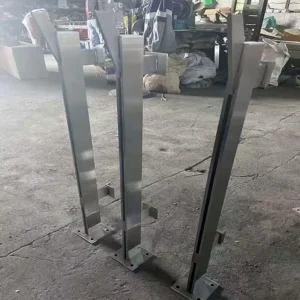
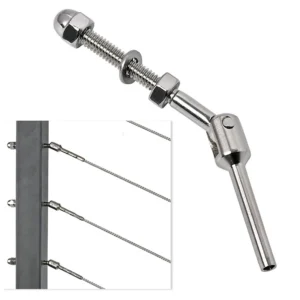
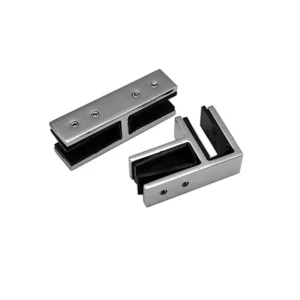
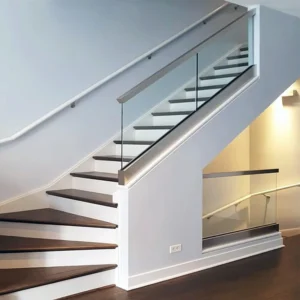
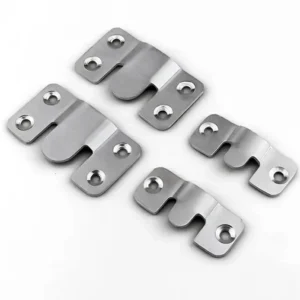
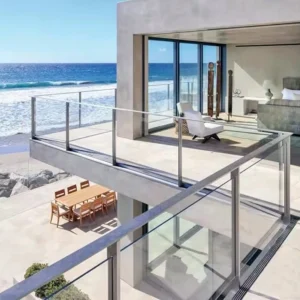
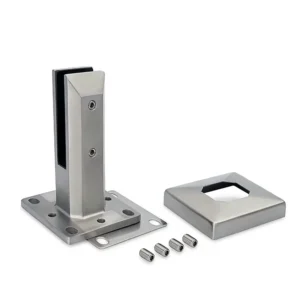
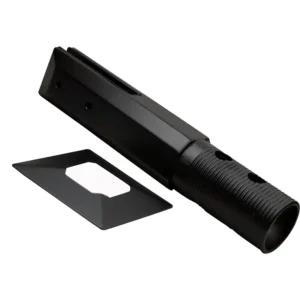
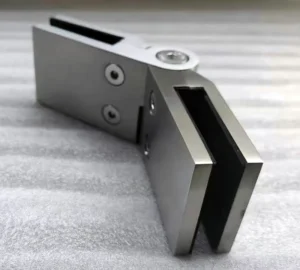
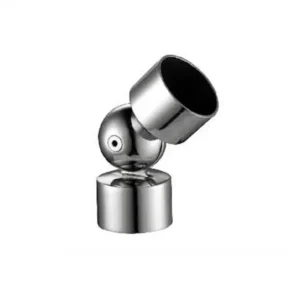
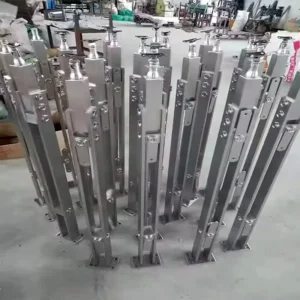
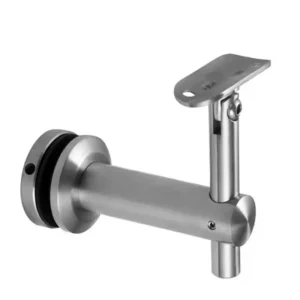
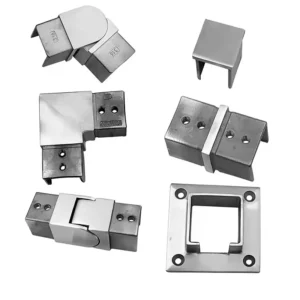
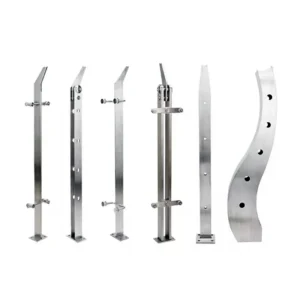
Wall-to-glass connectors transfer a panel connection to a wall or wall-mounted backing. They are different from post-to-glass adapters, which must match a post section, and from general glass mounting adapters, which may use a point spacer or another receiving structure. Here the wall condition is part of the product decision: a suitable glass-side clamp is not enough if the wall plate, anchor position or installation access is wrong.
Begin with a wall section or site photo, glass build-up, required panel line and estimated quantity. ESANG can use that information to propose a connector configuration and list the remaining project checks.
Discuss wall-to-glass connectors on WhatsApp
Decide how the connector meets the glass
Edge-clamped connection
A clamp-style connector grips a protected glass edge and can avoid a hole at that specific fixing. It must be paired with the correct insert for the complete glass build-up. Confirm whether the connector is intended to locate the panel, restrain it laterally or participate in a designed guard system; similar-looking clamps can have different duties.
Through-glass connection
A through-glass connector uses a prepared hole and a protected bolt or point-fitting stack. The hole diameter, centre, edge distance, any countersink, and the sleeve or washer arrangement belong on the coordinated glass drawing. Heat-treated glass cannot be treated as something that can be safely drilled after delivery.
Edge, corner and return geometry
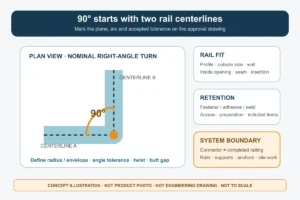
The connector angle must place the glass in the intended plane while preserving the specified gap to the wall. A nominal 90-degree body does not resolve an out-of-plumb wall, a sloping stair line or a return panel. Provide plan and elevation views when the panel is not square to the mounting face.

The wall side needs its own specification
“Wall” can mean reinforced concrete, masonry, steel framing, timber framing, a finished partition or a structural insert concealed behind finishes. These conditions do not accept the same anchors or loads. Send the build-up and identify the actual structural backing rather than relying on the visible surface material.
- Mounting face: record flatness, slope and the required glass centreline from the finished wall.
- Backing: identify the structural material, thickness and any embedded plate or blocking.
- Anchor zone: show edge distances, joints, services and restricted drilling areas.
- Finish build-up: state tile, stone, board, waterproofing or cladding thickness so the connector does not bear on an unsuitable finish.
- Access: confirm whether the rear side is open, concealed or permanently inaccessible.
The project engineer or anchor designer must select and verify the anchor for the actual substrate and imposed actions. A connector photo or nominal wall-plate size cannot establish the adequacy of the wall, anchor or completed glass system.

Freeze the gap, reach and adjustment strategy
Wall-to-glass hardware sets the relationship between the finished wall and the panel edge. Confirm the stand-off or clear gap, connector reach, panel centreline and any allowed adjustment direction. Too little reach can pull the glass into the wall finish; too much can create unwanted eccentricity or leave the connector outside its intended engagement.
Do not assume field adjustment can cure a wrong hole location or missing backing. If adjustment is required, request that the proposed direction and range be stated in the quotation and shown on the approval drawing. The installer also needs a measurable reference for the final glass line.
Protect the glass and preserve service access
The supplied glass-contact set may include pads, sleeves, gaskets or setting pieces. It must match the glass build-up and connection route. Metal-to-glass contact, missing sleeves or improvised packers can create concentrated stress; excessive tightening can damage pads or laminate edges.
Check the tightening side before fabrication. A connector may require access from the room side, the glass side or both. Corner panels, adjacent finishes and ceiling or floor clearances can block the tool path. Also confirm whether the glass can be removed later without opening the wall or dismantling an adjacent panel.
Exposure and water management
For exterior, pool, coastal or chemical-cleaning conditions, send the exposure description and adjacent materials. Request the proposed connector material, finish, pad material and maintenance assumptions in the quotation. If the wall penetration is exposed to water, the waterproofing and sealant detail must be coordinated by the responsible building-envelope parties; a connector or gasket should not be assumed to waterproof the wall.
What the supply should state
A clear offer separates the component package from site and engineering responsibilities:
- connector body, cover plates and stated finish;
- matched glass pads, sleeves or gaskets;
- connector screws or glass-side bolts, if included;
- wall anchors, backing plates or templates, only when explicitly listed;
- glass, drilling, wall preparation, waterproofing and installation, only when explicitly included;
- complete-system calculations, testing or approval documents, only when the exact scope and configuration are stated.
If anchors are not part of the offer, the quotation should still give the wall-plate hole pattern and the proposed fastener interface so the project team can complete the anchor design. If the connection is intended for a guard or other safety-critical assembly, provide the project actions and required evidence before treating any component as approved.
Information for a useful quotation
Send what is available now; unknown fields can be closed before production:
- application and whether the panel is a guard, partition, screen or another use;
- glass type, laminated ply build-up, overall thickness, edge finish and hole plan;
- finished wall build-up and the actual structural backing;
- panel orientation, connector count, locations and required glass-to-wall gap;
- clamp or through-glass preference and any prohibited glass fabrication;
- anchor access, tool access and future glass-removal route;
- environment, nearby chemicals, water exposure and adjacent metals;
- quantity, finish preference and documentation requirements.
The quotation should return the proposed connector geometry, glass match, included protective parts and fasteners, wall-plate pattern, proposed material/finish, exclusions, and open engineering assumptions. This prevents a visually similar connector from being mistaken for a universal replacement.