A railing hardware order that arrives with a single mill test certificate for the tube package — and nothing traceable for the brackets or fasteners — looks complete on delivery day and becomes a problem at project audit. The gap between what was documented and what was shipped often only surfaces when an inspector or importer quality reviewer attempts to match the certificate’s heat number against the component list, and cannot. At that stage, the resolution options narrow quickly: request a letter of conformance from the fabricator, initiate a material reconciliation, or accept the risk of a documentation rejection that delays installation acceptance. The decisions that prevent this outcome are made earlier, at specification and procurement, by defining the documentation scope to match every component type in the shipment — not just the primary tube order.
Mill test certificate scope for tubes, brackets, and fasteners
Treating material certificates as a single-document requirement is the most common structural mistake in railing hardware procurement. A typical handrail package includes tubes, wall brackets, post bases, and fasteners — components that frequently come from different raw material batches, different processing runs, and sometimes different sub-suppliers. Each batch is a separate traceability unit. One certificate for the tube order does not cover a bracket fabricated from a different coil or a fastener supplied by a third party, even if all components carry the same nominal grade.
The practical specification baseline is EN 10204 Type 3.1 or Type 3.2 for all stainless steel components in the package. EN 10204:2004 defines inspection document types for metallic products and establishes the difference between a manufacturer’s declaration (Type 2.2), an authorized inspection certificate (Type 3.1), and a third-party witnessed certificate (Type 3.2). For project work where material traceability is likely to be reviewed — import compliance, commercial construction, or specification-driven procurement — Type 3.1 should be treated as the minimum, not as a premium documentation option.
The scope of that requirement needs to be written into the purchase order or specification for each component group. Assuming that a supplier will extend tube-level documentation to fabricated brackets or hardware fittings without an explicit requirement is an assumption that frequently goes unmet. If the order does not name fasteners, the fasteners often arrive without formal certificates at all.
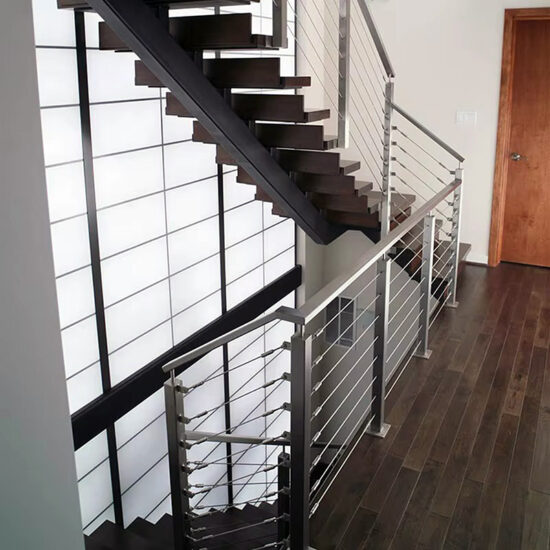
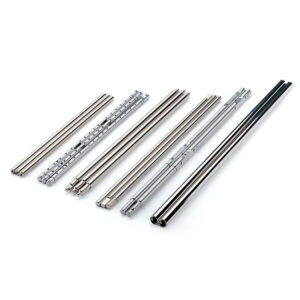
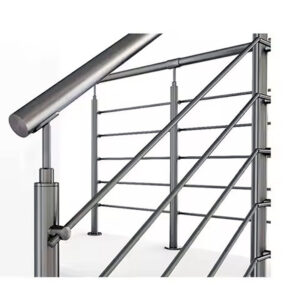
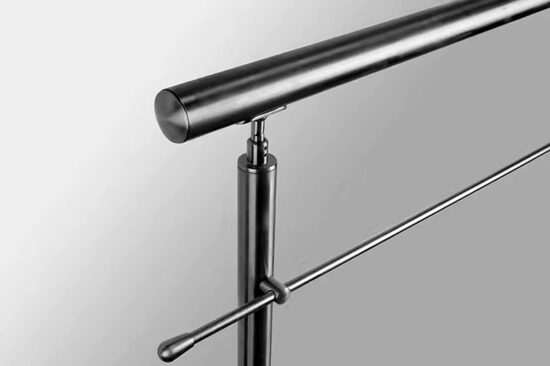
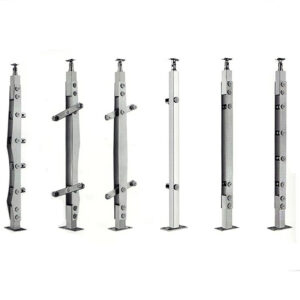
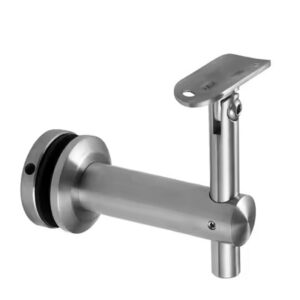
For projects specifying systèmes de mains courantes en tube rond, confirming that the documentation scope covers not only the tube but every co-shipped component reduces the reconciliation burden significantly at the point of delivery.
Heat number and grade traceability across railing components
The certificate itself is only the starting point. What makes a certificate usable for traceability is whether its heat number can be followed from the document through to the physical shipment — on the delivery note, waybill, and invoice. Without that cross-document linkage, a certificate that correctly states the grade and chemistry has no confirmed connection to the parts that arrived on the pallet.
The required certificate fields for this linkage to work include the manufacturer’s name, stainless grade, applicable specification, surface finish, dimensional data, and full mechanical and chemical properties — all indexed to a specific heat number. That heat number must then appear on the accompanying shipping documents. The table below maps each traceability element to where it must appear and why the cross-document match matters.
| Traceability Element | Documentation Where It Must Appear | Purpose / Verification |
|---|---|---|
| Full heat number, grade, manufacturer, specification, finish, dimensions, mechanical and chemical properties | Test certificate (EN 10204 Type 3.1 or 3.2) | Confirm batch identity and material properties for the exact components supplied |
| Heat number | Delivery note, waybill, invoice | Cross-link the certificate to the physical shipment and batch |
| When MTC cannot be issued (e.g., polished finish, size, manufactured product) | Letter of conformance or compliance from the fabricator or raw material supplier | Fallback traceability when direct material testing is not possible |
The fallback when an MTC cannot be issued — typically because the component has been polished, fabricated, or processed in a way that prevents post-production material testing — is a letter of conformance or compliance from the fabricator or raw material supplier. This matters: a letter of conformance is not a procedurally equivalent substitute for an MTC. It is a weaker document that depends on the fabricator’s ability to trace back to the original raw material source. Some inspectors will accept it when supported by the underlying raw material certificates from the original supplier; others will not. Treating conformance letters as a clean alternative rather than a constrained fallback creates exposure that is not apparent until the inspector reviews the documentation package.
ASTM and ISO document alignment for mixed hardware packages
When a handrail package mixes tubular products and fasteners sourced from suppliers working under different standards frameworks, the documentation formats do not automatically align. A tube supplier working to ASTM A554 and a fastener supplier issuing manufacturer’s test certificates may both supply valid documentation, but the certificate types, field structures, and specification references will differ. Reconciling that package into a coherent traceability record is an active step, not something that happens by default.
For tubular handrail products, conformance to ASTM A554 is a common specification reference, with dimensional tolerances handled under ASTM A450/A450M or ISO 1127 D3T3 depending on the supplier’s production context. The inspection documents for these components should still be issued in EN 10204 Type 3.1 or 3.2 format — the standards address what is tested, while EN 10204 addresses what is certified and how. These are not interchangeable functions.
| Component Group | Applicable Standards | Documentation Required |
|---|---|---|
| Tubular handrail products (tubes, brackets) | ASTM A554/03; dimensional tolerances per ASTM A450/A450M-02 or ISO 1127 D3T3 | EN 10204 Type 3.1 or 3.2 test certificate |
| Screws, bolts, nuts | Same or higher stainless steel grade as the railing system | Manufacturer’s test certificate showing grade, size, mechanical and chemical properties |
The practical consequence of a mixed-standard package is that the project team must confirm each certificate covers the correct component type under the correct specification reference — not just that documentation was provided. A fastener certificate that lists a grade but omits mechanical properties, or a tube certificate that references a dimensional standard not called out in the project specification, may be technically issued but functionally incomplete. That gap is worth catching before the goods reach the fabricator, not after.
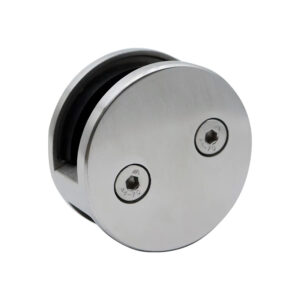
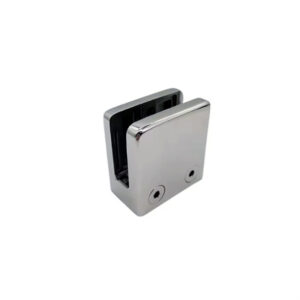
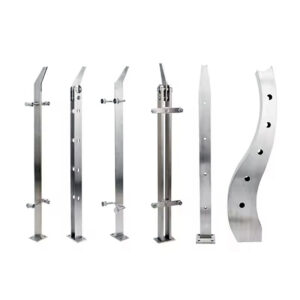
Pour plaques de base pour montage en surface and similar post hardware supplied alongside tube packages, confirming that fabricated components carry their own traceable documentation — separate from the tube MTC — prevents the most common component-level gap in mixed hardware deliveries.
For further context on how these standards interact with material test report requirements across different hardware categories, the MTR requirements article addresses documentation scope in more detail.
Inspection risk when MTCs do not match shipped parts
When a certificate cannot be matched to the shipped material — because the heat number differs, the grade listed does not correspond to what the order specified, or the component type is not covered — the inspector’s response involves judgment, not a fixed protocol. What is consistent across scenarios is the exposure created by the gap: the documentation package becomes contested, and the resolution path adds time and friction to the acceptance process.
The two most common triggers for a mismatch are shipping substitutions, where a batch is changed after the certificate was issued, and insufficient documentation scope, where the certificate covers the tube material but no traceable document accompanies the brackets or fasteners. The first is a supply chain control issue; the second is a specification gap. Both produce the same result at audit: a certificate that exists but cannot be matched to what was delivered.
| Scénario | Inspector Action | Conséquence |
|---|---|---|
| Test certificate not available | Inspector may request a letter of conformance or compliance | Documentation may be rejected if fallback is not provided |
| Test certificate does not match the supplied material (grade, heat number, component list) | Inspector may require reconciliation or a letter of compliance | Risk of rejection during project audit or importer quality review |
The secondary risk in this scenario is the letter of conformance path. When a fabricator issues a conformance letter to resolve a documentation gap after delivery, that letter is retrospective. Its credibility depends on the fabricator’s ability to trace the material back through their own production records to a raw material source. If the fabricator cannot produce that supporting raw material documentation, the conformance letter may not satisfy the inspector or importer quality reviewer. The downstream consequence — a hold on installation acceptance or a rejected documentation package — is the same as if no fallback had been offered.
Documentation acceptance after traceability and component list are reconciled
Acceptance of a material documentation package is not a formality that follows delivery. It is a verification step that should occur before the goods reach the fabricator, while the shipment is still physically accessible and while any documentation gaps can be resolved with the supplier. Once fabrication begins, the ability to quarantine, return, or re-document specific components becomes significantly harder.
The reconciliation involves three distinct checks: confirming that the certificate identity matches the order — manufacturer name, grade, and specification — that the heat number on the certificate appears on the delivery note, waybill, or invoice, and that every component type in the shipment is covered by a traceable certificate or documented fallback. A package that passes two of three checks is not a complete package.
| Reconciliation Item | Ce qu'il faut vérifier | Pourquoi c'est important |
|---|---|---|
| Certificate identity | Manufacturer name, grade, specification match the order | Ensures the documentation corresponds to the supplied materials |
| Heat number traceability | Heat number on the certificate matches the delivery note, waybill, or invoice | Confirms material batch linkage to the shipment |
| Supplied component list | All railing components (tubes, brackets, fasteners) are listed and covered | Avoids omissions that could lead to documentation rejection |
The timing implication is worth stating directly: reconciliation must be built into the procurement timeline as a delivery-point activity, not a post-fabrication administrative task. Teams that treat certificate collection as something to finalize after installation is underway consistently find that the components they need to trace have already been cut, finished, or installed — and that the documentation gaps they discover cannot be resolved without production records from the original supplier. That resolution path is slower, less certain, and usually avoidable.
For teams navigating supplier selection and documentation standards in parallel, the Guide de conformité aux normes ASTM et ISO covers verification requirements across hardware categories in more detail.
The acceptance decision for a stainless steel railing documentation package is made when the certificate identity, heat number, and component list can be matched against what was actually shipped — not when the order is placed or when the goods arrive on site. That reconciliation step is the controlling checkpoint, and its reliability depends on documentation requirements being defined at specification stage to cover every component group, not just the primary tube package.
Before accepting any mixed hardware delivery, confirm that tubes, brackets, and fasteners each carry traceable documentation, that heat numbers appear on the shipping documents accompanying each batch, and that any conformance letters are supported by underlying raw material records from the original supplier. If those three conditions cannot be satisfied before fabrication begins, the exposure does not disappear — it transfers to a later stage where the resolution options are narrower and the project timeline is already under pressure.
Questions fréquemment posées
Q: What documentation is required when tubes, brackets, and fasteners come from different suppliers within the same order?
A: Each component batch requires its own traceable certificate — a single MTC covering the tube package does not extend to brackets or fasteners sourced from different production runs or sub-suppliers. Write the EN 10204 Type 3.1 or 3.2 requirement explicitly into the purchase order for each component group, including fasteners, or those items will typically arrive without formal certificates.
Q: At what point in the project timeline should certificate reconciliation happen?
A: Reconciliation must be completed at the point of delivery, before fabrication begins — not after installation is underway. Once components have been cut, finished, or installed, the ability to quarantine or re-document specific parts is significantly reduced, and resolving gaps then requires production records directly from the original supplier, which is a slower and less certain path.
Q: Does the advice here still apply if the project does not have a formal third-party inspection requirement?
A: Yes. Even without a contracted third-party inspector, importer quality reviews and internal procurement audits apply the same traceability logic: heat number on the certificate must match the heat number on the delivery note, waybill, and invoice. The absence of a scheduled inspection does not remove the exposure — it only means the gap surfaces later, often when the project is already under fabrication or installation pressure.
Q: How does a letter of conformance compare to an MTC when a polished or fabricated component cannot be directly tested?
A: A letter of conformance is a weaker fallback, not a procedurally equivalent substitute. Its credibility depends entirely on whether the fabricator can trace the component back to an original raw material source and produce the underlying certificates from that supplier. Without that supporting documentation, some inspectors will not accept the letter, and the documentation package remains at risk of rejection — the same outcome as if no fallback had been offered.
Q: Is it practical to specify EN 10204 Type 3.1 for every component when sourcing from manufacturers who primarily work to ASTM standards?
A: It is practical and should be treated as the standard requirement. ASTM A554 and related standards define what is tested and what the product must conform to; EN 10204 defines how those test results are certified and issued. The two functions are independent, and a supplier working to ASTM production standards can still issue inspection documents in EN 10204 Type 3.1 format. If a supplier cannot provide this, that constraint is worth identifying at the procurement stage rather than discovering it during documentation reconciliation.