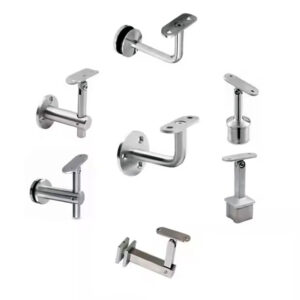
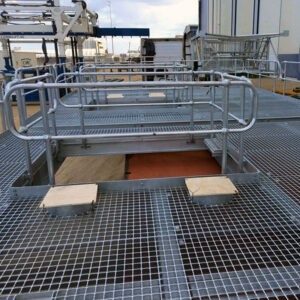
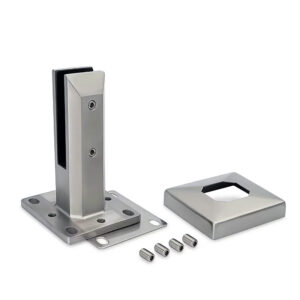
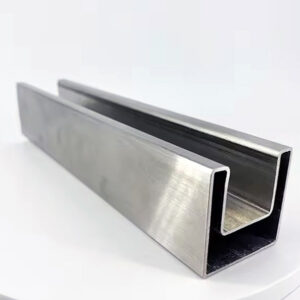
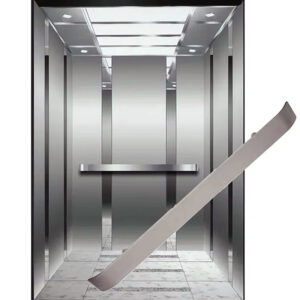
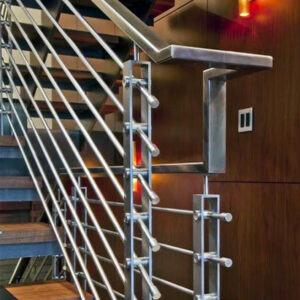
Connecteurs de rail
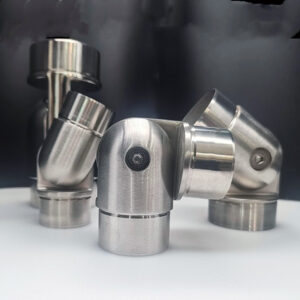
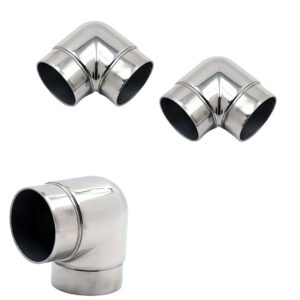
Connecteurs de rail
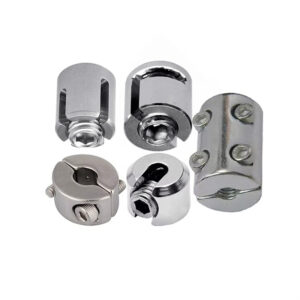
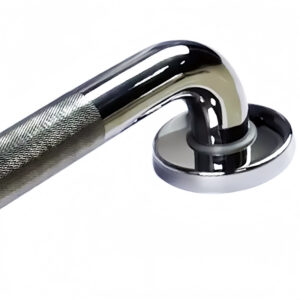
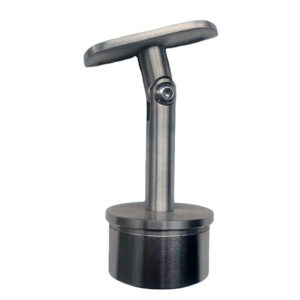
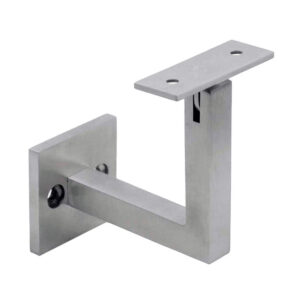
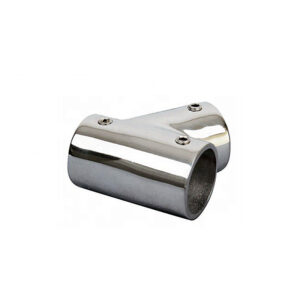
Les raccords de garde-corps ESANG servent à assembler les tubes de main courante, les lisses supérieures, les profilés de garde-corps, les angles, les coudes et les points de transition dans les systèmes de garde-corps en acier inoxydable. Ils permettent de maintenir l'alignement des garde-corps, de réaliser des assemblages nets, de former des angles et d'assurer la continuité des garde-corps.
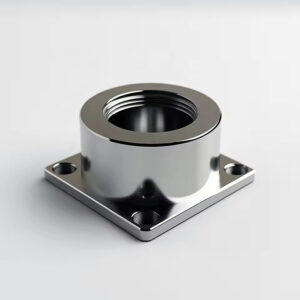
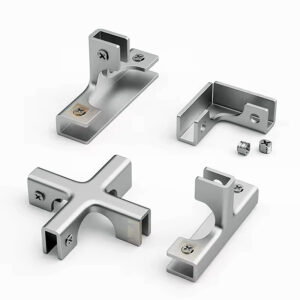
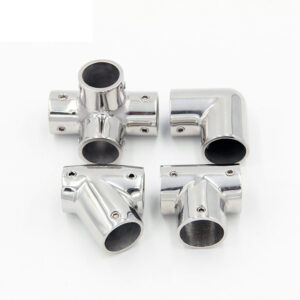
Cette catégorie comprend Raccords universels pour rails, Angles de rail à 90 degrés, Raccords d'angle à 135 degrés, Raccords pour rails droits, et Raccords ferroviaires flexibles.
Pour les entrepreneurs, les distributeurs, les fabricants et les acheteurs de projets, le choix des raccords de rails doit tenir compte de la forme et du diamètre des tubes, de l'angle de raccordement, de la visibilité du joint, du type de raccordement (interne ou externe), de la longueur de la section, de la nuance du matériau, de la finition et de l'environnement d'installation. ESANG est en mesure de fabriquer des raccords de rails conformément aux plans, aux dimensions, aux profils de tubes, à la nuance du matériau, aux exigences de finition et aux conditions d'installation.
Options de raccordement ferroviaire
| Option de connecteur | Utilisé de préférence pour | Questions clés de la sélection |
|---|---|---|
| Raccords universels pour rails | Assemblages généraux de rampes, raccords de mains courantes, raccords de tubes et ensembles de garde-corps sur mesure | Quelle sont la forme et le diamètre du tube, le sens de raccordement et le type de raccord requis ? |
| Angles de rail à 90 degrés | Virages à angle droit, angles de balcon, paliers d'escalier et transitions entre des agencements carrés | Quels sont le profil du rail, le rayon d'angle, le joint apparent et l'état des extrémités à faire correspondre ? |
| Raccords d'angle à 135 degrés | Dispositions de garde-corps en angle, angles non rectes et certaines transitions entre escaliers ou balcons | Quels sont l'angle, le profil du tube, le type de raccord et les exigences d'alignement requis ? |
| Raccords pour rails droits | Assemblage de sections de rampe droites, de longues portées de main courante et d'ensembles de garde-corps modulaires | Quelles sont les dimensions du tube, la longueur de la section, la profondeur d'insertion et la visibilité du raccord requises ? |
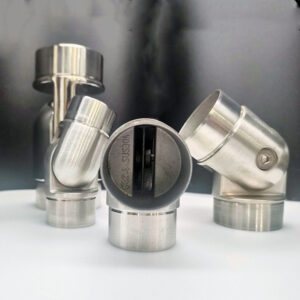
| Raccords ferroviaires flexibles | Angles personnalisés, ajustement du champ, transitions non standard et agencements variables des balustrades | Quelle plage d'angle, quel mode de verrouillage, quel profil de rail et quelle position finale faut-il vérifier ? |
Comment choisir des raccords pour rails
Les raccords de rails doivent être choisis en fonction de l'orientation des rails et du profil des tubes. Un raccord droit, un raccord d'angle à 90 degrés et un raccord flexible permettent de résoudre différents problèmes de raccordement.
| État du projet | Orientations recommandées | Pourquoi c'est important |
|---|---|---|
| Le rail doit se prolonger en ligne droite | Utilisez des raccords pour rails droits ou des manchons de raccordement internes | Les raccords droits permettent de maintenir l'alignement sur de longues sections de rail. |
| Le rail tourne à angle droit | Utilisez des angles de rail à 90 degrés | Les raccords à angle droit permettent de réaliser des transitions nettes au niveau des balcons, des escaliers ou des paliers. |
| Le rail décrit un virage en angle | Utilisez des raccords d'angle à 135 degrés ou des raccords spécialement conçus pour ces angles | Les configurations qui ne forment pas un angle droit nécessitent des connecteurs adaptés à l'angle réel. |
| Le projet présente une tolérance de terrain ou une géométrie personnalisée | Utilisez des raccords de rail flexibles | Les raccords flexibles permettent de s'adapter à des angles atypiques ou aux conditions spécifiques du chantier. |
| Le projet utilise des profilés tubulaires mixtes | Utilisez des connecteurs universels ou des spécifications de connecteurs personnalisés | La forme et les dimensions du tube doivent être vérifiées avant de choisir le raccord. |
| Le projet nécessite un aspect de rail lisse et continu | Utilisez des raccords dissimulés, internes ou polis lorsque cela est approprié | La visibilité des joints influe sur l'aspect final et la mise en œuvre lors de la pose. |
Angle du raccord, forme du tube et type de raccord
Les performances des raccords de rail dépendent de l'angle, de la forme du tube et de la méthode d'assemblage. Les acheteurs doivent vérifier si le raccord est destiné à un tube rond, carré ou rectangulaire, à un assemblage interne, externe ou à un raccord d'angle apparent.
| Facteur de sélection | Ce qu'il faut vérifier | Pourquoi c'est important |
|---|---|---|
| Forme du tube | Profil rond, carré, rectangulaire ou sur mesure | La géométrie du connecteur doit correspondre à celle du tube du rail. |
| Diamètre du tube | Diamètre extérieur, section carrée, épaisseur de paroi ou dimension intérieure | L'ajustement du raccord dépend de la précision des dimensions du tube. |
| Angle de raccordement | Droit, à 90 degrés, à 135 degrés, à angle variable ou à angle personnalisé | L'angle détermine le type de connecteur et son alignement. |
| Connexion interne ou externe | Que le connecteur s'insère à l'intérieur du tube ou se raccorde à l'extérieur | Les raccords internes permettent d'obtenir un assemblage plus net à l'œil nu ; les raccords externes peuvent être plus faciles à inspecter. |
| Joint apparent ou invisible | Quelle partie du connecteur reste visible après l'installation ? | La visibilité des joints influe sur l'aspect architectural final. |
| Raccordement mécanique ou soudé | Que le connecteur soit fixé mécaniquement, soudé ou par une autre méthode | La méthode de pose a une incidence sur la résistance, la finition et la préparation du chantier. |
Raccords droits, raccords d'angle et raccords flexibles
Les différents types de raccords permettent de s'adapter à différentes transitions de rails. Le choix en fonction de l'angle et du profil du tube permet d'éviter tout désalignement et toute modification sur site.
| Type de connecteur | Fonction principale | Considérations générales |
|---|---|---|
| Joints de rail droits | Raccorder deux tronçons de rail en ligne droite | Diamètre du tube, profondeur d'insertion, longueur de la section, alignement et visibilité du raccord |
| Coins de rail à 90 degrés | Créer des virages à angle droit | Rayon des angles, profil des tubes, sens des rails et finition des extrémités |
| Connecteurs d'angle à 135 degrés | Créer des transitions en angle ou des virages non rectangulaires sélectionnés | Angle réel, disposition des marches ou du balcon, forme du tube et alignement visuel |
| Connecteurs de rail flexibles | S'adapte à des angles personnalisés ou variables | Plage angulaire, méthode de verrouillage final, ajustement du tube et tolérance de montage |
| Connecteurs universels de rails | Prise en charge des conditions générales de raccordement des rails ou des projets mixtes | Profilé tubulaire, mode de raccordement, détail visible et plans du projet |
Matériaux, finitions et fabrication sur mesure
Les raccords de rail ESANG peuvent être fabriqués selon les spécifications du projet, notamment en ce qui concerne la forme du tube, l'angle du raccord, les dimensions internes du manchon, le rayon d'angle, le type de jonction, la nuance du matériau, la finition de surface et les exigences d'emballage.
| Matériau ou finition | Utilisation courante | Notes |
|---|---|---|
| Acier inoxydable 304 | Mains courantes d'intérieur, systèmes de rails, aménagements intérieurs commerciaux et environnements secs | Une solution couramment utilisée pour de nombreuses applications de raccordement de rails en intérieur. |
| Acier inoxydable 316 | Garde-corps d'extérieur, balcons, terrasses, aménagements autour de piscines et environnements humides | On le privilégie généralement lorsqu'une meilleure résistance à la corrosion est requise. |
| Acier inoxydable 316L | Projets nécessitant une meilleure soudabilité ou des performances anticorrosion plus élevées | Convient lorsque le cahier des charges exige de l'acier inoxydable à faible teneur en carbone. |
| Finition brossée ou satinée | Garde-corps commerciaux, escaliers, balcons et la plupart des projets de quincaillerie architecturale | Permet de réduire l'apparence des traces de doigts et des petites marques dues à la manipulation. |
| Polissage miroir | Aménagements intérieurs décoratifs, hôtels, villas et applications visuelles haut de gamme sélectionnées | Il confère un aspect brillant, mais nécessite un entretien et un nettoyage plus minutieux. |
Pour les projets de garde-corps non standard, les clients peuvent fournir des plans, les dimensions des tubes, les angles des rails, les longueurs des sections, le type de raccords, les exigences en matière de finition et les conditions d'installation. ESANG peut examiner ces exigences et fabriquer des raccords de garde-corps conformes au cahier des charges du projet, dans la mesure du possible.
Compatibilité avec les mains courantes, les traverses supérieures et les poteaux
Les raccords de main courante doivent être choisis en fonction de l'ensemble complet de la balustrade ou de la main courante. Un même raccord peut ne pas convenir à différentes formes de tubes ou à différents systèmes de main courante.
- Pour les longues sections continues de main courante, coordonnez les raccords avec Mains courantes.
- Pour les mains courantes murales, à associer avec Mains courantes à fixation murale et l'espacement des parenthèses.
- Pour les rails fixés sur des poteaux, coordonnez-vous avec Mains courantes sur poteau et les supports de poteaux.
- Pour les systèmes à rail supérieur, veuillez vous coordonner avec Traverses supérieures et traverses inférieures.
- Pour les ensembles de poteaux de garde-corps, assortissez les raccords de rails avec Poteaux en acier inoxydable et la mise en page de l'article.
Personnalisation en fonction des exigences du projet
De nombreux projets de raccords de rails sont conçus sur mesure en fonction du profilé du tube, de l'angle du rail, de la configuration des angles, des exigences de finition et de la méthode d'installation. ESANG propose des raccords de rails universels sur mesure, des raccords d'angle à 90 degrés, des raccords à 135 degrés, des raccords de rails droits, des raccords de rails flexibles, des manchons internes, des raccords coudés et des pièces de transition de rails sur mesure.
Lorsqu'un projet comporte des exigences conformes aux normes concernant la continuité des mains courantes, la disposition des garde-corps, la hauteur des rampes, la qualité des matériaux ou la méthode d'installation, les clients doivent fournir les plans et les cahiers des charges requis. ESANG est en mesure de fabriquer des raccords de rampes conformes aux spécifications fournies ; toutefois, la conformité finale dépend de l'ensemble du système installé, de la conception structurelle, de la méthode d'installation et de la réglementation locale applicable.
Considérations relatives à l'installation et au projet
Les raccords de rail doivent être prévus avant la découpe et la pose des rails. Il convient de convenir ensemble du diamètre des tubes, de l'emplacement des joints, de l'angle, du type de raccordement et de la finition.
- Forme du tube, dimensions du tube et épaisseur de paroi
- Raccord droit, à 90 degrés, à 135 degrés, flexible ou à angle personnalisé
- Manchon interne, connecteur externe, raccord soudé ou méthode de fixation mécanique
- Exigence relative aux joints apparents ou cachés
- Longueur des tronçons, longueur de transport et ordre de pose
- Fonction de main courante, de barre supérieure ou de garde-corps
- Compatibilité avec les poteaux, les supports et les points d'appui
- Matériau adapté aux environnements intérieurs, extérieurs, côtiers ou au bord d'une piscine
- Exigences du code local du bâtiment et du cahier des charges du projet
Pour les mains courantes continues, les garde-corps de balcon, les rampes d'escalier et les garde-corps à usage commercial, les détails relatifs aux raccords de rampe doivent être vérifiés par le concepteur du projet, l'ingénieur, l'entrepreneur ou les autorités locales. ESANG peut fabriquer des raccords de rampe conformes aux exigences fournies, mais la conformité finale dépend de l'ensemble complet une fois installé.
Scénarios d'application
Trons de main courante continus
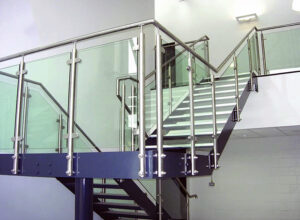
Les raccords de main courante sont couramment utilisés pour assembler des sections de main courante sur de longues portées, dans les couloirs, sur les rampes et dans les escaliers. L'emplacement des joints, le type de raccord et la finition apparente doivent être définis avant la fabrication.
Coins de balcons et de terrasses
Les raccords de balustrade à 90° et 135° sont utilisés pour les angles des balcons, terrasses et terrasses en bois. Il convient de vérifier la correspondance entre l'angle, le profilé de la balustrade et la finition.
Transitions entre les marches et les paliers
Les garde-corps d'escaliers et de paliers peuvent nécessiter des raccords coudés, des raccords flexibles ou des transitions de main courante sur mesure. Il convient d'examiner conjointement la pente de l'escalier, la géométrie du palier et la continuité de la main courante.
Systèmes de garde-corps à usage commercial
Les bâtiments commerciaux, les espaces publics, les hôtels, les écoles et les infrastructures de transport nécessitent souvent des raccords de rails reproductibles, présentant une finition homogène et des détails d'installation prévisibles.
Ensembles de rails architecturaux sur mesure
Les projets sur mesure peuvent nécessiter des angles de raccordement non standard, des manchons dissimulés, des joints polis ou des adaptateurs spéciaux pour profilés tubulaires. Il est important d'examiner les plans et les dimensions des tubes.
Catégories de produits connexes
- Raccords universels pour rails
- Angles de rail à 90 degrés
- Raccords d'angle à 135 degrés
- Raccords pour rails droits
- Raccords ferroviaires flexibles
- Mains courantes
- Traverses supérieures et traverses inférieures
- Mains courantes sur poteau
Questions fréquemment posées
À quoi servent les raccords de rails ?
Les raccords de main courante servent à assembler les tubes de main courante, les lisses supérieures, les profilés de main courante, les angles, les coudes et les points de transition. Ils permettent de maintenir l'alignement de la main courante et de créer des tronçons continus ou en angle.
Quelle est la différence entre les raccords pour rails droits et les raccords d'angle ?
Les raccords droits permettent de relier des sections de rail en ligne droite. Les raccords d'angle permettent de réaliser des virages, notamment des transitions à 90 ou 135 degrés. Le choix approprié dépend de l'orientation du rail et du profil du tube.
Dans quels cas faut-il utiliser des angles de rail à 90 degrés ?
Les angles de garde-corps à 90 degrés sont utilisés pour les virages à angle droit, les angles de balcon, les paliers d'escalier et les transitions dans les agencements carrés. Il convient de vérifier la forme du tube, le rayon de l'angle et le style des joints apparents.
Dans quels cas faut-il utiliser des raccords d'angle à 135 degrés ?
Les raccords d'angle à 135 degrés sont utilisés pour les agencements de garde-corps en angle, les angles non rectangulaires et certaines transitions au niveau des escaliers ou des balcons. Il convient de vérifier l'angle réel et le profilé du garde-corps avant de passer commande.
Que sont les connecteurs ferroviaires flexibles ?
Les raccords de garde-corps flexibles sont utilisés pour réaliser des angles sur mesure, s'adapter aux tolérances de chantier et s'adapter à des configurations de garde-corps non standard. Il convient de vérifier la plage d'angles, le mode de verrouillage final et la compatibilité avec les tubes avant la production.
ESANG peut-il personnaliser les connecteurs ferroviaires ?
Oui. ESANG est en mesure de fabriquer des raccords pour rails en fonction de la forme et des dimensions des tubes, de l'angle des raccords, du type de raccordement (interne ou externe), de la nuance du matériau, de la finition et des plans du projet.
Peut-on utiliser des raccords de rail pour des mains courantes continues ?
Oui. Les raccords de rail sont couramment utilisés dans les mains courantes continues pour assembler des sections, effectuer des virages et créer des transitions. Le type de raccord doit être choisi en fonction du profilé du tube, du tracé et des exigences en matière de finition.
Dois-je choisir des raccords de rail en acier inoxydable 304 ou 316 ?
L'acier inoxydable 304 est couramment utilisé pour les environnements intérieurs et secs. L'acier inoxydable 316 est généralement privilégié pour les environnements extérieurs, côtiers, au bord d'une piscine, humides ou présentant un risque élevé de corrosion. Le type d'acier à retenir doit être choisi en fonction de l'exposition du projet et des spécifications techniques.
Quelles informations faut-il fournir pour une demande de liaison ferroviaire ?
Les informations utiles comprennent la forme du tube, ses dimensions, l'angle de raccordement, le type de raccord, la préférence pour un raccordement interne ou externe, la nuance du matériau, la finition, la quantité, les plans et le contexte du projet.
Comment entretenir les raccords de rail en acier inoxydable ?
Le nettoyage courant s'effectue généralement à l'aide d'un détergent doux, d'eau claire et d'un chiffon doux. Évitez les produits nettoyants à base de chlorure, la laine d'acier et les outils abrasifs. Les installations situées à l'extérieur, au bord d'une piscine ou en bord de mer doivent être nettoyées plus régulièrement afin de réduire la contamination des surfaces et de préserver leur aspect.
Articles connexes :
Pier and Dock Railing Layout: Posts, Infill, Access, and Mounting
Plan pier and dock runs around post locations, infill modules, corners, gates, access routes, substrate edges, and mounting responsibility.
Coastal Railing Exposure: Salt Air, Splash, and Cleaning Access
Separate airborne salt, direct splash, retained wetness, deposits, and cleaning access before choosing coastal railing materials and details.
Replacing Core-Mounted Posts With Surface Bases: Precheck
Check the existing opening, slab condition, edge geometry, drainage, and revised load path before converting an embedded post to a surface base.
Liste de contrôle pour les appels d'offres relatifs aux socles de poteaux de balustrade à l'intention des acheteurs de projets
Demandez, dans un seul appel d'offres par projet, des informations comparables concernant les éléments de fixation des socles, les matériaux de support, les finitions, les plans, les limites d'ancrage, les échantillons et les documents d'inspection.
Adjustable Railing Post Bases for Sloped or Uneven Surfaces
Compare adjustable bases against the actual slope, bearing surface, leveling range, finish interface, and fixing access before selecting a detail.
Railing Post Base Anchors: Inputs for Engineering Review
Define substrate, geometry, loads, exposure, and anchor evidence before engineering review so a hardware label is not mistaken for a connection design.
Projets d'Esang

Certificat d'Esang
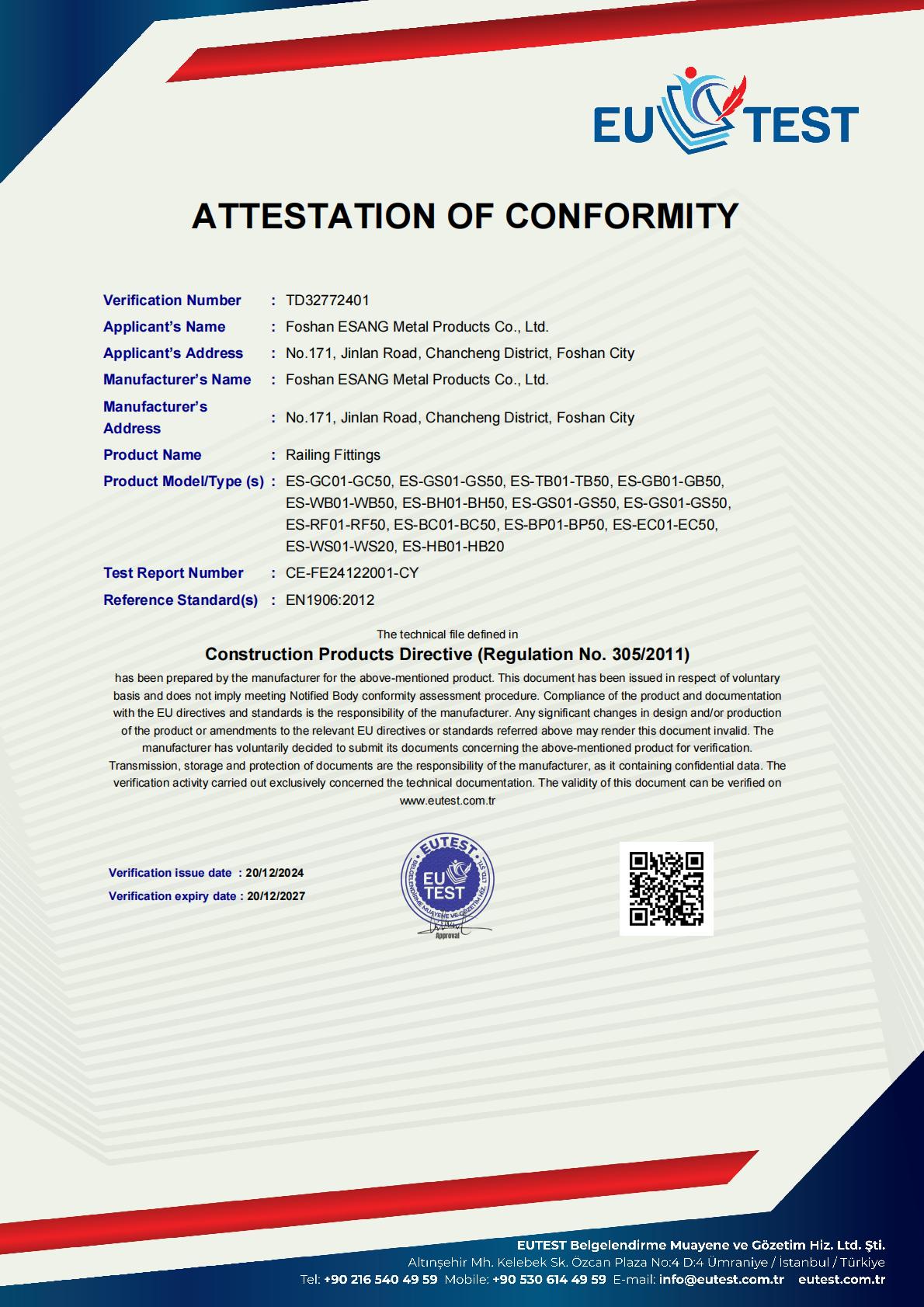
Foshan ESANG Metal Products est fier d'entretenir Certification CE (numéro de vérification TD32772401) en vertu de la directive sur les produits de construction (règlement n° 305/2011), ce qui confirme notre engagement à respecter les normes européennes les plus strictes en matière de sécurité et de qualité.
Certifié Gamme de produits :
Notre gamme complète d'accessoires pour garde-corps, qui comprend des pinces à verre, des tendeurs, des supports, des supports muraux, des sabots, des accessoires pour mains courantes, des câbles et des composants pour poteaux, répond aux besoins des utilisateurs de garde-corps. EN1906:2012 garantissant l'intégrité structurelle et la fiabilité des performances dans toutes les installations.
Ce que cela signifie pour votre projet :
✓ Conformité réglementaire totale pour les marchés européens et internationaux
✓ Performances en matière de sécurité et de durabilité vérifiées de manière indépendante
✓ Support documentaire pour les spécifications architecturales
✓ Tranquillité d'esprit grâce à l'assurance qualité d'une tierce partie
Certification valable jusqu'en 2027 : CE-FE24122001-CY
Projets d'Esang

Produits de référence