Mains courantes sur poteau
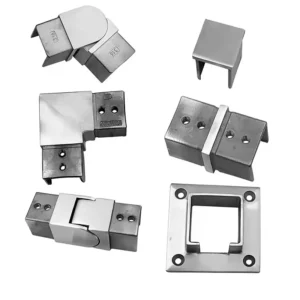
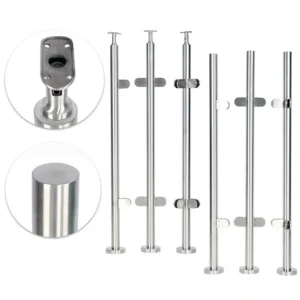
Mains courantes sur poteau
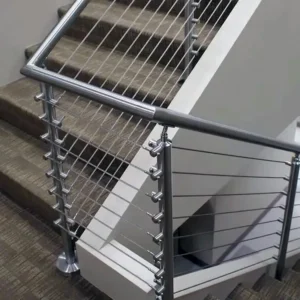
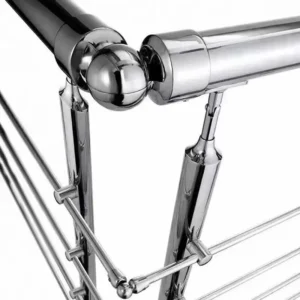
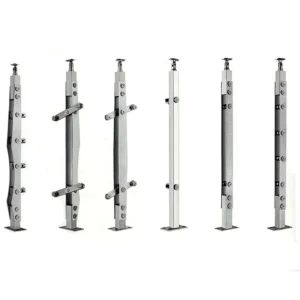
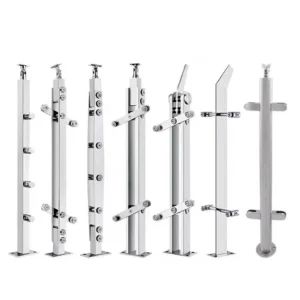
Use this category when railing posts carry the handrail. A post-mounted rail must be selected as an interface, not as an isolated tube: post cross-section, handrail profile, support head, post position, infill and post mounting all affect the assembly. A sketch or marked-up photo is enough to begin.
Discuss post-mount handrails on WhatsApp
Route to the right product family
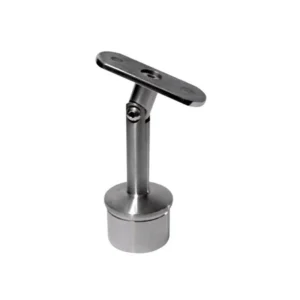
• Systèmes de main courante pour poteaux ronds — start here when the post body is round. Confirm post diameter, rail profile and the geometry of the post-side and rail-side contacts.
• Supports de main courante pour poteaux carrés — use when a flat post face or square/rectangular post must meet the handrail. Confirm the post width, bracket footprint and rail-support shape.
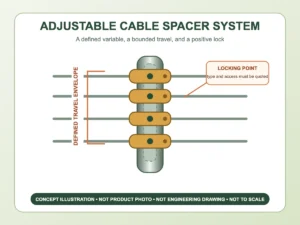
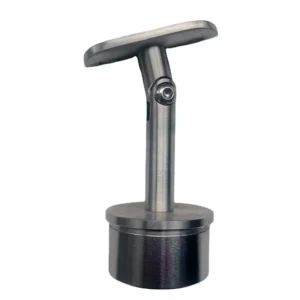
• Mains courantes à poteaux réglables — use for slopes, transitions or defined site tolerance. State which angle or position needs adjustment and how the final connection is to be locked.
• Mains courantes pour poteaux à usage intensif — use when the tender or engineering brief calls for a higher-duty post/rail assembly. The label is not a verified load class; provide the required loads and support conditions.
• Éléments d'extrémité pour main courante — use for starts, ends and returns where the rail terminates at or near an end post.
• Raccords intermédiaires pour main courante — use for repeated supports along a run. Confirm whether the rail passes continuously over the support or joins at that point.
Specify the interface before the style
Post side
State whether the post is round, square, rectangular or another profile, and provide the relevant outside dimensions, wall information if known, top preparation and hole pattern. A bracket for a flat post face is not interchangeable with one shaped for a round body.
Rail side
State the handrail cross-section and orientation. A round saddle, flat plate and shaped connector contact different rail profiles. Confirm whether the connection is mechanical, welded or supplied for later fabrication, and whether visible fasteners are acceptable.
Position in the run
Mark terminal, intermediate, corner, stair and landing posts. These positions can require different support heads, connector angles and terminations. For intermediate posts, say whether the handrail stays unbroken or whether the joint is intentionally located at a support.
Infill and post mounting
Show glass, cable, bars or panels and identify any holes or fittings already allocated on the post. Also state whether the post is surface-, fascia- or core-mounted, but do not assume that handrail components include the post base, anchors or infill hardware. Each boundary should appear in the proposed bill of materials.
A handrail component does not rate the whole railing
Post spacing, base connection, substrate, infill, corner routing and installation affect the complete railing assembly. Product names such as “heavy duty” or a robust-looking bracket do not establish a load capacity or code outcome. Where performance criteria apply, provide them with the drawings and have the full installed system checked by the responsible project team.
What to compare in quotations
Compare the exact post and rail interfaces; bracket or saddle geometry; terminal, intermediate and corner parts; proposed section lengths and joints; material grade and finish offered; fabrication state; included fasteners; relationship to post, base and infill hardware; quantity basis; packaging; and explicit exclusions. This prevents a quote for loose support heads from being mistaken for a complete post-and-handrail assembly.
Minimum information to start
Send a layout or route sketch, post and handrail profiles, post positions and spacing if known, infill type, stair or ramp angles, base-mount condition, material/finish request, exposure, quantity and destination. If exact sizes are not final, send photos and approximate dimensions; the final interface fields must be confirmed before production.
Articles connexes :
What Should Be Included at Handrail Ends: Returns, End Caps or Open Coordination Points?
Distinguish handrail returns, end caps and unresolved end interfaces, then schedule each termination by function, adjoining construction and supply responsibility.
Factory-Cut or Site-Trimmed Handrails: Which Release Method Fits the Available Dimensions?
Choose factory-cut or site-trimmed handrails by checking dimension status, datums, mating allowances and the finish work attached to each cut.
Handrail Tube Only or a Complete Component Package: What Should the Supplier Quote Include?
Compare tube-only and component-package handrail quotes by separating fittings, fabrication, mounting interfaces, finish work and delivered quantities.
Continuous or Sectional Handrail Supply: Which Split Strategy Fits Transport and Site Assembly?
Compare continuous and sectional handrail supply using delivery access, joint locations, mating details and section identification before fabrication release.
Where Should a Handrail Change from Wall-Supported to Post-Supported Along a Mixed Route?
Choose a handrail support change by comparing wall and post interfaces, preserving the gripping path and locating the transition on coordinated drawings.
Panneaux en treillis métallique à niveau, inclinés ou passant de l’incliné au niveau : quelle géométrie convient à chaque tronçon de garde-corps ?
Choisissez entre une géométrie de panneaux grillagés « à niveau », « inclinés » ou « inclinés puis ramenés à niveau » en fonction du tracé de la balustrade, de l'orientation du motif, des interfaces et des plans du projet.
Projets d'Esang

Certificat d'Esang
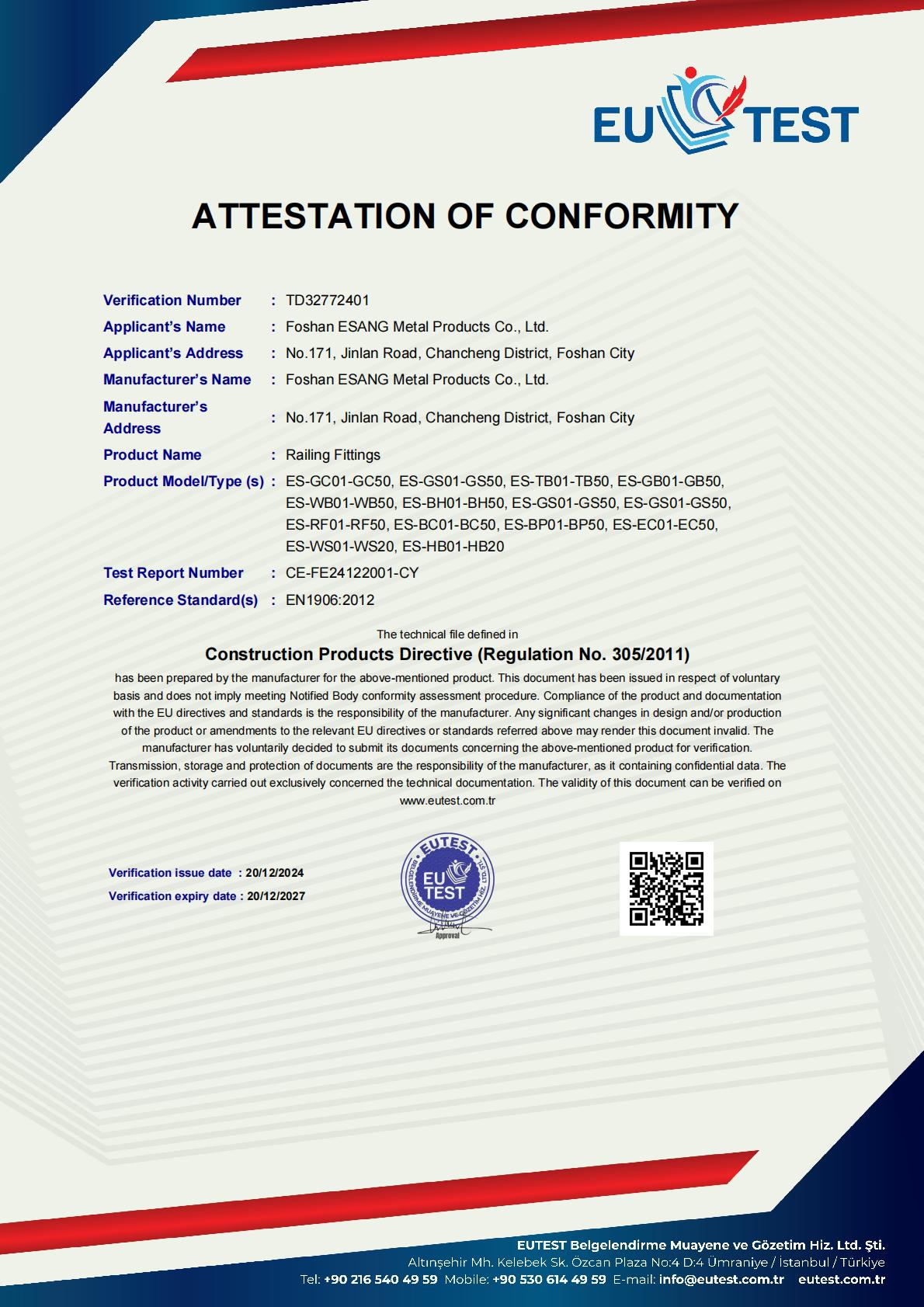
Foshan ESANG Metal Products est fier d'entretenir Certification CE (numéro de vérification TD32772401) en vertu de la directive sur les produits de construction (règlement n° 305/2011), ce qui confirme notre engagement à respecter les normes européennes les plus strictes en matière de sécurité et de qualité.
Certifié Gamme de produits :
Notre gamme complète d'accessoires pour garde-corps, qui comprend des pinces à verre, des tendeurs, des supports, des supports muraux, des sabots, des accessoires pour mains courantes, des câbles et des composants pour poteaux, répond aux besoins des utilisateurs de garde-corps. EN1906:2012 garantissant l'intégrité structurelle et la fiabilité des performances dans toutes les installations.
Ce que cela signifie pour votre projet :
✓ Conformité réglementaire totale pour les marchés européens et internationaux
✓ Performances en matière de sécurité et de durabilité vérifiées de manière indépendante
✓ Support documentaire pour les spécifications architecturales
✓ Tranquillité d'esprit grâce à l'assurance qualité d'une tierce partie
Certification valable jusqu'en 2027 : CE-FE24122001-CY
Projets d'Esang


Produits de référence