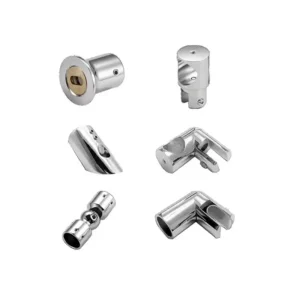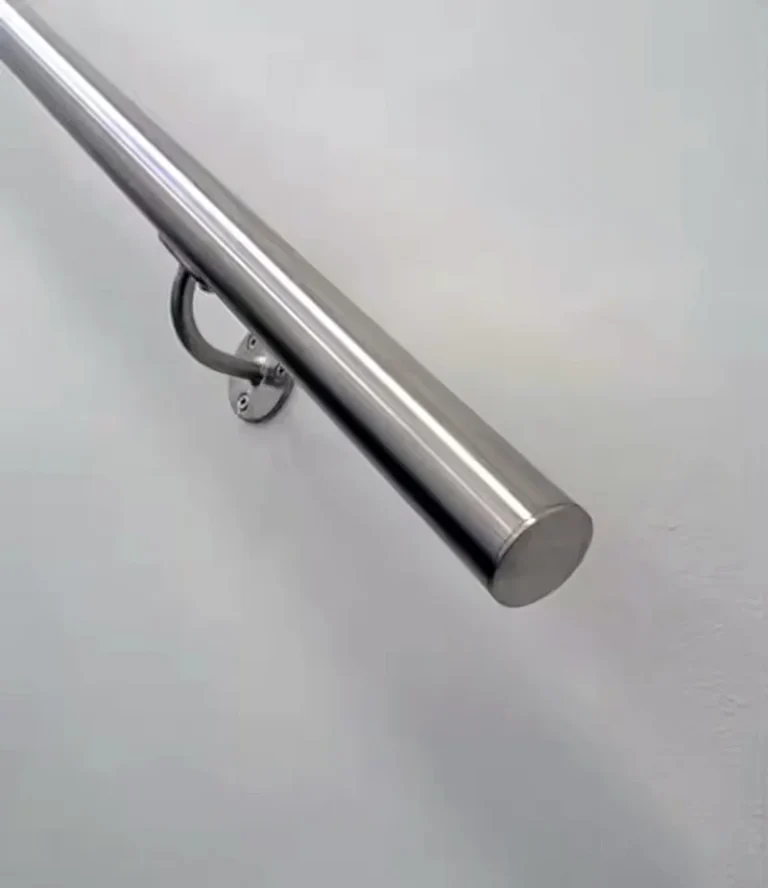
Match the round tube to the grip, brackets and route
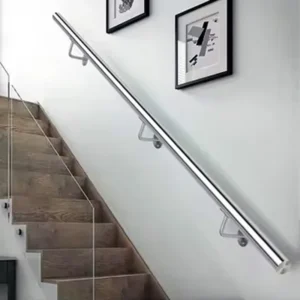
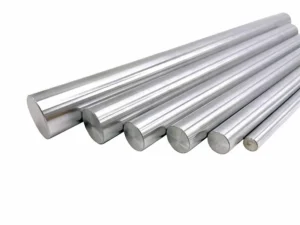
Round tube wall handrails give the buyer a consistent gripping shape and a clear way to coordinate saddles, bends, joiners and end returns. The phrase “round tube” is not a complete specification: outside diameter, wall, material, finish, fabrication lengths and the wall attachment all affect whether parts fit and whether the installed rail satisfies the project brief.
Request a round tube wall handrail quote
Start with the desired tube outside diameter, a route sketch and the wall type. If the diameter is not yet fixed, provide the governing architectural or accessibility detail and ask for a dimensioned proposal.
Define the tube before choosing the fittings
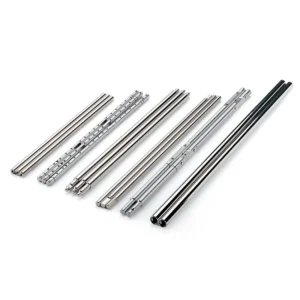
Outside diameter and wall
Specify outside diameter and wall thickness separately. Fittings that appear visually similar may not share the same fit, and a bracket saddle intended for one diameter may rock on or mark another. If the route is subject to the U.S. federal ADA Standards, the U.S. Access Board identifies a 1¼–2 inch (32–51 mm) outside-diameter range for circular handrail gripping surfaces; the complete project still has to meet all other applicable requirements and be accepted by the responsible authority.
Matériau et finition
Describe indoor or outdoor use, salt or chemical exposure, cleaning regime and the desired visible finish. Ask the quotation to name the proposed material and finish for the rail, brackets, joiners and visible fasteners. A finish description is not a substitute for material identification, and the tube alone does not establish system durability.
Ends and fabrication method
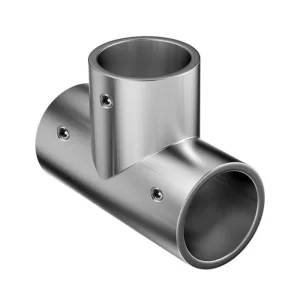
Decide whether the route uses caps, wall returns, formed bends, elbows or transitions into another rail. State whether visible field joints are acceptable and whether site welding or finish repair is permitted. The quotation should show which ends and bends are factory prepared and which work remains on site.
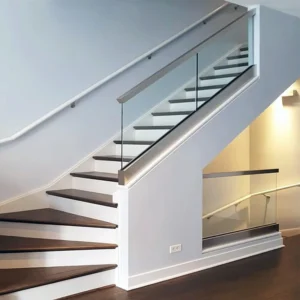
Map each stair, landing and change of direction
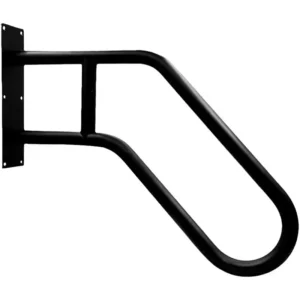
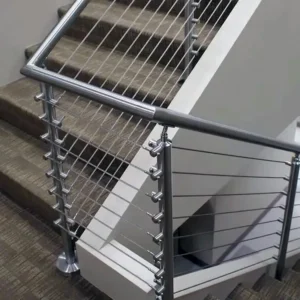
A straight product image does not show the difficult parts of a handrail run. Mark the following on the plan or elevation:
- sloping and level sections with separate lengths;
- inside and outside corners and their actual included angles;
- top and bottom extensions, returns and connections to adjacent rails;
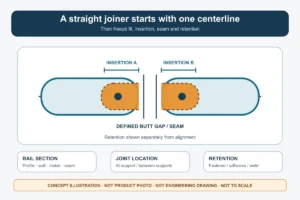
- proposed joint locations and the maximum practical transport length;
- doors, trim, services or other obstructions near the gripping surface.
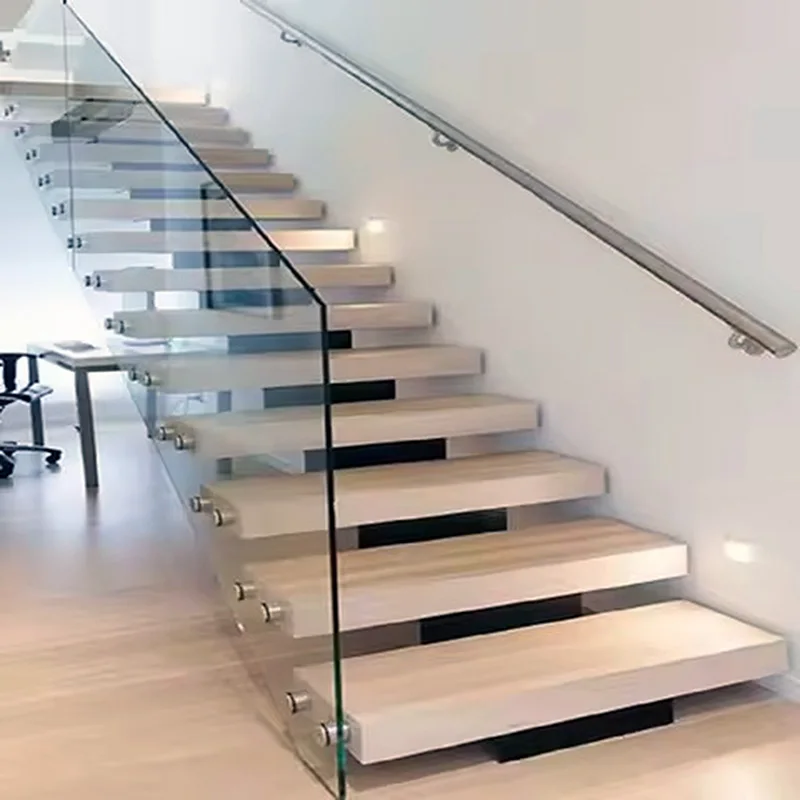
Make the bracket–tube interface explicit
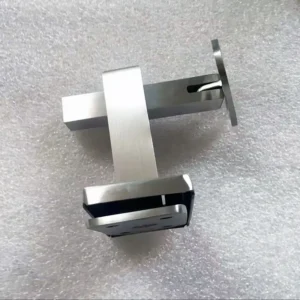
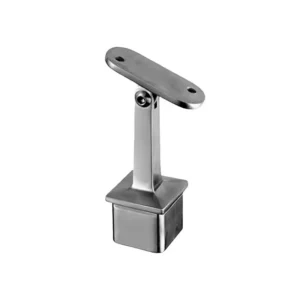
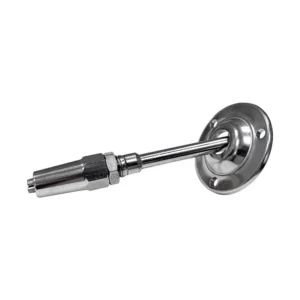
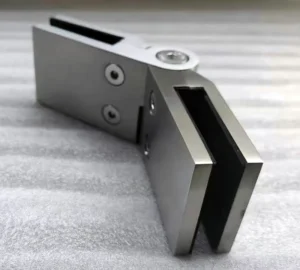
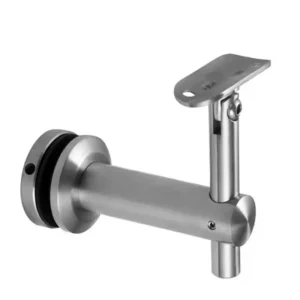
The bracket should be quoted for the exact tube outside diameter and required wall clearance. Confirm whether the rail is supported on a curved saddle, clamped, screwed or welded, and whether a rail joint may occur at the support. The attachment drawing should also show the wall plate, visible fasteners and the dimension from finished wall to the gripping surface.
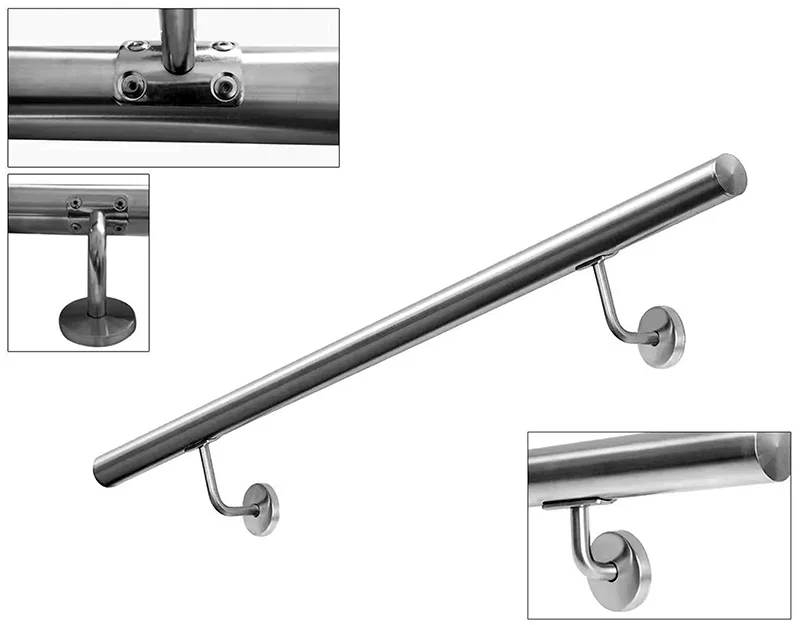
On the wall side, identify the structural substrate separately from tiles, plasterboard, cladding or another finish. Bracket spacing and anchor selection depend on the project loads, tube configuration, backing and substrate. They should be returned as project assumptions or engineered details—not copied from an unrelated product table.
Keep this decision separate from adjacent handrail choices
- Use the stainless steel wall handrail enquiry when material environment and overall component package are the main decision but the profile is still open.
- Use the continuous wall handrail enquiry when the critical problem is joints, transitions and uninterrupted routing over several runs.
- Use the adjustable bracket enquiry when site tolerance or rail angle is the unresolved interface.
- Request configuration-specific structural evidence when a documented heavy-duty or special load requirement controls the purchase. A larger round tube is not automatically a verified heavy-duty system.
What to send and what the quotation should show
Send route drawings or photos, outside diameter or governing detail, approximate lengths, bends and returns, finish, exposure, wall build-up, backing information, quantity and destination. State whether you need tube only, fabricated rail sections, brackets, connectors, end parts and anchors.
A comparable quotation should identify:
- proposed tube outside diameter, wall, material and finish;
- piece lengths, bends, end treatments and joint method;
- bracket saddle and wall-plate details, proposed quantity and spacing basis;
- included and excluded fasteners, anchors, site operations and finish repair;
- available drawings, installation instructions, material records and configuration-specific evidence.