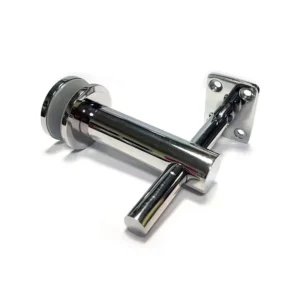
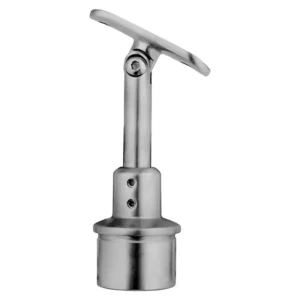
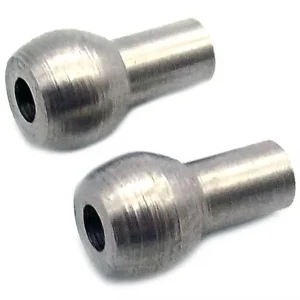
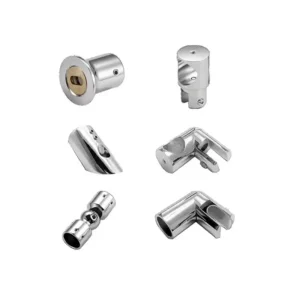
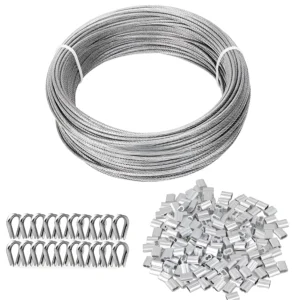
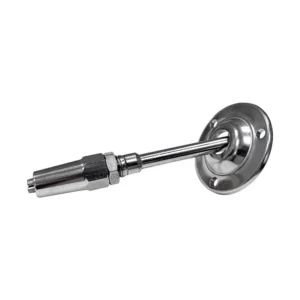
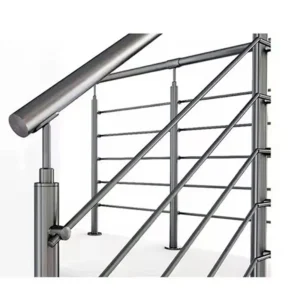
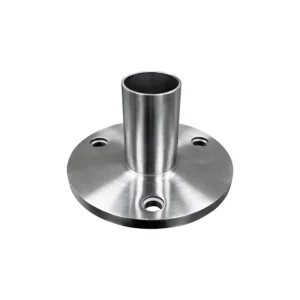
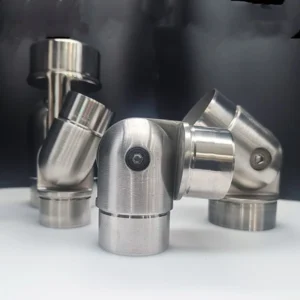
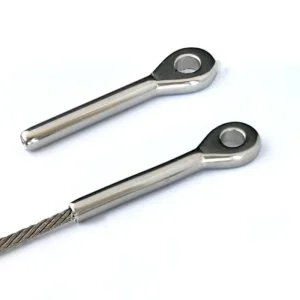
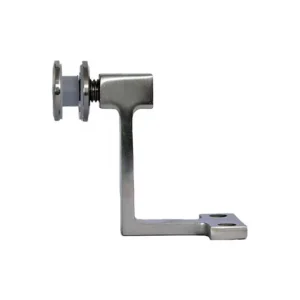
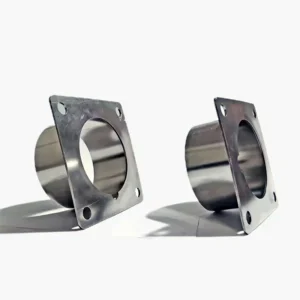
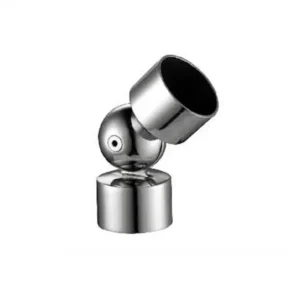
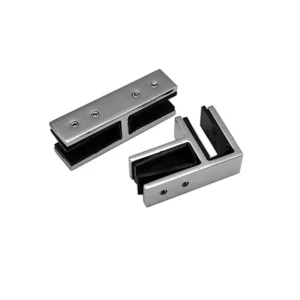
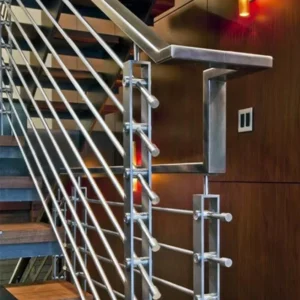
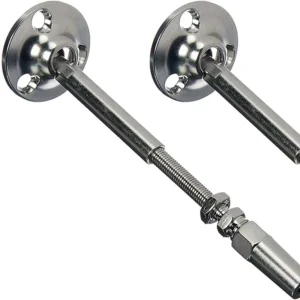
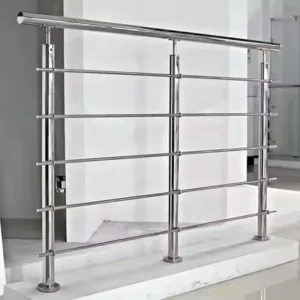
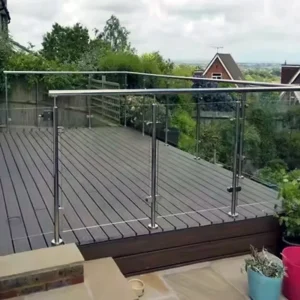
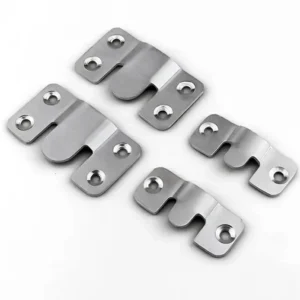
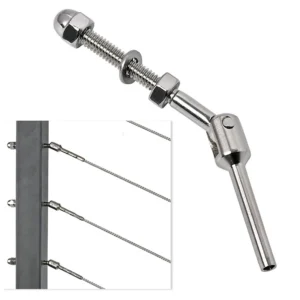
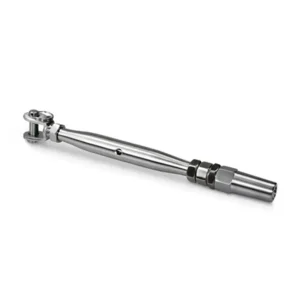
Through-post cable fittings coordinate the cable with holes through terminal, intermediate or corner posts. Their job may be to guide and protect a passing cable, to provide a bearing surface at a terminal post, or to connect a fixed or tensioning end through the post. Those are different functions. ESANG can review the cable path and post drawing and quote the proposed fittings, but the order must identify the role of every post, the cable and hole details, and the access available on both sides.
Request a through-post fitting quotation on WhatsApp
First identify what happens at each post
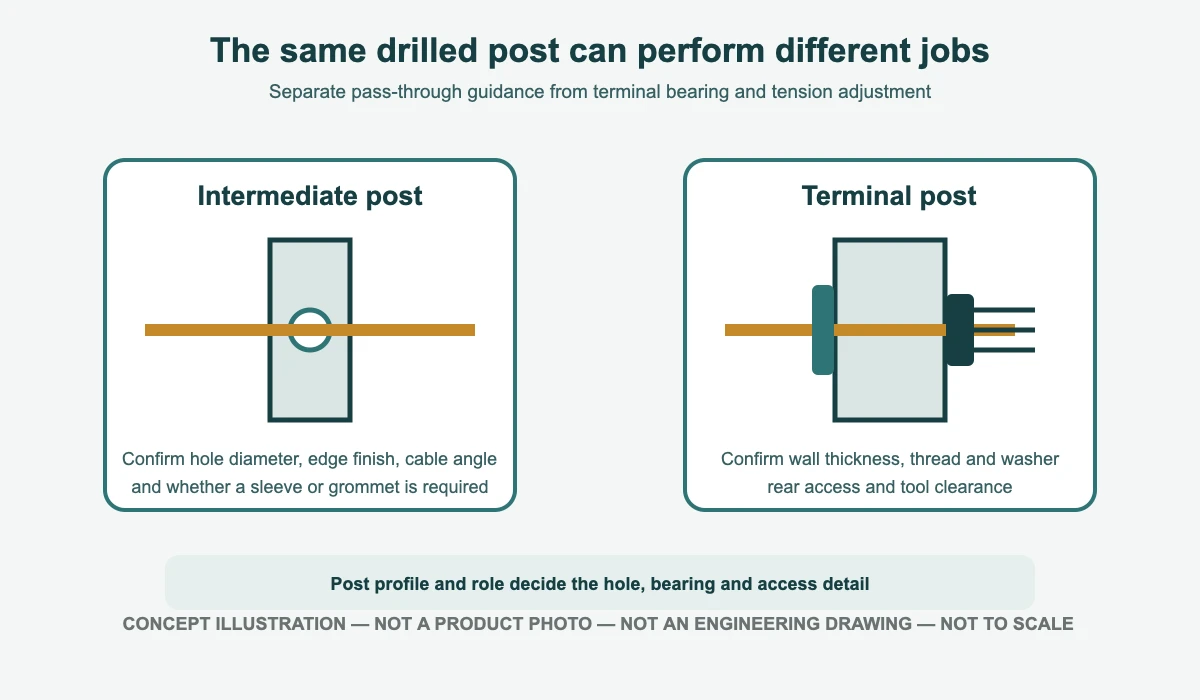
An intermediate post normally guides a cable that continues to the next post. A terminal post normally receives end hardware and cable tension. A corner post may change cable direction or terminate two separate runs. Treating all drilled posts as the same detail can leave raw edges at pass-through holes, place a nut where no tool can reach it, or ask a corner hole to carry a direction change it was not designed for.
| Post role | Likely hardware responsibility | Fields to confirm | Typical mismatch consequence |
|---|---|---|---|
| Intermediate, straight run | Guide, sleeve, grommet or finished pass-through | Cable diameter, hole diameter, wall thickness, alignment and edge finish | Abrasion, snagging or a visibly unfinished hole |
| Terminal, fixed end | End terminal, bearing washer, nut or receiver | End form, thread, post depth and rear access | Insufficient engagement or bearing concentrated on a thin wall |
| Terminal, tension end | Adjustable terminal plus bearing and finish parts | Adjustment travel, tool clearance and final exposed length | No room to tension, bottomed thread or excessive projection |
| Stair or sloped line | Angled hole, bevelled bearing or pivoting interface | Cable angle, face angle and alignment after tensioning | Side loading, distorted washer seating or rubbed cable |
| Coin | Separate terminations or a specifically designed change-of-direction detail | Corner angle, routing radius, friction, end-post responsibility | Uneven tension and damage from forcing cable around a sharp turn |
Match cable, hole and pass-through part
Provide both cable diameter and construction. A stiff cable may require a different routing radius and preparation from a flexible rope of the same diameter. The pass-through opening needs enough clearance for the cable and any lacing or installation aid, but excessive clearance can produce poor alignment or a loose trim part. State whether the cable is already terminated at one end, because the attached fitting may not pass through the planned hole.
A sleeve or grommet can protect the cable from a raw edge and finish the visible hole, but it must match the post wall and cable angle. A decorative escutcheon alone should not be assumed to carry terminal load. At intermediate posts, the cable should follow a clean line without being kinked by an offset hole. At stair posts, a hole drilled perpendicular to the face may not align with the sloping cable.
Post material and wall thickness change the interface
Hollow metal posts
Send the outside profile, wall thickness and hole preparation. Thin walls may need a defined bearing component or internal reinforcement at a terminal; that decision belongs to the post and railing design, not to the decorative face washer. Confirm whether a nut or tool can enter the post, whether the post cap is removable and whether welding or a threaded insert is already planned.
Solid or thick fabricated posts
State the drilled depth, tapped thread or full through-hole. A terminal designed to cross a hollow post may not provide enough thread for a thick section, while an excessively long thread may conflict with an internal cavity or visible finish. If a threaded receiver is used, provide its thread standard and engagement requirement.
Timber and composite posts
Provide actual post depth, finish layers and the planned bearing faces. Wood movement, crushing at washers and moisture entry around holes need to be resolved in the project detail. Do not copy a metal-post washer or thread length into a timber detail without checking the complete connection.
Plan the fixed end and tension end together
A through-post cable line still needs a tensioning plan. One end can be fixed and the other adjustable, or both ends can provide adjustment when the selected system and access permit it. State which post is the tensioning post and where the installer will hold and turn the terminal. If both ends become inaccessible after cladding, caps or adjacent work is installed, future adjustment will also be blocked.
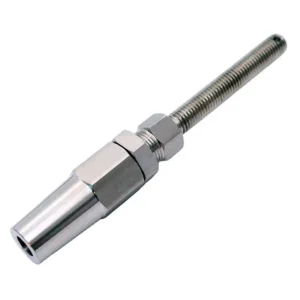
For threaded terminals, specify thread standard, diameter, pitch, usable threaded length and mating nut or receiver. The required projection depends on post depth, washers, bevelled washers, caps and the adjustment travel left after initial tensioning. A nut that reaches the thread does not prove the line has sufficient adjustment remaining.
Washers, sleeves and caps have separate jobs
- Bearing washers spread force over the designed post face or backing detail.
- Bevelled washers can provide a flatter seat at an angled termination when their angle matches the layout.
- Pass-through sleeves or grommets can protect the cable and finish intermediate holes.
- Escutcheons and caps cover exposed holes, nuts or threads; they should not be credited with a structural function unless the specific design gives them one.
- Isolation parts may be considered where dissimilar materials meet, but the material, geometry and exposure need project-specific review.
Ask the quotation to show which of these parts are included for each post position. A photo of a terminal beside a post does not establish the washer stack, internal reinforcement or complete supply.
Drilling and installation sequence matter
Through-post work normally requires controlled layout, drilling and deburring before the cable is laced. Hole alignment across repeated posts affects both appearance and cable contact. Protect finished surfaces from drilling swarf, especially carbon-steel particles that can contaminate stainless steel. Clean the holes and install any sleeves before feeding the cable.
- Mark terminal, intermediate and corner post roles from the approved layout.
- Verify hole diameter, centre position and angle for each role.
- Drill with the specified tools and remove burrs without damaging the finish.
- Install sleeves, grommets or receivers in the required sequence.
- Feed the cable without crushing, kinking or catching strands.
- Assemble the fixed and tensioning ends with the specified washers and threads.
- Apply final tension to the project instructions and inspect every pass-through for contact or misalignment.
The necessary tools may include a layout jig, drill and suitable bits, deburring tools, cable cutters, lacing aid, holding wrenches, hex keys and a system-specific tensioning tool or gauge. “Through-post fitting” does not imply that drilling tools, post fabrication or cable installation are included.
Exposure affects holes and hidden surfaces
Request the material grade and finish for the visible fittings, internal or hidden parts, washers and nuts. Coastal, poolside and washdown environments can concentrate deposits at sheltered rear faces and crevices around sleeves. 316 stainless is often considered where chloride resistance is important, but it is not automatically immune to staining or corrosion. Describe salt, humidity, cleaning chemicals, wetting, drainage and rain washing so the proposed grade and finish can be identified.
Plan routine cleaning with clean water and mild detergent where deposits accumulate. Avoid chloride-based cleaners, bleach, hydrochloric acid and carbon-steel wool. Inspect hole edges, sleeves, washers, exposed threads and hidden faces where practical. Maintenance frequency must follow actual exposure rather than a universal calendar claim.
Define the supply boundary and quotation fields
ESANG may quote individual pass-through pieces, fixed terminals, tensioning terminals, washers, nuts, caps or a coordinated hardware set. Cable, posts, post drilling, internal reinforcement, anchors, installation tools and on-site labour are not included unless listed. The proposed bill of materials should be tied to the number and role of posts rather than a single undifferentiated fitting count.
For a useful inquiry, send the cable diameter and construction; number and length of cable lines; post schedule; post shape, size and wall thickness; hole diameter, position and angle; fixed and tensioning end locations; thread details; washers, sleeves and caps required; rear-side access; corner and stair conditions; material grade and finish; exposure; quantities, packaging and delivery destination. A marked-up sketch and site photos can start the review while final dimensions remain pending.