Systèmes de garde-corps pour l'extérieur
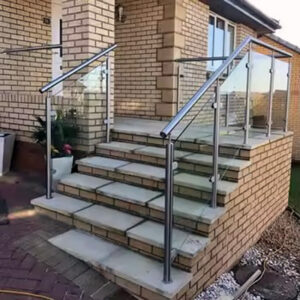
Systèmes de garde-corps pour l'extérieur
ESANG outdoor railing systems are designed for exterior stairs, decks, balconies, terraces, patios, platforms, walkways, and other weather-exposed architectural railing projects. Outdoor railings require more attention to material grade, fasteners, drainage, surface finish, cleaning access, and long-term exposure than typical dry indoor installations.
Cette catégorie comprend Exterior Stair Railings 316, Deck Railing Systems 316, Systèmes de garde-corps de balcon 316, et Weather Resistant Systems.
For contractors, distributors, fabricators, designers, and project buyers, outdoor railing selection should consider weather exposure, rainwater drainage, material grade, post mounting, handrail connection, glass or cable hardware, anchors, surface finish, and maintenance expectations. ESANG can manufacture outdoor railing components according to drawings, dimensions, material grade, finish requirements, and installation conditions.
Outdoor Railing System Options
| Outdoor railing option | Utilisé de préférence pour | Questions clés de la sélection |
|---|---|---|
| Exterior Stair Railings 316 | Outdoor stairs, exterior access routes, building entrances, and exposed stairways | What stair pitch, handrail type, bracket layout, material grade, and drainage condition are required? |
| Deck Railing Systems 316 | Decks, terraces, patios, platforms, and raised outdoor areas | What deck structure, post mounting, handrail, infill, fasteners, and finish should be used? |
| Systèmes de garde-corps de balcon 316 | Exterior balconies, apartment buildings, hotels, villas, and commercial balcony projects | What post system, glass or cable infill, top rail, base plate, and exposure condition should be confirmed? |
| Weather Resistant Systems | Outdoor environments requiring more careful material, finish, fastener, and maintenance planning | What level of rain, humidity, UV exposure, pollution, or cleaning access should be considered? |
How to Choose Outdoor Railing Systems
Outdoor railing systems should be selected according to the exposure condition first. A covered exterior stair, an open deck, and a high-rise balcony may all use stainless steel components, but the mounting, drainage, finish, and maintenance requirements can be different.
| État du projet | Orientations recommandées | Pourquoi c'est important |
|---|---|---|
| The project is an exterior stairway | Use exterior stair railings with suitable handrails, brackets, posts, and anchors | Stairs require careful handrail alignment, bracket spacing, drainage, and slip-resistant site planning. |
| The project is a deck or terrace | Use deck railing systems with weather-resistant posts, handrails, infill, and base hardware | Deck railings depend on substrate, edge condition, base fixing, and outdoor exposure. |
| The project is an exterior balcony | Use balcony railing systems with coordinated posts, glass or cable hardware, top rail, and base plates | Balcony systems require attention to edge fixing, wind exposure, water drainage, and appearance. |
| The project is wet, humid, or exposed to rain | Consider 316 stainless steel and suitable fastener and finish choices | Moisture exposure increases the importance of corrosion resistance and cleaning. |
| The project uses glass panels outdoors | Coordinate glass railing hardware with drainage, glass thickness, and mounting method | Outdoor glass systems need compatible clamps, spigots, base shoes, or standoffs. |
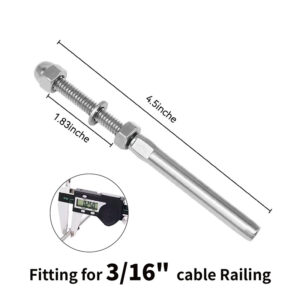
| The project uses cable infill outdoors | Coordinate cable fittings, tensioners, posts, and spacer bars with weather exposure | Outdoor cable systems require attention to tensioning, corrosion resistance, and maintenance. |
Outdoor Railing Components
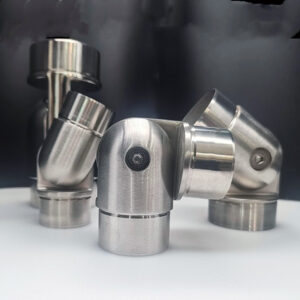
Outdoor railing projects usually combine several ESANG product categories. The correct system may include handrails, posts, glass hardware, cable hardware, mounting brackets, anchors, base plates, and connectors.
| Component group | Typical outdoor use | Catégorie de produits associés |
|---|---|---|
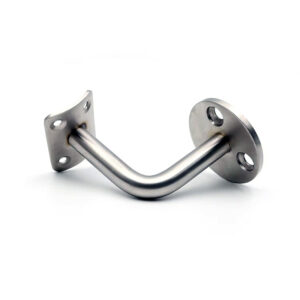
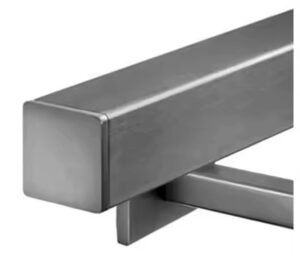
| Exterior handrails | Outdoor stairs, ramps, access routes, decks, balconies, and terraces | Systèmes de mains courantes |
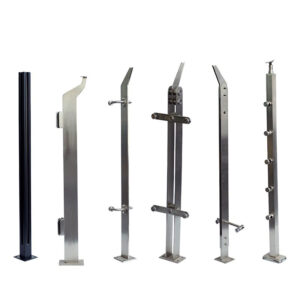
| Stainless steel posts | Balconies, decks, terraces, stairs, glass railings, and cable railings | Poteaux en acier inoxydable |
| Post hardware and base plates | Surface mount, fascia mount, core mount, and outdoor post installation | Matériel et fixation |
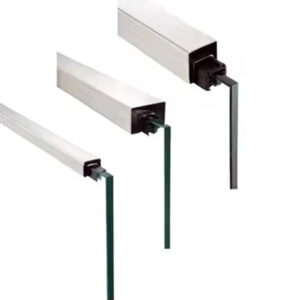
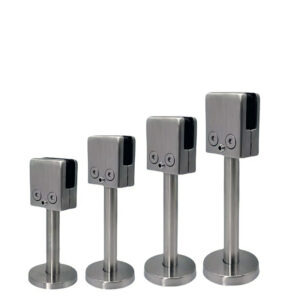
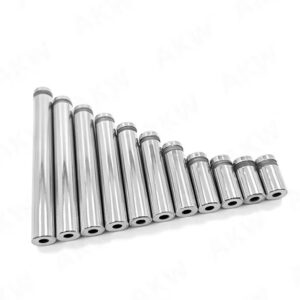
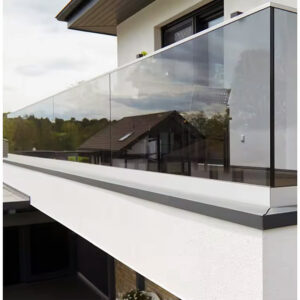
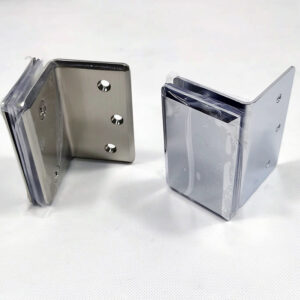
| Glass railing hardware | Balcony glass, poolside glass, terrace glass, and outdoor transparent railings | Quincaillerie pour garde-corps en verre |
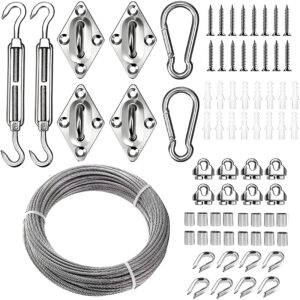
| Cable railing hardware | Deck cable railing, balcony cable railing, outdoor stair cable railing, and open-view systems | Systèmes de rampes à câbles |
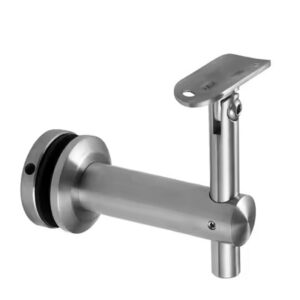
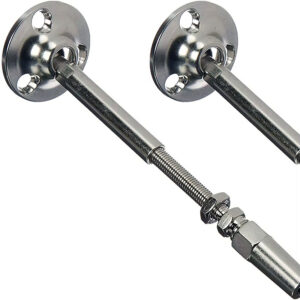
| Anchoring and brackets | Wall brackets, post brackets, anchors, rail connectors, and surface mounting hardware | Matériel de fixation et supports |
Material Grade and Finish for Outdoor Projects
Outdoor railing systems are exposed to rain, humidity, temperature changes, pollution, and cleaning chemicals. 316 stainless steel is often considered for outdoor applications because it provides better corrosion resistance than 304 stainless steel in many exposed environments.
| Matériau ou finition | Typical outdoor use | Remarques de l'acheteur |
|---|---|---|
| Acier inoxydable 304 | Covered exterior areas, mild environments, or projects where exposure is limited | May be suitable in less demanding outdoor conditions if the project specification allows. |
| Acier inoxydable 316 | Exterior stairs, decks, balconies, terraces, humid areas, and exposed outdoor railings | On le privilégie généralement lorsqu'une meilleure résistance à la corrosion est requise. |
| Acier inoxydable 316L | Custom outdoor or welded assemblies requiring low-carbon stainless steel | Suitable when the specification calls for improved weldability or more demanding corrosion performance. |
| Finition brossée ou satinée | Outdoor commercial railings, balcony systems, decks, and exposed handrails | Permet de réduire l'apparence des traces de doigts et des petites marques dues à la manipulation. |
| Polissage miroir | Selected decorative outdoor applications | Provides a bright appearance but requires more careful cleaning and handling. |
Material grade should not be selected by product name alone. The final choice should consider weather exposure, rainwater contact, humidity, pool chemicals, coastal distance, air pollution, fastener compatibility, budget, and maintenance plan.
Weather, Drainage, and Mounting Considerations
Outdoor railing systems should be reviewed with the site environment. Water, dirt, surface contamination, and fastener mismatch can affect long-term appearance and maintenance.
| Outdoor factor | Ce qu'il faut vérifier | Pourquoi c'est important |
|---|---|---|
| Rain exposure | Open exposure, covered exterior, drainage direction, and water collection points | Standing water and trapped dirt can affect appearance and maintenance. |
| Mounting surface | Concrete, deck, tile, stone, steel, or finished balcony surface | Substrate affects base plate, anchor, and waterproofing details. |
| Base plate and anchors | Base size, anchor type, edge distance, and cover plate requirement | Outdoor posts depend on reliable fixing and protected anchor details. |
| Fastener material | Compatibility between posts, brackets, anchors, and screws | Mismatched metals or unsuitable fasteners can create maintenance problems. |
| Finish direction | Brushed, satin, mirror, or custom finish | Finish affects appearance, cleaning, and visible handling marks. |
| Cleaning access | Whether hardware can be reached and cleaned regularly | Outdoor stainless steel needs appropriate routine cleaning to maintain appearance. |
Customization for Outdoor Projects
ESANG outdoor railing systems can be manufactured according to project drawings and environmental requirements. Customers can specify handrail profile, post shape, glass thickness, cable layout, bracket type, mounting method, anchor requirement, material grade, surface finish, packaging, and OEM or ODM requirements.
For outdoor projects with standard-oriented requirements related to guardrail height, handrail height, opening limitations, material grade, corrosion resistance, or installation method, customers should provide the required drawings and specifications. ESANG can manufacture components to match those provided details, while final compliance depends on the complete installed system, structural design, installation method, and applicable local code.
Considérations relatives à l'installation et au projet
Outdoor railing systems should be reviewed with the full project environment. The same stainless steel component may require different material grade, fasteners, anchors, finish, or maintenance planning depending on whether it is used on a stair, deck, balcony, terrace, or exposed walkway.
- Outdoor stair, deck, balcony, terrace, patio, walkway, or platform location
- Covered exterior, exposed exterior, humid, poolside, or coastal condition
- Material grade: 304, 316, or 316L stainless steel as specified
- Main courante, poteau, verre, câble, barre ou système de remplissage sur mesure
- Montage en surface, montage sur façade, montage sur noyau, montage mural ou méthode de montage sur mesure
- Base plate, anchor, drainage, and waterproofing requirements
- Surface finish, cleaning access, and maintenance expectations
- Plans du projet, réglementation locale et exigences relatives à l'installation sur site
For workplace or public-access outdoor areas in the United States, OSHA 1910.29 may be relevant to guardrail and handrail-related requirements. These references should be treated as planning resources, and final compliance should be confirmed by the project designer, engineer, contractor, or local authority.
Scénarios d'application
Exterior Stair Railings
Exterior stair railings may use stainless steel handrails, posts, brackets, rail connectors, and surface or wall mounting hardware. Stair pitch, drainage, anchors, and handrail continuity should be reviewed before production.
Deck Railing Systems
Deck railing systems may combine stainless steel posts, handrails, cable infill, glass panels, base plates, and anchors. Deck structure, surface material, edge condition, and outdoor exposure should be confirmed.
Balcony Railing Systems
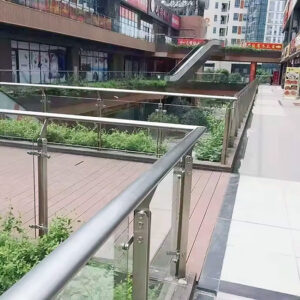
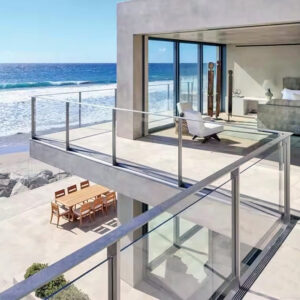
Outdoor balcony railings are used in apartments, hotels, villas, commercial buildings, and residential projects. Glass, cable, posts, top rails, base plates, and anchoring details should be coordinated as a complete system.
Weather Resistant Systems
Weather-resistant railing systems focus on material grade, fastener compatibility, drainage, cleaning access, and maintenance planning. These factors are especially important for exposed outdoor environments.
Outdoor Glass and Cable Railings
Outdoor glass and cable railings can create open views and modern architectural lines. Glass thickness, cable spacing, post layout, tensioning, hardware grade, and finish should be selected according to the project environment.
Catégories de produits connexes
- Exterior Stair Railings 316
- Deck Railing Systems 316
- Systèmes de garde-corps de balcon 316
- Weather Resistant Systems
- Systèmes de mains courantes
- Poteaux en acier inoxydable
- Quincaillerie pour garde-corps en verre
- Systèmes de rampes à câbles
- Systèmes d'ancrage
Questions fréquemment posées
What are outdoor railing systems?
Outdoor railing systems are railing and handrail assemblies used on exterior stairs, decks, balconies, terraces, patios, walkways, and exposed building areas. They may include stainless steel handrails, posts, glass, cable, brackets, anchors, and custom infill.
Is 316 stainless steel better for outdoor railings?
316 stainless steel is usually preferred for outdoor, humid, poolside, coastal, or higher-corrosion environments because it offers better corrosion resistance than 304 stainless steel in many exposed conditions. The final grade should still follow project specification and environment.
Can 304 stainless steel be used outdoors?
304 stainless steel may be suitable for some mild or covered exterior conditions if the project specification allows. For more exposed, humid, poolside, or coastal environments, 316 stainless steel is often a better starting point.
What outdoor railing systems can ESANG support?
ESANG can support exterior stair railings, deck railing systems, balcony railing systems, weather-resistant systems, glass railings, cable railings, stainless steel posts, handrails, brackets, and anchoring hardware.
Can ESANG manufacture outdoor railings to project drawings?
Yes. ESANG can manufacture outdoor railing components according to drawings, dimensions, material grade, surface finish, handrail profile, post type, glass thickness, cable layout, bracket type, anchor requirement, and packaging needs.
What should be checked for outdoor post mounting?
Outdoor post mounting should consider base plate size, anchor type, edge distance, drainage, waterproofing, substrate strength, fastener compatibility, and material grade.
Can outdoor railing systems use glass or cable infill?
Yes. Outdoor railings can use glass panels, cable infill, stainless steel posts, top rails, or custom infill systems. Glass thickness, cable spacing, post layout, hardware grade, and drainage should be confirmed before production.
What finish is best for outdoor stainless steel railings?
Brushed or satin finish is commonly used for outdoor railings because it helps reduce the visibility of minor marks. Mirror polish can be used for selected decorative projects but requires more careful cleaning and handling.
What information is needed for an outdoor railing inquiry?
Useful information includes project type, outdoor environment, drawings, handrail profile, post type, infill type, material grade, surface finish, mounting method, anchor requirement, quantity, and any target project specifications.
How should outdoor stainless steel railings be maintained?
Le nettoyage courant s'effectue généralement à l'aide d'un détergent doux, d'eau claire et d'un chiffon doux. Évitez les produits nettoyants à base de chlorure, la laine d'acier et les outils abrasifs. Les installations situées à l'extérieur, au bord d'une piscine ou en bord de mer doivent être nettoyées plus régulièrement afin de réduire la contamination des surfaces et de préserver leur aspect.
Articles connexes :
Exigences en matière de passivation pour les éléments de fixation, les supports et les accessoires d'ancrage en acier inoxydable
Précisez le traitement en fonction de l'état de la pièce, du procédé de fabrication et de l'exposition, plutôt que d'appliquer une seule instruction générique de passivation à tous les composants.
Nettoyage des éléments de fixation des garde-corps en câble et en verre en acier inoxydable 316 dans les environnements marins
Nettoie les bornes de câbles, les colliers de serrage en verre, les éléments de fixation et les interstices sans laisser de résidus de produits chimiques ni endommager les finitions polies ou brossées.
Comment les résidus de fabrication provoquent des taches de thé sur les garde-corps en acier inoxydable
Les taches de thé peuvent être dues à des particules incrustées, à une coloration due à la chaleur, au transfert d’abrasifs ou à des résidus coincés dans les rainures ou les fissures de la finition.
Décapage ou passivation des éléments de fixation des garde-corps en acier inoxydable : différences en termes de portée et de risques
Le décapage permet d'éliminer le tartre et les couches superficielles altérées ; la passivation vise à traiter l'état de la surface après le nettoyage, avec des contrôles et des risques différents.
Plan d'entretien des ferrures des garde-corps côtiers : sel, fissures, fixations et finition de surface
Axez l'entretien sur l'exposition aux intempéries, la rétention de sel, les fissures, les métaux dissemblables, l'état des fixations et l'aspect de la finition.
Règles de nettoyage sur chantier pour les garde-corps en acier inoxydable après découpe, soudage et installation
Éliminez la poussière de meulage, les résidus de soudure, les dépôts de ciment et les traces d'acier au carbone avant la remise du bien afin d'éviter toute tache évitable.
Projets d'Esang

Certificat d'Esang
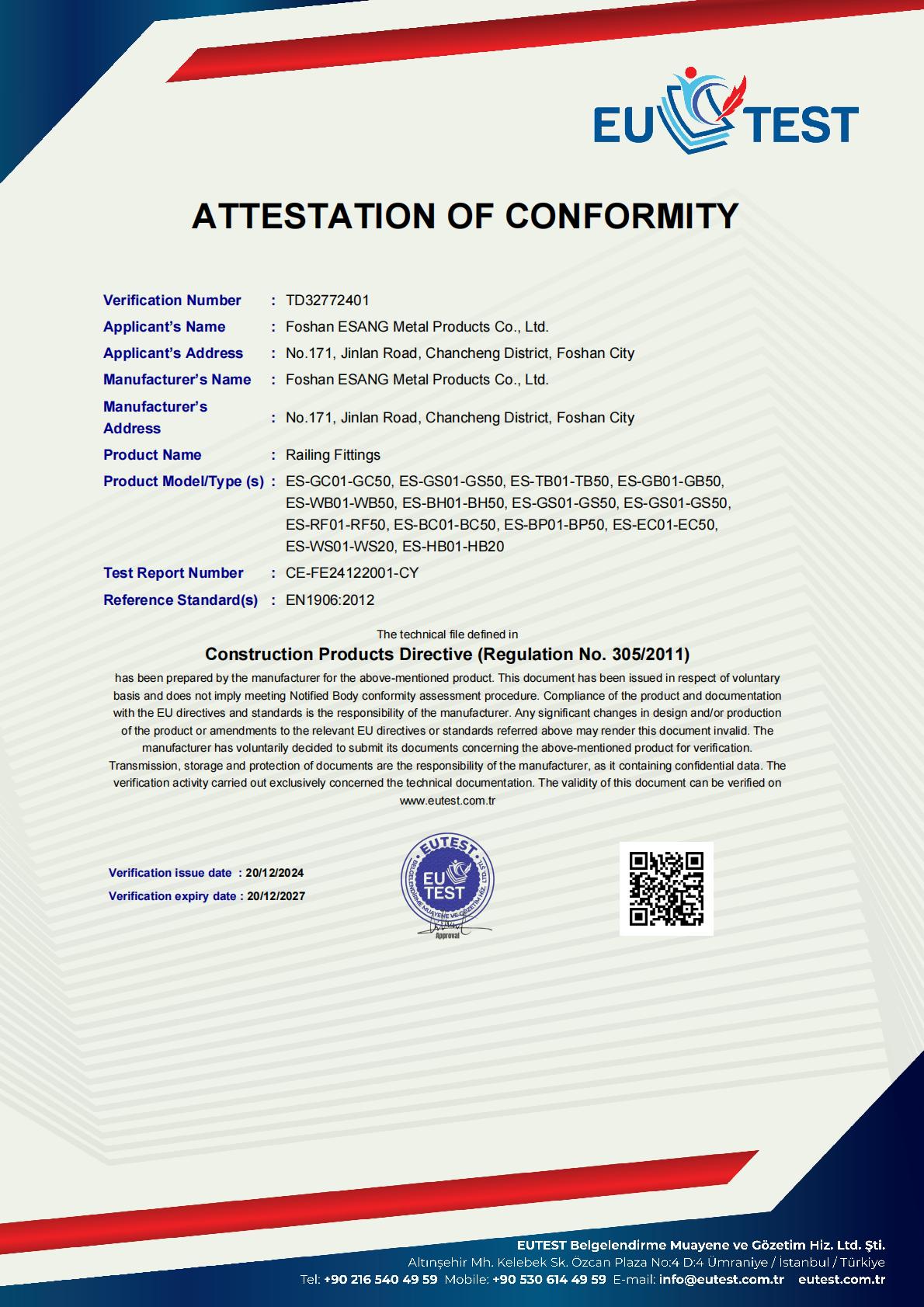
Foshan ESANG Metal Products est fier d'entretenir Certification CE (numéro de vérification TD32772401) en vertu de la directive sur les produits de construction (règlement n° 305/2011), ce qui confirme notre engagement à respecter les normes européennes les plus strictes en matière de sécurité et de qualité.
Certifié Gamme de produits :
Notre gamme complète d'accessoires pour garde-corps, qui comprend des pinces à verre, des tendeurs, des supports, des supports muraux, des sabots, des accessoires pour mains courantes, des câbles et des composants pour poteaux, répond aux besoins des utilisateurs de garde-corps. EN1906:2012 garantissant l'intégrité structurelle et la fiabilité des performances dans toutes les installations.
Ce que cela signifie pour votre projet :
✓ Conformité réglementaire totale pour les marchés européens et internationaux
✓ Performances en matière de sécurité et de durabilité vérifiées de manière indépendante
✓ Support documentaire pour les spécifications architecturales
✓ Tranquillité d'esprit grâce à l'assurance qualité d'une tierce partie
Certification valable jusqu'en 2027 : CE-FE24122001-CY
Projets d'Esang

Produits de référence