Les erreurs de placement des ancrages se manifestent rarement lors de la mise en place de la charpente. Elles apparaissent plus tard — lorsqu’un poteau se trouve décalé de trois centimètres par rapport à son axe prévu et que l’équipe considère la marge d’ajustement comme un outil de correction plutôt que comme une tolérance. Le coût en aval ne se limite pas à un simple décalage visible des éléments de fixation ; il s’agit d’une condition de charge pour laquelle le support n’a jamais été conçu, combinée à une position d’ancrage qui ne peut être modifiée sans endommager le support. Ce qui fait la différence entre une installation bien exécutée et une remise en état coûteuse, c’est de savoir si l’ajustement a été considéré comme une marge de manœuvre de planification dans une plage définie ou comme un moyen de pallier toutes les erreurs commises en amont. Ce qui suit vous aidera à déterminer quelles conditions de chantier les poteaux réglables peuvent réellement absorber, où s’arrête cette capacité, et à quoi ressemble la condition d’acceptation lorsque le système est correctement mis en œuvre.
Ce que l'ajustement de champ peut et ne peut pas corriger
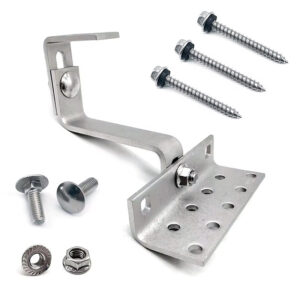
La plage de réglage est une tolérance de conception, et non un mécanisme de réparation sur chantier. Lorsqu’un poteau et une console sont dimensionnés pour une plage d’inclinaison spécifique — par exemple, un angle compatible compris entre 25° et 40° pour une console supérieure réglable —, cette plage couvre les variations réelles du site dans le cadre d’une installation correcte. Elle ne sert pas à compenser des ancrages placés en dehors de la position prévue, une instabilité rotationnelle ou des défauts du support. Le considérer comme s’il le faisait engendre des problèmes qui persistent une fois l’installation réceptionnée.
Cette distinction est importante car les modes de défaillance diffèrent. Un poteau installé à la limite de sa plage de réglage sur un ancrage correctement placé correspond à un cas de figure prévu par la conception et pris en charge par le matériel. Un poteau tiré au-delà de sa plage de réglage pour atteindre un ancrage mal placé peut sembler aligné de loin, alors que la plaque de base est inclinée selon un angle non prévu, que la géométrie de fixation est excentrée et que la position visuelle du matériel s’est écartée de son axe de conception. Ni le serrage du poteau ni le verrouillage du support ne permettent de remédier à cette situation a posteriori.
Chaque type de variation du site a une réponse spécifique, et cette réponse dépend de ce que le mécanisme d'ajustement a été conçu pour absorber.
| Problème ou anomalie lié(e) au site | Un ajustement peut-il y remédier ? | Ce qu'il faut confirmer |
|---|---|---|
| Variation mineure de la pente dans la plage d'angles définie pour le produit (par exemple, 25° à 40°) | Oui, à condition que le poteau et le support soient conçus pour cette pente | Vérifiez la plage d'angles d'escalier compatibles indiquée par le fabricant pour le poteau et le support concernés. |
| Erreurs de mise en page importantes (positionnement des ancres bien au-delà des limites de réglage des crochets) | Non — un ajustement ne peut pas compenser des erreurs de positionnement grossières | Vérifier l'alignement des ancrages par rapport aux repères topographiques avant l'installation des poteaux |
| Rotation incontrôlée du poteau | Non — le réglage ne bloque pas la rotation | Veillez à ce que le mode de fixation empêche toute rotation, indépendamment des composants réglables. |
| Structure fragile ou ancrage insuffisant | Non — l'ajustement repose sur un support solide | L'adéquation structurelle doit être vérifiée séparément ; l'ajustement n'apporte pas de résistance supplémentaire |
La norme ASTM E985-24 traite des exigences de performance structurelle des systèmes de garde-corps métalliques permanents, notamment la résistance aux charges et l’intégrité des raccordements. Elle ne définit pas de limites d’angle pour les réglages sur chantier ni ne précise quelle doit être la plage de réglage d’un support — ces valeurs découlent de la conception du produit par le fabricant. Ce que la norme établit, c’est l’exigence que le système installé fonctionne comme un ensemble structurellement cohérent. Le recours au réglage pour corriger un mauvais positionnement flagrant des ancrages compromet cette cohérence, même lorsque les éléments de fixation semblent être bien verrouillés en place.
Charges excentriques dues à un réglage incorrect
Lorsque l'on recourt à un ajustement pour combler l'écart entre un ancrage mal placé et la position prévue du poteau, la plaque de base ne repose plus à plat et centrée comme prévu. La géométrie qui en résulte dévie la trajectoire de la charge de l'axe prévu, créant ainsi une situation d'excentricité au niveau de la jonction de base. Il ne s'agit pas d'un cas de charge prévu pour lequel le système de garde-corps a été conçu — c'est une conséquence imprévue de la compensation d'une erreur de chantier que les hypothèses de conception initiales ne couvrent pas.
Le risque n’est pas théorique, mais il n’est pas non plus inévitable dans toutes les installations faisant appel à un réglage. Le problème est précis : lorsque le mécanisme de réglage atteint ou dépasse sa plage de réglage prévue pour compenser une erreur de positionnement plutôt qu’une véritable variation de pente du site, la relation entre le support et la plaque de base s’écarte de la géométrie prévue par le fabricant. À ce stade, le système de verrouillage — qu’il s’agisse d’une vis de réglage, d’une plaque de serrage ou d’une bague de friction — est sollicité pour maintenir une configuration pour laquelle il n’a pas été dimensionné. Au fil du temps, les cycles thermiques, les charges dynamiques et les mouvements mineurs peuvent dégrader le verrouillage, permettant au poteau de revenir progressivement vers sa position d’origine.
Il y a également des conséquences au niveau des contrôles. Des positions excentrées de la base et des éléments de fixation visiblement hors axe sont souvent signalés lors des contrôles esthétiques ou des inspections de corrosion, bien après la réception de l’installation. Les bords exposés des fixations, les jeux au niveau du périmètre de la plaque de base et les positions des supports situées en dehors du plan visuel prévu sont des signes courants. Il ne s’agit pas de problèmes esthétiques que le polissage permet de résoudre : ils indiquent un état de la base que le contrôle de réception initial a manqué ou reporté.
Éviter ce résultat relève de la planification, et non de la pose. Les emplacements des ancrages doivent être vérifiés par rapport aux repères topographiques avant la mise en place de tout poteau. Une fois qu’un ancrage est coulé dans le béton ou fixé à un support structurel, sa géométrie est figée. L’ajustement permet de corriger les variations de pente dans les limites prévues par la conception ; il ne modifie pas l’emplacement de l’ancrage.
Quincaillerie réglable ou fabrication fixe
Au stade de l'approvisionnement, le choix entre des fixations réglables et une structure soudée fixe se résume souvent à une question de coût. Cette approche néglige toutefois deux conséquences en aval : le nombre de points de jonction qui nécessiteront une attention particulière à l'avenir, et l'aspect visuel final du système une fois installé.
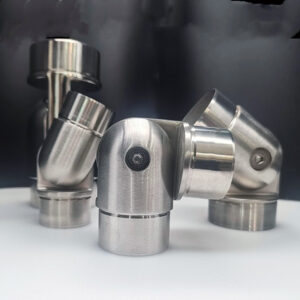
Les systèmes réglables s’adaptent aux variations du chantier : dalles qui ne sont pas parfaitement de niveau, pentes d’escaliers variant légèrement d’une volée à l’autre, ou supports sur lesquels la position exacte de l’ancrage ne peut pas être maintenue avec une tolérance stricte. Cet avantage en termes de tolérance est bien réel. Il réduit les retouches lorsque les tracés sont imprécis ou lorsque les conditions du chantier évoluent entre la conception et l’installation. En contrepartie, les supports, selles et plaques de base réglables introduisent de multiples points de connexion, dont chacun repose sur une méthode de verrouillage qui doit rester stable pendant toute la durée de vie du système. Un plus grand nombre d’interfaces implique davantage de risques de dérive d’alignement à l’avenir, davantage de points d’intervention pour la maintenance, et davantage d’endroits où une inspection visuelle pourrait révéler un mouvement ou une dégradation.
La fabrication fixe présente moins d’interfaces. Un poteau soudé avec une base intégrée ou un support de main courante à selle fixe offre une connexion intrinsèquement stable qui ne repose pas sur un système de verrouillage après ajustement. La condition préalable est que le tracé soit précis : aucun ajustement n’est possible pour compenser les variations de pente ou les erreurs mineures de positionnement. Les retouches sont plus perturbantes lorsque des systèmes fixes sont installés sur la base de données topographiques erronées.
| Considération | Système de montants réglables | Système de fabrication fixe |
|---|---|---|
| Variation du site d'action | Tolère des variations modérées ; réduit les retouches sur les chantiers présentant des conditions variables | Nécessite un tracé précis ; des modifications pourraient s'avérer nécessaires en cas de changement des conditions sur le chantier |
| Interfaces de connexion | Plusieurs composants (supports, étriers) offrent des points de réglage supplémentaires | Moins d'interfaces ; raccords généralement soudés ou intégrés |
| Dernière apparition | Les éléments de fixation peuvent rester visibles ; l'esthétique générale dépend de la conception des supports. | Plus épuré, avec un minimum de pièces visibles une fois soudé |
| Stabilité du verrouillage après l'alignement | Repose sur une méthode de verrouillage qui doit rester stable dans le temps | La stabilité est inhérente à la connexion fixe |
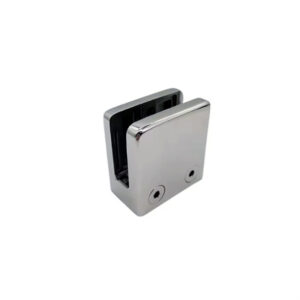
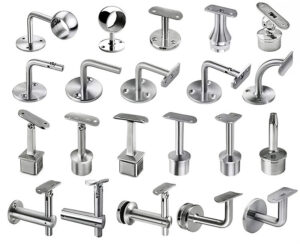
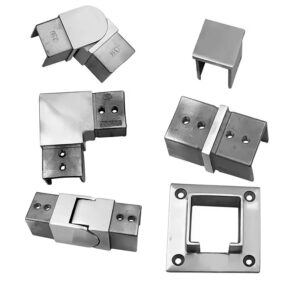
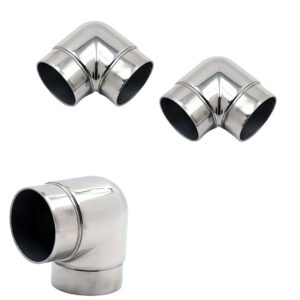
Le fait que cette même gamme de produits propose à la fois des supports de main courante à selle réglables et fixes montre qu’il s’agit d’un choix de configuration et non d’un classement en termes de qualité. Le choix approprié dépend des variations du chantier, des exigences de tolérance et du profil d’inspection et d’entretien prévu pour l’installation. Les projets présentant des supports homogènes et un contrôle topographique rigoureux obtiennent souvent un résultat plus net avec une fabrication fixe. Les projets aux conditions variables tirent profit de la souplesse offerte par les fixations réglables — à condition que la plage de réglage soit utilisée conformément à sa destination.
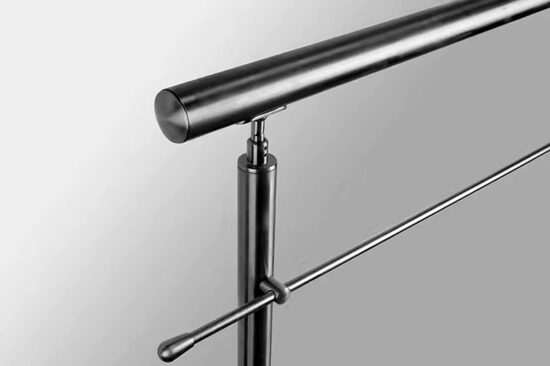
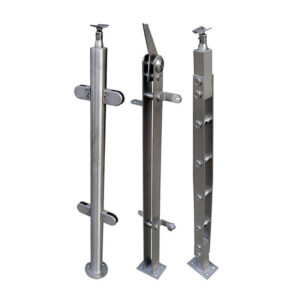
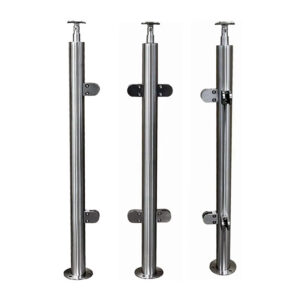
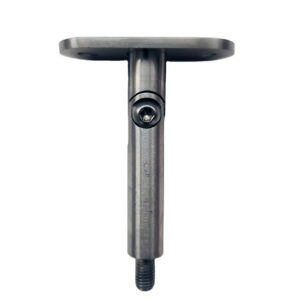
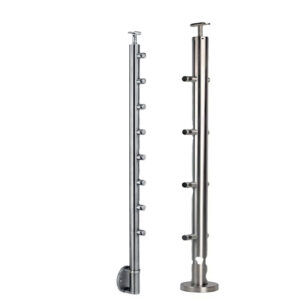
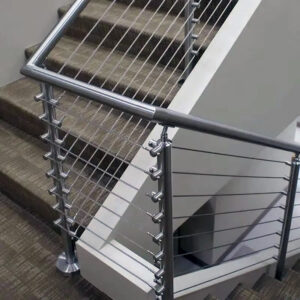
Pour les installations où la variation de pente entre les volées d'escaliers constitue le principal défi, mains courantes à poteaux réglables remédier directement à ce problème. Lorsque le support est en bon état et que le tracé est précis, les composants fixes offrent généralement un résultat plus stable et d’une meilleure qualité visuelle.
Séquence de levé et d'alignement sur le chantier
C'est au cours de la phase de levé que la plupart des problèmes d'installation en aval sont soit maîtrisés, soit reportés. Si les équipes commencent à poser les ancrages sans repères convenus ni séquence définie, la plage de réglage des fixations des poteaux compense les incohérences de tracé plutôt que les variations réelles de pente — et la géométrie ainsi créée ne peut être corrigée sans replacer les ancrages.
Une séquence de travail commence par la mise en place de repères topographiques avant le début des travaux de forage ou de fixation. Ces repères définissent le plan de référence pour les positions des bases des poteaux et constituent les points par rapport auxquels chaque emplacement d’ancrage est validé. La séquence passe ensuite à la mise en place des ancrages, chaque position étant vérifiée par rapport au repère avant la fixation définitive sur le support. Les poteaux ne sont installés qu’une fois que tous les ancrages d’une série ont été validés — et non pas un par un, ce qui risquerait de faire de la position d’un poteau installé en premier la référence de facto pour le suivant.
Le tracé du rail suit la mise en place des poteaux. Le rail doit être positionné dans la plage de réglage du support ou de la selle du poteau ; il ne doit pas servir à aligner un poteau. L'ordre de serrage est important : le verrouillage final doit s'effectuer d'une extrémité définie de la ligne à l'autre, et non sur chaque poteau pris isolément, ce qui pourrait entraîner une dérive angulaire cumulative sur l'ensemble de la ligne.
L'intérêt de cette séquence ne réside pas dans une simple formalité procédurale, mais dans le fait qu'elle délimite la tâche demandée au mécanisme de réglage. Si chaque poteau est verrouillé dans sa plage de réglage conformément au relevé, le système fonctionne comme prévu. Si les installateurs travaillent poteau par poteau et utilisent le réglage pour atteindre le rail, l’erreur s’accumule visuellement et géométriquement d’une manière difficile à identifier tant que l’ensemble du tracé n’est pas achevé. À ce stade, le réajustement est nettement plus perturbant que ne l’aurait été le travail de relevé initial.
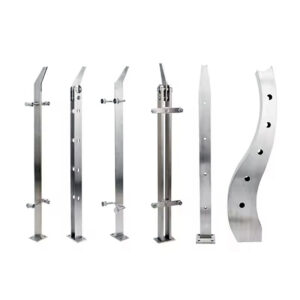
Pour en savoir plus sur le choix des poteaux, les méthodes de fixation et les considérations relatives aux matériaux pour les différents types d'installation, Le guide complet sur les poteaux en acier inoxydable couvre l'ensemble des spécifications et des variables propres au chantier qui influencent ces décisions.
Réception définitive dans les limites prévues
L'acceptation d'un système de garde-corps à poteaux réglables consiste à vérifier que chaque poteau se situe dans la plage de réglage prévue pour le produit — il ne s'agit ni d'un test de conformité structurelle, ni d'un seuil variant en fonction de l'ampleur du réglage nécessaire pour y parvenir. La condition d'acceptation est binaire : soit le poteau s'aligne dans la plage angulaire définie par le fabricant sans déplacer l'ancrage ni dépasser les limites de la quincaillerie, soit il ne s'y aligne pas.
Les plages applicables dépendent du type de montage et de la configuration du support. Il s'agit de valeurs de conception propres à chaque fabricant, et non de critères d'acceptation imposés par la réglementation ; elles constituent toutefois les paramètres mesurables sur la base desquels un contrôle d'acceptation rationnel doit être effectué.
| Fixation / Type de poteau | Gamme d'angles d'escalier compatibles | Condition d'acceptation |
|---|---|---|
| Support supérieur réglable à montage en surface | 25°–37° | Chaque poteau doit être aligné dans la plage prévue, sans déplacer les ancrages ni dépasser les limites imposées par les éléments de fixation. |
| Support supérieur réglable à fixation latérale | 25°–38° | Même condition |
| Poteau structurel d'extrémité ou intermédiaire avec support supérieur réglable | 25°–40° | Même condition |
Le fait de dépasser la plage de réglage ne signifie pas automatiquement que le garde-corps ne satisfait pas à une exigence de performance structurelle prévue par la norme ASTM E985-24. Cela signifie simplement que l'installation s'est déplacée hors de l'enveloppe dans laquelle la géométrie du produit, le cheminement des charges et le comportement de verrouillage ont été conçus. Les conséquences visibles et structurelles de cette situation — charge excentrée sur la base, dérive des fixations, instabilité du verrouillage — constituent le risque réel, et non la valeur angulaire en elle-même.
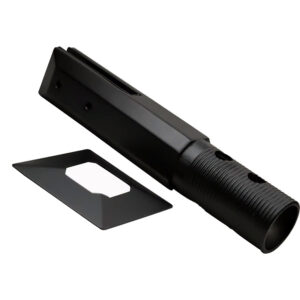
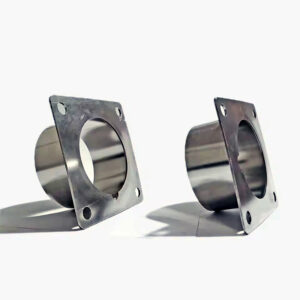
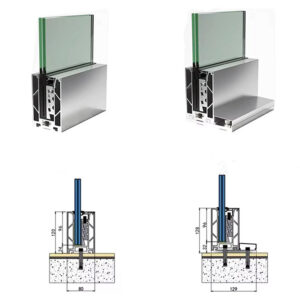
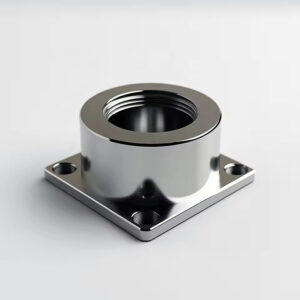
Le contrôle de conformité doit donc être effectué avant le serrage définitif, et non après. Un poteau dont la mesure se situe dans la plage autorisée avant le couple de serrage définitif, mais qui a nécessité une manipulation importante du support pour atteindre cette position, justifie une vérification de la position de l'ancrage. À l'inverse, un poteau qui s'aligne parfaitement dans la plage de réglage, sans déviation visible des éléments de fixation et avec une plaque de base plane et de niveau, correspond au résultat prévu par le cahier des charges. Plaques de base réglables sont conçus pour s'adapter à cet alignement sans compromis sur l'aspect visuel — à condition que la géométrie de l'ancrage le permette.
Considérez la série de mesures dans son ensemble, et non pas mesure par mesure. En vérifiant au hasard quelques mesures au milieu d'un vol, on risque de passer à côté d'une dérive angulaire cumulative qui n'apparaît que lorsque l'ensemble de la série est comparé aux repères de référence du levé initial.
L'implication fondamentale de l'utilisation de systèmes de poteaux réglables est que leur marge de tolérance est limitée — définie par la plage d'angles indiquée par le fabricant pour chaque configuration de montage — et que cette limite doit être prise en compte dès la phase de planification, et non découverte sur le terrain. Les projets qui confirment les positions des ancrages avant la fixation et établissent des repères topographiques avant que les équipes ne commencent à poser les poteaux utilisent la plage de réglage conformément à sa finalité. Les projets qui considèrent ce réglage comme une flexibilité illimitée ont tendance à révéler leurs erreurs lors de la réception, lorsque les seules options sont soit d’accepter une installation géométriquement compromise, soit de replacer les ancrages dans un support déjà achevé.
Avant l'achat, vérifiez quelle plage d'angles le matériel sélectionné prend en charge pour chaque type de fixation prévu dans le projet, quelle méthode de verrouillage est utilisée et quelles sont ses exigences en matière de stabilité à long terme, et déterminez si les variations sur le chantier justifient réellement l'utilisation de composants réglables ou si un agencement précis et une fabrication fixe permettraient d'obtenir un résultat plus facile à entretenir. La comparaison entre les systèmes réglables et fixes relève d'un choix de configuration qui doit être effectué lors de la définition du cahier des charges, et non pas résolu sur le chantier à l'aide d'un support et d'une vis de réglage.
Questions fréquemment posées
Q : Que faire si l'angle de mon escalier dépasse la plage de réglage des poteaux de rampe réglables standard ?
R : Le système ne peut pas fonctionner en toute sécurité ; vous devez soit vous procurer des fixations offrant une plage d’angle plus large, soit opter pour une fabrication sur mesure, soit modifier la structure de l’escalier afin de ramener la pente dans les limites autorisées. Forcer un support à fonctionner au-delà de ses limites de conception — par exemple, un escalier à 45° avec des fixations prévues pour un angle compris entre 25° et 40° — entraînera une inclinaison de la plaque de base, exercera une charge excentrique sur la connexion et compromettra le mécanisme de verrouillage, même si le montant semble d’aplomb. Vérifiez toujours la plage d’angles spécifique indiquée par le fabricant pour chaque type de montage avant de passer commande.
Q : Quel programme d'entretien dois-je mettre en place pour les systèmes de montants réglables afin d'éviter que les serrures ne s'usent avec le temps ?
R : Inspectez et resserrez chaque point de fixation tous les 12 mois pendant les deux premières années, puis passez à des contrôles bisannuels si aucun déplacement n’est constaté. Les cycles thermiques, les vibrations normales dues au passage des piétons et les charges dynamiques peuvent progressivement desserrer les vis de fixation, les colliers de serrage ou les colliers de friction, même si l’installation initiale a été réalisée correctement. À chaque contrôle, vérifiez l’alignement des poteaux par rapport aux repères d’arpentage d’origine afin de détecter tout mouvement précoce avant qu’il ne se traduise par une déformation visible.
Q : Dans des environnements soumis à des vibrations fortes et continues, tels que les passerelles industrielles ou à proximité de machines lourdes, les recommandations de l'article concernant les montants réglables s'appliquent-elles toujours ?
R : Dans les environnements soumis à de fortes vibrations, les assemblages soudés fixes sont fortement recommandés, car les vibrations persistantes accélèrent le desserrage de toute interface de verrouillage mécanique bien au-delà de ce que l'entretien classique peut gérer. Si l'utilisation de pièces réglables est inévitable, il convient de prévoir des éléments de verrouillage entièrement métalliques associés à des freins-filets chimiques et de réduire la fréquence des inspections à une fois par trimestre. Même dans ce cas, un système soudé présente moins de points de défaillance et offre une plus grande sécurité à long terme sous des charges dynamiques continues.
Q : Sur un cycle de vie de 10 ans, les pièces réglables reviennent-elles réellement moins cher que les pièces fixes, si l'on tient compte des coûts d'entretien et des retouches ?
R : La fabrication fixe permet souvent de réduire le coût total sur une décennie lorsque la disposition initiale du substrat est suffisamment précise pour éviter toute retouche des ancrages. Les poteaux réglables permettent d’économiser sur les retouches d’installation immédiates sur des sites variables, mais ils entraînent une main-d’œuvre d’entretien récurrente pour le resserrage et les contrôles d’alignement, qui s’accumule au fil du temps. Sur des configurations hautement contrôlées, l’entretien quasi nul des équipements fixes leur confère un avantage financier ; sur des sites imprévisibles, les économies réalisées en amont sur les retouches grâce au réglage peuvent tout de même faire pencher la balance.
Q : Quel doit être le degré de planéité d'un support en béton pour pouvoir se passer de plaques de base réglables et utiliser des poteaux fixes en toute sécurité ?
R : En règle générale, la dalle doit présenter un nivellement de 3 mm maximum sur toute longueur d’un mètre, et les emplacements des ancrages doivent respecter le gabarit de boulonnage prévu à ±5 mm près pour que les plaques de base fixes puissent être posées sans cales ni meulage. Si un relevé au laser révèle que plus de 10% de vos emplacements de poteaux se situent en dehors de ces tolérances, les plaques de base réglables constituent alors le choix le plus pratique et le moins risqué. Dans les cas limites, plaques de base réglables peut s'adapter aux irrégularités courantes du terrain sans nécessiter de travaux de réfection importants du béton.