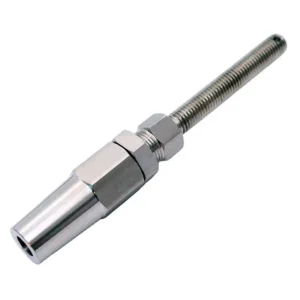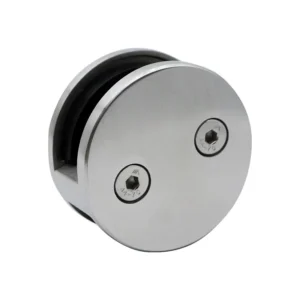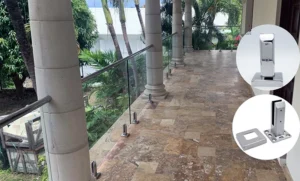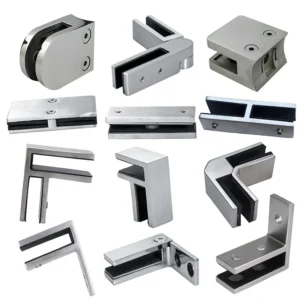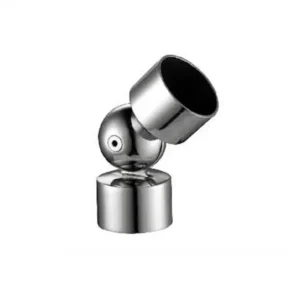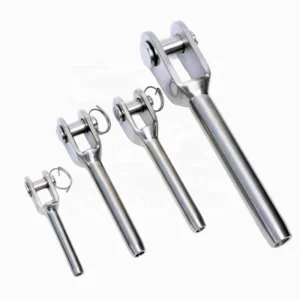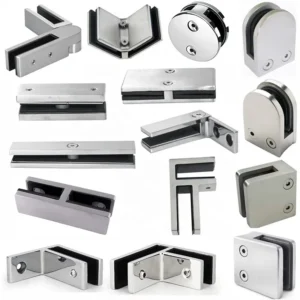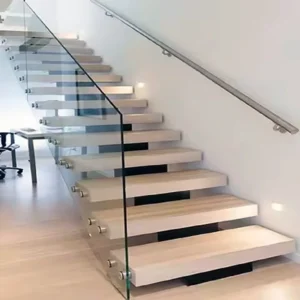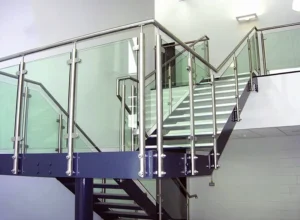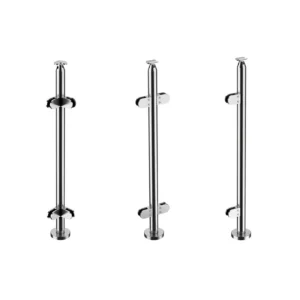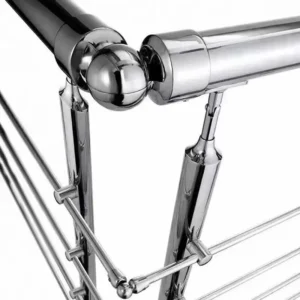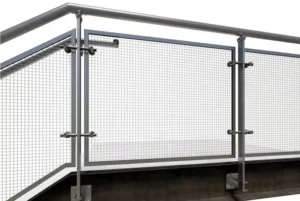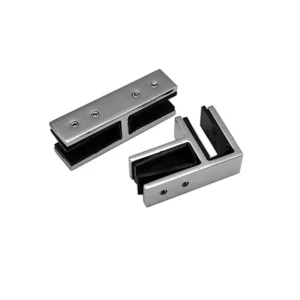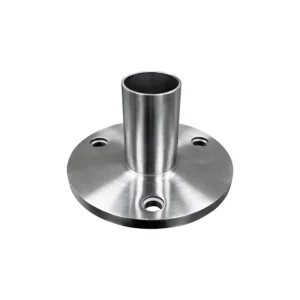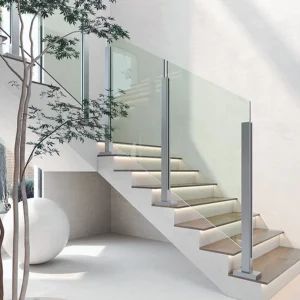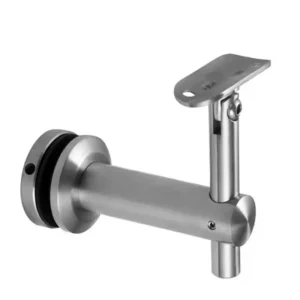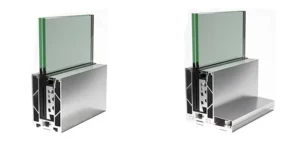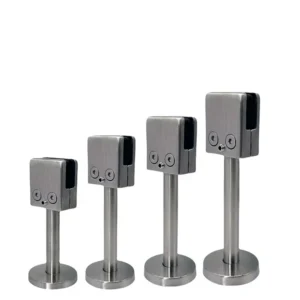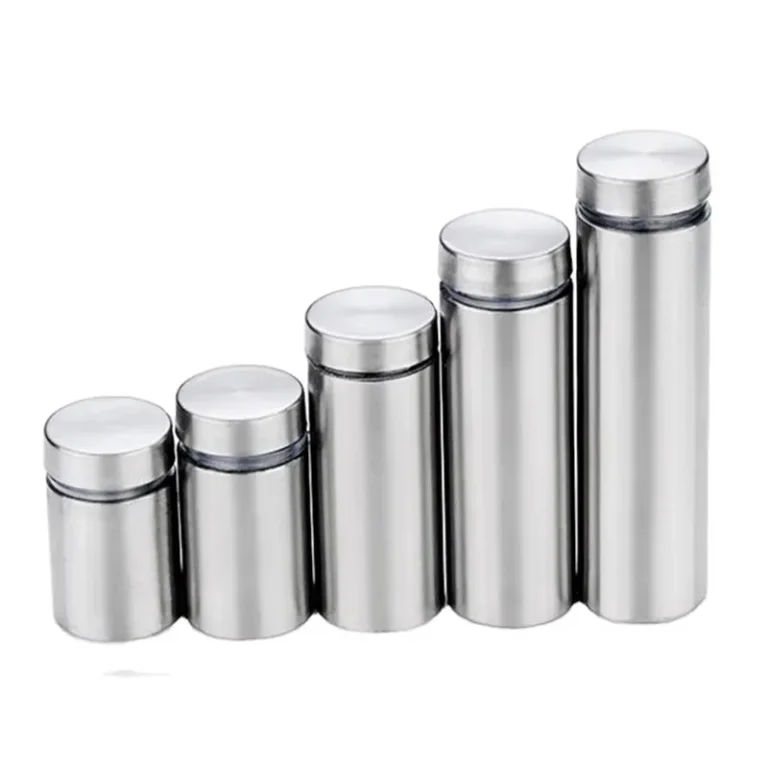
Adjustable glass standoffs are point-fixing assemblies used to hold drilled glass away from a wall, fascia, post or frame while allowing a defined part of the installation geometry to be corrected. “Adjustable” is not one universal mechanism: it may refer to projection, leveling, lateral position or a replaceable spacer. State which movement the project needs before selecting a body, cap, glass hole or anchor.
Discuss adjustable standoffs on WhatsApp
Define what must move
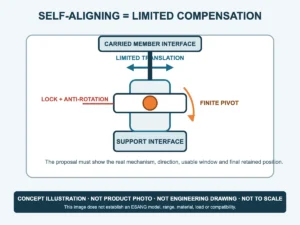
Ask the drawing and quote to name the adjustment axis and usable range for the exact proposed assembly. This avoids buying a product that is adjustable in the wrong way.
- Projection adjustment changes the distance between the glass and the support. It can help align panels over a variable wall or fascia, but it also changes the lever arm and must stay within the evaluated configuration.
- In/out or leveling adjustment brings adjacent glass faces into one plane. It is useful for support tolerances but cannot correct an anchor that misses the structural member.
- Lateral or slot adjustment can assist setting-out, but the final position, washer bearing and lock-off still need to be shown.
- Replaceable spacer lengths create different fixed stand-offs; a family of lengths is not necessarily a mechanism that remains adjustable after installation.
The final lock, thread engagement, anti-rotation method and inspection access matter as much as the initial movement. If the quote only says “adjustable” without those fields, the offers are not yet comparable.
Freeze the glass hole before tempering
Point-fixed standoffs normally pass a stud, sleeve or cap connection through a fabricated glass hole. That means the glass and hardware drawings must be coordinated before heat treatment. Confirm:
- monolithic or laminated make-up, total thickness and tolerance, panel size and heat-treatment requirement;
- hole diameter, hole position, edge distance and hole tolerance for the proposed fitting;
- cap or washer diameter on both faces and how it bears around the hole;
- gaskets, bushes or sleeves that isolate metal from the glass edge and faces;
- whether adjustment changes hole clearance or requires an elongated feature in another component;
- tightening sequence and project-approved torque or lock-off instruction.
A standoff cannot safely rescue a wrongly fabricated hole. Excess clearance may reduce bearing or make alignment unstable; insufficient clearance can force metal or a rigid sleeve against the glass. The glass fabricator should receive the exact approved hardware detail, not a nominal standoff diameter.
Match the body and anchor to the support
The visible barrel creates an offset, but the hidden fixing transfers the action into the structure. Provide the actual support: reinforced concrete or masonry, structural steel, a steel plate behind cladding, or structural timber. For a built-up wall, identify the finish, cavity and backing location.
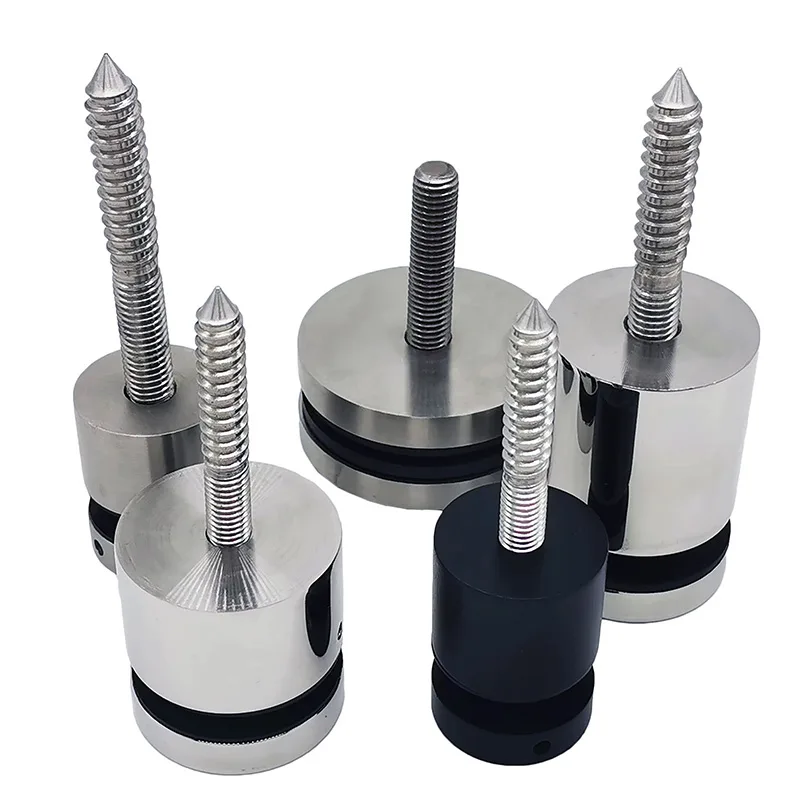
The proposed connection should state the standoff body, stud or bolt, any rear nut or threaded receiver, washers, anchor system, required engagement and access for tightening. A wood-threaded end, machine-threaded stud and concrete anchor are not interchangeable merely because the visible barrel looks the same. The project engineer or anchor designer must confirm the load path, edge distances and support capacity.
Coordinate offset, joints and adjacent hardware
Projection affects more than appearance. It changes cleaning access, sealant joints, cap-rail alignment, the clearance to wall finishes and the moment at the support. Record the finished glass face datum and measure from the structural support, not from an unfinished cladding surface.
Also coordinate panel joints, corners, bottom clearance, handrail or top-rail connections, gates and any glass-to-glass fittings. Standoffs support discrete points; they do not by themselves define the glass thickness, panel span or whether a top rail is required. Those decisions belong to the complete engineered glass system.
State the supply boundary
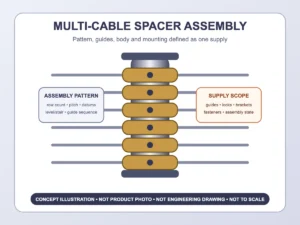
Ask the quotation to identify each part rather than treating “standoff” as a complete kit. The proposed supply may include or exclude:
- barrel/base, cap, stud and locking parts;
- glass gaskets, bushes, sleeves and washers;
- substrate anchors, threaded receivers or backing plates;
- spacers or adjustment pieces for the stated projection range;
- glass and its hole fabrication;
- top rail, panel connectors and adjacent supports;
- special tools, setting template, drawings, test evidence and engineering.
Material and finish should be proposed for the stated indoor, exterior, pool, coastal or industrial exposure. A visible finish does not prove an alloy. Likewise, a fitting advertised for glass does not establish a rating for the completed guard; glass, hole geometry, standoff spacing, fasteners and substrate must be assessed together.
Quote fields that prevent rework
You can start with a photo and estimated quantity. For a production-ready comparison, send:
- use of the glass panel and the governing project criteria;
- glass make-up, thickness, panel size and existing or proposed hole schedule;
- required finished offset and the direction/range of adjustment needed;
- support material, thickness, backing and access to the reverse side;
- panel layout, joints, corners, slopes and adjacent rail or connector details;
- exposure, visible form, finish, quantity and packaging;
- which anchors, gaskets, glass, tools and documents must be in the proposed package.
The quote should return an exact section detail through the glass, standoff and support, plus the final hole and interface fields. That is the document to compare—not the word “adjustable” alone.