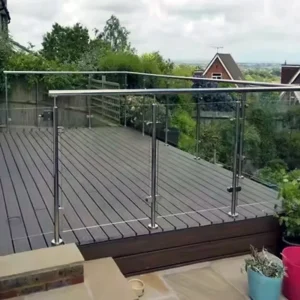
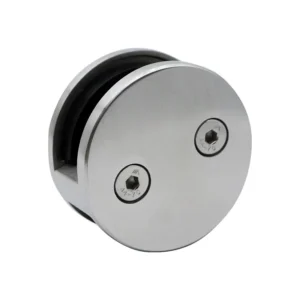
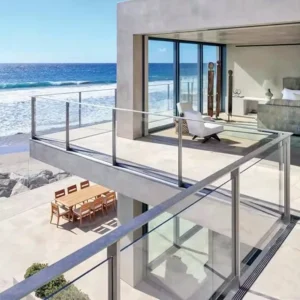
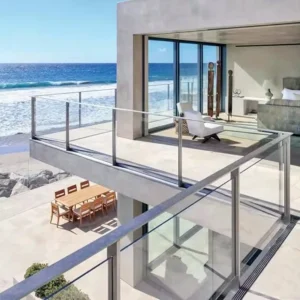
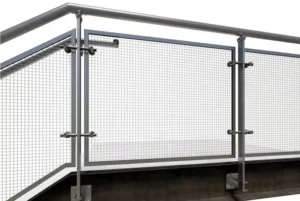
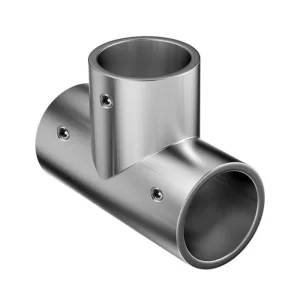
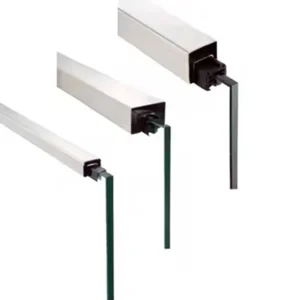
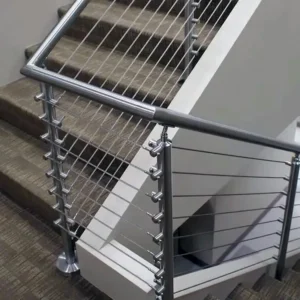
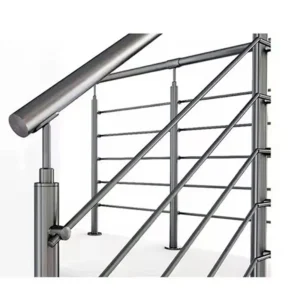
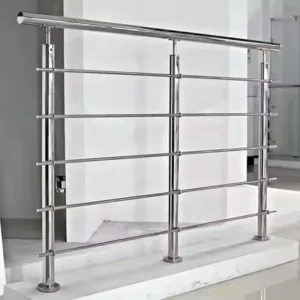
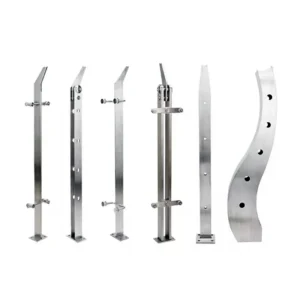
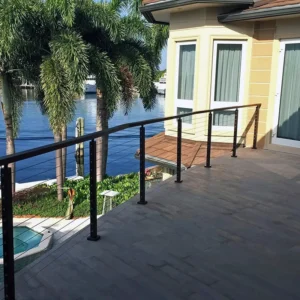
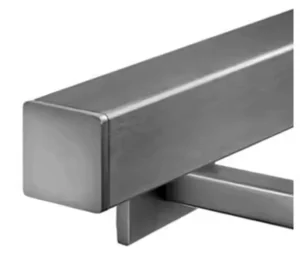
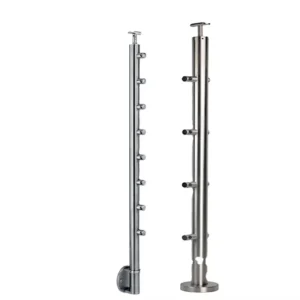
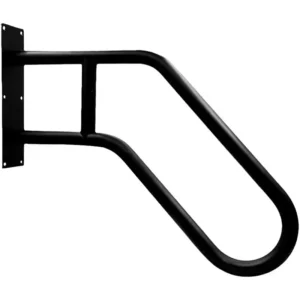
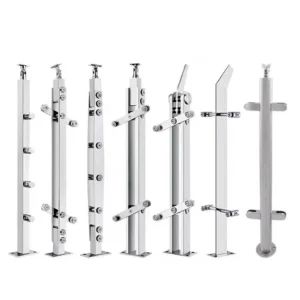
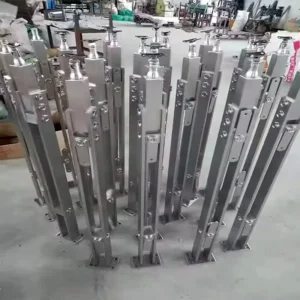
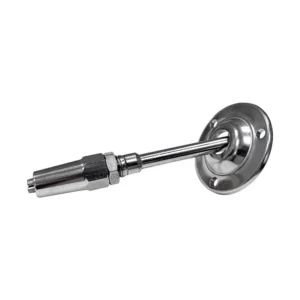
Continuous round handrail tubing is useful when a project needs a consistent gripping line through straight runs, landings, returns or changes in direction. The purchasing decision is not simply “the longest tube available.” Tube outside diameter, wall, grade, finish, bends, joints, supports and delivery sections must be coordinated as one schedule. ESANG can review a drawing, marked-up photo or preliminary quantity and prepare a proposed configuration for confirmation.
Discuss continuous round tubing on WhatsApp
Start with the rail’s job
A round member can serve different duties, and those duties should not be combined by assumption:
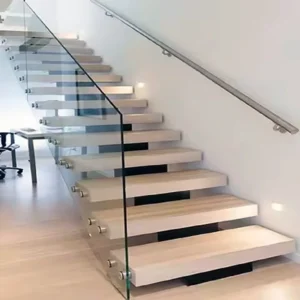
- Graspable handrail: the route, gripping surface, clearance, returns and continuity are governed by the applicable project rules. For U.S. accessibility work, the official ADA Standards, Section 505 are one reference; the project designer still decides which rules apply.
- Top rail for a guard or infill system: the post spacing, infill, connections, anchors and supporting structure determine system behavior. A tube description alone is not a guard-system performance statement.
- Decorative or protective rail: appearance, transitions and mounting details may control the choice even when the member is not the code-required gripping surface.
Tell ESANG which role applies to each run. If one tube must serve more than one role, identify that explicitly so the proposed section and interfaces can be reviewed together.
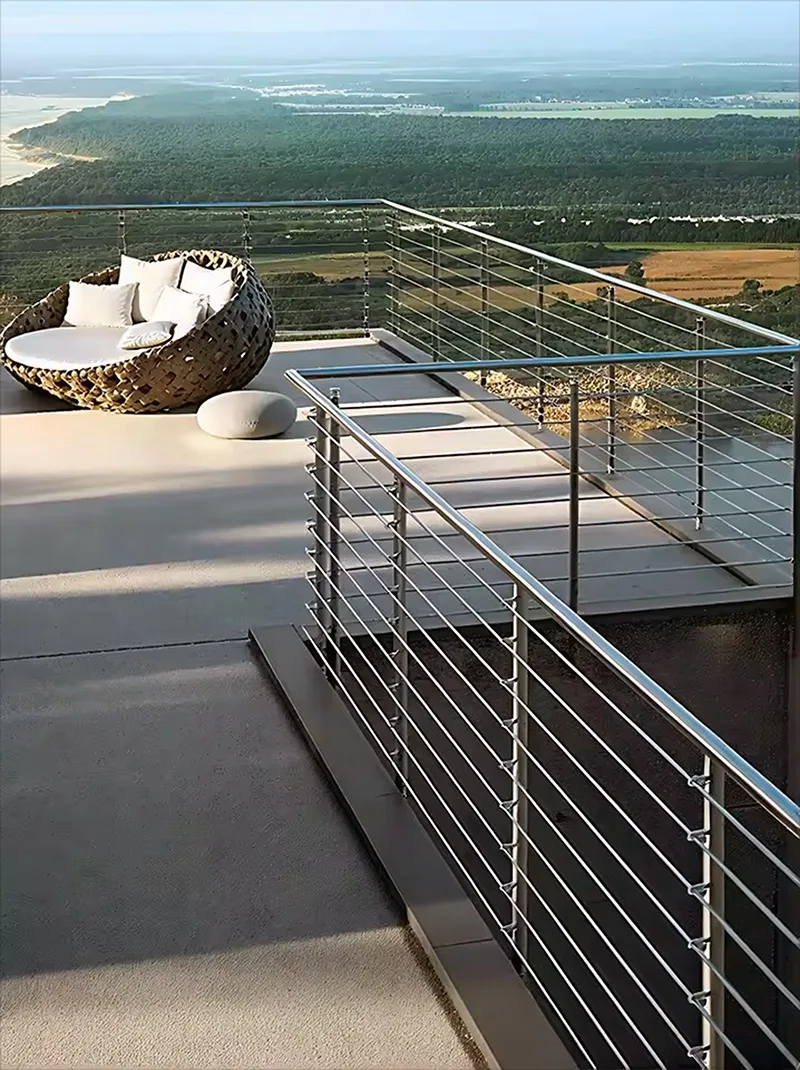
Freeze the tube schedule before comparing prices
Outside diameter and wall
State the actual outside diameter rather than relying on a nominal pipe description. Add the requested wall or gauge and whether the member is intended as a gripping rail, top rail or non-structural trim. If the design is based on a published tube specification, put the exact specification and edition in the request. For example, ASTM A554 covers welded stainless mechanical tubing, but citing it does not by itself set the grade, finish, wall, tolerances or structural acceptance for a railing project.
Material and exposure
Describe interior or exterior use, distance from salt water, de-icing salt, pool chemicals, industrial deposits, cleaning practice and any sheltered areas that will not be rain-washed. Ask the quotation to name the proposed grade for the tube and for visible connectors or fasteners. Do not treat “stainless” or a finish name as a complete exposure specification.
Finish and visual direction
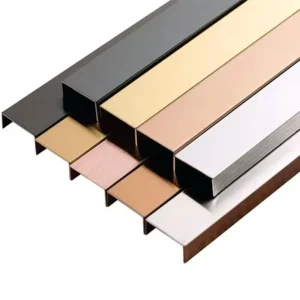
Define the target finish, acceptable color variation, grain direction and whether welded areas must be blended to match the parent tube. For adjacent sections, a sample or approved finish reference is more useful than broad terms such as “brushed” or “mirror.” Protective film and packing should also be stated when the surface will remain exposed after installation.
Straight, bent and end-prepared sections
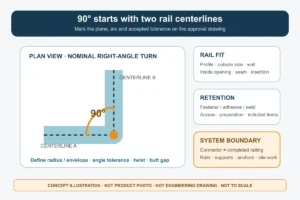
Mark every bend, return, slope change, termination and interface with posts or wall brackets. A bend request should include centerline radius, included angle and tangent lengths. An end-preparation request should identify whether the end is plain, capped, sleeved, machined or prepared for a project-specific weld. These are quotation fields, not a claim that every combination is a stocked ESANG option.
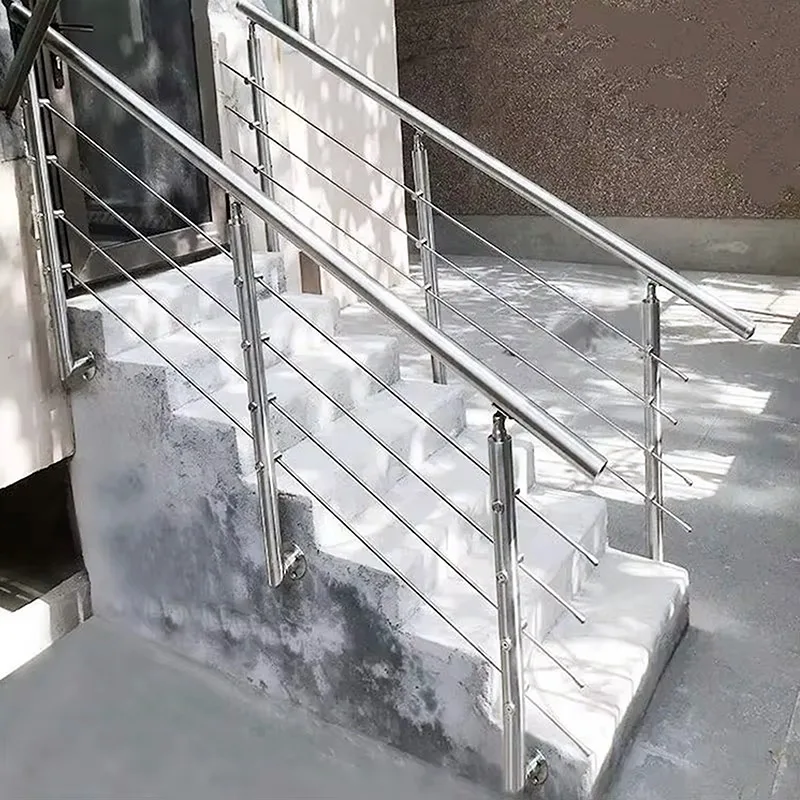
“Continuous” still needs a joint map
A visually continuous route can be produced from more than one fabrication and installation strategy. The practical choice depends on transport, access, finish expectations and whether site welding is permitted.
- Long shop-prepared sections: reduce the number of field joints but increase handling, packaging and access demands. Confirm the maximum section that can reach its final position without damage.
- Mechanical or sleeved joints: can simplify field assembly, but the tube inside diameter, insert, retention method, joint line and access for tightening must be matched.
- Shop-welded assemblies: can move more finishing work into a controlled environment, but shipping geometry and site tolerance become more critical.
- Field-welded joints: may suit some projects, but the contract must assign welding, alignment, finishing, cleaning, inspection and protection responsibilities.
Show proposed joint locations on the run drawing. Keep joints away from highly visible focal points or difficult finishing areas where the project requires a uniform appearance. The structural designer or system engineer must still set supports and verify the complete assembly; ordering a longer tube does not create a longer allowable unsupported span.
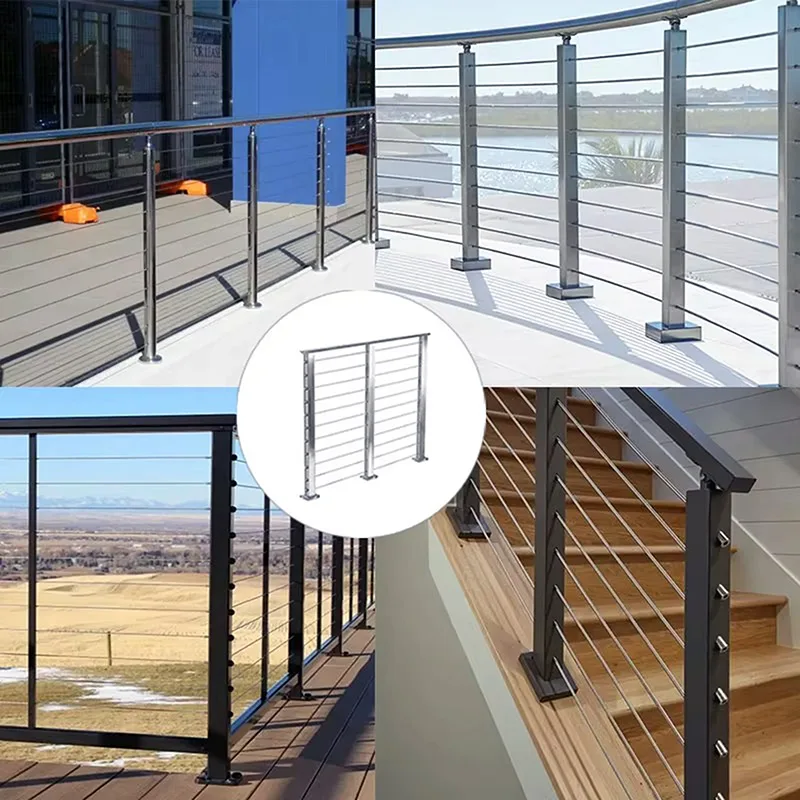
Interfaces that must be matched
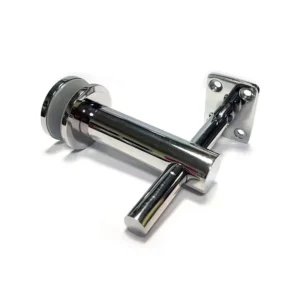
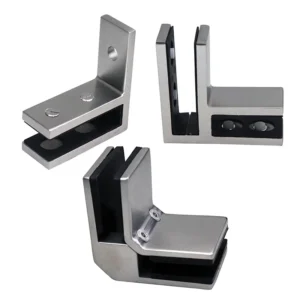
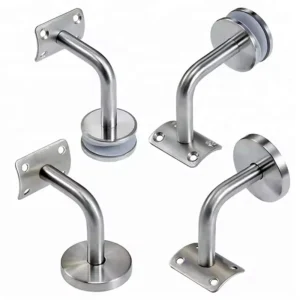
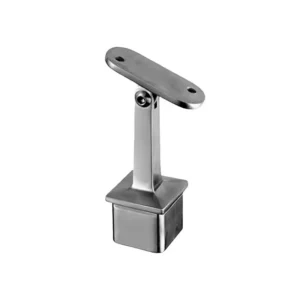
- Brackets and saddles: provide rail outside diameter, contact profile, fixing-hole pattern and required standoff or clearance.
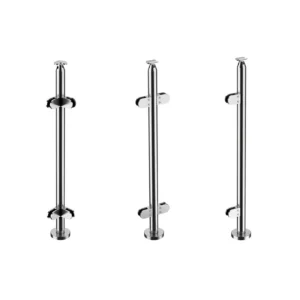
- Posts and adapters: identify the post profile, top condition, rail centerline and whether the connection is mechanical or welded.
- Corners and slopes: give actual angles and the allowed appearance at the transition; do not assume a nominal elbow will match site geometry.
- Ends and returns: mark wall returns, free ends, closures and any required extensions on the drawing.
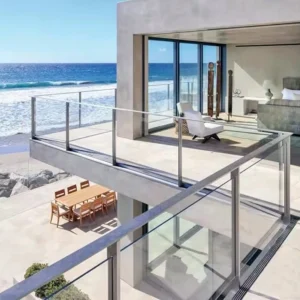
- Adjacent infill: state whether glass, cable, rods or another infill meets the rail. Infill hardware and its loads remain a separate coordination item.
What to send for a useful proposal
You can begin with a sketch, a marked-up plan or site photos. For a comparable quotation, send as much of the following as is available:
- overall route, run lengths, slopes, corners, landings and returns;
- tube outside diameter, wall, requested grade and finish, or the design criteria if these are not fixed;
- rail duty: graspable handrail, top rail, decorative rail or a combined duty;
- proposed support and joint locations, including any no-joint zones;
- site exposure, cleaning conditions and the governing project specification;
- maximum delivery section, access limitations and whether shop or field welding is permitted;
- estimated quantities and the documentation, sample or inspection records required with the order.
The proposed quotation should identify the exact tube, section lengths, bends, end preparations, joint components, finish, included documentation and exclusions. Anchors, supports, infill and installation labor should appear as included or excluded rather than being inferred from a product name.
Common specification questions
Does continuous tubing mean one piece for the whole route?
No. “Continuous” can describe the visual and functional route. Manufactured section length, shipping length, installation access and joint locations still need to be agreed for each project.
Can one diameter be used for every handrail project?
No. Grip requirements, system duty, wall thickness, bracket fit and the governing code all affect the choice. Give the actual design requirement rather than selecting a diameter only from a photograph.
Is a 316 or 316L label enough for coastal use?
No. Grade is one input. Finish, fabrication, weld treatment, crevices, fasteners, drainage, cleaning and the severity of chloride exposure also affect suitability. Ask the quotation to state the proposed material for each relevant component and the required post-fabrication treatment.
Can pricing start before every dimension is final?
Yes. A preliminary route, target section, estimated quantity and exposure are enough to start a configuration discussion. Final fabrication should wait until the joint map, interfaces and controlling dimensions are approved.