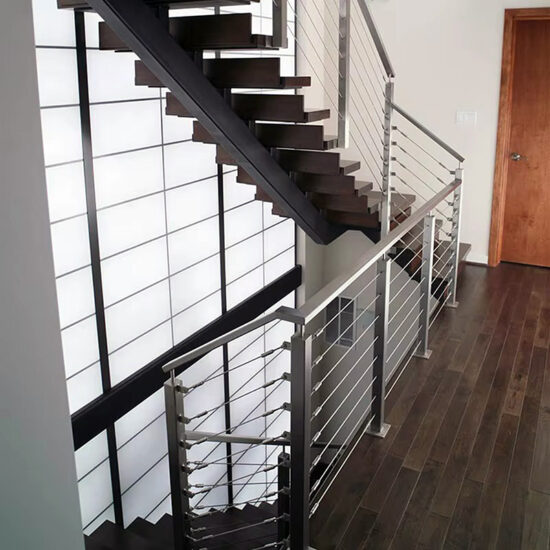
Navigating cable railing code compliance is a foundational project risk. Misidentifying the governing code—IRC or IBC—can invalidate your design, trigger costly rework, and delay occupancy. The challenge is compounded by local amendments and subjective interpretations of infill climbability. Professionals must move beyond component selection to system-level verification, where documentation and installation quality are as critical as the hardware itself.
This compliance landscape demands precision now. Building departments are scrutinizing cable systems more closely, and liability for failures extends across the supply chain. A methodical approach to code selection, specification, and verification is no longer optional; it’s essential for project viability, safety, and professional reputation.
IRC vs IBC: Defining the Core Code Difference
The Jurisdictional Filter
The first decision is jurisdictional. The International Residential Code (IRC) governs one- and two-family dwellings. The International Building Code (IBC) applies to commercial structures and multi-family residences with three or more units. This binary filter immediately dictates your primary guard height: 36 inches for IRC and 42 inches for IBC. This single parameter influences post length, material costs, and overall system aesthetics before any other detail is considered. We often see projects stalled because this fundamental code assignment was assumed rather than verified with the local authority.
The Amendment Variable
Model codes are just the starting point. Local jurisdictions frequently adopt amendments that modify these baseline requirements, creating a fragmented regulatory environment. A system compliant in one city may fail in the next. The most critical pre-design step is contacting the local building department to confirm which code edition is enforced and if any local modifications exist, particularly regarding guard height or infill interpretation. This due diligence prevents redesigns during permitting.
Key Code Requirements Compared: IRC vs IBC Checklist
Aligned Safety Fundamentals
Both the IRC and IBC share core safety principles. Each mandates that a 4-inch sphere cannot pass through any guard opening and requires the top rail to withstand a 200-pound concentrated load. The uniform infill load requirement is 50 pounds per square foot applied horizontally. These aligned requirements form the universal structural baseline for all cable railing systems, whether residential or commercial.
Critical Points of Divergence
Beyond the guard height, the most significant divergence is the stair triangle opening rule. The IRC prohibits a 6-inch sphere from passing through the space formed by the tread, riser, and bottom rail. The IBC uses a stricter 4 3/8-inch sphere. This detail is easily overlooked during stair design but is a common point of correction during inspection. Handrail height, while sharing a 34- to 38-inch range, must also be evaluated in the context of the taller IBC guard.
The following table provides a direct comparison of the core requirements, highlighting the critical differences that dictate design parameters.
IRC vs IBC Core Requirements
| Requirement | IRC (Residential) | IBC (Commercial) |
|---|---|---|
| Minimum Guard Height | 36 inches | 42 inches |
| Handrail Height | 34 to 38 inches | 34 to 38 inches |
| Opening Limitation | 4-inch sphere | 4-inch sphere |
| Stair Triangle Opening | 6-inch sphere | 4 3/8-inch sphere |
| Top Rail Load | 200 lbs concentrated | 200 lbs concentrated |
| Infill Load | 50 lbs per sq. ft. | 50 lbs per sq. ft. |
Source: IBC 2021 International Building Code and IRC 2021 International Residential Code. These model codes establish the fundamental safety requirements for guards and handrails, including the critical differences in height and stair opening rules shown in the table.
Cable Spacing & Deflection: Meeting the 4-Inch Sphere Rule
Dynamic, Not Static, Compliance
The 4-inch sphere rule is a performance requirement under load, not a simple measurement of static spacing. Cables will deflect when pressure is applied. Therefore, initial on-center spacing must be less than 4 inches to ensure a sphere cannot pass after deflection occurs. Industry standard spacing is typically 3 to 3 1/8 inches. This buffer is your primary defense against non-compliance during a structural test or incidental impact.
Managing Deflection Through Tension
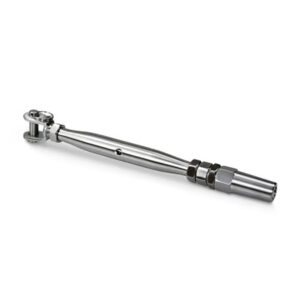
The system must limit deflection to maintain the safe opening. Proper cable tension is the only control mechanism. Inadequate tension leads to excessive flex, violating the code’s intent. The goal is to achieve and maintain tension high enough to limit deflection under the 50 psf load, but within the hardware’s rated capacity. This is why skilled installation with calibrated tensioning tools is non-negotiable; it transforms a theoretical specification into a compliant, in-service condition.
The parameters below define the operational targets for achieving and maintaining compliance with the 4-inch rule.
Cable Spacing and Deflection Parameters
| Parameter | Specification | Purpose |
|---|---|---|
| Maximum Opening | 4-inch sphere | Code compliance |
| Typical Cable Spacing | 3 to 3 1/8 inches | Accounts for deflection |
| Maximum Allowable Deflection | 25% under load | Maintains safe opening |
| Infill Load Requirement | 50 lbs per sq. ft. | Structural safety |
Source: IRC 2021 International Residential Code and IBC 2021 International Building Code. Both codes mandate the 4-inch sphere rule for guard openings and the 50 psf infill load, requiring initial cable spacing to be less than 4 inches to account for dynamic deflection under pressure.
Post Spacing & Tensioning for Structural Compliance
Engineering the Span
Building codes specify load requirements but do not prescribe maximum post spacing. The common 4-foot on-center standard is an engineered solution to manage cable deflection and meet the 200-lb top load across the span. Wider spacings are possible but require rigorous engineering analysis for the posts and footings to handle the multiplied cable tension and increased lever arm. In our experience, tighter post spacing consistently yields more reliable tension maintenance and reduces deflection-related callbacks.
The Imperative of Tensioning Protocol
Cable tension is not a set-it-and-forget-it specification. It is a temporary state affected by cable relaxation, thermal contraction, and expansion. A proper tensioning sequence—typically starting from the middle of a run and working outward—ensures even distribution and minimizes load on end posts. This procedural discipline is as important as the torque value on the tensioner. Long-term compliance implicitly includes a maintenance expectation, as periodic re-tensioning may be required to sustain the system’s safety performance.
The following factors outline the standard engineering practices that underpin a structurally sound installation.
Post Spacing and Tensioning Factors
| Factor | Standard Practice | Key Consideration |
|---|---|---|
| Typical Post Spacing | 4 feet on-center | Manages deflection |
| Maximum Top Load | 200 lbs concentrated | Code requirement |
| Cable Tension (per cable) | Exceeds 300 lbs | Structural integrity |
| Tensioning Sequence | Start from middle | Ensures even distribution |
Source: Technical documentation and industry specifications.
Material & Hardware Specifications for Code Approval
Component-Level Integrity
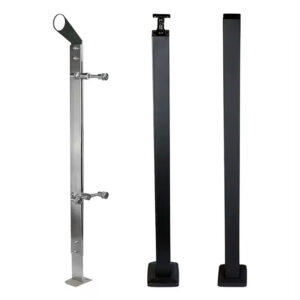
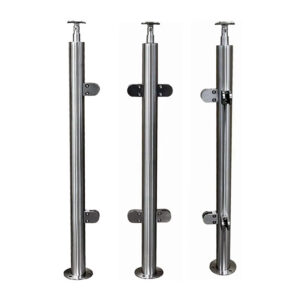
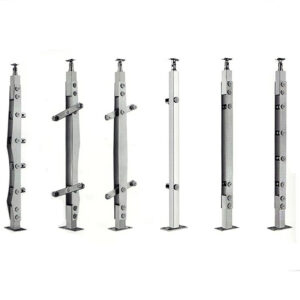
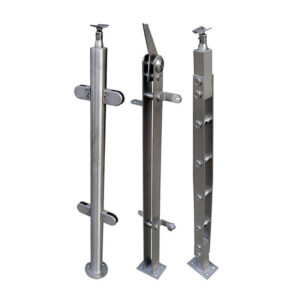
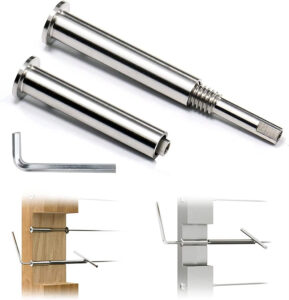
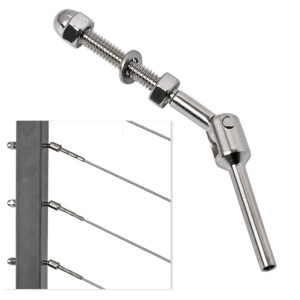
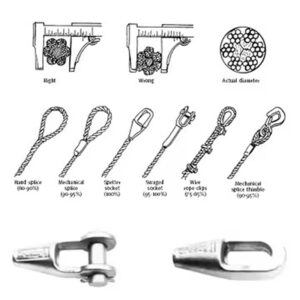
Every component must contribute to the system’s certified performance. Cable should be 1×19 construction (19 strands in a single outer layer) for optimal strength-to-stretch ratio. End and corner posts must be engineered to withstand the cumulative tension of all converging cables, which can exceed 300 pounds per cable. Using undersized or non-rated hardware creates a latent failure point, as the system is only as strong as its weakest mechanical connection.
The Dual-Function Challenge
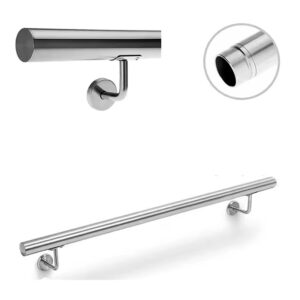
When a top rail also serves as a handrail on a stair, it must satisfy two sets of requirements. It must meet the guard height (36″ or 42″) while also providing a graspable profile, typically defined as a 1¼- to 2-inch diameter. This often conflicts with minimalist design intent and requires specialized, engineered components. Selecting a pre-engineered cable railing system designed for this dual compliance can resolve this conflict efficiently.
The specifications for key components are critical for both initial approval and long-term performance.
Material and Hardware Specifications
| Component | Key Specification | Compliance Note |
|---|---|---|
| Cable Construction | 1×19 strand | Optimal strength, minimal stretch |
| Handrail Diameter (if applicable) | 1¼ to 2 inches | Graspable profile requirement |
| End/Corner Post Design | Engineered for tension | Withstands >300 lbs per cable |
| System Certification | ICC Evaluation Report (ESR) | Streamlines permitting |
Source: Technical documentation and industry specifications.
The “Ladder Effect”: Horizontal vs. Vertical Cable Infill
A Subjective Enforcement Risk
The IRC does not explicitly prohibit horizontal cables due to climbability, but the “ladder effect” remains a subjective concern. Approval can hinge on an individual inspector’s interpretation. This creates an unquantifiable project risk. Proactive mitigation is essential: engage the building department during design review, submit supporting documentation like ICC Evaluation Service Reports (ESRs) that address climbability, or consider vertical infill for high-risk applications like schools or multifamily units where scrutiny is highest.
The Vertical Infill Alternative
Vertical cable systems eliminate the climbability debate entirely. However, they require significantly more cable and termination hardware, increasing material cost. They also present a different aesthetic and may have specific engineering requirements for lateral stability. The decision between horizontal and vertical infill is a risk-versus-cost calculation that must be made early, with input from the authority having jurisdiction.
Compliance Verification: Permits, Engineering & ESRs
The Burden of Proof
Securing a permit requires demonstrating that the assembled system meets code. This shifts focus from individual parts to integrated performance. Building officials typically require detailed engineering calculations, installation instructions, and proof of component ratings. Generic components place the full burden of structural proof on the designer and installer, increasing permit review time and liability.
The Value of Third-Party Certification
An ICC Evaluation Service Report (ESR) is a powerful tool. It certifies that a specific manufacturer’s system has been evaluated for compliance with model code requirements. Submitting an ESR with your permit application transfers a significant portion of the burden of proof from the field to the manufacturer, streamlining approvals. For contractors, this creates a strategic choice: accept higher permitting risk and liability with generic parts, or invest in certified kits for faster, more predictable approvals.
Choosing the Right Code: A Decision Framework for Your Project
Step 1: Confirm Jurisdiction and Code
Begin by definitively identifying the governing code (IRC or IBC) and all local amendments. This is your non-negotiable design framework. For IRC, design to 36-inch height and the 6-inch stair triangle. For IBC, design to 42 inches and the 4 3/8-inch triangle.
Step 2: Select Your Compliance Path
Decide between a custom-engineered system or a pre-certified kit. Weigh the lower upfront cost of generic components against the higher permitting risk, engineering fees, and liability. For most projects, especially commercial ones, the certainty and speed offered by a certified system justify the investment.
Step 3: Plan for Lifecycle Performance
Specify quality materials (1×19 cable, engineered posts) and factor in the cost of skilled installation. Acknowledge that cable systems require maintenance; plan for potential re-tensioning visits to ensure the system remains compliant and safe for its entire service life.
Your cable railing project’s success hinges on three priorities: definitive code identification, a verification strategy centered on certified systems or detailed engineering, and a lifecycle view that includes skilled installation and maintenance. This structured approach mitigates risk and ensures enduring safety and compliance.
Need professional guidance specifying a code-compliant cable railing system? The experts at Esang can help you navigate the requirements from design through installation. For specific project inquiries, you can also Contact Us.
Frequently Asked Questions
Q: How do you determine whether the IRC or IBC governs a cable railing project?
A: The project’s occupancy type dictates the applicable code. The International Residential Code (IRC) applies to one- and two-family dwellings, while the International Building Code (IBC) governs commercial structures and multi-family residences with three or more units. This initial decision is critical as it sets the minimum guard height at 36 inches or 42 inches, respectively. This means you must confirm the building’s classification before any design work begins, as the height difference directly impacts post sizing, aesthetics, and material costs.
Q: What is the practical method for ensuring cable spacing meets the 4-inch sphere rule?
A: You must account for cable deflection under load, which requires spacing cables at 3 to 3 1/8 inches on-center during installation. This pre-tensioning buffer ensures a 4-inch sphere cannot pass through the opening even when the cables flex, which is mandated by both the IRC and IBC. For projects where long-term safety is paramount, plan for skilled installation with a defined tensioning sequence and factor in potential maintenance re-tensioning to counteract cable relaxation over time.
Q: How does the “ladder effect” risk impact residential projects using horizontal cables?
A: While the International Residential Code (IRC) does not explicitly ban horizontal cables, approval can become subjective and hinge on an individual inspector’s interpretation of climbability. This creates an unquantifiable enforcement risk. If your residential project prioritizes a horizontal design, you should proactively mitigate risk by submitting pre-approved ICC Evaluation Service Reports (ESRs) and engaging the local building department early in the design phase.
Q: What are the key structural differences between IRC and IBC for stair railings?
A: Beyond the consistent 4-inch sphere rule for guards, a major difference is the opening limitation within the stair triangle. The IRC prohibits a 6-inch sphere from passing through, while the IBC enforces a stricter 4 3/8-inch sphere. This means commercial and multi-family stair designs require tighter clearances at the junction of the tread, riser, and bottom rail, which may necessitate specialized hardware or altered cable layouts compared to a single-family home.
Q: Should you use a certified cable railing kit or source generic components?
A: Certified kits with an ICC Evaluation Service Report (ESR) transfer compliance liability to the manufacturer and typically streamline the permitting process. Generic components offer lower upfront cost but place the full burden of proving code compliance through engineering calculations on the installer. For projects where permitting speed and risk reduction are critical, such as commercial builds, the certified system is often the safer choice despite higher material costs.
Q: What is the industry standard for post spacing, and can you exceed it?
A: A 4-foot on-center post spacing is the common engineered standard to reliably meet the 200-pound top load and 50 psf infill load while managing cable deflection. Wider spans up to 8 feet are technically possible with sufficiently robust structural posts but significantly increase engineering complexity and the risk of excessive deflection if tensioning is imperfect. This means custom designs with wider spacing require detailed engineering review and highly skilled installation, increasing both project cost and potential liability.
Q: Why is cable specification critical for long-term code compliance?
A: Using 1×19 construction cable is essential for its high strength and low stretch characteristics, which help maintain proper tension over time. Cable relaxation and temperature changes will degrade tension, a temporary state that compromises the 4-inch sphere rule. This means you should specify high-quality cable and factor in the need for skilled installation and potential post-occupancy re-tensioning services to ensure the system remains compliant and safe throughout its lifecycle.