Specifying and installing ADA-compliant handrails is a precise engineering task, not a general construction detail. A common misconception is that meeting the height range is sufficient for compliance. In reality, the interplay of height, clearance, grip geometry, and structural integrity creates a complex specification that, if mismanaged, leads to failed inspections, safety hazards, and costly retrofits.
For architects, contractors, and facility managers, navigating these requirements is critical now. The ADA is a civil rights law with legal enforceability, and building codes like the IBC incorporate its technical standards. Non-compliance isn’t just a code violation; it’s a barrier to access that carries significant liability. Understanding the full scope of Section 505.4 is essential for delivering safe, usable, and legally defensible installations.
ADA Handrail Height: The 34 to 38 Inch Standard Explained
Defining the Tolerance Zone
The ADA establishes a vertical range of 34 to 38 inches from the stair nosing to the top of the gripping surface. This four-inch zone is not a suggestion but a mandatory tolerance that must be applied consistently along the entire stair flight, including across landings. The strategic implication is clear: professionals must prioritize consistent installation within this range over achieving an arbitrary “perfect” height. A handrail that varies outside this zone, even if it averages within it, is non-compliant and compromises predictable support.
Application and Measurement Protocol
Consistency is the critical installation checkpoint. Measurement must be taken from the leading edge of the stair tread (the nosing) or the walking surface of a ramp. This measurement point must be maintained for the full length of the run. Industry experts recommend using a story pole or laser level during installation to verify this consistency continuously, as even minor deviations at brackets or fittings can create non-compliant sections. According to research from the ADA Standards for Accessible Design, this consistent application is a foundational requirement for usability.
The Impact of Inconsistency
A handrail with height variance fails its primary function: providing reliable, predictable support. Users with mobility or balance impairments rely on muscle memory and consistent placement. An inconsistent rail forces constant adjustment, increasing fatigue and fall risk. This directly translates to liability. In my experience reviewing installations, the most common field error isn’t the starting height but the failure to maintain it through transitions and around obstructions.
| Parameter | Specification | Key Requirement |
|---|---|---|
| Height Range | 34 to 38 inches | From walking surface |
| Tolerance Zone | 4 inches | Consistent application required |
| Measurement Point | Top of gripping surface | Above stair nosing |
| Application | Entire stair flight | Includes landings |
Source: ADA Standards for Accessible Design. The ADA Standards establish the enforceable 34-38 inch vertical range for handrail height, measured from the stair nosing to the top of the gripping surface, which must be consistent for the full length of the run.
Clearance Requirements: Avoiding Pinch Points and Projections
The 1.5-Inch Clearance Rule
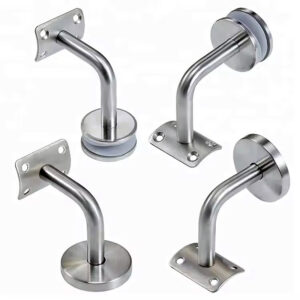
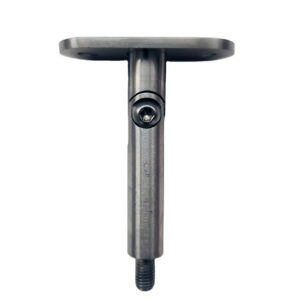
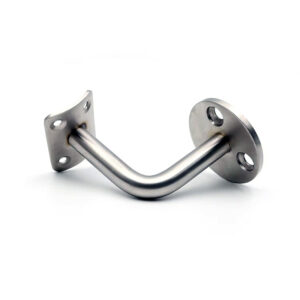
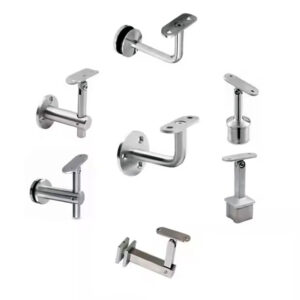
Beyond height, clearance is a critical, often overlooked, installation parameter. The ADA mandates a minimum 1.5-inch clearance between the gripping surface and any adjacent wall. This space allows for a proper power grip, where fingers and thumb can wrap fully around the rail. This requirement extends along the entire handrail length, including at mounting brackets. To achieve this, bracket stems must be positioned at least 1.5 inches below the bottom of the gripping surface.
Navigating Space Constraints
The clearance requirement strategically conflicts with space-constrained designs. The entire handrail system cannot project more than 4.5 inches from the wall. This creates a narrow design window: the bracket must provide the 1.5-inch clearance while keeping the overall projection within limit. Architects and installers must design wall details and select mounting hardware concurrently with the handrail. Specifying a standard bracket on a thick wall finish can instantly violate clearance, necessitating costly field modifications or custom solutions.
| Clearance Type | Minimum Distance | Maximum Projection |
|---|---|---|
| Gripping Surface to Wall | 1.5 inches | N/A |
| Bracket Stem to Grip Bottom | 1.5 inches | N/A |
| Total System from Wall | N/A | 4.5 inches |
Source: ADA Standards for Accessible Design. These standards mandate the 1.5-inch clearance for a proper power grip and limit the overall projection of the handrail system to prevent hazards and ensure safe use.
Gripping Surface Specifications for Safety and Usability
Geometry for a Power Grip
The physical geometry of the handrail is an engineering specification directly impacting safety performance. For a circular cross-section, the outside diameter must be between 1.25 and 2 inches. This range enables a full-hand “power grip,” which provides significantly more strength and stability than a “pinch grip.” Non-circular profiles must have a perimeter between 4 and 6.25 inches with a maximum cross-section dimension of 2.25 inches. Specifying undersized or non-compliant profiles for aesthetic reasons introduces significant liability.
Continuity and Surface Integrity
The gripping surface must be continuous and free of sharp edges. It cannot rotate within its fittings, as a spinning rail offers no stability. The bottom of the grip can only be obstructed for up to 20% of its length, typically for bracket attachments. Easily overlooked details include the treatment of seams in extruded aluminum or welded stainless steel—they must be ground smooth to a seamless finish. Grip geometry is not an aesthetic choice but a foundational safety requirement mandated by standards like ICC A117.1 Accessible and Usable Buildings and Facilities.
| Profile Type | Dimension Specification | Additional Requirement |
|---|---|---|
| Circular Cross-Section | 1.25 to 2 inches diameter | Enables full power grip |
| Non-Circular Profile | 4 to 6.25 inches perimeter | Equivalent graspability |
| Bottom Obstruction | Max 20% of length | For support attachments |
| Surface Condition | Continuous, smooth | No sharp edges |
Source: ICC A117.1 Accessible and Usable Buildings and Facilities. This standard provides the technical specifications for handrail gripping surfaces, including permissible diameters, perimeters, and continuity requirements to ensure safety and usability.
Ensuring Continuity and Proper Handrail Extensions
The Mandate for Uninterrupted Support
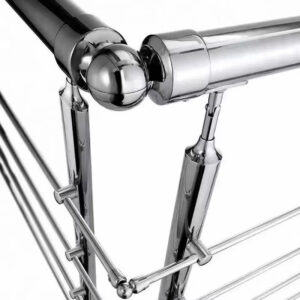
Handrails must provide uninterrupted support, especially during transitions where falls are most likely. They must be continuous within each stair flight. On switchback or dogleg stairs, the inside handrail must be continuous between flights. Breaks in the rail, even for decorative newel posts, compromise core safety functionality. Value-engineering that eliminates continuity violates ADA standards and creates a tangible hazard at the point where users most need consistent guidance.
Critical Top and Bottom Extensions
Handrail extensions are non-negotiable safety features, not optional add-ons. At the top of a stair flight, the handrail must extend horizontally at least 12 inches beyond the top nosing. At the bottom, it must extend at the stair slope for a distance equal to one tread depth before terminating in a return to a wall, floor, or post. These extensions provide critical support during the mounting and dismounting phases, allowing users to stabilize themselves before engaging with or after leaving the stair slope. Omitting them is a frequent and serious compliance error.
Stainless Steel Material and Structural Considerations
Grade and Corrosion Resistance
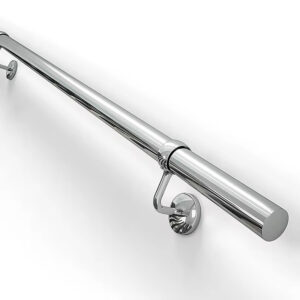
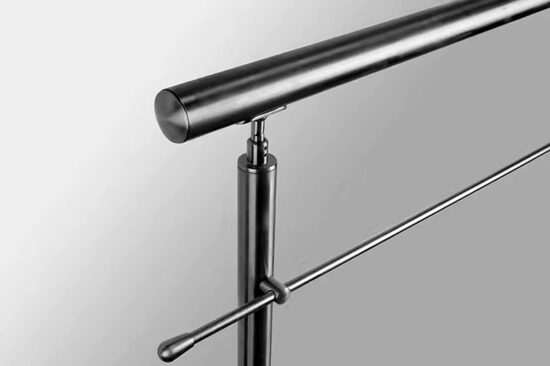
While ADA standards are material-agnostic, stainless steel is a premier choice for its strength, durability, and cleanability. Type 304 grade is standard for its corrosion resistance in most interior and exterior applications. For coastal or high-chloride environments, Type 316 offers superior pitting resistance. The material’s performance hinges on proper fabrication and passivation—a post-weld treatment defined by standards like ASTM A967 that restores the protective oxide layer and prevents rust at weld points.
Structural Load and Bracket Spacing
The complete handrail system must withstand a concentrated load of 200 pounds applied in any direction. Brackets are typically spaced 4 to 5 feet apart to meet this requirement while preventing excessive deflection. This presents a strategic trade-off. Stainless steel offers exceptional longevity and low lifecycle maintenance costs. For high-traffic, institutional, or outdoor applications, this durability often justifies the investment, reducing long-term operational costs and ensuring sustained compliance. Selecting a system with integrated structural engineering data is crucial.
| Consideration | Specification | Implication |
|---|---|---|
| Common Grade | Type 304 | Corrosion resistance |
| Concentrated Load | 200 pounds | Any direction |
| Bracket Spacing | 4 to 5 feet | Typical support |
| Lifecycle Cost | Lower maintenance | Higher initial expense |
Source: ASTM A967 Standard Specification for Chemical Passivation Treatments for Stainless Steel Parts. This specification defines passivation treatments that enhance the corrosion resistance of stainless steel grades like Type 304, which is critical for the long-term durability and cleanability of handrails.
Children’s Use and Secondary Handrail Requirements
Acknowledging Different User Groups
The ADA acknowledges that the primary 34-38 inch height range does not serve children effectively. In facilities where children are the primary users, such as elementary schools or pediatric clinics, a secondary handrail is recommended. This lower rail should be at a maximum height of 28 inches measured from the stair nosing. This requirement reflects the market’s segmentation into different user needs and is a key consideration for projects in the educational or childcare sectors.
Design and Clearance for Dual Rails
Installing a secondary rail requires careful planning. A minimum vertical clearance of 9 inches must be maintained between the upper and lower gripping surfaces to prevent hand entrapment. This often requires customized bracket designs or dedicated mounting points. Facilities serving diverse populations must adopt a dual-compliance strategy, ensuring safety and usability for all occupants. Standard commercial installations may only need the primary rail, but project specifications must clearly identify the user group to avoid omission of this critical feature.
| Rail Type | Height Specification | Vertical Clearance |
|---|---|---|
| Primary (Adult) Handrail | 34 to 38 inches | N/A |
| Secondary (Children’s) Handrail | Max 28 inches | From walking surface |
| Clearance Between Rails | Min 9 inches | Prevents entrapment |
Source: Technical documentation and industry specifications.
ADA vs. IBC: Navigating Code Compliance and Conflicts
The Multi-Code Labyrinth
Compliance is a multi-code labyrinth. The ADA is a civil rights law, but its technical standards are incorporated into enforceable building codes like the International Building Code (IBC). While handrail height (34-38″) aligns between ADA and IBC, a critical conflict arises with guards. The IBC specifies a minimum 42-inch guard height on stairs. If a guard’s top rail also serves as the handrail, it must meet both the height and graspability requirements—a common design challenge that often necessitates a separate handrail attached to the guard.
Determining the Governing Requirement
Other standards like OSHA have different ranges (e.g., 30-38″ for general industry). The strictest applicable requirement ultimately controls the final installation. Professionals must identify all governing jurisdictions and codes for a project during the design phase. This includes state and local amendments to the IBC, which may modify accessibility provisions. Failure to navigate these conflicts systematically can result in non-compliance, failed inspections, and liability, even if the installation meets the baseline ADA standard.
| Code / Standard | Handrail Height | Guard Height (Top Rail) |
|---|---|---|
| ADA Standards | 34 to 38 inches | Not specified |
| International Building Code (IBC) | 34 to 38 inches | Min 42 inches |
| OSHA Standards | 30 to 38 inches | Varies |
Note: The strictest applicable requirement controls the final installation.
Source: ICC A117.1 Accessible and Usable Buildings and Facilities. This standard is incorporated by reference into the IBC and provides the technical basis for resolving conflicts between accessibility requirements and other building code mandates like guard height.
Key Selection Criteria for Compliant Stainless Steel Handrails
Verifying Technical Specifications
First, verify that the product’s dimensions meet ADA specifications. This includes cross-section diameter or perimeter, and the provided clearance from the wall when mounted with its standard bracket. Request certified dimensional drawings from the manufacturer. Second, assess the structural certification—can the system demonstrably support the 200-pound concentrated load at the specified bracket spacing? Do not rely on generic material claims; insist on engineered load data for the complete assembly.
Evaluating Support and Lifecycle Value
The market is shifting. Customization is often a compliance necessity for complex layouts. Manufacturers offering detailed CAD drawings, installation guides, and direct design support mitigate liability and add significant value, locking in specifications early. Third, conduct a lifecycle cost analysis. Weigh stainless steel’s durability and minimal maintenance against the initial expense. For projects where long-term performance and hygiene are priorities, such as healthcare or transit facilities, the total cost of ownership justifies the material selection. The competitive battleground is the comprehensive technical support ensuring guaranteed compliance. For projects requiring precision-engineered solutions, exploring specialized stainless steel handrail systems is a logical step in the specification process.
Successful implementation hinges on three priorities: consistency in installation, concurrent design of hardware and wall conditions, and verification against all applicable codes, not just the ADA. Treat the handrail as a safety-critical system, not a decorative finish. This requires precise specifications, qualified installers, and final measurement verification before sign-off.
Need professional guidance on specifying compliant stainless steel handrail systems? The technical experts at Esang can provide detailed product data, installation drawings, and code analysis to ensure your project meets all requirements from design through installation.
Frequently Asked Questions
Q: How do we ensure our handrail height meets ADA compliance across an entire staircase?
A: You must maintain a consistent vertical measurement between 34 and 38 inches from the stair nosing to the top of the gripping surface for the full length of the flight, including landings. This four-inch tolerance zone is not an average but a continuous requirement. This means installers must verify height at multiple points during installation, as a single measurement is insufficient and any variation outside the range creates a compliance failure and safety risk.
Q: What are the critical clearance requirements for ADA handrail installation?
A: You must provide a minimum 1.5-inch clearance between the gripping surface and any adjacent wall to allow for a proper power grip. The entire handrail system, including brackets, cannot project more than 4.5 inches from the wall. This necessitates mounting brackets with stems set at least 1.5 inches below the rail’s bottom. For projects with space-constrained corridors or complex wall details, you must select the mounting hardware and finalize wall conditions concurrently with the handrail design to avoid non-compliant pinch points.
Q: What specifications define a compliant handrail gripping surface?
A: A compliant gripping surface for a circular profile has an outside diameter between 1.25 and 2 inches, as defined in the ADA Standards for Accessible Design. Non-circular shapes require a perimeter measurement of 4 to 6.25 inches. The surface must be continuous, smooth, and cannot rotate in its fittings. If your design team prefers a custom aesthetic profile, you must verify its perimeter falls within the specified range, as undersized rails compromise user safety and introduce liability.
Q: When are secondary handrails required for children’s use?
A: The ADA recommends a secondary handrail in facilities where children are the primary users, such as elementary schools. This lower rail should be a maximum of 28 inches high, with at least a 9-inch vertical clearance maintained between it and the primary 34-38 inch handrail. This means facilities serving children must adopt a dual-compliance strategy, which often requires a custom rail design to accommodate both user groups safely and meet all clearance rules.
Q: How do we resolve conflicts between ADA handrail height and IBC guard requirements?
A: While both ADA and IBC specify a handrail height of 34-38 inches, the IBC also mandates a minimum 42-inch guard height on stairs. If a guard’s top rail also serves as the handrail, it must satisfy both the height and graspability requirements—a common design challenge. You must identify all governing codes for your project, as the strictest applicable clause controls. For projects under IBC jurisdiction, expect to design a system that integrates a graspable handrail within a taller guard assembly.
Q: What should we look for when selecting a stainless steel handrail vendor?
A: First, verify the product’s cross-section and clearance meet ADA specifications. Second, assess the manufacturer’s technical support, like providing detailed CAD drawings and installation guides, which mitigates compliance risk. Third, evaluate lifecycle costs, as stainless steel’s durability often justifies a higher initial cost in high-traffic or exterior applications. This means for complex layouts, you should prioritize vendors whose support ecosystem locks in compliant specifications early, avoiding costly field modifications.
Q: Why is passivation important for stainless steel handrails, and what standard applies?
A: Passivation is a crucial chemical treatment that removes free iron from the stainless steel surface, enhancing its corrosion resistance and longevity, especially in high-touch or exterior environments. The process and testing requirements are defined in ASTM A967. For projects in corrosive environments like coastal areas or facilities with stringent hygiene protocols, you should specify that handrail components are passivated per this standard to ensure long-term performance and appearance.